February 19, 2026


Last Updated: January 2026
Digital marketers in 2026 can't ignore AEO. As AI assistants become primary information sources for millions of users, Answer Engine Optimization has emerged as a critical discipline alongside traditional SEO and paid advertising.
This guide explains what AEO means in digital marketing, how it fits into your marketing stack, and why it demands attention now.
AEO stands for Answer Engine Optimization—the practice of optimizing digital content so AI-powered platforms cite and recommend it when users ask questions.
For digital marketers specifically, AEO means adapting content strategy, technical implementation, and measurement approaches to earn visibility in:
When these platforms answer user questions, they synthesize information from sources they consider trustworthy. AEO ensures your content becomes one of those cited sources.
Traditional search still exists, but AI-powered search has captured significant user attention. ChatGPT alone reached 800 million weekly active users by late 2025. Many users now ask AI assistants questions they would have previously typed into Google.
This represents a fundamental distribution channel that digital marketers must address.
Research shows 60% or more of searches now end without a click to any website. Users get their answers directly from AI-generated responses or featured snippets. Digital marketers relying solely on click-based strategies miss the majority of information-seeking behavior.
Most digital marketing teams haven't developed AEO capabilities yet. Early adoption creates differentiation while competitors focus exclusively on traditional channels.
AI answers reach users during active research—often before they're ready to click ads or visit websites. Being cited in AI responses puts your brand in consideration early in the decision journey.
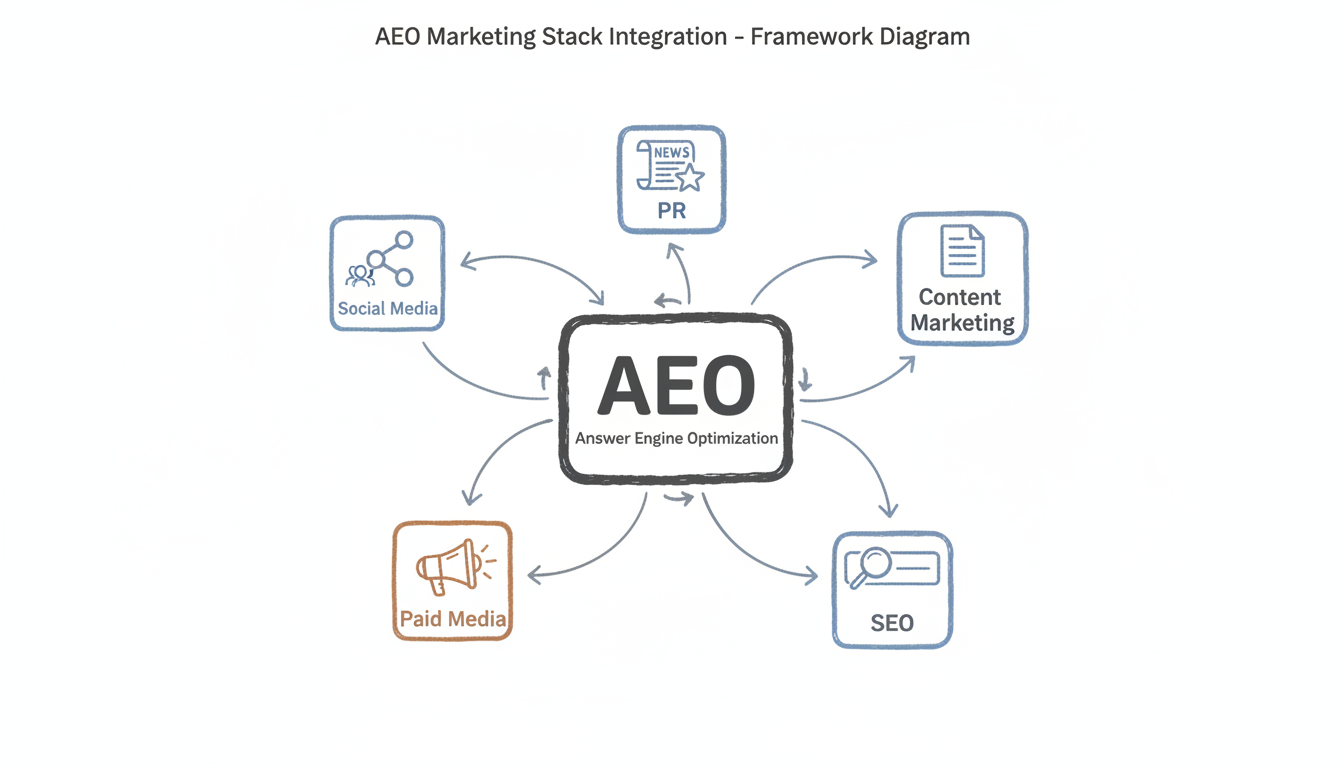
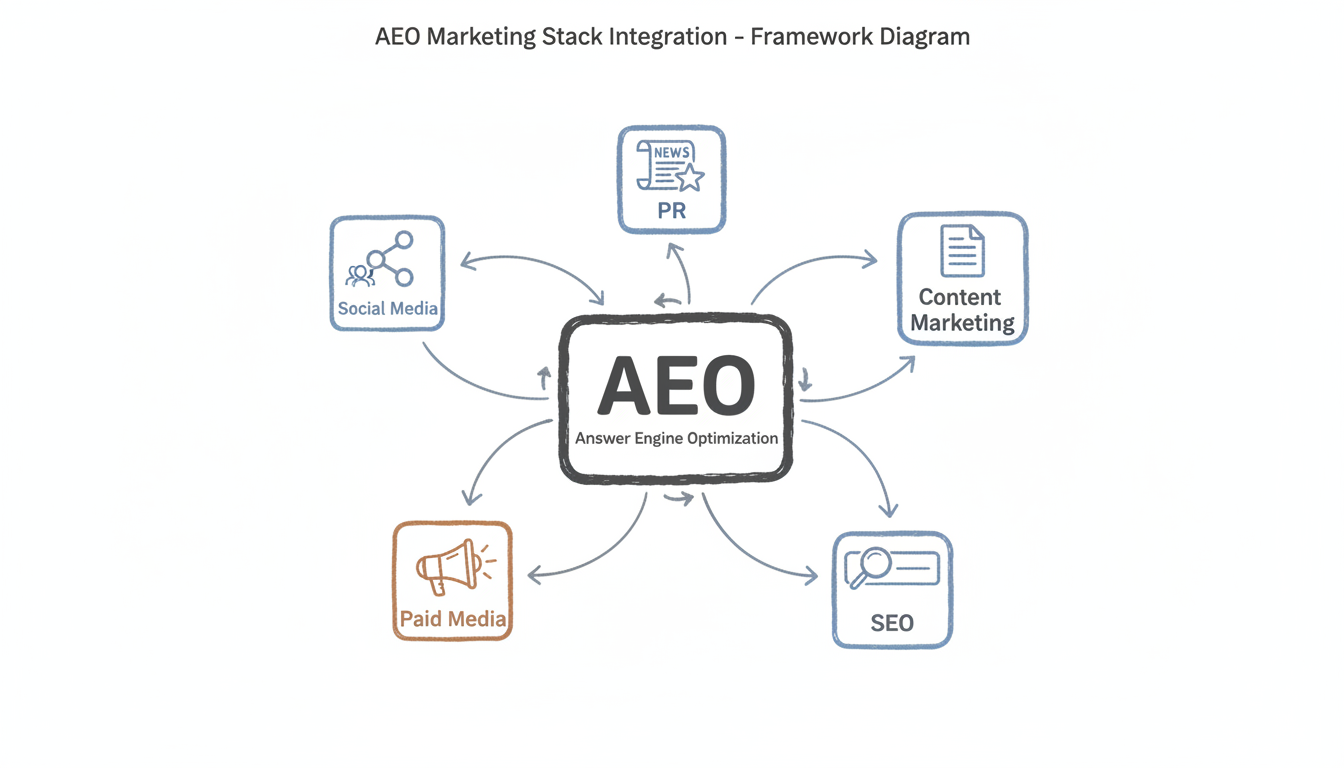
AEO doesn't replace existing digital marketing disciplines—it extends them:
Quality content serves both purposes. The comprehensive, well-researched articles that perform well in traditional search can earn AI citations when properly structured. AEO adds structural requirements (question-based headings, direct answers) that content teams incorporate into existing workflows.
SEO and AEO share foundations. Technical SEO helps AI systems discover and crawl your content. Content quality serves both ranking and citation. The difference: AEO emphasizes structure over keyword density, freshness over backlink quantity, and multi-platform presence over site authority alone. Understanding the nuances between SEO vs AEO vs GEO helps marketers allocate resources effectively.
AEO complements paid advertising by building organic brand visibility. When AI systems recommend your brand, it reinforces paid messaging. Some marketers report that strong AEO presence improves paid conversion rates as users see brand mentions in AI responses before clicking ads.
Social signals—particularly Reddit engagement and LinkedIn activity—influence AI perception of expertise. Active participation in relevant communities supports AEO goals while generating organic reach.
Press coverage and media placements build authority signals AI platforms evaluate. PR efforts that generate citations from recognized sources directly improve AEO performance.
Structure for questions: Organize content around questions your audience actually asks. Use question-format headings like "What is [topic]?" and "How does [process] work?"
Front-load answers: Place direct, extractable answers near the top of each section. AI systems often evaluate only the first portion before deciding to cite.
Build topic clusters: Develop comprehensive coverage of your core areas rather than scattered content across many topics. AI systems recognize and prefer authoritative sources. This approach aligns with proven generative engine optimization strategies that prioritize depth over breadth.
Maintain freshness: Update content regularly. Research shows content published or updated within the last 13 weeks is approximately 50% more likely to earn AI citations.
Schema markup: Implement comprehensive structured data—FAQ, Article, Organization, and Person schema—to help AI systems understand your content.
Clear metadata: Ensure proper date display (published and updated), author information, and page organization signals.
Technical health: Site speed, mobile optimization, and crawlability matter for both traditional SEO and AI discoverability.
Multi-platform presence: Establish visibility where AI systems find authoritative information—Reddit, LinkedIn, industry publications, structured databases.
Expert positioning: Associate content with credentialed authors. Implement Person schema with expertise indicators.
External validation: Pursue PR coverage, industry mentions, and authoritative citations that strengthen expertise signals.
Traditional digital marketing metrics don't capture AEO success. Add:
Several tools now offer these capabilities, including free AEO tools that provide basic monitoring alongside premium platforms like Rankscale, Otterly, Peec AI, and Ahrefs Brand Radar.
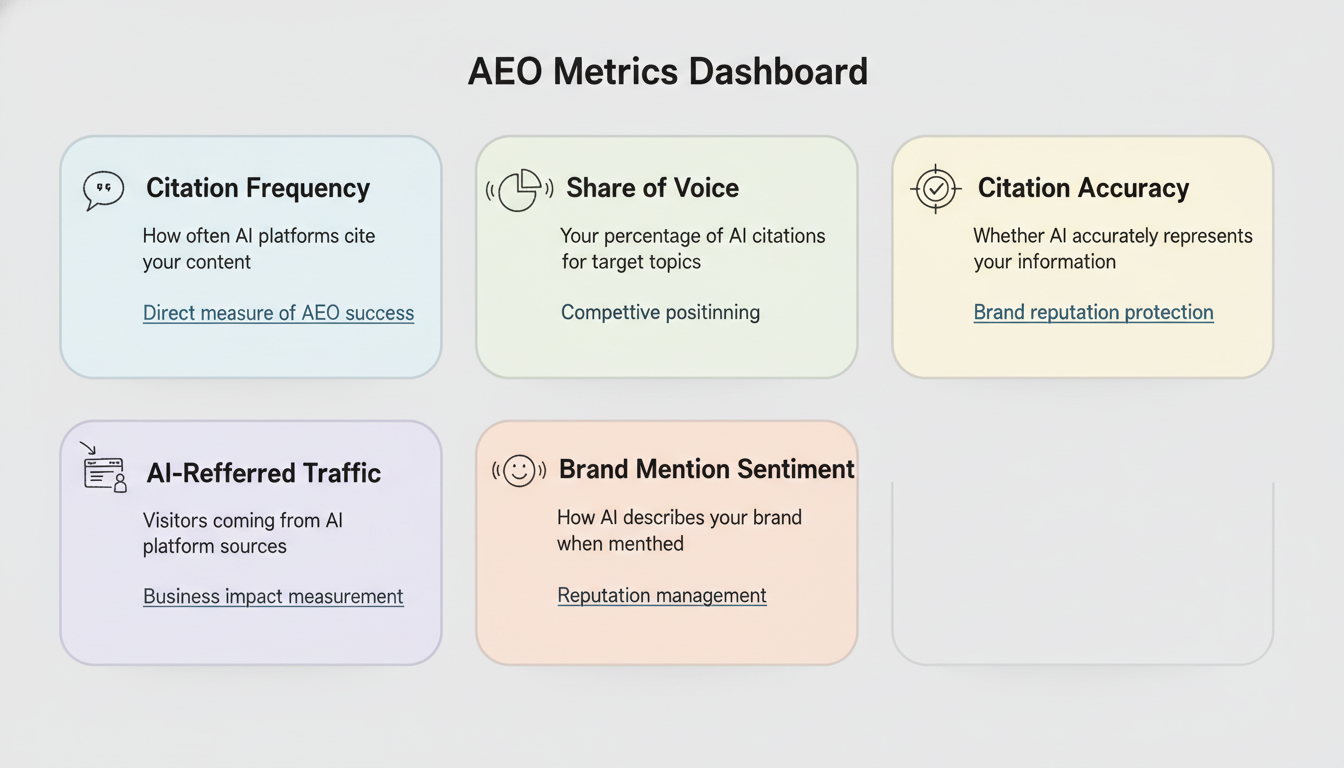
Metric | Description | Why It Matters |
Citation frequency | How often AI platforms cite your content | Direct measure of AEO success |
Share of voice | Your percentage of AI citations for target topics | Competitive positioning |
Citation accuracy | Whether AI accurately represents your information | Brand reputation protection |
AI-referred traffic | Visitors coming from AI platform sources | Business impact measurement |
Brand mention sentiment | How AI describes your brand when mentioned | Reputation management |
Treating AEO as separate from SEO: They share foundations. Integrate rather than isolate.
Ignoring content structure: Content optimized for keywords but not questions misses AEO requirements.
Neglecting freshness: Outdated content loses citation priority regardless of other quality signals.
Website-only thinking: AI systems evaluate authority across platforms, not just your site.
Expecting instant results: AEO builds over time like SEO. Consistency compounds.
AEO has become essential to digital marketing in 2026. As AI assistants mediate more information discovery, optimizing for AI citation determines whether your brand reaches audiences through these increasingly important channels.
The good news: AEO builds on digital marketing fundamentals you already practice. Quality content, genuine expertise, and audience value remain the foundation. AEO ensures these assets earn visibility where your audience increasingly looks for information.
By submitting this form, you agree to our Privacy Policy and Terms & Conditions.