February 19, 2026


Last Updated: January 2026
Understanding what makes content rank in AI search requires abandoning some traditional SEO assumptions. While conventional ranking factors still matter, AI platforms like ChatGPT, Perplexity, and Google AI Overviews evaluate and surface content using different criteria—and on different timescales.
This guide breaks down the ranking factors that determine AI search visibility in 2026.
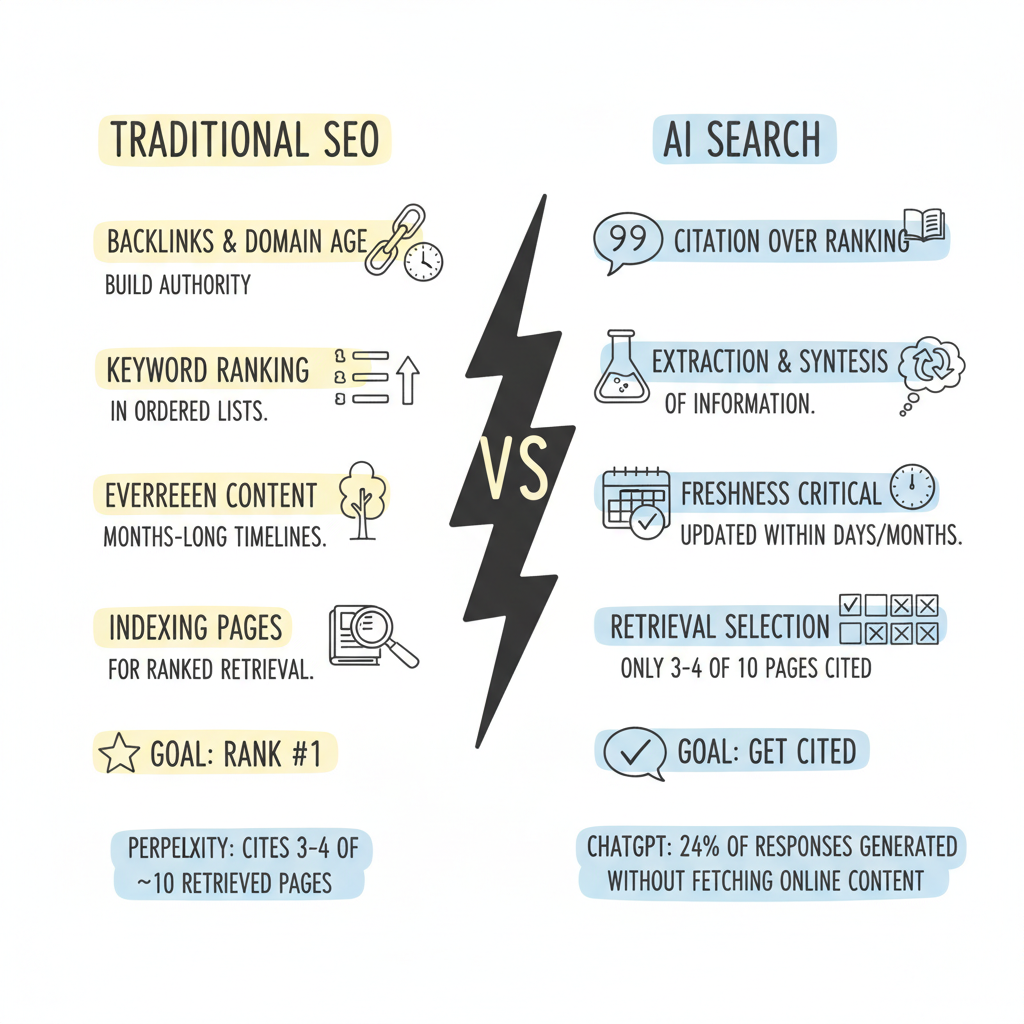
Traditional SEO builds authority over months through backlinks, domain age, and keyword optimization. AI search operates differently:
Research shows the citation gap is significant: Perplexity visits approximately 10 relevant pages per query but cites only 3-4. Gemini provides no clickable citation in 92% of answers. ChatGPT generates 24% of responses without explicitly fetching any online content.
Getting retrieved is only half the battle—getting cited is the real goal.
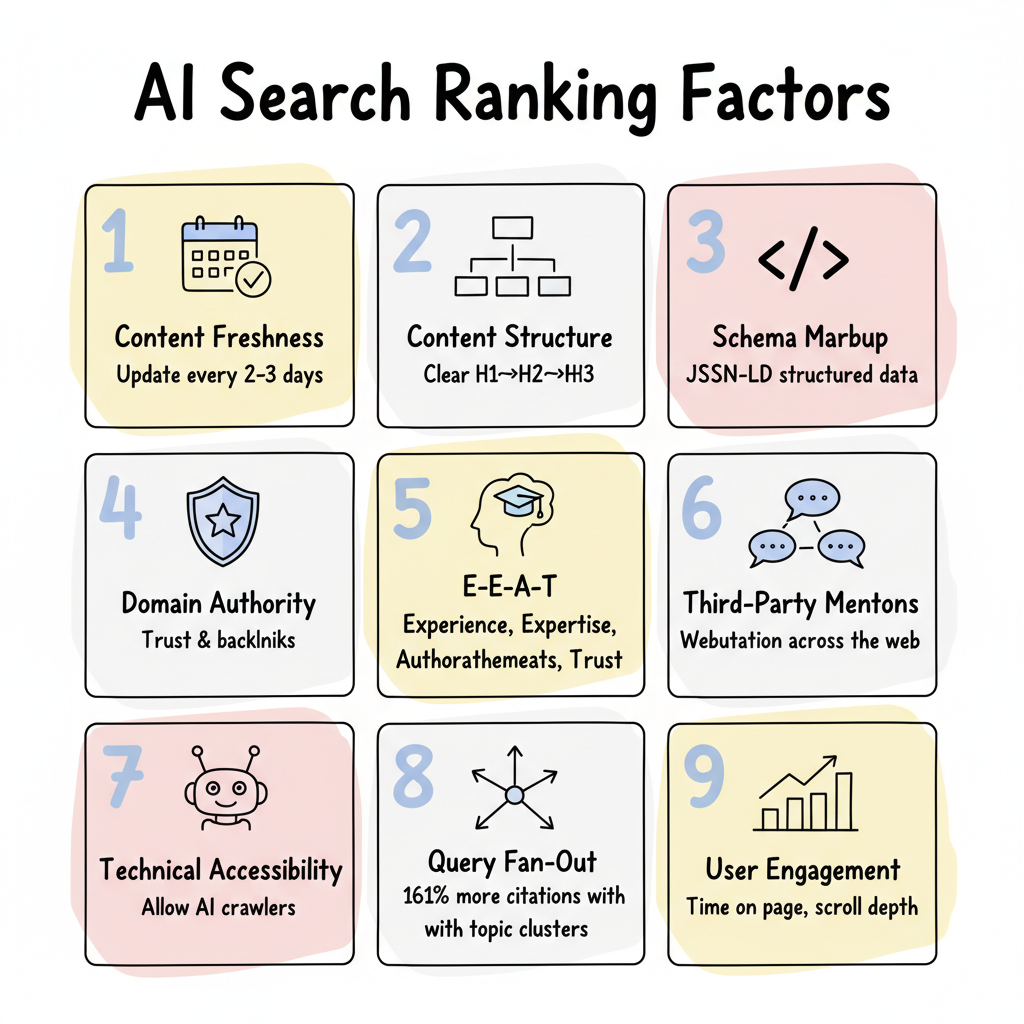
Freshness is perhaps the most aggressive ranking factor in AI search, especially for Perplexity.
Why it matters: AI platforms prioritize recent information as more accurate and relevant. They parse "last updated" metadata to assess source recency.
The data:
What to do:
AI systems extract information based on how content is organized. Structure determines whether your content gets cited accurately.
Why it matters: Well-structured content is easier for AI to parse, understand, and quote correctly.
Key structural elements:
URL structure insight: URLs with 17-40 character slugs receive the most citations. Descriptive but concise paths outperform both overly long URLs and cryptic short ones.
Structured data provides AI models with explicit, machine-readable information about your content.
Why it matters: While AI can interpret unstructured content, schema dramatically simplifies extraction. Research suggests schema contributes approximately 10% to ranking factors on platforms like Perplexity.
Priority schema types:
Implement schema using JSON-LD format in the page head for optimal AI comprehension.
AI platforms evaluate source authority when deciding what to cite.
Why it matters: Authoritative sources get cited more frequently and more prominently. However, AI platforms also cite pages that don't rank #1 on Google—creating opportunities for brands with strong content but limited traditional authority.
Authority signals that matter:
Trust signals:
Google's E-E-A-T framework influences AI search even beyond Google's own AI Mode. Understanding AEO vs SEO dynamics helps you balance traditional search factors with emerging AI-specific signals.
Why it matters: AI platforms evaluate whether content comes from credible sources before citing it.
E-E-A-T implementation:
AI platforms evaluate your presence across the web—not just your own website.
Why it matters: Mentions, citations, and references from other authoritative sources signal trustworthiness to AI systems.
Where to build presence:
Consistency matters: AI systems cross-reference information about your brand across sources. Inconsistent information (different addresses, contradictory claims) can undermine trust signals.
AI platforms must be able to access your content to cite it.
Why it matters: AI crawlers (GPTBot, PerplexityBot) need technical access as a prerequisite to consideration.
Technical requirements:
Comprehensive topic coverage dramatically improves AI citation likelihood. Implementing AEO optimization strategies ensures your content addresses the full spectrum of related queries users might ask.
Why it matters: Websites ranking for multiple related queries are 161% more likely to earn AI citations compared to those ranking only for main keywords.
What this means:
AI platforms consider engagement metrics as content quality signals.
Why it matters: Top-cited pages demonstrate higher visit duration, lower bounce rates, and better conversion metrics.
Engagement factors:
Comparing SearchGPT vs Google AI when to prioritize each helps you allocate optimization resources effectively across platforms.
AI search ranking factors build on traditional SEO foundations but add new requirements—especially around freshness, structure, and schema implementation. The brands winning AI visibility in 2026 combine:
Start with the factors that offer the biggest gaps versus competitors. For most brands, that means updating content more frequently and implementing proper schema—these are the fastest paths to improved AI visibility. Following AEO best practices 2026 ensures your approach stays current with evolving platform requirements.
By submitting this form, you agree to our Privacy Policy and Terms & Conditions.