February 19, 2026



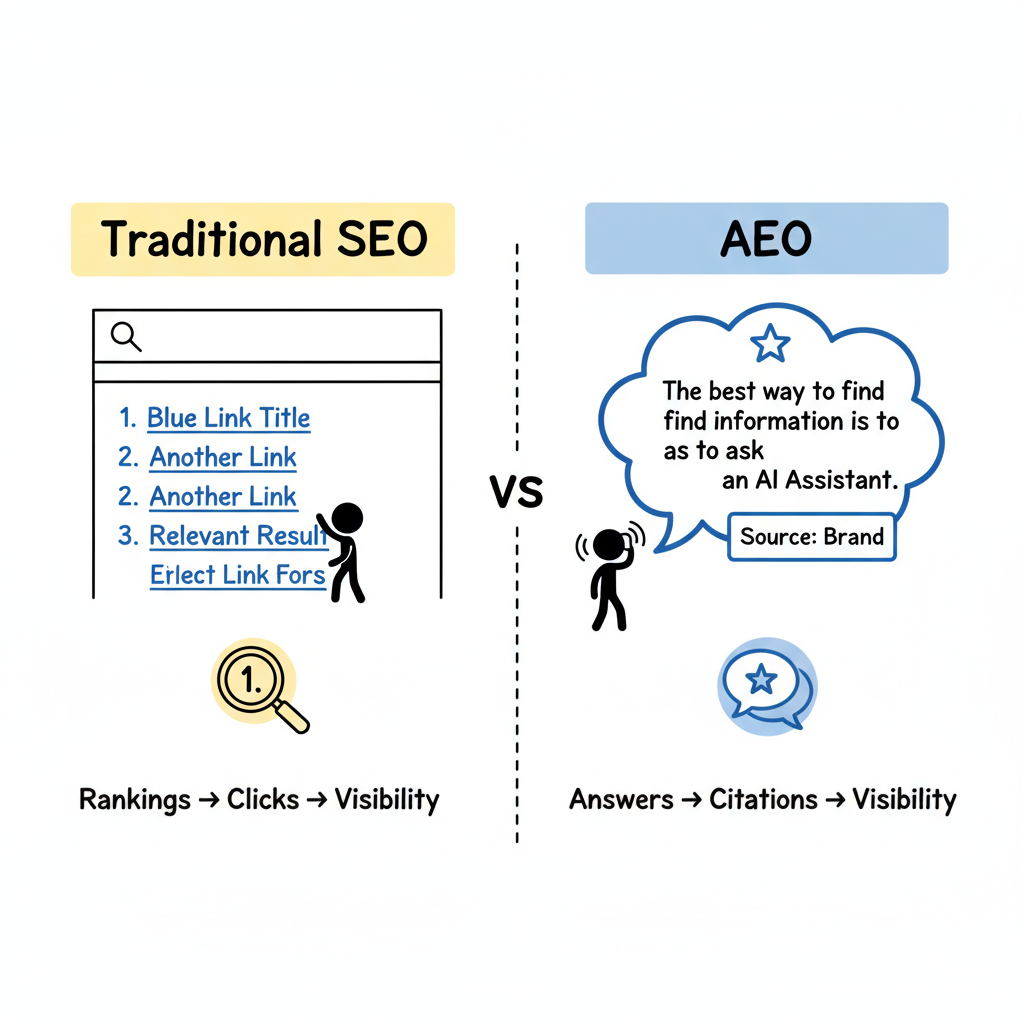
AEO optimization focuses on making your content the source that AI systems and voice assistants reference when providing direct answers. Unlike traditional SEO where rankings determine visibility, AEO determines whether your content gets selected as the answer users receive.
This guide covers practical optimization techniques you can implement to improve answer engine visibility.
User behavior has fundamentally shifted. Instead of browsing search results, users increasingly expect direct answers. Voice assistants, AI chat interfaces, and featured snippets satisfy queries before clicks happen.
Research indicates that companies now receive significant organic traffic from LLMs like ChatGPT, Perplexity, and Claude—sometimes exceeding traffic from traditional search. This shift means brands need to optimize for being cited, recommended, and directly referenced when users ask questions in their category.
AEO optimization matters because:
Organizations that ignore AEO optimization lose visibility even when they technically "rank" in traditional results.
AI systems extract content at the paragraph level. They look for clear, quotable statements rather than processing entire articles. Structure appropriately:
Lead with the answer. Place the direct answer immediately after each heading. Elaboration can follow, but the core answer should come first.
Keep paragraphs concise. Aim for under 80 words per paragraph. This improves extraction accuracy and voice search compatibility, similar to best practices for long-tail keywords and featured snippets.
Write standalone statements. Each paragraph should make sense when extracted alone. Avoid statements that require surrounding context to understand.
Use clear headers. Match how users phrase questions. Question-format headers (H2, H3) signal to AI systems exactly what your content answers.
Structured data helps answer engines understand your content's meaning and context:
Schema markup doesn't guarantee selection, but it removes ambiguity that might cause AI systems to skip your content. Ensuring schema markup alignment with visible content is critical for avoiding conflicts that could hurt visibility.
FAQ sections serve multiple AEO optimization purposes:
They explicitly format questions and answers in patterns AI systems recognize. They cover question variations users might phrase differently. They provide concise, extractable responses that work for voice and text.
Effective FAQ sections:
Voice queries differ from typed searches. They're longer (typically 7-10 words), more conversational, and often include local intent.
For voice optimization:
Content should deliver useful answers even when partially extracted as spoken responses.
Answer engines prefer sources with established expertise. Authority signals include:
Comprehensive coverage. Create thorough content around core topics rather than thin pages targeting individual keywords.
Consistent accuracy. Maintain and update content to remain current. Outdated information reduces trust signals.
Expert attribution. Credit content to recognized experts with verifiable credentials.
Cross-platform presence. Build presence on platforms AI systems crawl—LinkedIn, industry publications, relevant directories.
Focus initial efforts on:
These represent quick wins—content already performing that needs optimization for answer engine extraction.
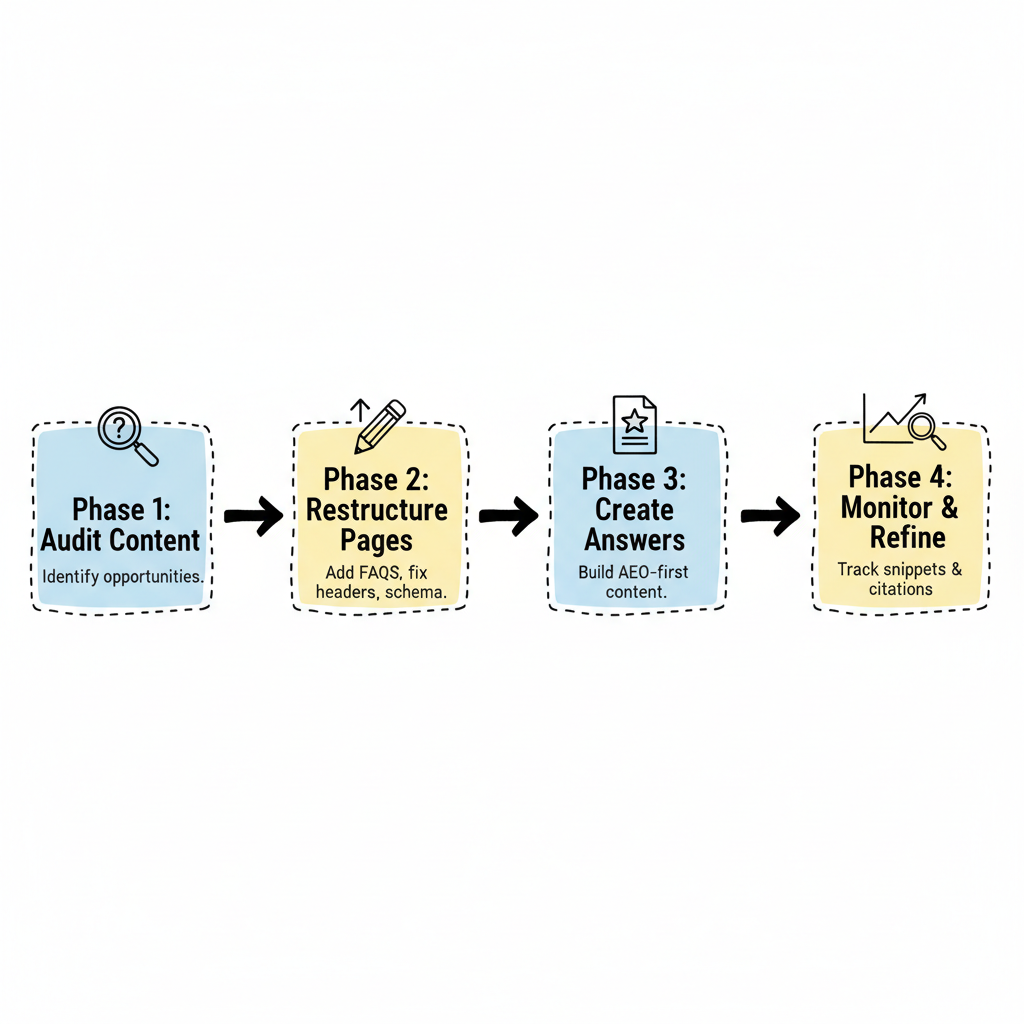
AEO optimization works best as systematic process:
Phase 1: Audit existing content. Identify which pages could become answer-ready with structural improvements. Consider running an AEO technical audit to uncover specific optimization opportunities.
Phase 2: Restructure priority pages. Add FAQ sections, improve headers, break long paragraphs, implement schema.
Phase 3: Create answer-optimized content. Build new content with AEO principles from the start.
Phase 4: Monitor and refine. Track featured snippet appearances and AI citations, adjust based on results.
Phased timelines prevent overwhelm while ensuring steady progress.
AEO measurement differs from traditional SEO metrics:
Regular manual testing across AI platforms reveals visibility that automated tools might miss. Understanding AI search success metrics by industry helps you benchmark your performance appropriately.
AEO optimization positions your content to be selected as the direct answer users receive across AI assistants, voice search, and featured snippets.
The core principle: Structure content so AI systems can confidently extract, understand, and cite it when answering user questions.
Where to start: Focus on high-performing existing content. Add FAQ sections, improve structure, implement schema markup.
The ongoing commitment: AEO optimization requires continuous updates as AI systems evolve. Brands that treat it as ongoing process maintain long-term visibility.
Organizations implementing AEO strategies typically see improved visibility across the growing channels where users expect direct answers.
Results vary by platform. Featured snippet improvements may appear within weeks as Google recrawls content. AI platform citations take longer as models refresh their knowledge bases. Expect gradual improvement over months rather than overnight transformation.
No. AEO complements SEO. Strong traditional rankings correlate with better AI citations because authority signals transfer across platforms. Build SEO foundations first, then layer AEO optimization.
Schema generators help implement structured data. Rank tracking tools monitor featured snippets. AI visibility platforms like Conductor track citations across multiple AI systems. Manual testing across ChatGPT, Perplexity, and similar platforms provides direct visibility feedback.
Start with FAQ schema on your top 10 pages. Add FAQ sections addressing common customer questions. Restructure paragraphs to lead with direct answers. These changes require minimal technical resources but significantly improve answer engine readiness.
By submitting this form, you agree to our Privacy Policy and Terms & Conditions.