February 19, 2026


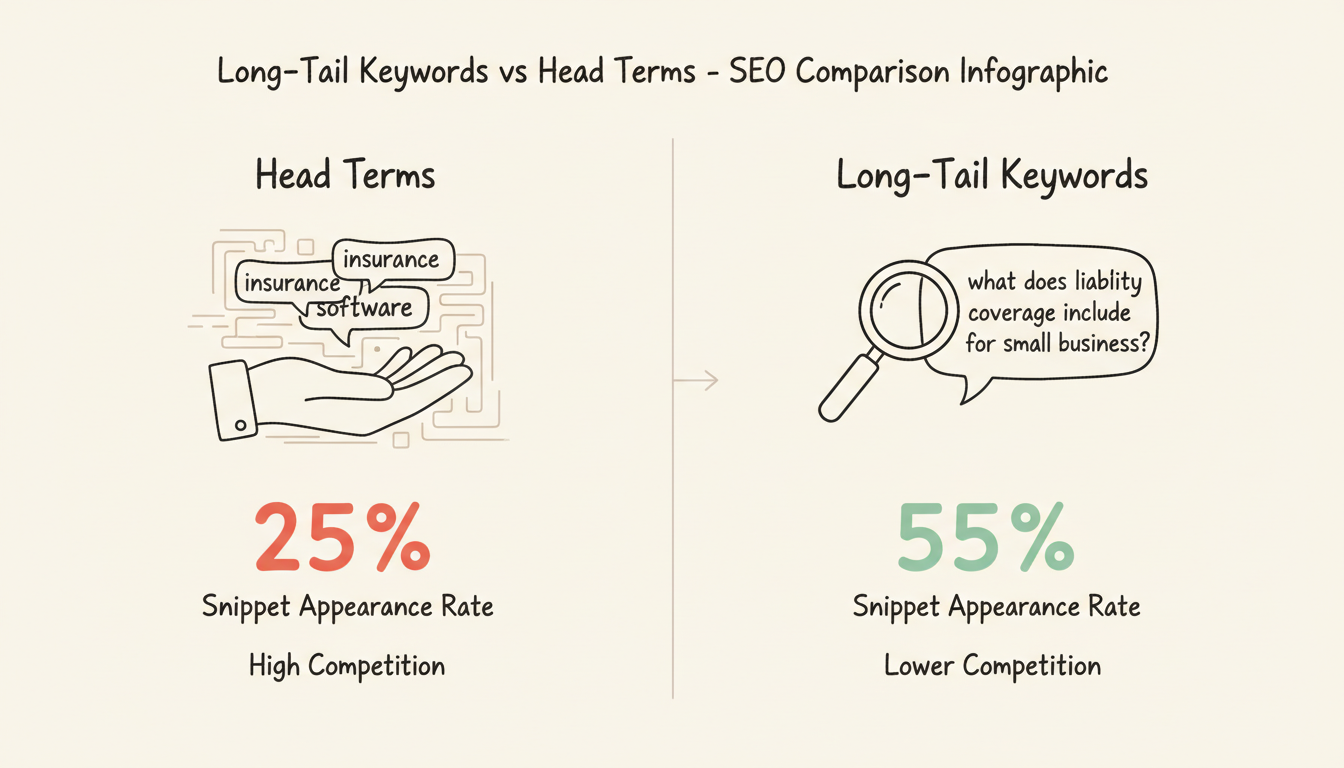
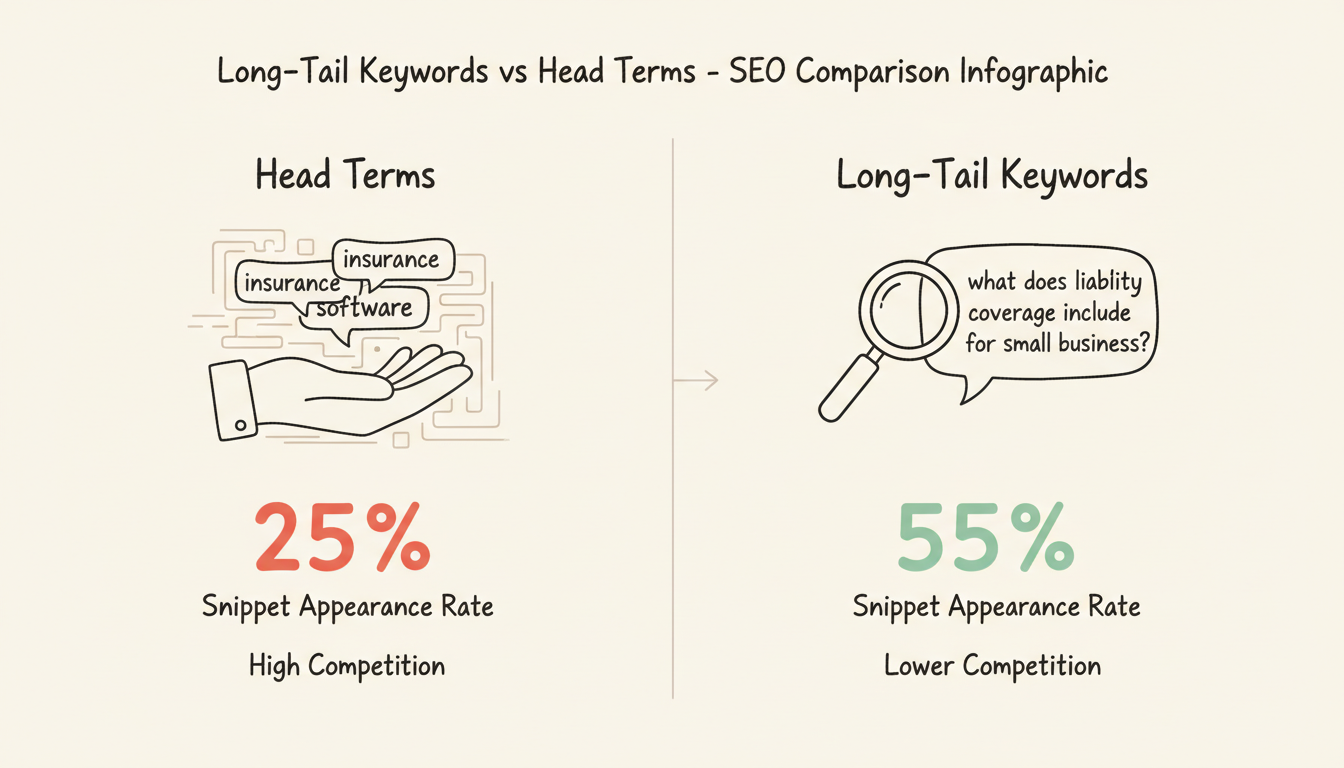
Featured snippets remain one of the most valuable positions in search results—and long-tail keywords offer the clearest path to winning them. Data shows AI Overviews and featured snippets appear in 55% of long-tail queries compared to just 25% of head terms. This disparity creates a significant opportunity for brands willing to target specific, question-based searches rather than competing for broad keywords.
This guide explores why long-tail keywords drive featured snippet success and how to build a strategy that captures these high-value positions.
Long-tail keywords offer distinct advantages when targeting featured snippets.
Head terms like "insurance" or "software" attract massive competition from established domains with substantial authority. Long-tail variations like "what does liability coverage include for small business" face far fewer competitors, making snippet positions achievable for smaller sites.
The math works in your favor:
Long-tail searches reveal specific user intent. When someone searches "how to choose project management software for a 10-person team," they're asking a precise question that deserves a precise answer. Featured snippets exist to provide exactly this—direct answers to specific queries.
Content that matches specific intent earns snippets more reliably than broad content trying to cover everything.
Research analyzing millions of search queries shows featured snippets and AI Overviews appear in approximately 55% of long-tail searches. This rate drops significantly for short, competitive head terms where Google may display traditional results or commercial listings instead.
Targeting queries where snippets frequently appear dramatically increases your chances of earning one.
Questions form the backbone of successful snippet strategies.
Featured snippets were designed to answer questions. When users ask "what," "how," "why," "when," or "where" questions, Google actively seeks content that provides clear answers. The format practically demands snippet-style responses.
Question queries signal informational intent, which Google satisfies through snippets rather than commercial results or local packs. Understanding how Google selects AI Overview sources can help you optimize for both traditional snippets and newer AI-powered results.
Certain question structures consistently trigger featured snippets:
"What is" questions: Definition snippets
"How to" questions: Process/list snippets
"Why" questions: Explanation snippets
"Best" questions: List snippets
Identify question-based long-tail keywords through:
Systematic targeting improves snippet acquisition rates.
Focus first on keywords where you already rank positions 2-10. Google primarily pulls snippets from first-page results, so existing visibility provides a foundation. Optimizing content you already rank for requires less effort than building authority for new keywords.
Review your Search Console data for question-based queries where you rank but don't hold the snippet. Many organizations leverage AEO checker tools to identify these snippet opportunities more efficiently.
Not all keywords have snippet potential. Before targeting, verify:
Target queries where snippets exist but aren't held by dominant authorities.
Structure content specifically for snippet extraction:
For paragraph snippets:
For list snippets:
For table snippets:
Specific formatting practices increase snippet capture rates.
Place direct answers immediately after questions. Don't build up to answers with context—lead with the response, then expand.
Effective structure:
## How long does featured snippet optimization take?

Featured snippet optimization typically shows results within 2-4 weeks after content updates, though competitive queries may take 2-3 months. The timeline depends on existing rankings, content quality, and competition.

[Additional context and detail follows...]
Analyze the current snippet format for your target query and match it. If Google shows a numbered list, create a numbered list. If it shows a paragraph, write a concise paragraph answer. Fighting the preferred format reduces success probability.
When optimizing for multiple search platforms, consider implementing a comprehensive generative engine optimization strategy that addresses both traditional search engines and AI-powered answer engines.
While the answer itself should be concise, surrounding content should demonstrate expertise. Include:
This supporting content helps Google trust your answer as authoritative.
Reinforce snippet targeting through on-page SEO:
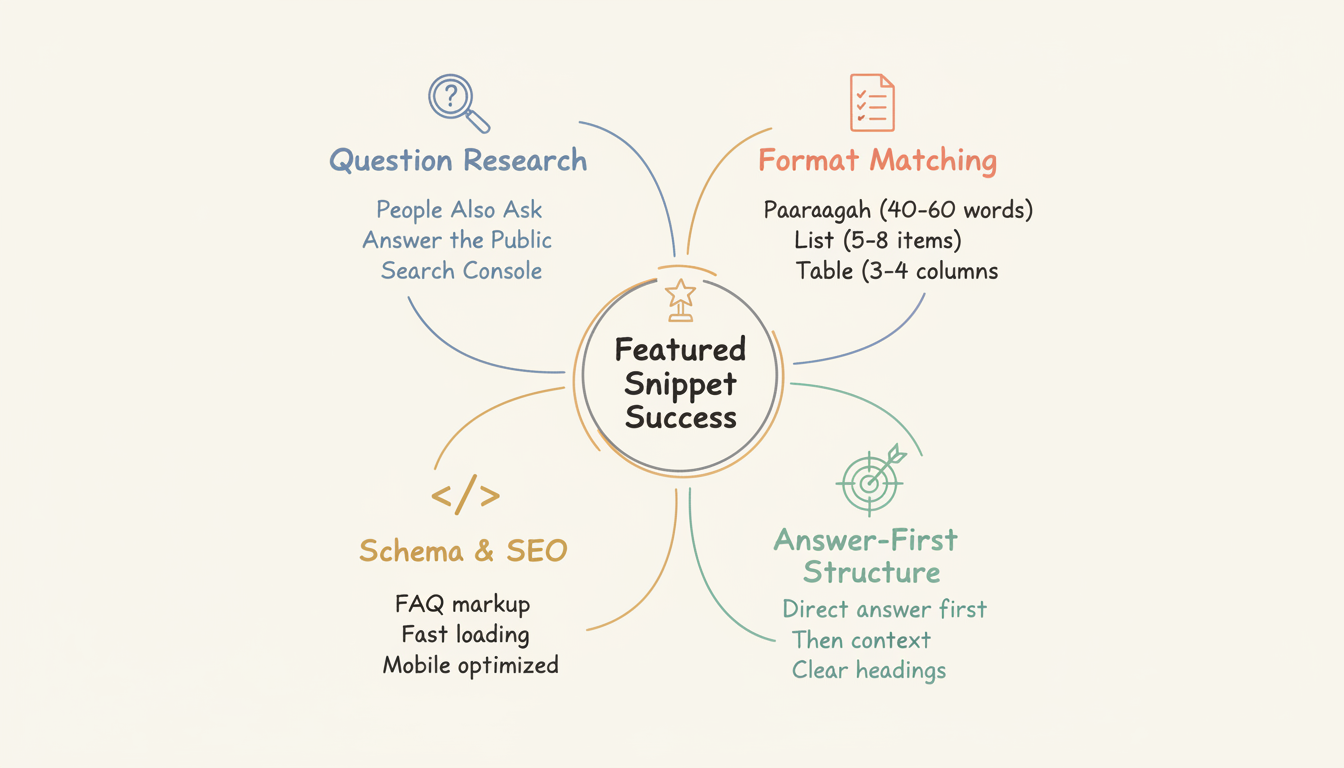
Track progress and refine strategies based on data.
Snippet acquisition rate: Percentage of target keywords where you hold featured snippets
Position tracking: Monitor rankings for snippet-targeted keywords
Traffic from snippets: Measure clicks from queries where you hold snippets (though note that snippets can reduce clicks while increasing visibility)
Snippet stability: Track how long you maintain snippet positions
Several platforms track featured snippet performance:
Use data to refine your approach:
Optimal featured snippet answers range from 40-60 words for paragraph snippets. Google extracts concise, complete answers. Longer responses get truncated; shorter ones may lack sufficient information.
Featured snippets can decrease clicks for simple queries where users get answers directly. However, they increase visibility and brand awareness. For complex topics where users want more detail, snippets often increase clicks to your site.
Sites need first-page rankings to compete for most featured snippets. Google primarily sources snippets from top-10 results. Building domain authority and relevance through consistent content creation increases snippet opportunities.
Featured snippets can change frequently—sometimes daily for competitive queries. Regular content updates, improved answers from competitors, or Google algorithm changes can trigger snippet turnover.
By submitting this form, you agree to our Privacy Policy and Terms & Conditions.