
February 19, 2026


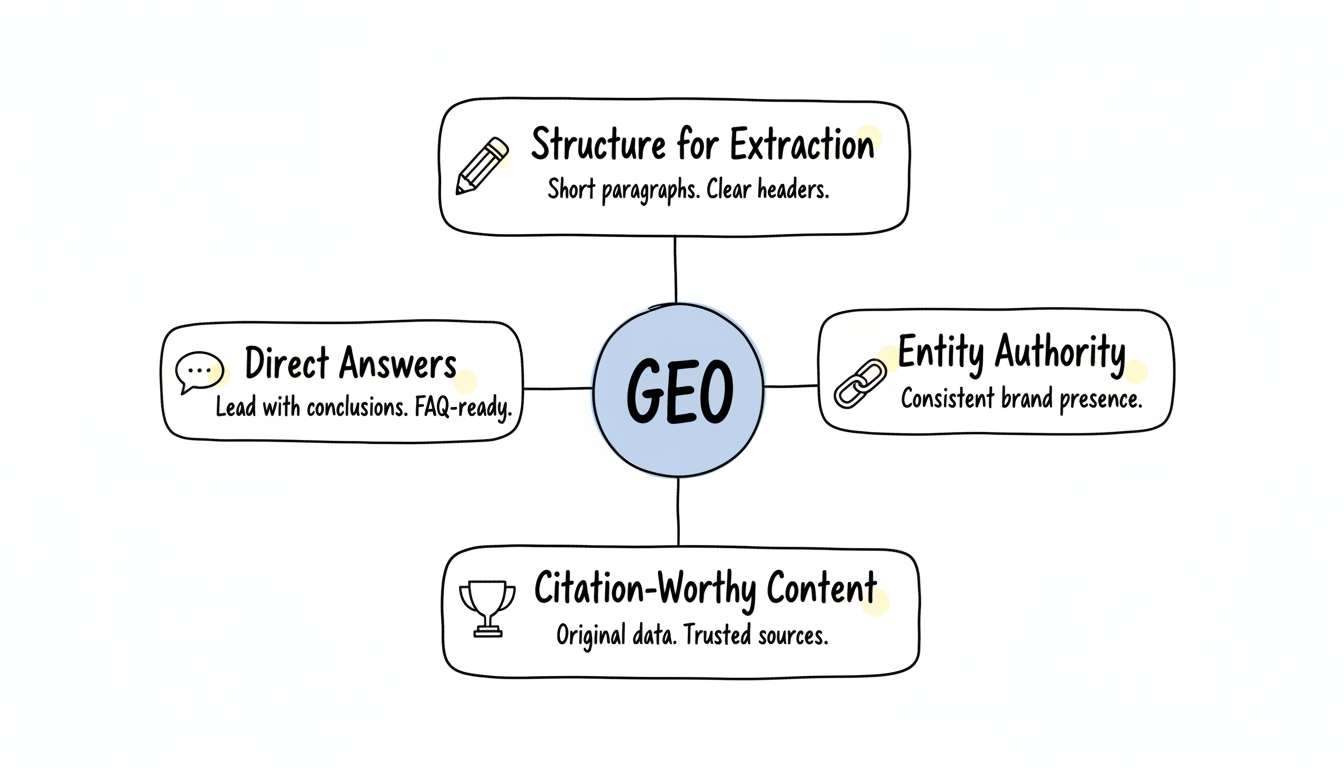
Generative engine optimization (GEO) is the practice of structuring content so AI-powered search platforms find, understand, and cite it. As more users turn to ChatGPT, Perplexity, and Google AI Overviews for answers, traditional SEO alone no longer guarantees visibility. GEO addresses this shift.
This guide introduces what GEO means, why it matters, and how to start optimizing for generative AI search.
Generative engine optimization focuses on making your content the source AI systems reference when generating answers. Unlike traditional search where users click through to websites, AI search synthesizes information directly into responses—often citing sources but not always driving clicks.
GEO encompasses several optimization targets:
Each platform uses different approaches to retrieve and cite content, but the fundamental optimization principles overlap significantly.
User behavior is shifting rapidly toward AI-powered search:
Brands that don't appear in AI-generated responses lose visibility to competitors who do. This isn't hypothetical future concern—it's happening now.
Effective generative engine optimization builds on several foundational concepts.
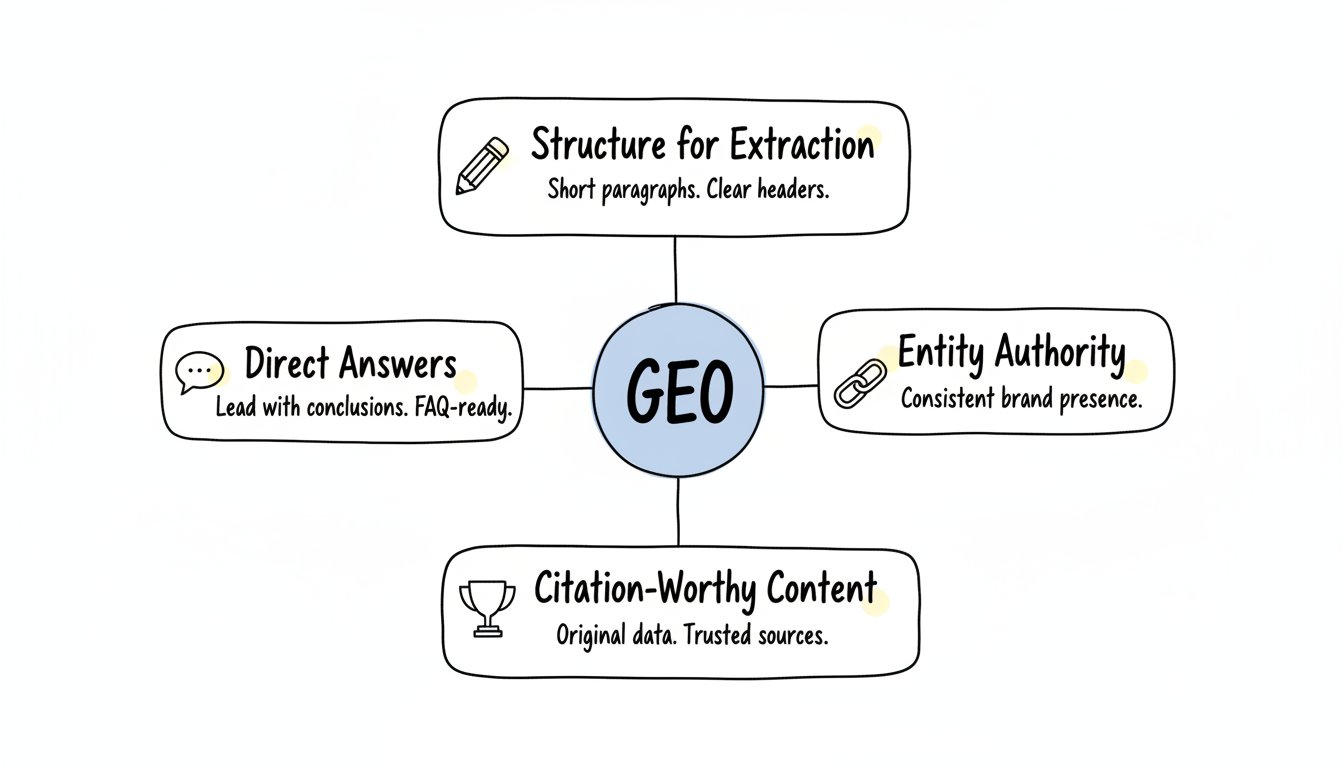
AI systems extract content at the paragraph level. They look for clear, quotable statements rather than processing entire articles. To optimize:
AI systems evaluate authority through entity relationships—connections between your brand, your experts, and topics you cover. Strengthen this by:
AI systems cite sources they trust. Earning citations requires demonstrating expertise through original research and comprehensive topic coverage. Successful search engine optimization using ai combines data-driven insights with content structured for machine extraction:
Structure content to answer questions directly:
For teams new to generative engine optimization, start with these practical steps.
Before optimizing, understand your baseline:
Understanding the differences between traditional seo vs ai search optimization helps teams benchmark their current performance and identify gaps in their content strategy.
Don't create new content immediately. Instead:
Audit your digital presence for consistency:
Implementing effective ai search analytics tracking enables teams to monitor citation performance and measure the impact of entity consistency improvements across platforms.
Technical optimization supports AI extraction:
Generative engine optimization addresses a fundamental shift in how users find information. AI-powered search is here now, not a future possibility.
The core principle: Make your content easy for AI systems to find, understand, trust, and cite.
Where to start: Audit current AI visibility, restructure existing content for extraction, and ensure entity consistency across platforms.
The relationship to SEO: GEO complements rather than replaces traditional SEO. Strong SEO performance often correlates with better AI visibility since AI systems reference authoritative sources. Organizations implementing a geo seo combined strategy gain advantages in both traditional and AI-powered search environments.
Organizations that begin GEO optimization now position themselves ahead of competitors still focused solely on traditional search.
SEO focuses on ranking web pages in traditional search results where users click through to websites. GEO focuses on getting content cited in AI-generated responses where users may receive answers directly without clicking. Both share the goal of visibility, but the mechanisms differ.
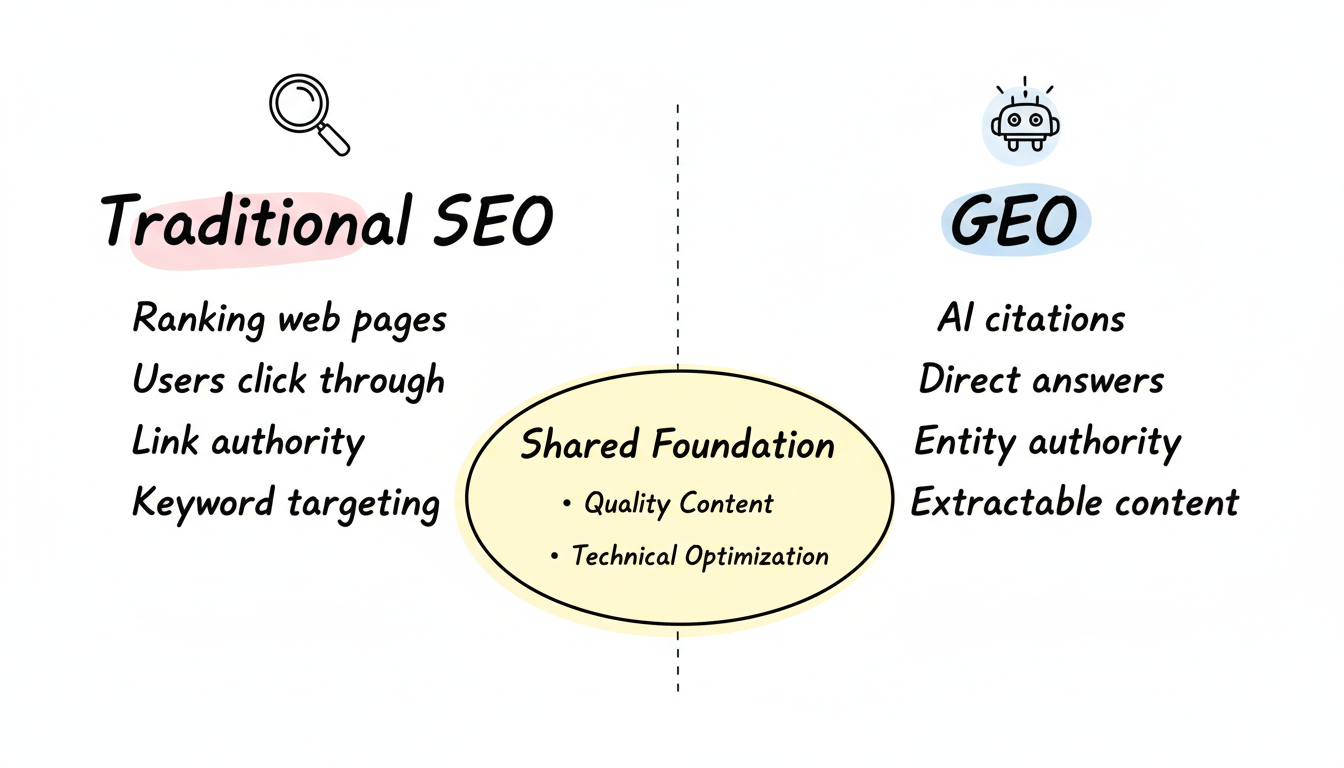
No. The best approach integrates both. Strong SEO foundations—authoritative content, technical optimization, quality signals—support GEO success. Many optimization principles overlap.
Results vary based on AI platform update cycles. Some improvements appear within weeks as AI systems refresh their knowledge. Others take months as changes propagate through training data. Expect gradual improvement rather than overnight transformation.
Yes. AI systems prioritize content quality and relevance over brand recognition alone. Small businesses with excellent, authoritative content can earn citations over larger competitors with less helpful content.
By submitting this form, you agree to our Privacy Policy and Terms & Conditions.



