February 19, 2026


Last Updated: January 2026
AI has transformed how SEO professionals approach their work. From keyword research to content creation, AI tools now assist with tasks that once required hours of manual effort. This guide explains how to use AI effectively for search engine optimization while maintaining quality and strategic control.
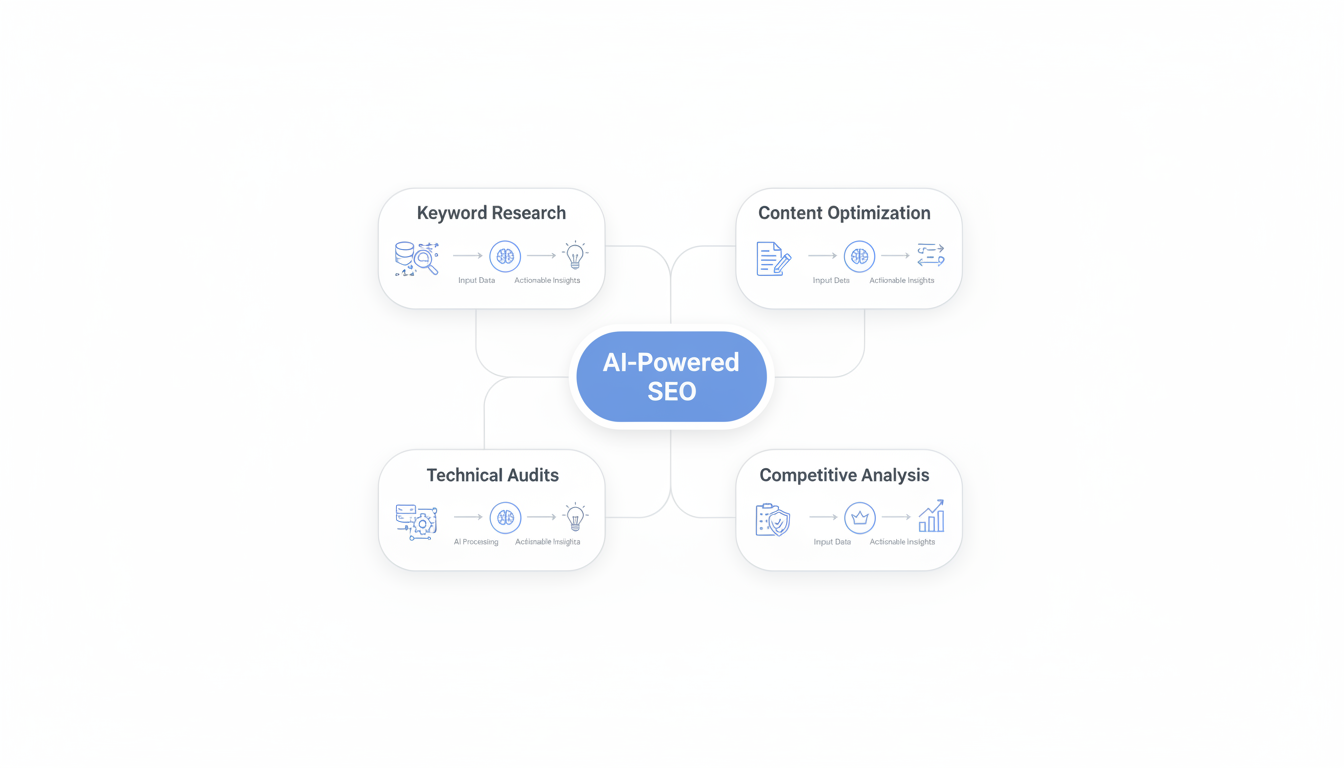
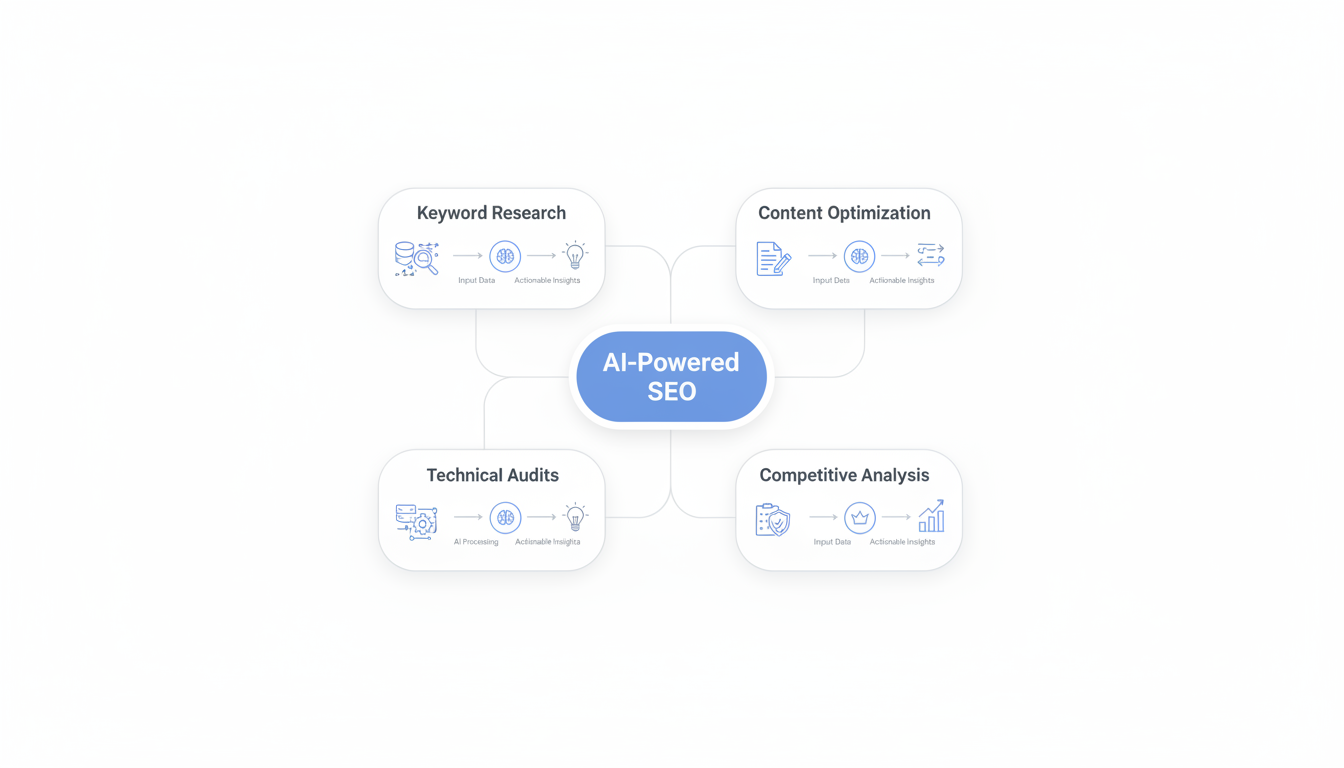
AI tools excel at specific SEO tasks, accelerating work while improving accuracy.
AI enhances keyword research by:
What previously took days of spreadsheet work now completes in hours.
AI assists content optimization through:
These tools help optimize existing content and guide new content creation, particularly for on-page AEO optimization strategies.
AI improves technical audits by:
Technical SEO at scale becomes manageable with AI assistance.
AI accelerates competitive research:
Better competitive intelligence informs more effective strategy, especially when analyzing AI-powered search engines comparison data.
Specific AI applications deliver immediate value.
AI tools create comprehensive content briefs by analyzing top-ranking content for target keywords. These briefs include:
Teams spend less time researching and more time creating.
AI generates meta descriptions at scale:
Manual meta description writing for large sites becomes impractical without AI assistance.
AI identifies internal linking opportunities by:
Better internal linking distributes authority and improves crawlability.
AI helps prioritize content updates:
Systematic content maintenance keeps sites competitive.
Several tool categories support AI-powered SEO.
Major SEO platforms have integrated AI capabilities:
These platforms combine traditional SEO data with AI processing. For businesses evaluating investments, understanding your AI search optimization budget helps determine which platform fits your needs.
Content creation tools support SEO workflows:
Writing assistants accelerate content production when used with human oversight.
Purpose-built tools address specific needs:
Specialized tools often outperform general-purpose alternatives for specific tasks. Many organizations also leverage dedicated AEO software for answer engine optimization.
Effective AI use requires intentional approaches.
AI tools make mistakes. Human review ensures:
Use AI for efficiency, not replacement of judgment.
Before publishing or implementing AI recommendations:
Trusting AI outputs without verification creates risk.
The most effective workflows leverage both:
Neither performs optimally alone.

As AI integrates into workflows:
Systematic documentation improves consistency and enables optimization.
AI accelerates SEO work significantly. Tasks that took hours now complete in minutes. This efficiency gain is competitive—teams not using AI fall behind.
AI assists but doesn't replace expertise. Strategic thinking, quality judgment, and brand understanding remain human responsibilities. AI handles processing; humans handle decisions.
Tool selection matters. Different tools excel at different tasks. Build a stack that addresses your specific needs rather than expecting one tool to do everything.
Process development enables value. Raw AI capability only delivers results through thoughtful integration into workflows. Invest time in building effective processes.
AI can draft content, but human editing improves quality and ensures brand alignment. AI-generated content without human review often lacks nuance, contains errors, and fails to differentiate from competitors. Use AI for efficiency in first drafts, then apply human expertise for final quality.
Start with AI features in tools you already use. Most major SEO platforms have added AI capabilities. Once comfortable, evaluate specialized tools for specific needs like content optimization or technical auditing. Avoid purchasing multiple tools before validating value from initial investments.
Google evaluates content quality regardless of how it's created. Low-quality AI content may struggle to rank, but well-edited AI-assisted content performs comparably to human-written content. Focus on quality, accuracy, and user value rather than production method.
By submitting this form, you agree to our Privacy Policy and Terms & Conditions.