February 19, 2026


Authoritative comparison lists have become one of the highest-priority ranking factors for SearchGPT and other AI search engines. While traditional SEO focused on ranking individual pages, AI search optimization requires being cited as a trusted source—and inclusion in expert-curated "best of" lists dramatically increases your citation likelihood.
This guide covers how to identify valuable lists, secure placements, and create your own authoritative content that AI systems reference.
AI search engines don't show ten blue links—they synthesize answers from one to three sources they consider most authoritative. Being featured in respected comparison lists signals credibility that AI systems actively seek.
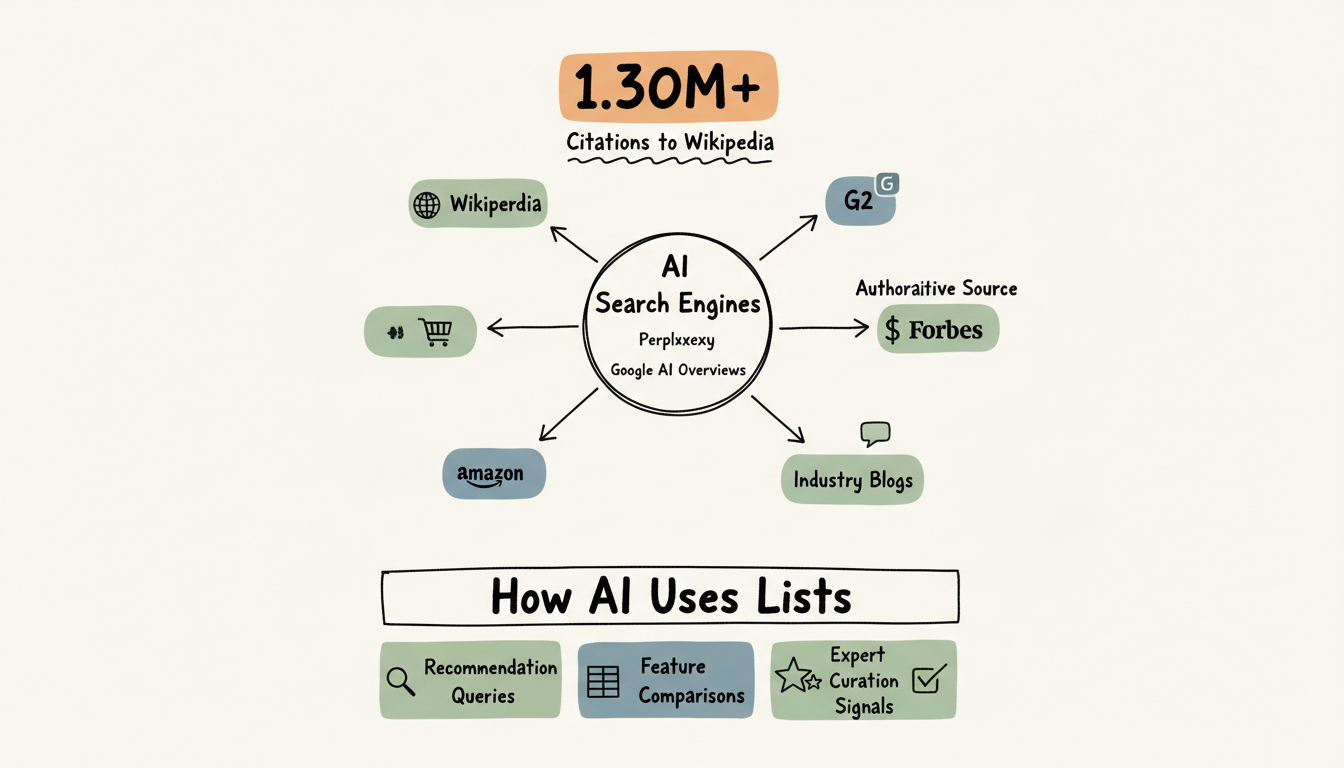
Research shows AI platforms heavily favor established sources. ChatGPT has generated over 1.3 million citations to Wikipedia alone, followed by industry authorities like G2, Forbes, and Amazon. When your brand appears alongside these trusted sources in comparison lists, AI systems infer similar authority.
SearchGPT, Perplexity, and Google AI Overviews draw from comparison content differently than traditional search:
Expert-curated "Best of" lists rank among the most impactful content types for AI visibility because they provide the structured, authoritative recommendations AI systems need to answer user questions confidently.
Strategic list identification determines where your outreach efforts will yield results.
Start with publications covering your industry:
Find where competitors already appear:
Use search queries to find relevant lists:
The lists ranking for these queries represent your priority outreach targets.
Getting listed requires systematic outreach combining relationship building with value demonstration.
Before contacting list publishers, understand their content:
This research shapes pitches that address publisher needs rather than generic requests.
Effective outreach demonstrates mutual value:
1. Lead with relevance: Explain specifically why your product/service fits their list criteria
2. Provide comparison data: Offer specific differentiators that make your inclusion valuable to their readers
3. Share proof points: Include customer testimonials, case studies, or metrics that validate your position
4. Make inclusion easy: Provide a brief company description, key features, and imagery they can use
Long-term relationship development yields better results than cold outreach:
Publishers who know your brand are significantly more likely to include you in future lists.
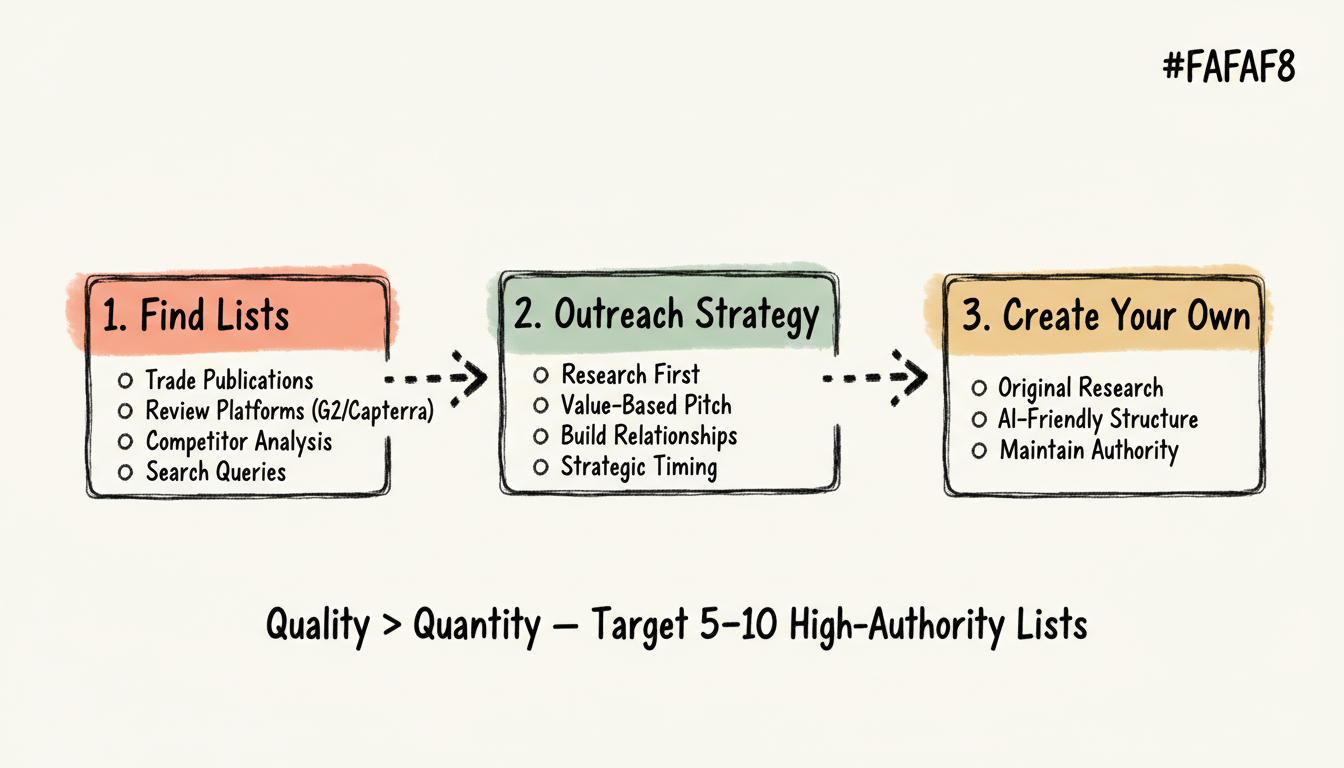
Strategic timing improves success rates:
Publishing your own comparison content positions your brand as the authoritative source AI systems cite.
Lists backed by original data earn more citations:
AI systems distinguish original research from rehashed information. Content offering genuinely new data points earns "Information Gain"—a critical metric for generative AI search engine optimization.
Format lists for AI extraction:
Keep lists authoritative over time:
Not all lists provide equal value. Evaluate opportunities based on quality indicators.
High-value lists typically feature:
Prioritize lists that align with your target audience:
Some lists provide minimal value or potential harm:
Track the value your list placements generate.
Monitor immediate impact:
Measure impact on AI search performance using AEO optimization metrics:
List impact often appears indirectly:
Establish clear goals for your list placement efforts.
Set realistic placement goals:
Track quality improvements:
Connect list strategy to business results:
Timeline varies significantly. Cold outreach to established publications may take 3-6 months. Relationship-based approaches with regular publishers can yield placements within weeks. Creating your own authoritative lists provides immediate control.
Proceed cautiously with paid placements. Some legitimate "sponsored" features exist on quality sites, but many pay-for-play lists provide minimal value and can signal low quality to AI systems. Editorial-based inclusion generally carries more weight.
Quality matters more than quantity. Focus on 5-10 high-authority lists in your primary category rather than pursuing dozens of lower-quality placements. Expand coverage after securing positions on priority targets.
Yes. Platforms like G2, Capterra, and TrustRadius function as authoritative lists for AI systems. Optimize your profiles on these platforms as part of your overall list strategy.
By submitting this form, you agree to our Privacy Policy and Terms & Conditions.