
February 19, 2026


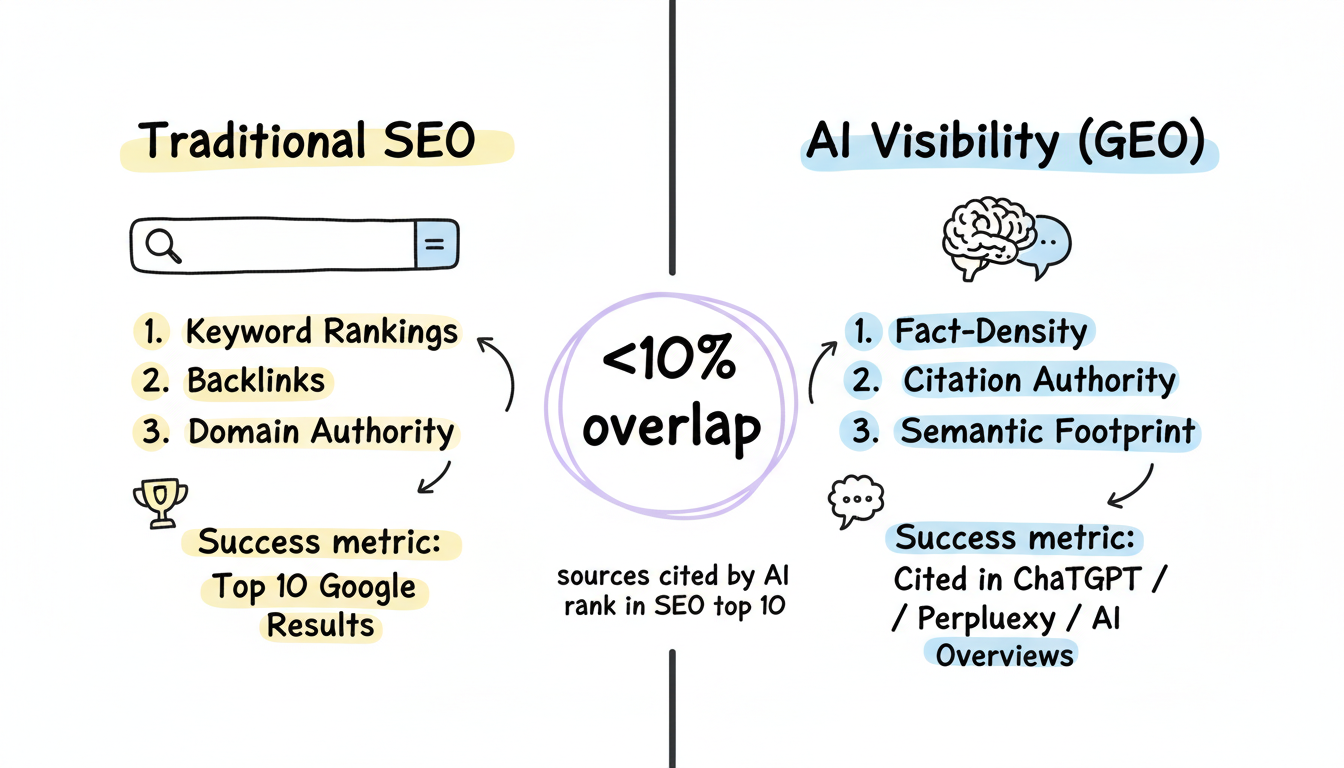
As AI-powered search transforms how users discover information, brands need more than traditional SEO tactics. The best generative engine optimization (GEO) strategies focus on making content retrievable, re-rankable, and reference-worthy across ChatGPT, Perplexity, Google AI Overviews, and other AI engines.
According to Go Fish Digital's GEO strategies guide, GEO strategies focus on expanding a brand's semantic footprint, improving fact-density, and enhancing structured data signals so AI systems recognize and use content as authoritative input.
According to eMarketer's 2026 analysis, fewer than 10% of sources cited in ChatGPT, Gemini, and Copilot rank in the top 10 Google organic search results for the same query—meaning SEO tactics alone won't guarantee visibility in AI. Success now depends on treating AI as a branding channel and managing GEO vs SEO separately.
The visibility gap:
Platform | Source Selection Criteria | SEO Ranking Correlation |
ChatGPT | Authority, recency, fact-density | Low (<10% overlap) |
Perplexity | Citations, source diversity | Moderate |
AI Overviews | Structured data, E-E-A-T | Higher but distinct |
Claude | Balanced sourcing, authority | Low |
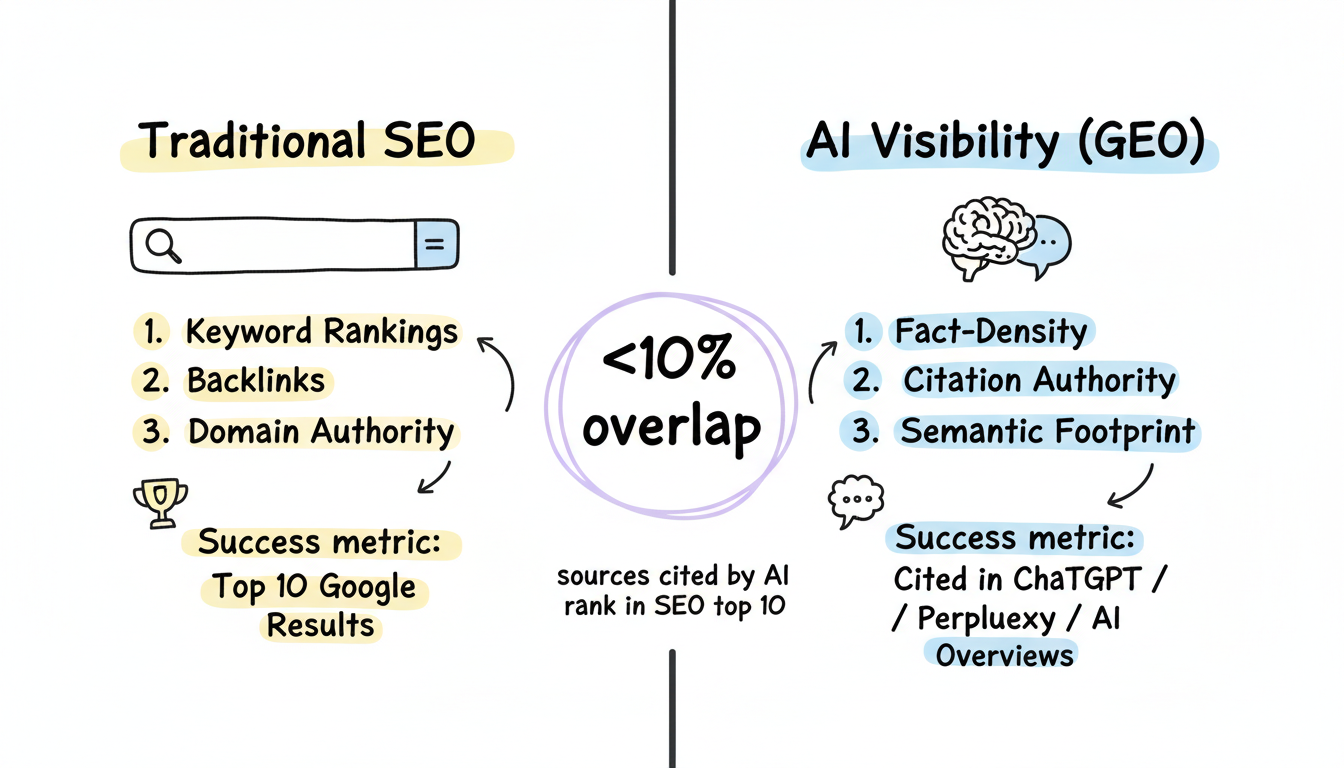
According to Profound's 10-step GEO framework, GEO is a comprehensive strategy to improve AI visibility, answer engine optimization, and citation authority across every customer touchpoint. Technical signals, content optimization, and authority building work together.
Three pillars of effective GEO:
According to Go Fish Digital, expanding semantic footprint means publishing new content and optimizing existing pages to cover broader topic clusters and adjacencies. This creates a comprehensive topical presence AI systems recognize.
Implementation approach:
Step A: Map Adjacencies to Your Sitemap
Step B: Page-Level Gap Audit
According to Go Fish Digital, this two-stage method turns your sitemap into a semantic optimization blueprint—helping pages survive retrieval, reranking, and grounding to get cited in AI answers.
According to Medium's GEO citation strategies analysis, when AI models select citations, peer-reviewed journals, government databases, and transparent publications are trusted more. Content with high fact-density earns more citations.
Fact-density tactics:
Tactic | Why It Works | Implementation |
Include statistics | Verifiable claims | Add data points with sources |
Cite authoritative sources | Builds trust chains | Reference industry publications |
Add specific numbers | Reduces ambiguity | Replace vague terms with specifics |
Include dates and timeframes | Demonstrates currency | Update content with recent data |
Provide definitions | Aids AI understanding | Define key terms clearly |
According to To The Web's GEO guide, an authoritative tone makes content up to 30% more likely to appear in AI-generated answers. Combining authority with factual density maximizes citation potential.
According to Backlinko's GEO guide, GEO helps ensure your content and brand show up in AI-generated answers—not just traditional search results. Building citation authority requires presence across sources AI systems trust.
Authority building tactics:
According to LinkedIn's GEO analysis, increasing branded mentions in high-authority publications that likely feed into AI models—including Wikipedia, which many models use as a trusted source—drives citation frequency.
According to Peec AI's GEO guide, you need to optimize content for machine readability and build the external presence that drives citations. AI-friendly structure helps content survive the retrieval and selection process.
Structural optimization:
Answer-ready formatting:
Technical signals:
According to To The Web, content becomes AI-friendly by designing short, self-contained answer blocks instead of long narrative pages that AI systems struggle to parse.
According to Profound, continuous testing and optimization are essential as AI engines evolve. Monitoring provides the feedback loop needed to improve citation performance through an AI search measurement framework.
Monitoring framework:
Metric | What to Track | Tools |
Citation frequency | How often AI mentions your brand | Profound, Ahrefs Brand Radar |
Citation context | Quality and accuracy of mentions | Manual audits, sentiment tools |
Competitive share | Your visibility vs. competitors | Share of voice tracking |
Source attribution | Which content earns citations | Citation source analysis |
Traffic from AI | Visitors referred by AI platforms | Analytics with AI source segments |
According to NoGood's GEO tools analysis, teams can identify which queries trigger AI answers, see how often their brand is cited across platforms like ChatGPT, Gemini, and Claude, and understand which sources AI systems trust.
According to Backlinko, the way people search with AI tools is fundamentally different from traditional search. Real questions from real people often make the best content topics because they're the same questions people ask AI tools.
Query alignment tactics:
According to BeOmniscient's GEO tools guide, by integrating GEO insights into existing marketing tools, you can improve search visibility and reshape content to match what AI systems are surfacing. Organizations can leverage specialized AEO tools to streamline this optimization process.
According to eMarketer, success depends on adapting fast as AI models evolve. Several common mistakes undermine GEO effectiveness.
Mistakes to avoid:
According to Medium's citation strategies analysis, building trust alignment means framing content in ways AI agents can interpret as reliable while meeting human expectations.
According to Go Fish Digital, GEO is about making content retrievable, re-rankable, and reference-worthy inside AI-generated answers. The complete strategy integrates all elements.
Implementation roadmap:
Phase 1: Foundation (Weeks 1-4)
Phase 2: Content Optimization (Weeks 5-12)
Phase 3: Authority Building (Ongoing)
Phase 4: Monitoring and Iteration (Continuous)
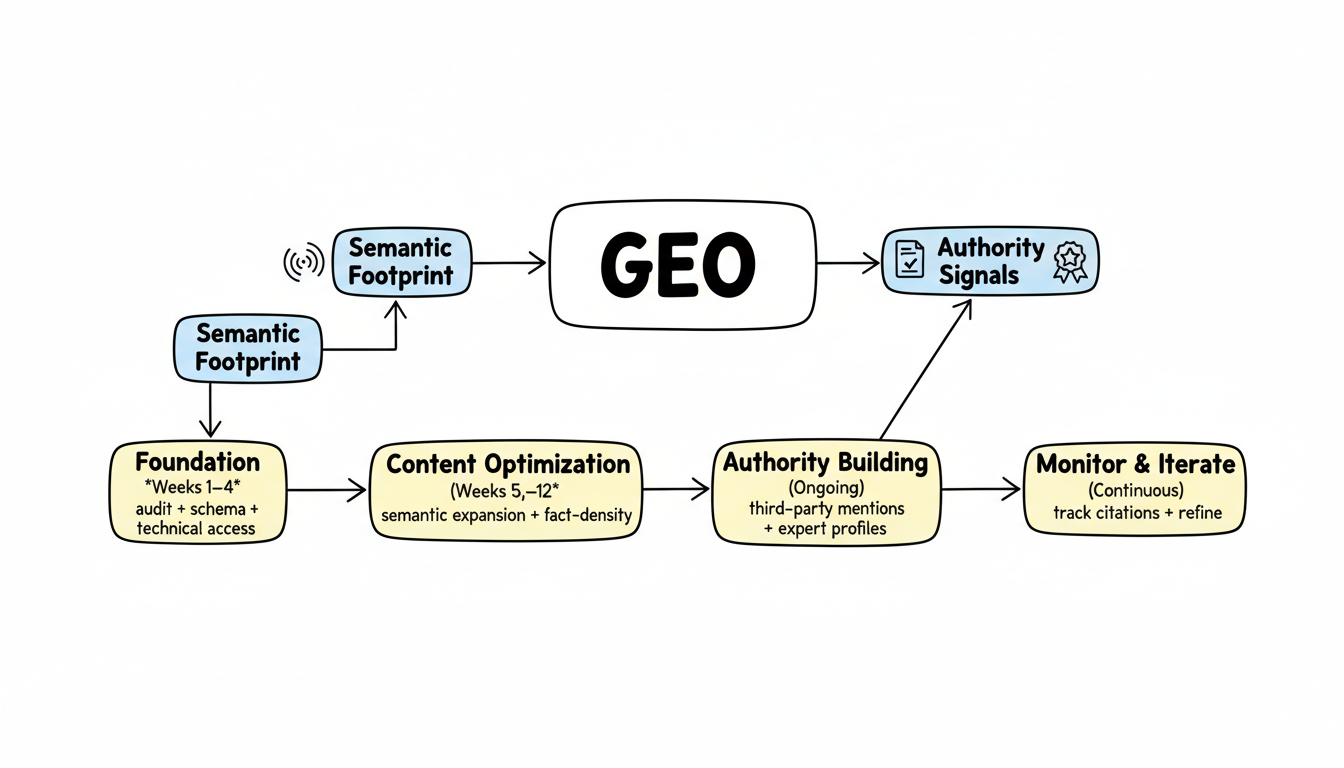
The best GEO strategy combines multiple optimization approaches:
According to Profound, GEO is now essential to secure citations in AI-powered answers and drive increased revenue and mindshare from LLMs. Brands that implement comprehensive GEO strategies capture visibility that competitors miss.
By submitting this form, you agree to our Privacy Policy and Terms & Conditions.



