February 19, 2026


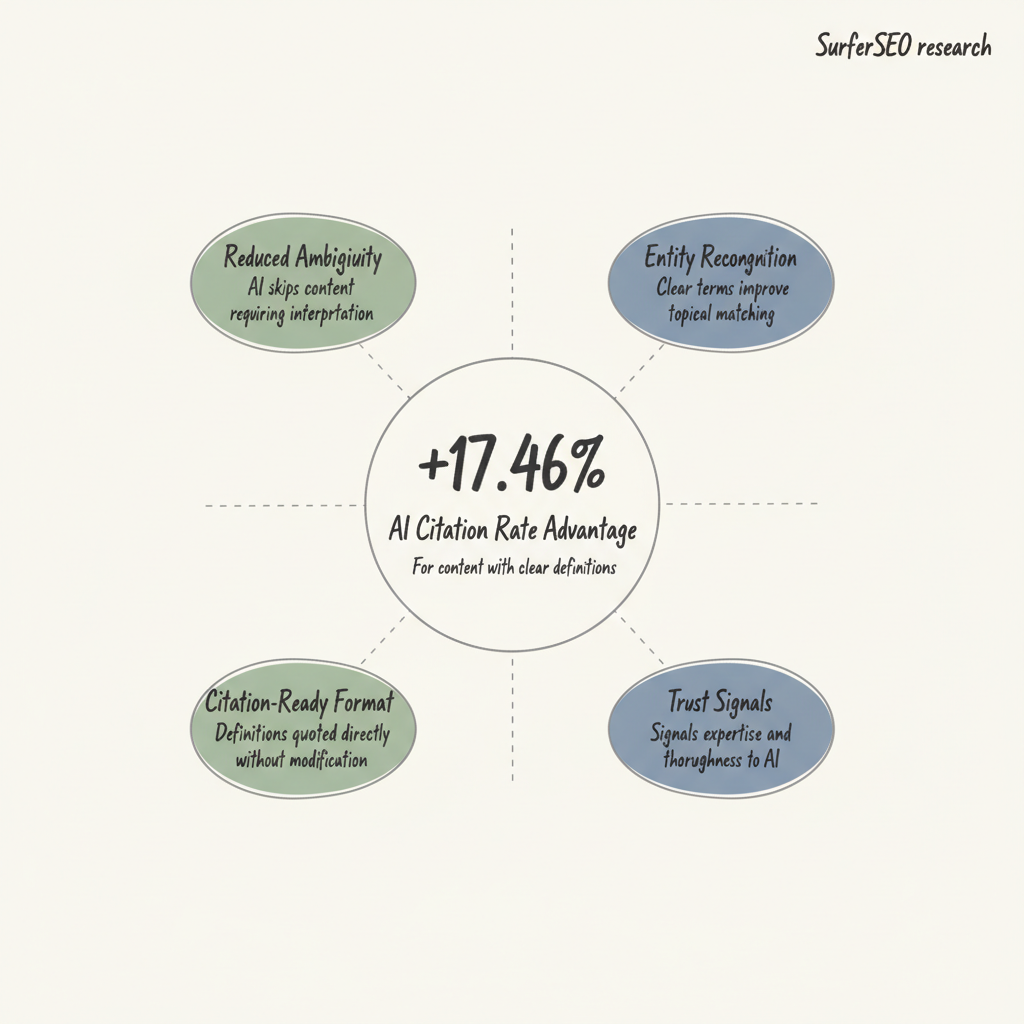
Answer engine optimization research from SurferSEO reveals a compelling statistic: content with clear, well-structured definitions shows a 17.46% advantage in AI citation rates compared to content without explicit term clarification. This measurable benefit makes definition optimization one of the most actionable AEO tactics available.
Understanding why definitions matter—and how to implement them effectively—can significantly improve your content's visibility across AI-powered search platforms.
AI systems face a fundamental challenge when generating responses: they must synthesize information from multiple sources while ensuring accuracy and comprehensiveness. Content that explicitly defines key terms provides AI with high-confidence, quotable material that requires minimal interpretation.
When your content clearly states "X is defined as Y," AI systems can:
This reliability makes definition-rich content particularly valuable for AI citation. The 17.46% advantage reflects how frequently AI systems select sources that reduce their synthesis burden through explicit clarification, similar to how effective AEO optimization strategies prioritize content clarity and structure.
SurferSEO's analysis examined content performance across AI Overview citations and found that pages including explicit definitions for their primary topics earned citations 17.46% more frequently than comparable content without such definitions.
This advantage compounds across multiple factors:
Reduced Ambiguity: AI systems avoid content requiring interpretation when clearer alternatives exist. Definitions eliminate ambiguity that might otherwise disqualify content from citation.
Improved Entity Recognition: Clear definitions help AI systems understand exactly what entities your content addresses, improving topical matching for relevant queries. This becomes especially important when distinguishing AEO vs GEO vs SEO strategies and their unique optimization requirements.
Citation-Ready Format: Well-structured definitions provide ready-made snippets that AI can quote directly without modification.
Trust Signals: Content that takes time to define terms signals expertise and thoroughness—qualities AI systems associate with authoritative sources.
Effective AEO definitions follow specific structural patterns that maximize citation potential.
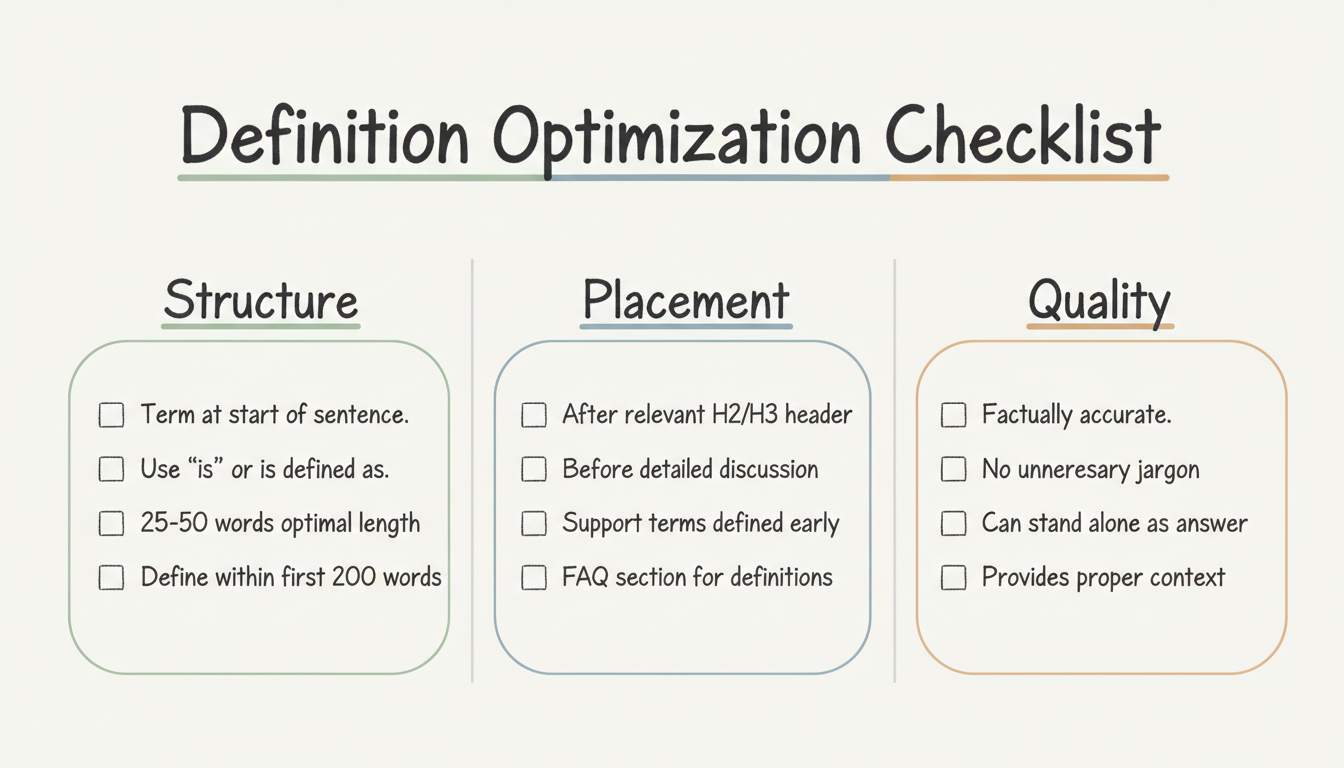
Place the term being defined at the start, followed immediately by the definition:
"Answer engine optimization is the strategic practice of structuring content to earn citations in AI-generated responses across platforms like ChatGPT, Perplexity, and Google AI Overviews."
This format mirrors how dictionary entries work, making it instantly recognizable to both humans and AI systems. Understanding what an answer engine is helps contextualize why this definitional approach proves so effective.
For technical terms requiring precise clarification:
"Information gain is defined as the unique value content provides beyond what exists in other indexed sources."
The explicit "is defined as" phrase signals definitional intent, increasing the likelihood of extraction by AI systems.
For terms requiring situational context:
"In the context of AI search optimization, citations refer to instances where AI systems directly reference or quote content from a specific source when generating responses."
This approach clarifies scope while providing definition, useful for terms with multiple meanings across domains.
The optimal definition length falls between 25-50 words. Longer definitions lose quotability; shorter definitions may lack sufficient context. AI systems favor definitions they can extract and present without truncation.
Where definitions appear affects citation probability as much as how they're written.
Near the Top: Place definitions for your primary topic within the first 200 words. AI systems scanning for authoritative answers often weight early-appearing definitions more heavily.
Following Headers: Position definitions immediately after H2 or H3 headings containing the term being defined. This structural clarity helps AI systems map definitions to specific topics, much like how question-based headers for AEO provide clear structural signals.
Before Deep Dives: Define terms before extensive discussion rather than after. Readers (and AI systems) benefit from understanding terminology before encountering detailed analysis.
In Dedicated Sections: For content covering multiple technical concepts, consider a "Key Terms" or "Definitions" section early in the article.
"Schema markup is structured data code added to web pages that helps search engines understand content context and meaning."
"Topical authority refers to a website's established credibility and comprehensive coverage within a specific subject area."
"Direct traffic describes visitors who access a website by typing the URL directly or using bookmarks, without referral from search engines or other websites."
"Canonicalization is the process of selecting one preferred URL when multiple URLs contain identical or similar content."
Use this checklist when creating definition-optimized content:
Structure
Placement
Quality
Adding clear definitions to existing content represents one of the lowest-effort, highest-impact AEO improvements available. The 17.46% citation advantage requires no technical changes, expensive tools, or extensive rewrites—just thoughtful placement of explicit term clarifications.
For sites producing educational or technical content, systematic definition optimization across existing pages can yield measurable visibility improvements within weeks as AI systems re-index and re-evaluate content quality signals.
By submitting this form, you agree to our Privacy Policy and Terms & Conditions.