
February 19, 2026


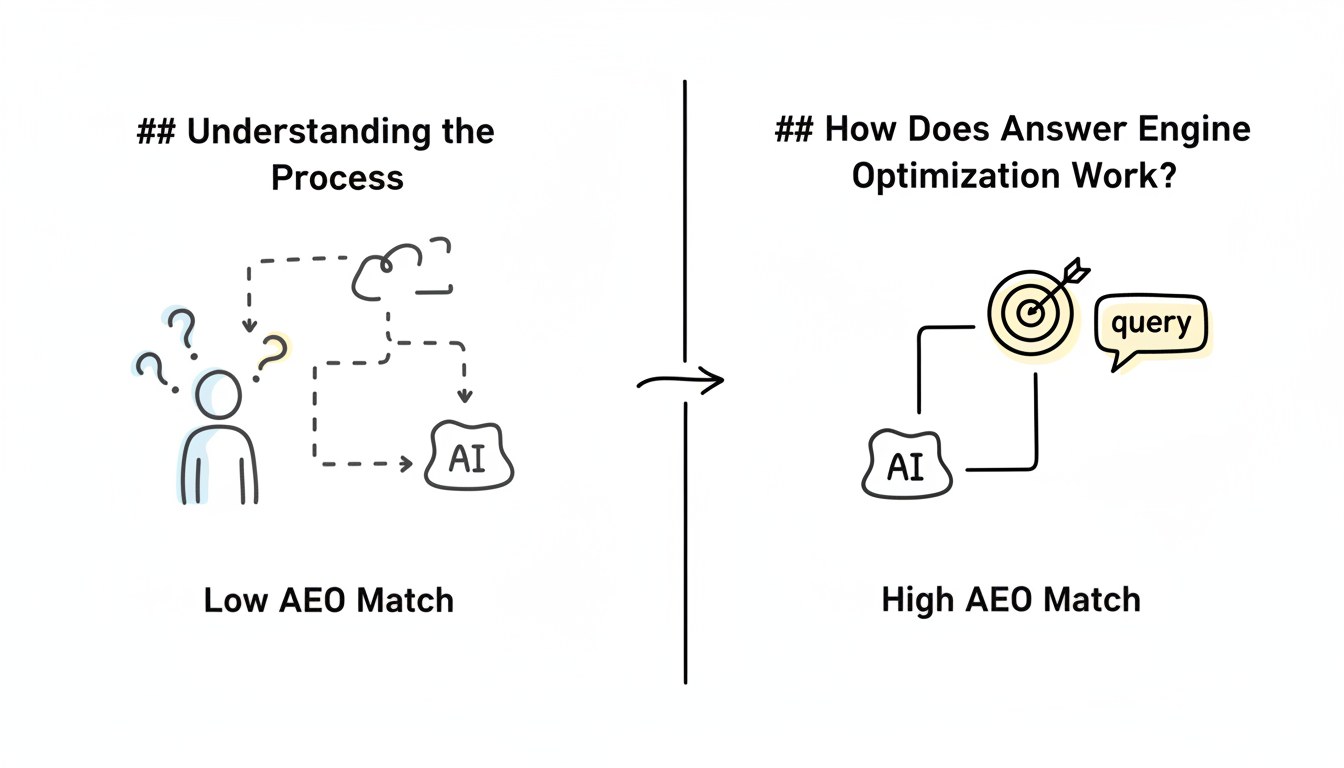
Traditional content headers like "Our Approach" or "Key Features" worked for skimmable web pages. But AI answer engines process content differently. They match user queries to content that directly addresses questions. Question-based headers align your content structure with how users phrase conversational queries—and how AI systems extract answers.
This guide explains why question-based headers matter for AEO and how to implement them effectively.
Answer engines are designed to respond to questions. When your content headers mirror the exact questions users ask, AI systems can identify relevant answers more accurately.
Users increasingly phrase searches as questions. Voice search queries average 29 words and almost always include question words—what, how, why, when, where. ChatGPT and Perplexity prompts follow similar conversational patterns.
When your H2 reads "What Is Answer Engine Optimization?" and a user asks "what is answer engine optimization," the match is direct. AI systems recognize the header as signaling relevant content for that query. This direct alignment is crucial for answer engine optimization vs generative engine optimization strategies.
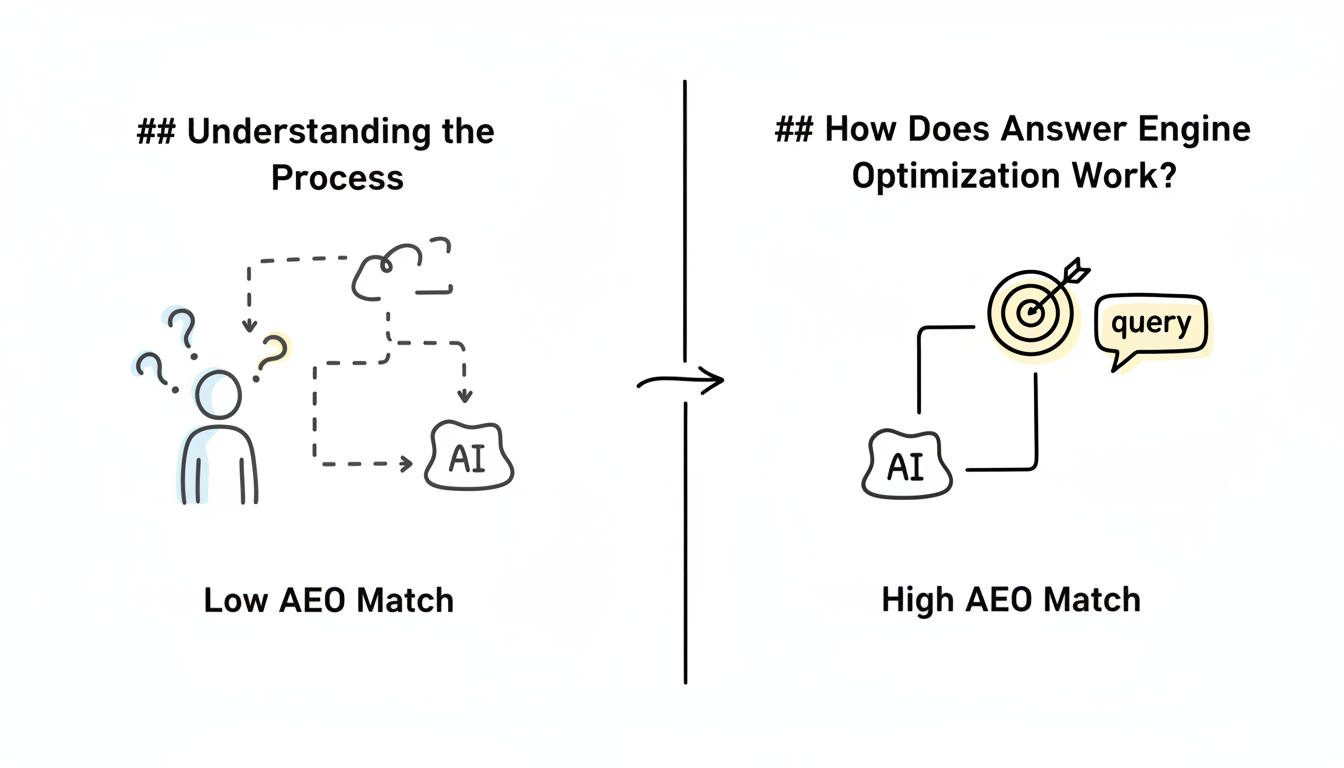
AI systems extract content in chunks. A question header followed by a direct answer creates a clear extraction boundary. The AI knows exactly which content block addresses which question.
Compare these structures:
Vague header:
## Understanding the Process
The process involves several steps that help organizations...
Question header:
## How Does Answer Engine Optimization Work?
Answer engine optimization works by structuring content for AI extraction...
The question header signals intent. The first sentence after it delivers the answer. AI systems extract this pattern reliably.
Featured snippets and "People Also Ask" boxes pull content that directly answers questions. Question headers increase the likelihood your content appears in these prominent positions—both in traditional search and AI-generated responses. Organizations working with a generative engine optimization agency often prioritize this structured approach to maximize visibility across both traditional and AI-powered search results.
Not all question headers perform equally. Effective question headers follow specific patterns.
Write headers as users would ask them. Avoid keyword-stuffed phrases that sound unnatural.
Less effective: "What Are Best AEO Strategy Tips Techniques Methods?"
More effective: "What Are the Best Practices for AEO in 2026?"
Natural language headers match natural language queries. AI systems trained on conversational data recognize and prefer natural phrasing.
The most effective question headers begin with:
Each question word signals a specific answer type. "How" signals steps or processes. "Why" signals reasons. AI systems use these cues to match content with query intent.
Ensure the question contains your main topic or keyword naturally:
This creates topical clarity for both AI systems and human readers. Understanding the fundamental differences between SEO vs AEO helps inform which question patterns work best for your content goals.
The content immediately after your question header matters as much as the header itself. AI systems look for direct answers in the first 40-60 words following a header.
Answer the question immediately. Don't build up to the answer—lead with it.
Ineffective approach:
## Why Does AEO Matter for B2B Companies?
In recent years, the search landscape has evolved significantly.
Many factors have contributed to this change. When we consider
the various elements involved, it becomes clear that...
Effective approach:
## Why Does AEO Matter for B2B Companies?
AEO matters for B2B companies because 44% of professional buyers
now use AI tools for research before engaging vendors. Without
AEO optimization, B2B brands become invisible during the
critical evaluation phase.
The second approach delivers the answer immediately, then provides supporting context. AI systems can extract a complete, useful answer from the first sentences.
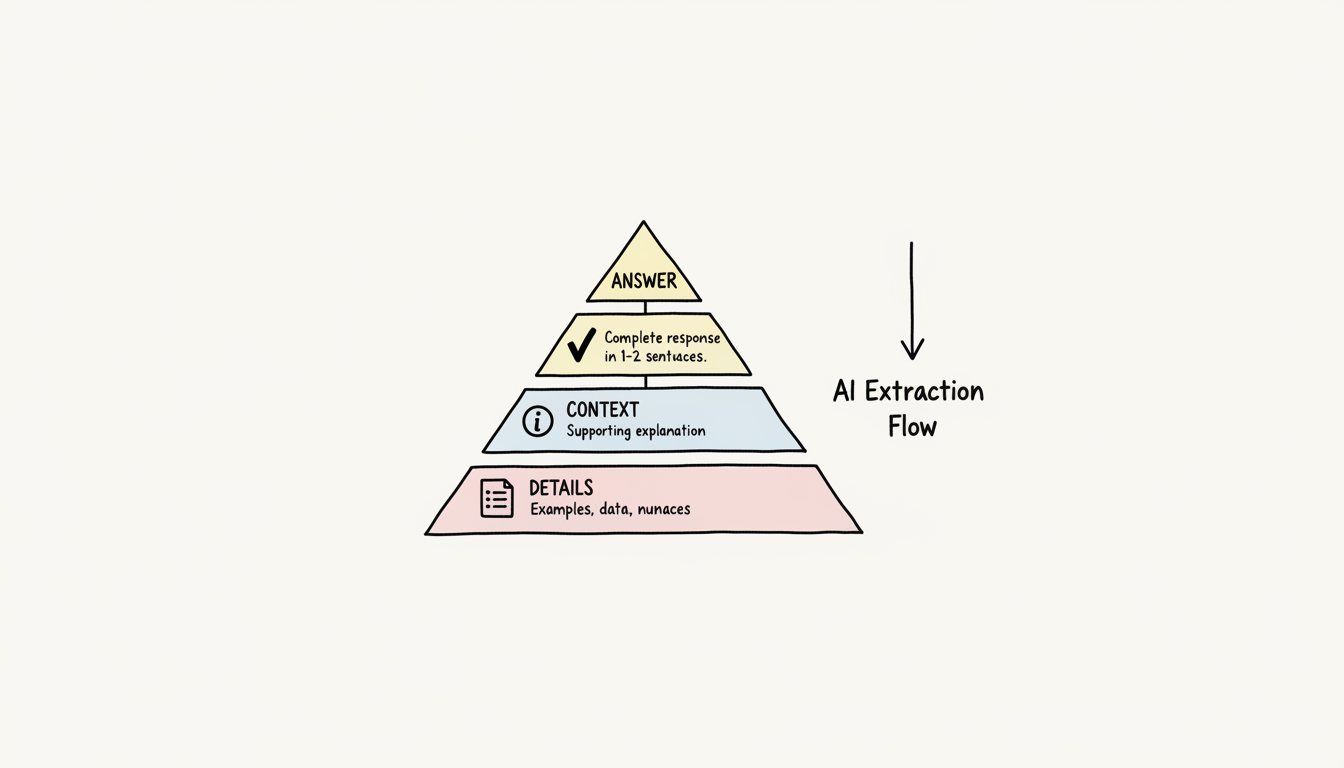
Structure content after question headers using the inverted pyramid:
This structure ensures AI extraction captures complete answers even when pulling only the first paragraph.
Balance question headers with other structural elements. Not every header needs to be a question.
Use question headers for:
Use declarative headers for:
Think beyond single questions. Users asking "What is AEO?" often follow with "How does AEO work?" and "Why does AEO matter?" Structure your content to address this natural progression.
The best AEO content in 2026 focuses on "conversational paths"—anticipating the second, third, and fourth questions users will ask after their initial query. Utilizing AEO checker tools can help identify which follow-up questions your content successfully addresses and where gaps remain.
Several patterns reduce question header effectiveness.
"What Is Marketing?" is too generic. "What Is Answer Engine Optimization for E-commerce?" is appropriately specific.
Rhetorical questions or questions you don't actually answer in the following content confuse AI extraction systems.
Questions packed with every possible keyword variation sound unnatural and perform poorly. Write for humans first—AI systems trained on natural language will follow.
Mixing question headers randomly throughout content without logical flow disrupts both reader experience and AI content mapping. Use questions strategically where they add clarity.
You don't need to rewrite everything. Start with these steps:
Incremental restructuring often produces meaningful AEO improvements without complete rewrites.
No. Use question headers strategically for explanatory content, definitions, and processes. Mix with declarative headers for action sections, lists, and conclusions. The goal is clarity, not uniform formatting.
Question headers generally improve traditional SEO as well. They align with voice search queries, improve featured snippet capture, and create clearer content structure—all factors that benefit organic rankings alongside AEO performance.
By submitting this form, you agree to our Privacy Policy and Terms & Conditions.



