
February 19, 2026


Featured snippets have evolved from an SEO bonus into a critical gateway to AI visibility. In 2026, winning position zero doesn't just capture clicks—it positions your content as "seed data" for Google AI Overviews and other answer engines. Content that earns featured snippets has a 75% higher chance of becoming the primary citation in AI-generated responses.
Here's how to optimize for featured snippets in the AI search era.
According to ClickRank.ai's analysis of AI SEO tactics, featured snippets have become the primary source material for AI Overviews. Google's AI systems use existing snippet content as trusted, pre-validated answers—making snippet optimization a direct path to AI citation.
The featured snippet-AI connection:
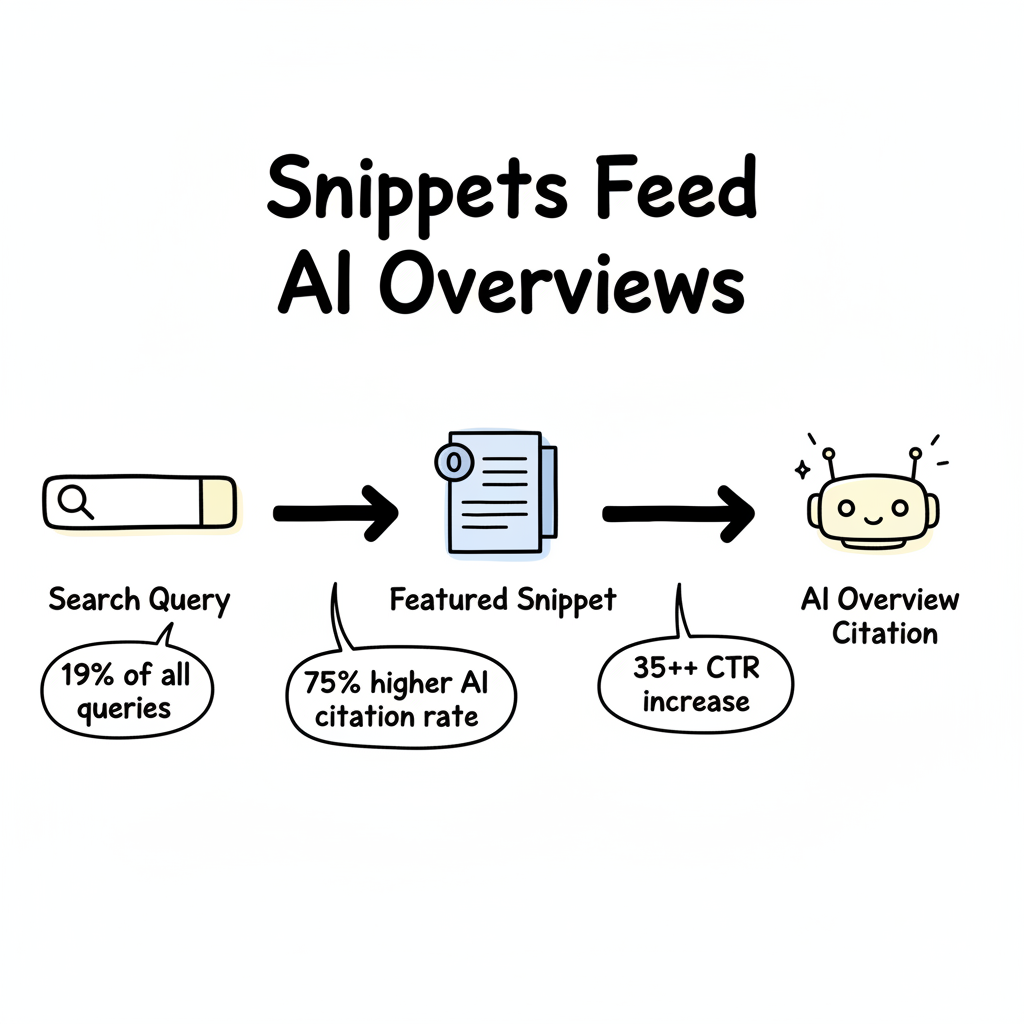
This relationship means optimizing for featured snippets simultaneously optimizes for AI visibility, a key distinction in SEO vs AEO strategies.
According to ALM Corp's SEO trends report for 2026, Google's internal "answerability score" evaluates how well content directly answers queries. Content structured for extraction earns snippets more consistently.
Answer-first content structure:
Example format:
## How much does [service] cost?

[Service] typically costs $X-$Y per month for standard plans.
[1-2 sentences of context]. [Supporting details below].

| Plan | Price | Features |
|------|-------|----------|
| ... | ... | ... |
This structure signals to Google exactly where the answer lives.
Different snippet types require different content lengths. According to SEOProfy's research on featured snippet optimization, paragraph snippets perform best at specific word counts.
Snippet type guidelines:
Snippet Type | Optimal Length | Best Format |
Paragraph | 40-60 words | Direct answer with context |
List | 4-8 items | Numbered or bulleted steps |
Table | 3-5 rows | Comparison or specification data |
Definition | 30-50 words | "X is..." format |
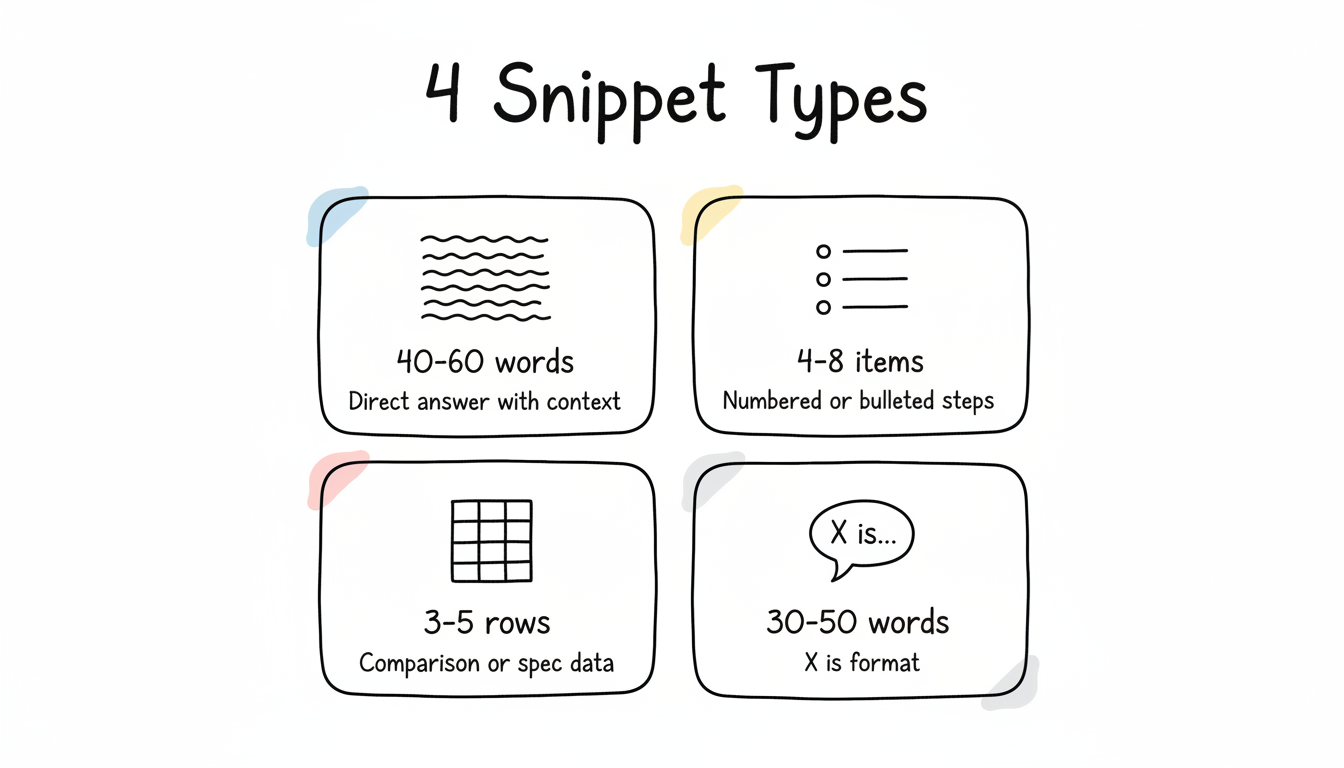
Why 40-60 words works: This range provides enough context for a complete answer while remaining concise enough for Google to extract cleanly. Longer answers get truncated; shorter answers may lack sufficient context.
According to Julius Trujillo's analysis of AI SEO opportunities, the fastest path to featured snippets is identifying and replacing weak existing snippets.
Weak snippet indicators:
Opportunity identification process:
Weak snippets represent immediate opportunities because Google actively seeks better answers. This approach is foundational to effective AEO marketing and helps position content for AI-generated answer extraction.
According to Search Engine Journal's enterprise SEO guidance, semantic H2/H3 structures help Google understand content hierarchy and extract specific passages.
Semantic structure best practices:
Header progression example:
H1: Complete Guide to [Topic]
  H2: What is [Topic]?
  H2: How does [Topic] work?
    H3: Step 1: [Process]
    H3: Step 2: [Process]
  H2: How much does [Topic] cost?
  H2: [Topic] vs [Alternative]
This structure creates multiple snippet opportunities within a single piece of content.
Featured snippets that feed AI Overviews share common characteristics. According to NoGood's analysis of AI search optimization, "citation-worthiness" determines whether content gets extracted.
Citation-worthy content characteristics:
What reduces citation-worthiness:
Content must be trustworthy enough for Google to confidently display as a direct answer. This principle underpins why GEO is the new SEO, as generative engines prioritize authoritative, well-structured information for answer synthesis.
According to SEO.com's featured snippet research, Google constantly tests snippet holders—a phenomenon called "answer volatility." Winning a snippet doesn't guarantee retention.
Volatility monitoring approach:
Retention tactics:
Snippet defense requires ongoing attention, not one-time optimization.
Structured data helps Google understand your content's purpose and extract appropriate passages. Implementing article schema for AI platforms increases the likelihood of content being selected as authoritative source material.
Priority schema types for snippets:
Schema Type | Snippet Impact |
FAQPage | Direct Q&A extraction |
HowTo | Step-by-step list snippets |
Article | Content type identification |
Speakable | Voice search snippet eligibility |
Implementation note: Schema doesn't guarantee snippets but provides explicit signals about content structure that improve extraction accuracy.
Track whether snippet optimization improves overall AI visibility.
Key metrics:
Monitoring cadence:
Featured snippet optimization has become essential for AI search visibility:
The brands that master featured snippet optimization capture visibility in both traditional search and AI-generated answers—doubling their search presence from a single optimization effort.
By submitting this form, you agree to our Privacy Policy and Terms & Conditions.



