February 19, 2026


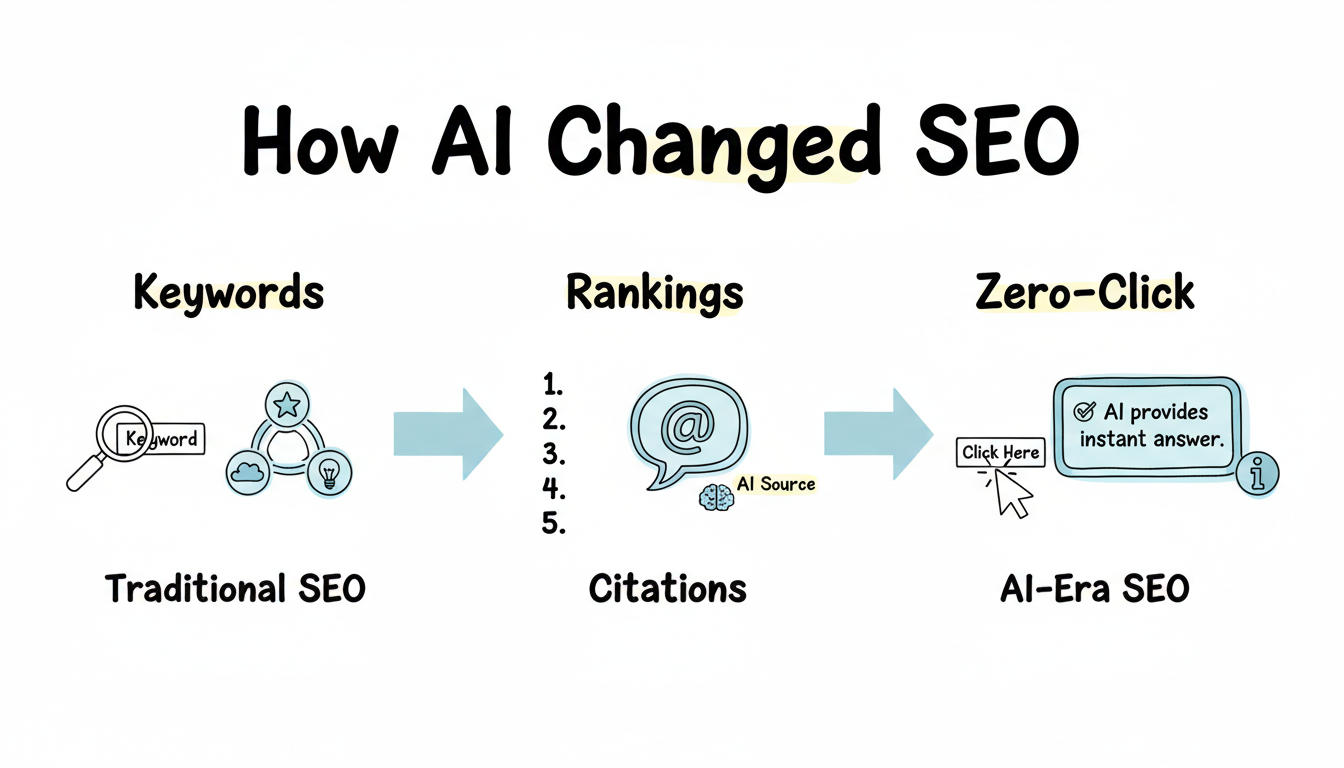
Generative AI has fundamentally changed how search works. Google's AI Overviews now appear for most informational queries. ChatGPT and Perplexity handle billions of search-like prompts daily. Users increasingly expect answers—not lists of links to explore.
For SEO professionals, this shift creates both challenges and opportunities. The fundamentals of search optimization remain relevant, but the tactics, measurements, and competitive landscape have transformed. Understanding how generative AI for SEO determines whether your strategy captures visibility or loses it.
Google's AI Overviews (formerly Search Generative Experience) now dominate the SERP for informational queries. Instead of ten blue links, users see AI-generated summaries that compile information from multiple sources.
Interest in "AI overview" has increased 99x over the past five years. The feature affects how users interact with search results—and fundamentally changes what "ranking" means. Learning how to use Google AI Overview effectively helps optimize for this new search landscape.
The impact on traditional SEO:
ChatGPT handles over 2.5 billion prompts daily. Many of these prompts are search queries—users asking questions they would have previously Googled. Perplexity, Claude, and other AI platforms capture additional search volume.
This represents genuine market share loss for traditional search. When someone asks ChatGPT "best project management software for small teams," they're not typing that into Google.
What this means for SEO:
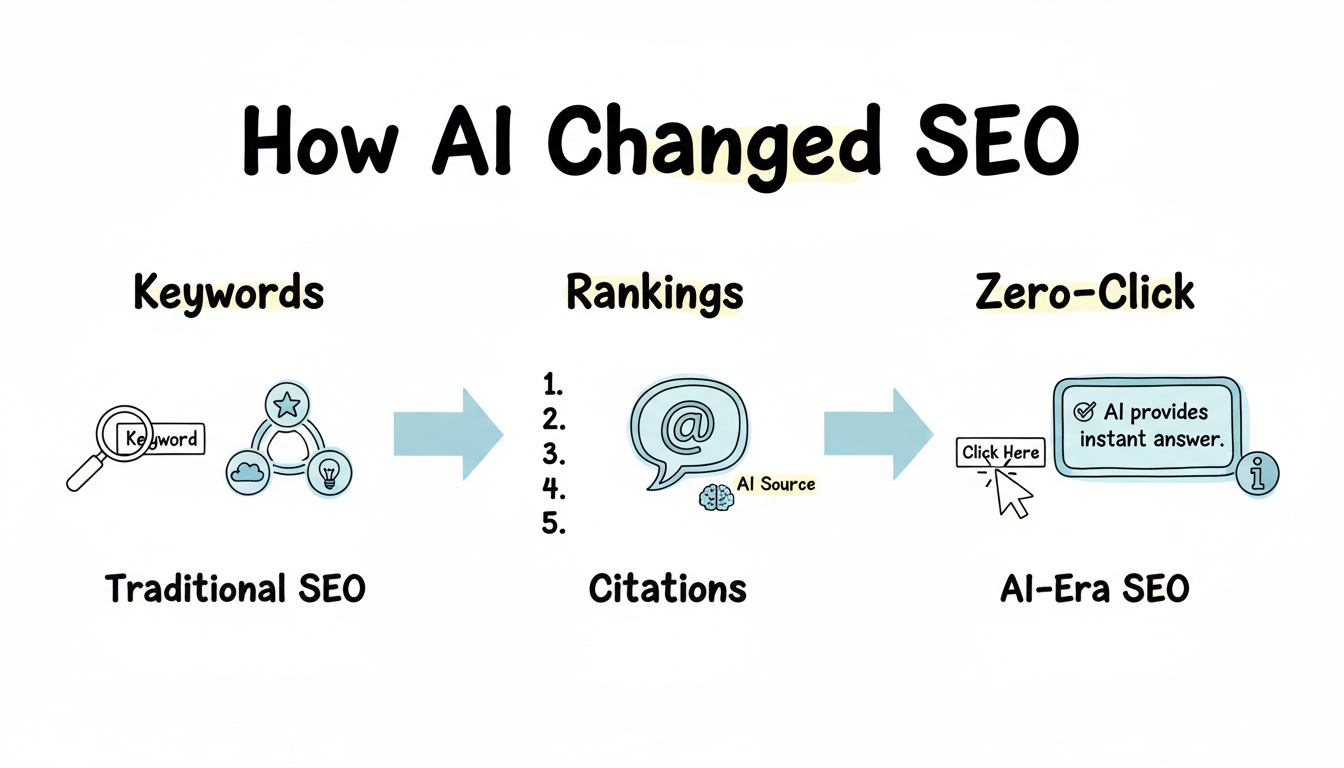
AI systems understand intent and context—not just keyword matches. Optimizing for "best CRM software" as a standalone keyword matters less than demonstrating comprehensive expertise across CRM-related topics.
The topic authority approach:
AI platforms prefer citing sources that show depth across related subjects. A brand with 20 interconnected articles on CRM topics appears more authoritative than a brand with one optimized page.
Build content clusters that cover topics comprehensively. Internal linking demonstrates topical relationships. Consistent publishing shows ongoing expertise.
Traditional SEO measured success through ranking positions. Position one captured the most clicks. Moving from position five to position three represented meaningful improvement.
Generative AI introduces a different success metric: citations. When AI Overviews or ChatGPT generate responses, they cite sources. Being cited—regardless of traditional ranking position—drives visibility. Understanding AEO optimization metrics helps track performance in this new paradigm.
What earns citations:
AI-generated answers often satisfy user queries without requiring clicks. Users see the information they need in the AI response itself.
This zero-click reality affects how SEO success is measured:
Google has clarified its stance on AI-generated content: quality matters, not production method.
Google's guidelines state:
What this means practically:
AI can assist content creation, but shortcuts produce poor results. Generic AI content—the kind that sounds good but lacks substance—doesn't rank well and doesn't earn AI citations.
Semrush analyzed over 20,000 articles and found AI content performs almost identically to human-written content—when quality is equal. The differentiator is value, not production method.
Despite the AI transformation, core SEO principles remain relevant:
Page speed, mobile optimization, crawlability, and structured data still affect how search engines and AI systems discover and evaluate content. Technical foundations support both traditional rankings and AI visibility.
Experience, Expertise, Authoritativeness, and Trustworthiness matter more than ever. AI systems evaluate these signals when deciding what to cite. Building genuine authority—through credentials, external validation, and demonstrated expertise—improves both SEO and AI visibility.
"Helpful content" standards apply regardless of how content is produced. Content that answers user questions, provides accurate information, and delivers unique value ranks better and earns more citations.
Sites that satisfy user intent—regardless of how users arrived—build the engagement signals both search engines and AI platforms value.
AI systems extract information from content. Clear, direct answers placed immediately after headers are more likely to be quoted and cited.
The formatting approach:
Schema markup helps AI systems understand content context. Organization, Person, Article, and FAQ schemas improve how AI platforms interpret and cite your content.
Structured data contributes approximately 10% to how AI systems rank and understand content. Proper implementation is now baseline SEO.
AI systems cross-reference brand information across sources. Inconsistent information—different company descriptions, varying contact details, conflicting credentials—undermines trust.
Audit and align entity information across all properties: website, Google Business Profile, LinkedIn, directories, and partner sites.
AI platforms favor recent, updated content. Establish systematic update schedules for priority pages. Refresh statistics, add current examples, and maintain freshness signals.
Perplexity, in particular, weights recency heavily. Content updated within 2-3 days performs better for time-sensitive queries.
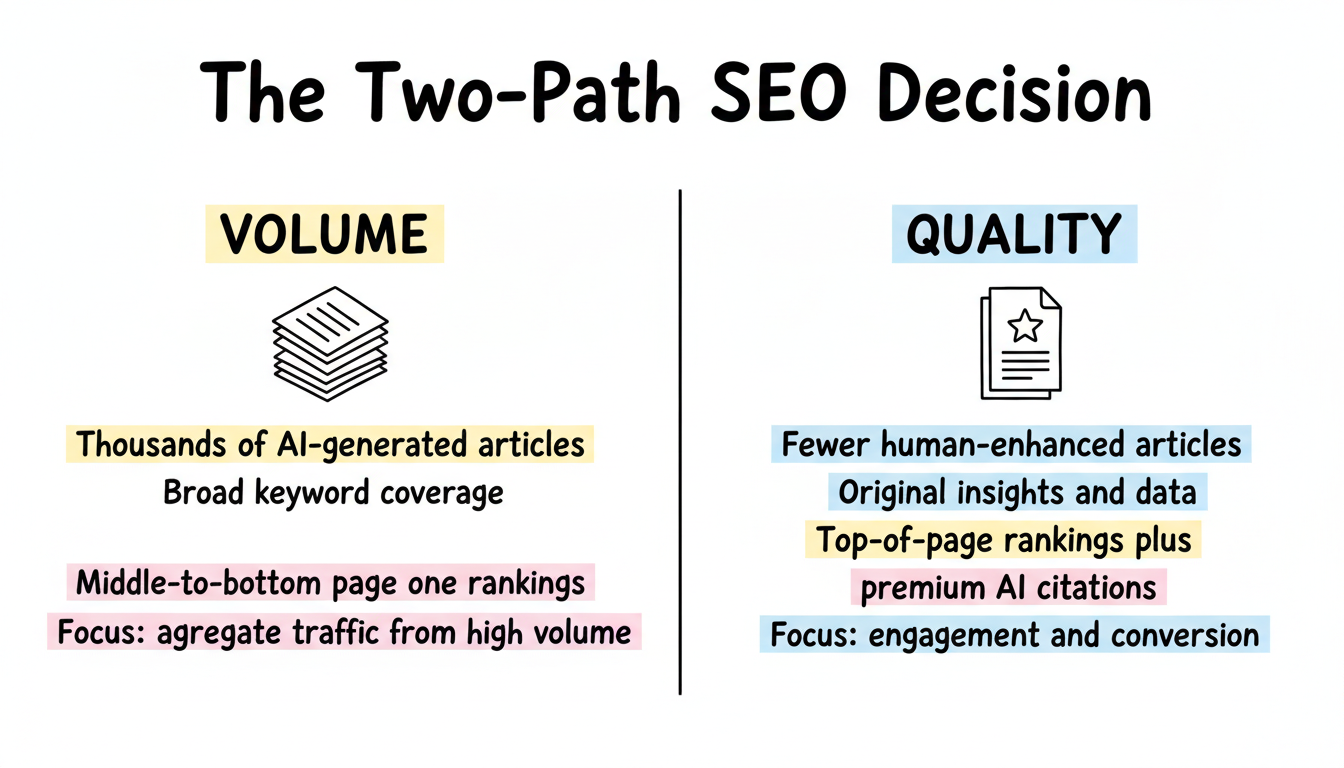
SEO professionals face a strategic choice:
Path 1: Volume Approach Produce thousands of AI-generated articles targeting broad keyword coverage. Accept middle-to-bottom page one rankings. Focus on aggregate traffic from high volume.
Path 2: Quality Approach Produce fewer, human-enhanced articles with original insights. Target top-of-page rankings and premium AI citations. Focus on engagement and conversion.
Both approaches can work. The right choice depends on business model, resources, and competitive landscape. But the quality approach increasingly outperforms as AI systems get better at identifying genuinely valuable content.
The most effective strategies optimize for both traditional search and AI platforms. Understanding the relationship between AEO SEO helps bridge traditional and AI-driven search optimization.
For traditional rankings:
For AI citations:
These approaches overlap significantly. Content that ranks well in traditional search often earns AI citations. Strong SEO fundamentals support AI visibility.
The key addition: optimizing specifically for how AI systems extract and cite information. This layer builds on—rather than replaces—traditional SEO.
Track both traditional metrics and AI-specific indicators:
Traditional metrics:
AI metrics:
Tools for AI visibility tracking are emerging rapidly. Platforms like Otterly.AI, Semrush AI Toolkit, and others provide citation monitoring across AI platforms.
Industry analysts expect AI-driven search traffic to surpass traditional search by 2028. The shift isn't hypothetical—it's already underway.
SEO professionals who adapt now build competitive advantages that compound over time. Those who wait risk optimizing for a declining portion of total search activity.
The fundamentals remain: create valuable content, build genuine authority, optimize for user experience. The tactics evolve: structure for AI extraction, monitor AI platforms, optimize for citations alongside rankings.
By submitting this form, you agree to our Privacy Policy and Terms & Conditions.