February 19, 2026


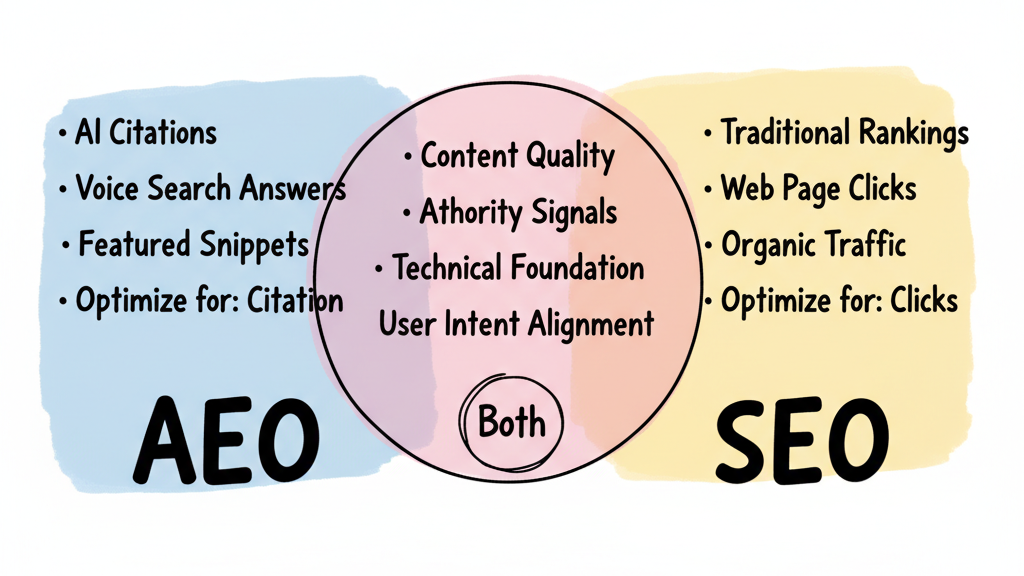
AEO SEO represents the integration of answer engine optimization with traditional search engine optimization. Rather than competing approaches, these disciplines work together to maximize visibility across both conventional search results and AI-powered answer experiences.
Understanding how AEO and SEO complement each other is essential for comprehensive digital visibility in 2026.
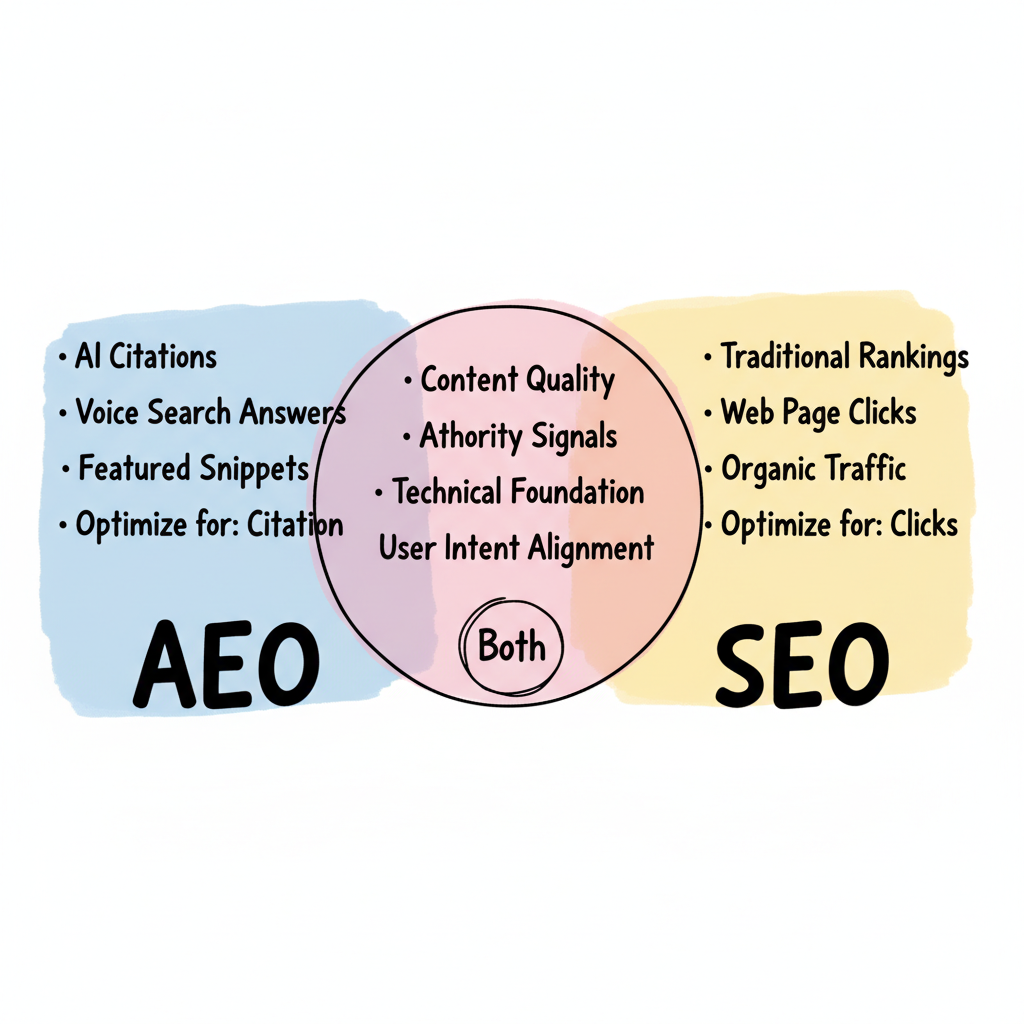
Answer engine optimization (AEO) focuses on making content the source that AI assistants, voice search, and featured snippets use when providing direct answers. Search engine optimization (SEO) focuses on ranking web pages in traditional search results where users click through to websites.
These aren't mutually exclusive. The same content that ranks well in traditional search often performs well in answer engines. The difference lies in additional optimization that makes content extractable and citable by AI systems.
Key overlaps between AEO and SEO:
Where they differ is in format and extraction. SEO optimizes for clicks. AEO optimizes for citation.
User behavior has shifted toward expecting immediate answers. Featured snippets appear in over 50% of Google searches. Voice assistants handle billions of queries monthly. AI platforms like ChatGPT, Perplexity, and Google AI Overviews provide synthesized responses directly.
Organizations that optimize only for traditional rankings miss visibility in these growing channels. Those that focus only on AEO without SEO foundations struggle to build the authority that makes content citable. This is particularly critical for AI overview website optimization, where content must perform across multiple formats.
The integration makes sense because:
Effective AEO SEO strategy implements optimization that serves both channels.
Write content that ranks in traditional search while being extractable for answers:
Technical elements support both AEO and SEO:
Many businesses are discovering that GEO AI optimization requires these same technical foundations to ensure content appears in generative engine results.
Authority supports visibility everywhere:
Different queries benefit different channels:
Understanding how SEO, GEO, and AEO work together helps identify which query types deserve focus for maximum visibility.
For teams implementing integrated optimization, follow this workflow:
Research phase:
Content creation:
Technical implementation:
Measurement:
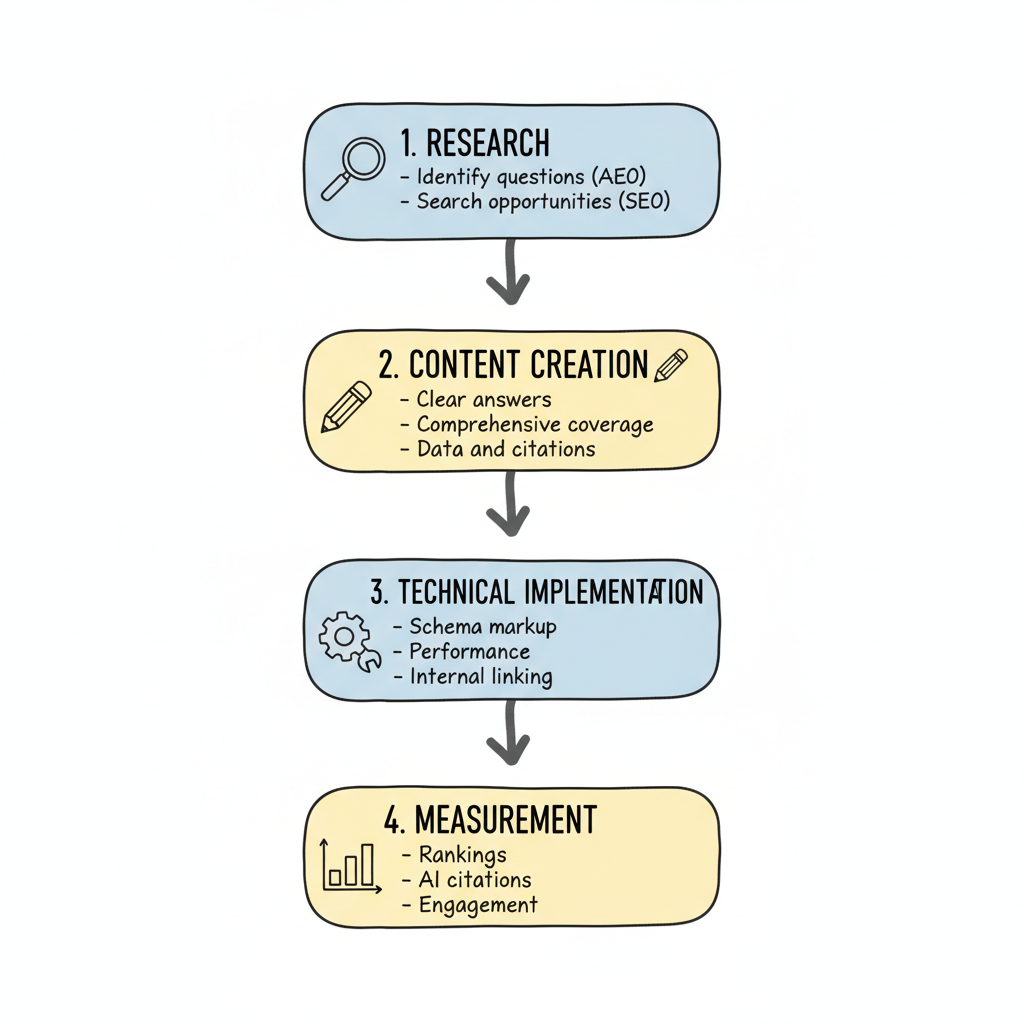
AEO SEO isn't about choosing between optimization approaches—it's about integrating them for comprehensive visibility.
The core principle: Content that ranks well in traditional search and provides clear, extractable answers performs best across all discovery channels.
Where to start: Audit existing high-performing content for answer-readiness. Add clear, direct answers to sections while maintaining the depth that supports rankings. Consider using free AI content optimization tools to identify opportunities.
The relationship: AEO extends SEO rather than replacing it. Strong SEO foundations support AEO success, and AEO optimization often improves traditional search performance.
Organizations that integrate AEO with SEO capture visibility wherever users search—whether clicking through results or receiving AI-generated answers.
Neither should be prioritized at the expense of the other. Strong SEO foundations often support AEO success since authoritative, high-ranking content tends to be cited by AI systems. Integrate both approaches rather than choosing between them.
Usually not. The same content can serve both channels when properly structured. Add clear, extractable answers within content that also provides comprehensive coverage for traditional rankings.
Track multiple metrics: traditional rankings and traffic for SEO, featured snippet appearances for bridging both, and manual testing of AI platform citations for AEO. Tools like Semrush track featured snippets; AI citations require manual testing across platforms.
Yes. The principles scale to any organization size. Start by identifying questions relevant to your expertise, optimizing existing content with clear answers, and implementing basic schema markup. Focus on quality and relevance rather than volume.
By submitting this form, you agree to our Privacy Policy and Terms & Conditions.