
February 19, 2026


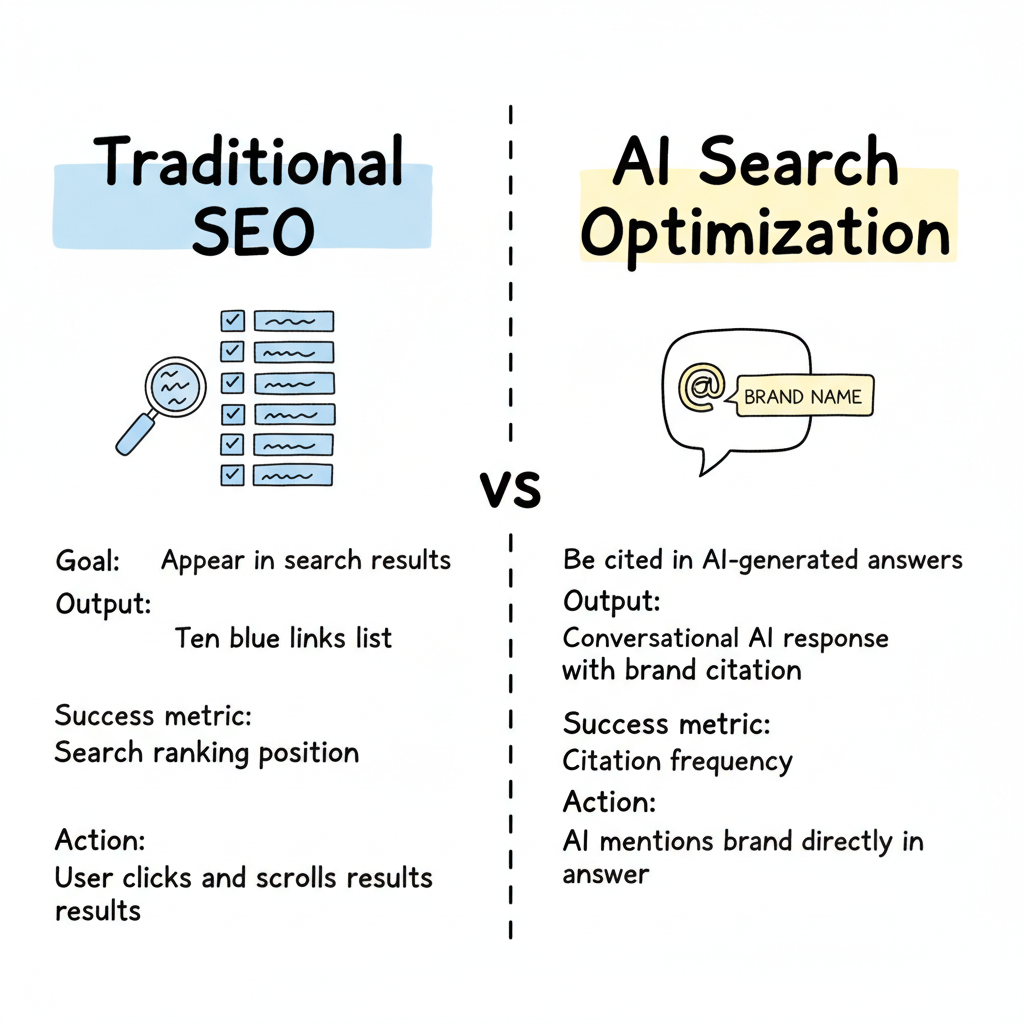
Search behavior has fundamentally changed. Users no longer scroll through ten blue links—they ask AI systems for direct answers. Generative AI search optimization is the practice of structuring content so AI engines like ChatGPT, Perplexity, Google AI Overviews, and Microsoft Copilot find, understand, and cite your brand when generating responses.
According to Dataslayer's GEO guide, ChatGPT processes over 800 million weekly user interactions, while Perplexity handles more than 340 million monthly queries. These platforms have become primary research channels for millions—making AI search optimization essential for brand visibility.
Generative AI search optimization focuses on making your content retrievable, understandable, and citable by large language models (LLMs) and AI-powered search platforms. Unlike traditional SEO, which aims to rank pages in search results, AI search optimization aims to get your content selected as the source AI uses when generating answers.
According to Semrush's AI search optimization guide, AI search optimization involves creating content that AI systems can easily find, interpret, and trust enough to cite. This requires understanding how LLM optimization processes and prioritizes information sources.
Core distinction:
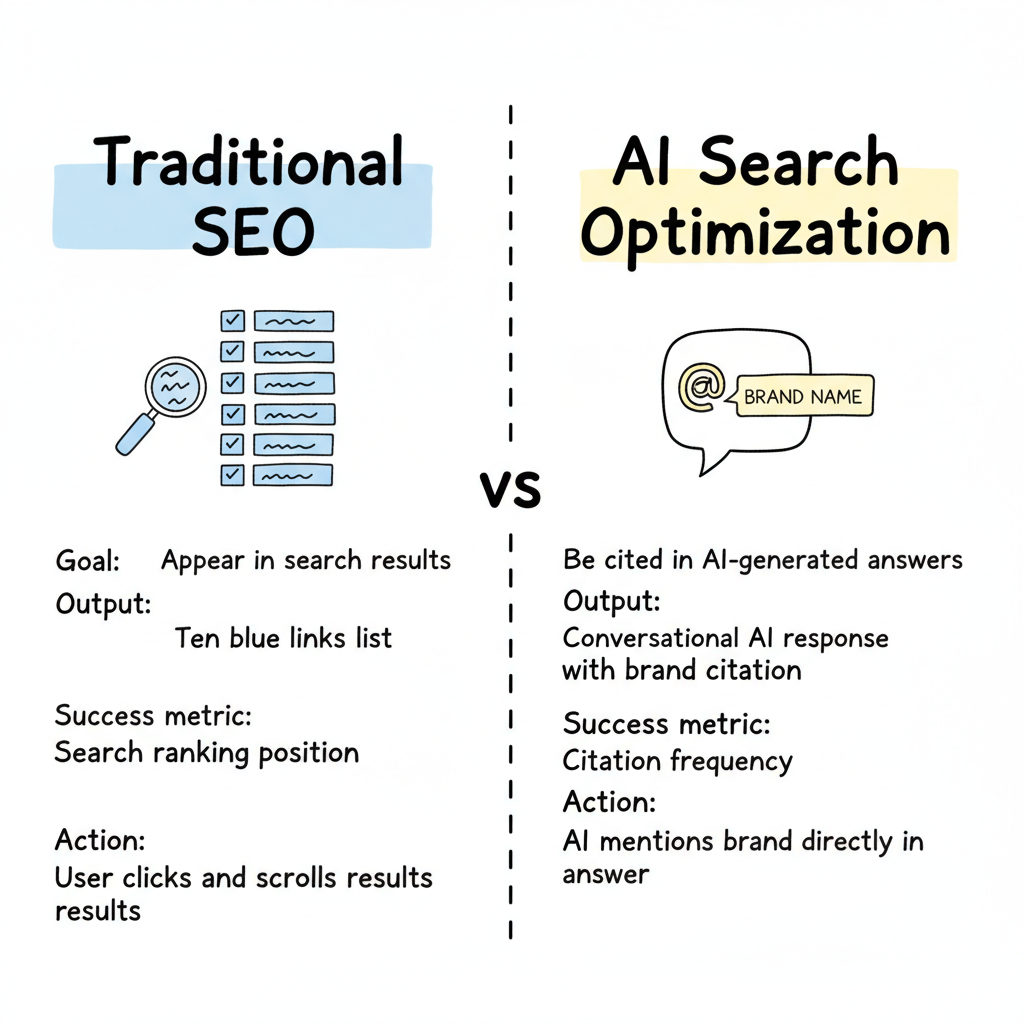
According to ALM Corp's guide to ranking in AI search engines, AI search engines now have substantial user bases that rival traditional search. The convergence of conversational interfaces and generative capabilities has created new discovery pathways that bypass traditional SERPs entirely.
The visibility shift:
Platform | User Base | Primary Use Case |
ChatGPT | 800M+ weekly users | Research, recommendations |
Perplexity | 340M+ monthly queries | Information retrieval |
Google AI Overviews | Billions of searches | Quick answers |
Microsoft Copilot | Enterprise users | Business research |
According to Search Engine Land's LLM optimization guide, measuring LLM visibility becomes as essential as tracking traditional search rankings. Brands invisible to AI systems miss growing segments of potential customers.
According to SeoProfy's LLM SEO guide, LLM SEO shifts focus from ranking in traditional search engines to helping LLMs understand, select, and surface your content when users ask questions.
AI source selection process:
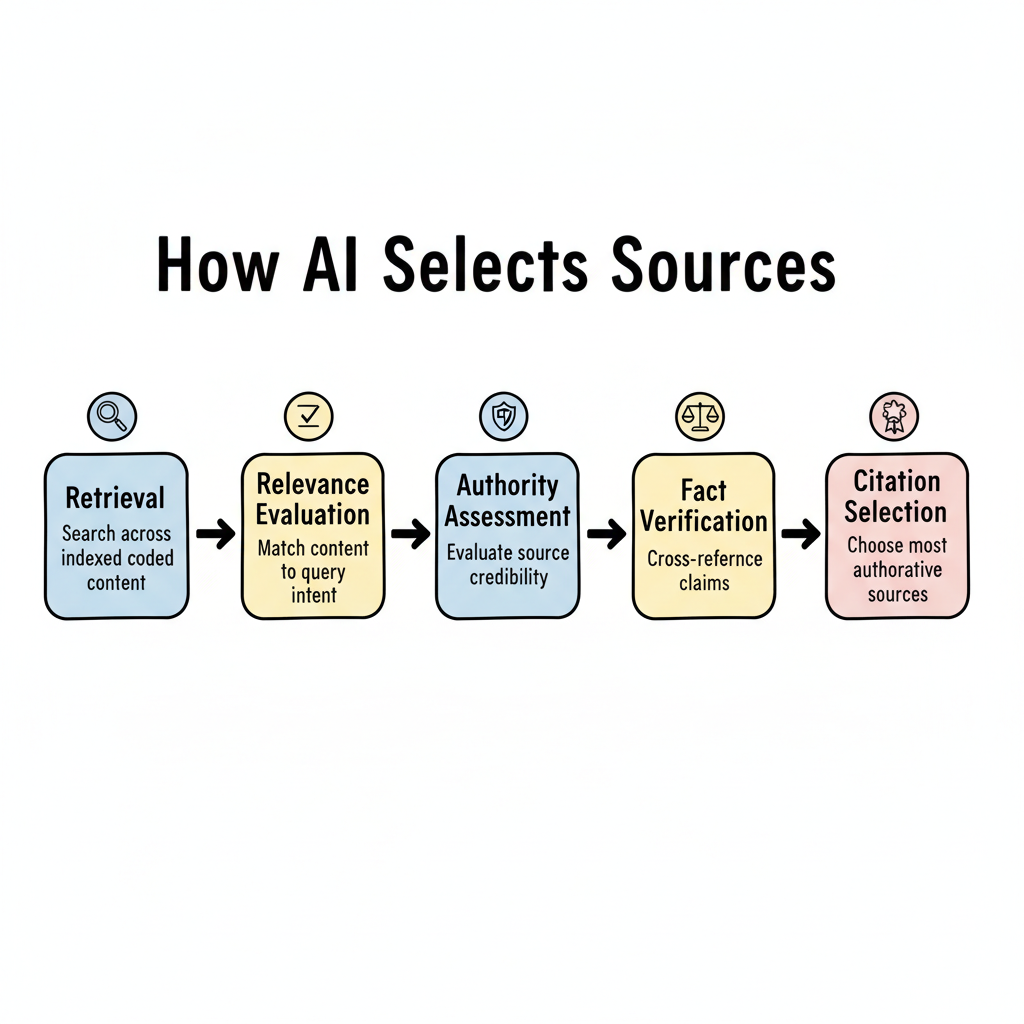
According to Exploding Topics' AI search optimization guide, AI engines prefer content that demonstrates clear expertise, provides verifiable information, and comes from recognizable authoritative sources. Understanding AI overview source selection helps you position your content for maximum visibility.
According to Microsoft's guidance on AI search optimization, optimizing for AI search answers requires specific content strategies different from traditional SEO approaches.
Format content so AI systems can easily extract and cite information:
Structure elements:
According to ALM Corp, entity optimization goes beyond traditional keyword targeting. Focus on specific people, places, brands, products, and concepts that AI models use for context understanding.
Entity optimization tactics:
According to Gravitate Design's AI optimization guide, AI systems evaluate authority through multiple signals that extend beyond traditional backlinks.
Authority signals AI systems evaluate:
For directory-specific optimization strategies, explore SearchGPT directory optimization techniques that enhance your entity presence.
According to Semrush, technical optimization ensures AI crawlers can access and understand your content effectively.
Technical requirements:
According to Dataslayer, certain content formats consistently perform better in AI search results.
High-performing formats:
Format | Why It Works | Example |
Definition content | Clear, extractable answers | "What is [concept]" pages |
How-to guides | Step-by-step structure | Tutorial content |
Comparison content | Structured evaluation | "X vs Y" articles |
Data-driven research | Verifiable statistics | Original studies |
FAQ sections | Direct Q&A format | Knowledge base pages |
According to Microsoft, content that directly addresses user questions with clear, factual responses earns more AI citations than vague or promotional material.
According to Search Engine Land, tracking LLM visibility requires new measurement approaches beyond traditional ranking tools.
Key metrics to track:
Metric | What It Measures | How to Track |
AI citation frequency | How often AI mentions your brand | Manual audits, AI visibility tools |
Citation accuracy | Whether AI represents your brand correctly | Regular response reviews |
Share of voice | Your visibility vs. competitors | Competitive AI analysis |
AI referral traffic | Visitors from AI platforms | Analytics with AI source tracking |
Answer appearance rate | How often content appears in AI answers | Platform-specific monitoring |
According to SeoProfy, specialized tools now exist for tracking AI visibility, though the measurement landscape continues evolving as platforms change. Learn how to leverage free AI content optimization tools for better visibility tracking.
According to Exploding Topics, several common mistakes undermine AI search optimization efforts.
Mistakes to avoid:
According to Semrush, AI search optimization works best when integrated with existing SEO efforts rather than treated as a separate discipline.
Integration approach:
Generative AI search optimization is essential for 2026 visibility:
According to ALM Corp, brands that optimize for AI search engines now will capture visibility that competitors miss. As AI-powered search continues growing, optimization becomes essential rather than optional.
By submitting this form, you agree to our Privacy Policy and Terms & Conditions.



