February 19, 2026


Choosing between Google Ads and Facebook Ads for your ecommerce store is one of the most important decisions you will make for paid advertising. Both platforms can drive significant revenue, but they work in fundamentally different ways. Understanding these differences helps you allocate budget effectively and maximize your return on ad spend.
This guide breaks down Google Ads vs Facebook Ads for ecommerce, including when each platform performs best and how to split your advertising budget between them.
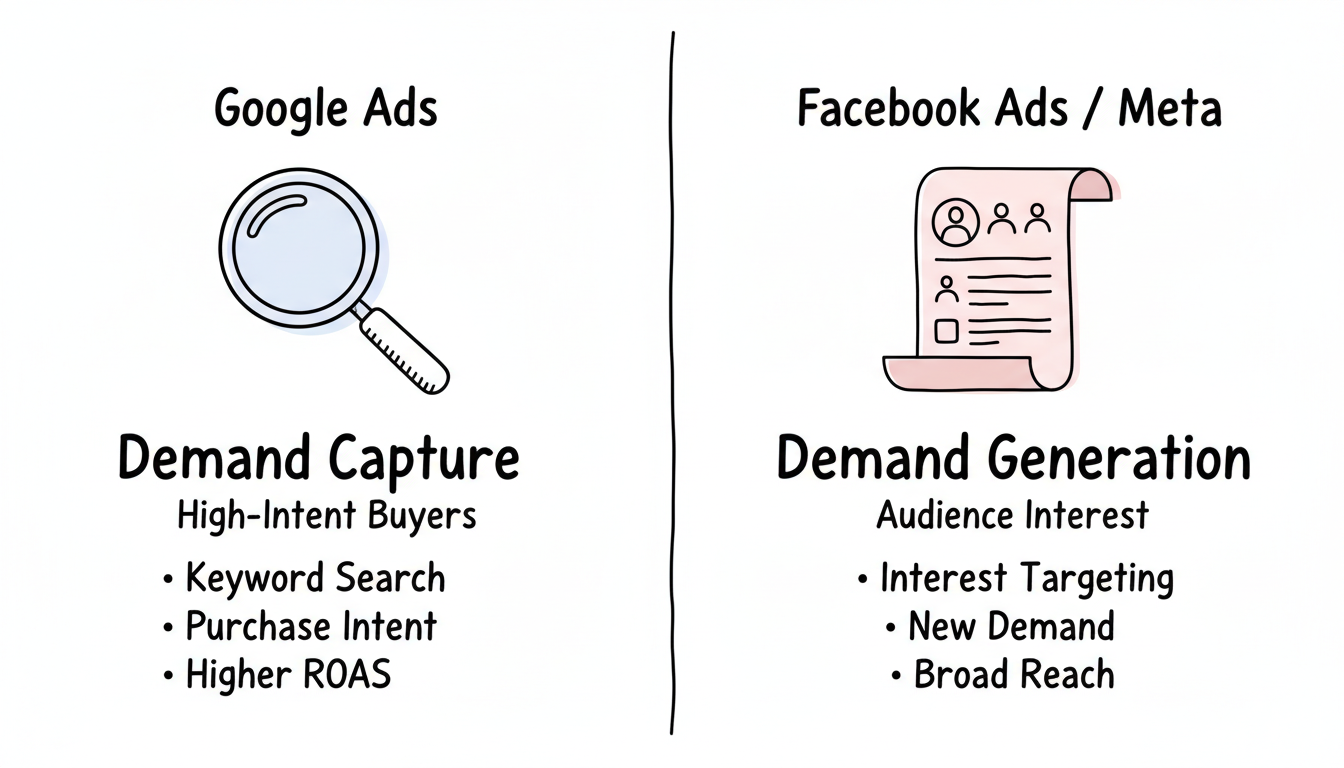
Google Ads and Facebook Ads serve different roles in the customer journey. Understanding this distinction is the foundation of effective ecommerce advertising.
Google Ads is primarily an intent-based platform. Users come to Google actively searching for products they want to buy. According to platform comparison data, Google Ads captures high-intent demand with keyword precision.
Key characteristics:
Google Ads formats for ecommerce:
Facebook Ads (and Instagram Ads through Meta) is an interest-based platform. Users are not actively shopping; they are scrolling through their feeds. Your ads interrupt their experience and introduce them to products they did not know they wanted.
Key characteristics:
Facebook Ads formats for ecommerce:
Think of it this way:
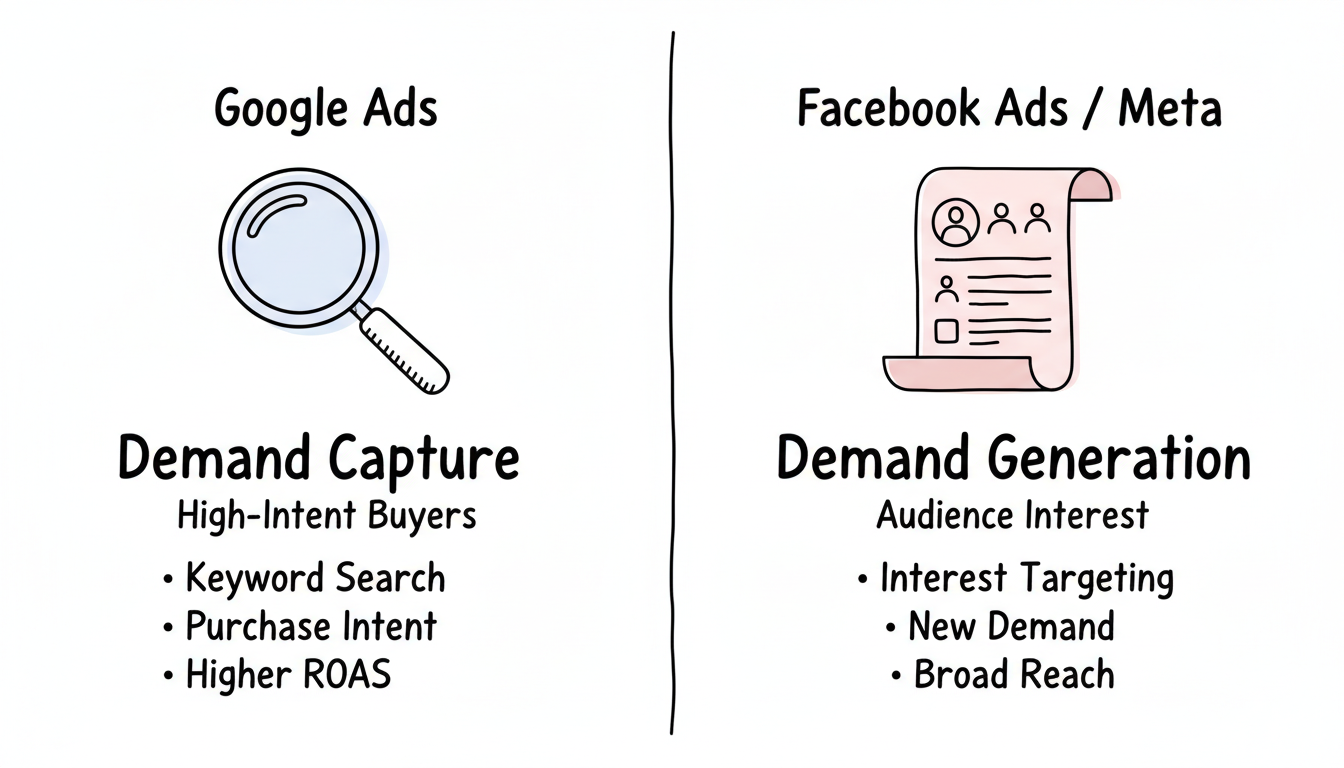
According to ecommerce marketing experts, Google typically leads in profit after ad spend despite Meta sometimes driving higher top-line revenue. This is because Google captures high-intent buyers closer to purchase.
Facebook Ads excels when you need to introduce products to new audiences.
Visual or innovative products: If your product needs demonstration or looks impressive on video, Facebook and Instagram give you the canvas to show it off. Facebook excels when your creative is compelling and your product is visual, especially with dynamic catalog ads for retargeting.
Low search volume categories: If people are not actively searching for your product type, Google Ads will struggle. Facebook lets you reach potential customers who do not yet know your category exists.
Impulse purchases: Products under $50 with broad appeal often perform exceptionally well on Facebook because the buying decision does not require extensive research. Learning how to run Facebook ads for Shopify stores can be particularly effective for impulse-driven product categories.
New brands: Facebook allows you to build brand awareness and generate initial sales before you have enough brand search volume to justify Google spend.
Google Ads dominates when buyers are actively looking for what you sell.
High search demand: If people search for your product category regularly, Google puts you in front of buyers ready to purchase. According to industry analysis, if search demand is high and competition is manageable, start with Google Ads.
Competitive markets: In crowded ecommerce categories, capturing search intent often delivers better ROAS than trying to generate new demand. Understanding the nuances between Facebook ads vs Instagram ads vs Google ads helps you determine which platform best suits your competitive landscape.
Higher price points: Products requiring research and comparison shopping benefit from Google because buyers are already in research mode.
Local or service-based: Google usually wins for local services because of clear, high-intent search queries.
Most successful ecommerce brands run both platforms. The question is how to split your budget.
At lower budgets, focus on one platform to generate enough data for optimization.
Start with Google Ads if:
Start with Facebook Ads if:
At this level, you can test both platforms while maintaining adequate spend on each.
Suggested split:
Run each platform for at least 2-4 weeks with sufficient budget before comparing performance. When evaluating Facebook ads cost per click compared to Google, remember that lower CPCs on Facebook don't always translate to better conversion rates.
With larger budgets, run a full-funnel strategy using both platforms together.
According to full-funnel framework strategies:
Top of Funnel (Awareness):
Middle of Funnel (Consideration):
Bottom of Funnel (Conversion):
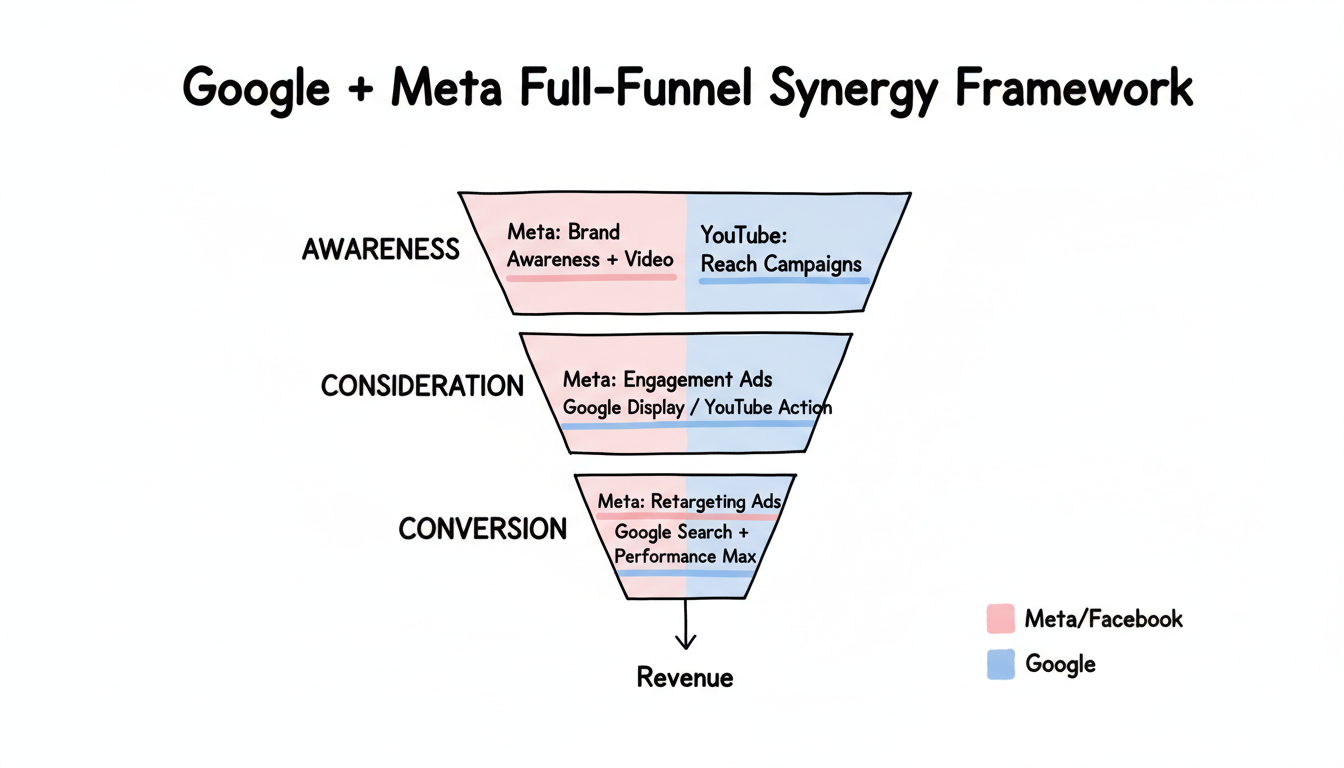
Running both platforms creates a compounding effect. Facebook introduces your products to new audiences, some of whom later search on Google. Your Google ads then capture that demand you created.
Similarly, Google Analytics often shows Facebook "assisted" conversions where users saw a Facebook ad, did not click, but later searched and purchased. This cross-platform lift makes measuring true attribution challenging but indicates the platforms work better together than alone. Many ecommerce Facebook ads agencies recommend this integrated approach for maximizing overall revenue.
Google Ads typically delivers higher ROAS because it captures high-intent buyers. However, Facebook can drive higher total revenue by reaching more people. The best platform depends on your product, audience, and creative capabilities. Most successful ecommerce brands use both.
If search demand exists for your product and you have limited creative resources, start with Google. If your product is visually compelling and search volume is low, start with Facebook. If you must choose one, Google Ads usually wins for established product categories with clear search intent.
Yes, but smaller budgets should focus on one platform first. Split budgets under $5,000/month spread too thin for either platform to optimize effectively. At $10,000+/month, splitting between platforms becomes more viable.
By submitting this form, you agree to our Privacy Policy and Terms & Conditions.