
February 19, 2026


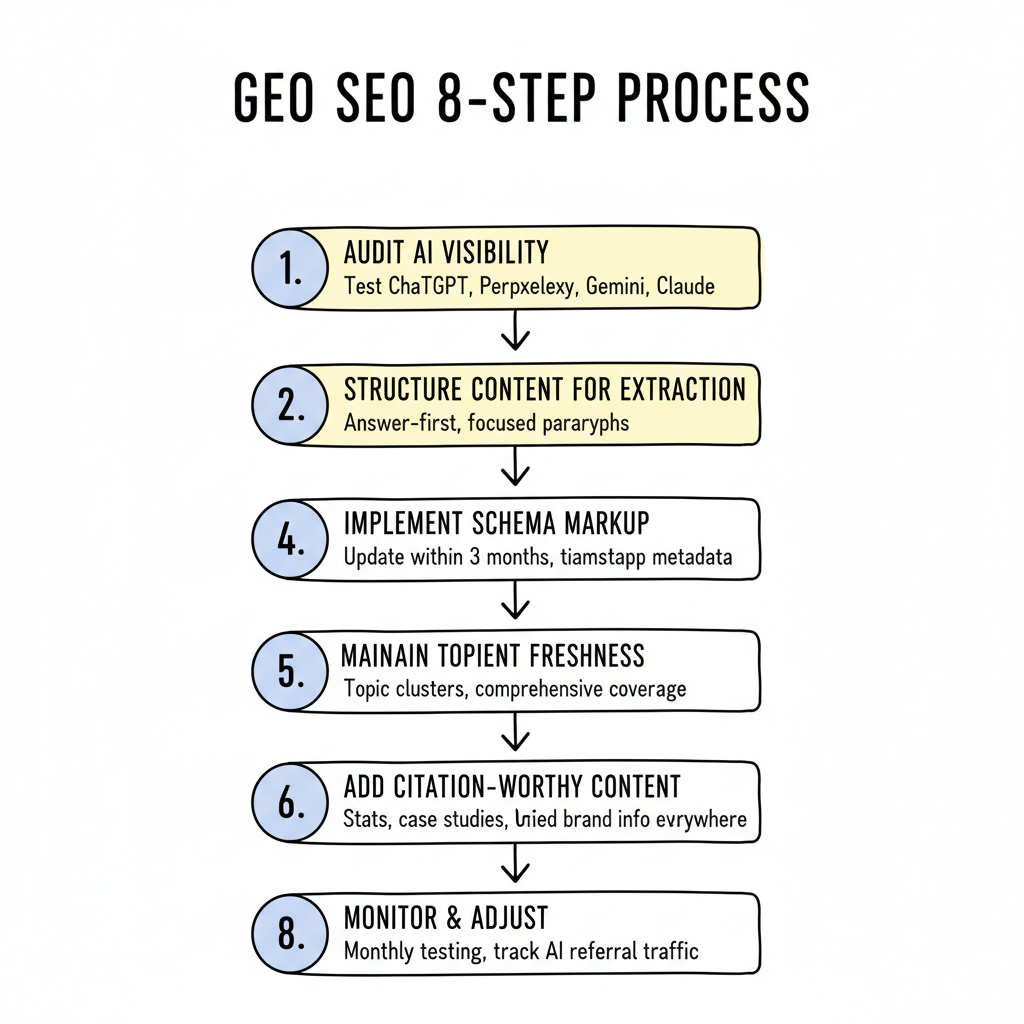
GEO SEO combines generative engine optimization with traditional search optimization to ensure your content appears in both AI-generated responses and conventional search results. With ChatGPT receiving over 1 billion prompts daily and 71% of Americans using AI to research purchases, learning how to do GEO SEO has become essential for digital visibility.
This guide provides a step-by-step approach to implementing GEO SEO for your content.
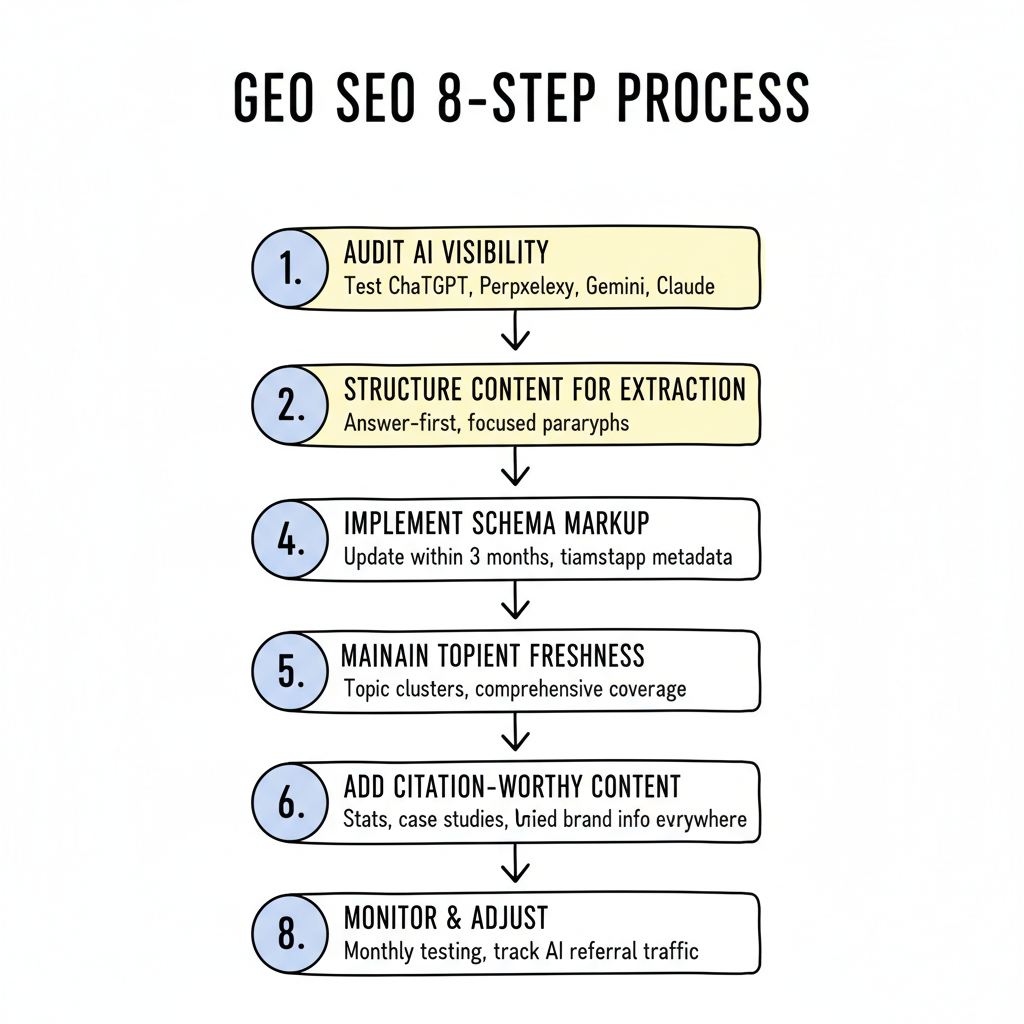
Before optimizing, understand where you stand. Test your visibility across major AI platforms.
Ask ChatGPT, Perplexity, Claude, and Google Gemini questions about your industry:
Document whether your brand appears, how accurately it's represented, and which competitors get cited instead. Understanding the landscape helps identify which AEO tools and software can help monitor your AI visibility effectively.
Note your starting position:
This baseline helps measure improvement as you implement optimizations.
AI systems extract information at the paragraph and section level. Content structure directly impacts citation likelihood.
Start each section by answering the question immediately before elaboration. AI systems prefer clear, extractable statements.
Before: "There are many factors to consider when evaluating solutions in this space. The market has evolved significantly over the past decade, and..."
After: "The three most important factors when evaluating [topic] are [factor 1], [factor 2], and [factor 3]. Here's why each matters..."
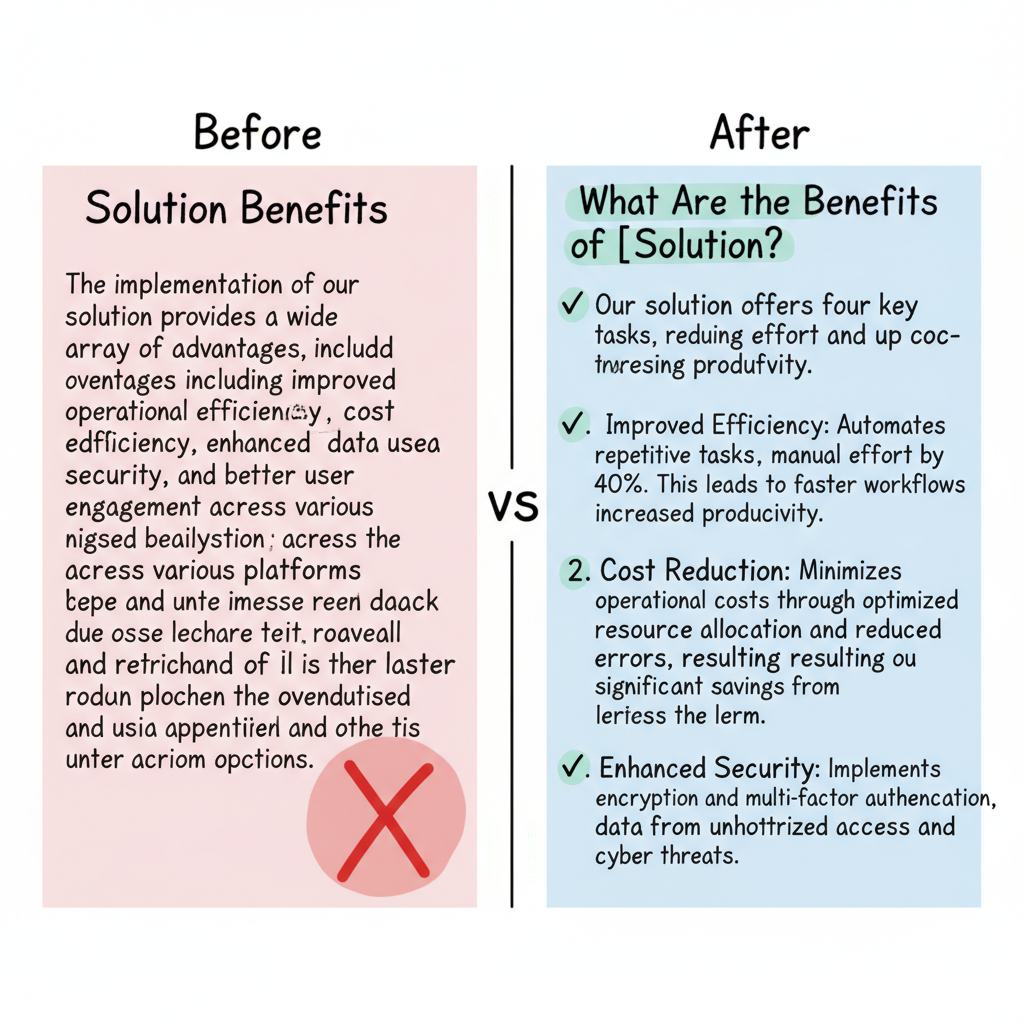
Convert headings into the actual questions users ask AI systems. This improves query matching.
Before: "Solution Benefits"
After: "What Are the Benefits of [Solution]?"
Each paragraph should address one idea in 50-80 words. This enables accurate extraction and increases citation probability.
Build content so AI can extract standalone statements without losing context. Each section should make sense independently, similar to how you would optimize content for generative AI platforms.
Schema markup makes your content machine-readable. Microsoft confirmed in 2025 that structured data supports how their LLMs interpret web content.
FAQ Schema: Add to pages with question-and-answer content.
HowTo Schema: Implement on step-by-step guides and tutorials.
Article Schema: Include publication dates and author information on blog posts.
Organization Schema: Define your company with consistent information.
Person Schema: Add author credentials and expertise indicators.
Schema creates a knowledge graph that helps AI understand relationships between concepts on your page, increasing likelihood of being featured in AI-generated answers.
LLMs parse last-updated metadata to assess source recency. Research shows over 70% of pages cited by ChatGPT were updated within 12 months.
Create a content audit schedule to review and refresh important pages quarterly.
AI systems prefer sources demonstrating comprehensive expertise rather than thin pages targeting isolated keywords.
Develop hub pages with supporting content covering different aspects of core topics. Well-organized, comprehensive content increases AI response inclusion by up to 37%. Understanding the differences between AEO vs SEO vs GEO helps you structure these clusters effectively.
Address not just primary queries but logical follow-up questions users might ask. AI conversations are multi-turn—content answering likely follow-ups gets cited more.
LLMs have already absorbed most generic information during training. Content providing original data, proprietary research, or unique perspectives stands out from the training corpus.
Content with verifiable data and authoritative citations performs significantly better in AI systems.
Research shows adding authoritative citations and statistics can increase AI visibility by over 100% compared to unoptimized content.
AI systems evaluate your brand across the entire web. Inconsistent information reduces confidence and citation probability.
This entity consistency helps AI systems confidently identify and cite your brand.
GEO SEO requires ongoing attention. AI visibility fluctuates more than traditional rankings.
Implementing GEO SEO requires systematic attention to content structure, technical markup, authority signals, and ongoing monitoring.
Start with audit: Understand current visibility before optimizing.
Structure for extraction: Lead with answers, use question headers, keep paragraphs focused.
Technical foundation: Implement schema markup and maintain freshness signals.
Build authority: Create comprehensive topic coverage with citation-worthy data.
Stay consistent: Ensure entity information matches across all platforms.
Technical implementations like schema markup can be completed within weeks. Content restructuring typically takes 1-3 months. Measurable citation improvements usually appear within 3-6 months, though AI visibility can change more quickly than traditional rankings.
No. GEO and SEO work best together. Strong organic rankings create authority signals that increase AI citation probability. Pages in Google's top 10 show approximately 0.65 correlation with LLM mentions. Implement both for complete visibility.
Content structure has the highest immediate impact. Restructuring existing content with answer-first formatting, question headers, and focused paragraphs improves AI extractability without requiring new content creation.
By submitting this form, you agree to our Privacy Policy and Terms & Conditions.



