
February 19, 2026


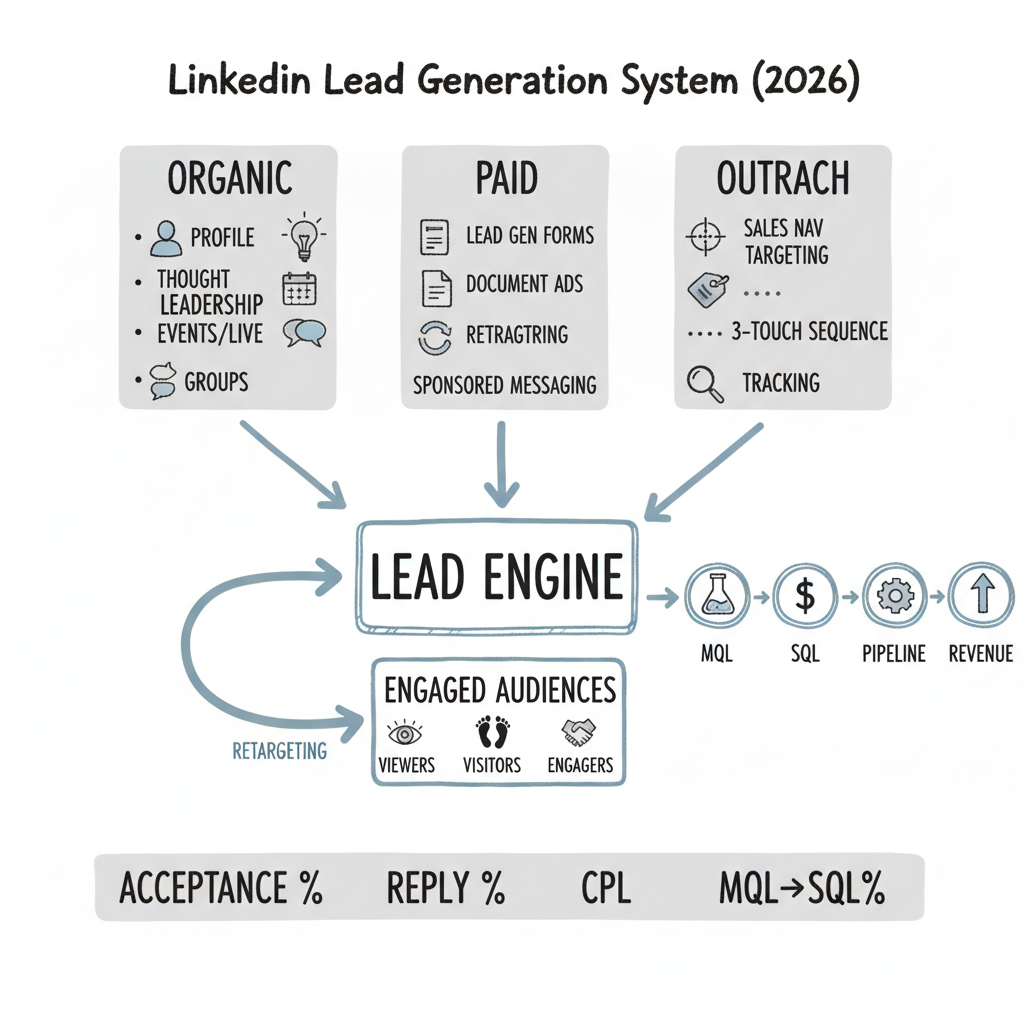
LinkedIn dominates B2B lead generation. With 80% of B2B social leads coming through the platform and conversion rates 277% higher than other social channels, LinkedIn has become the primary battleground for reaching professional decision-makers.
But the strategies that worked three years ago no longer deliver results. Buyers now self-educate, research silently, and often make it halfway through their decision process before ever speaking with sales. This guide covers the organic, paid, and content strategies that actually work in 2026.
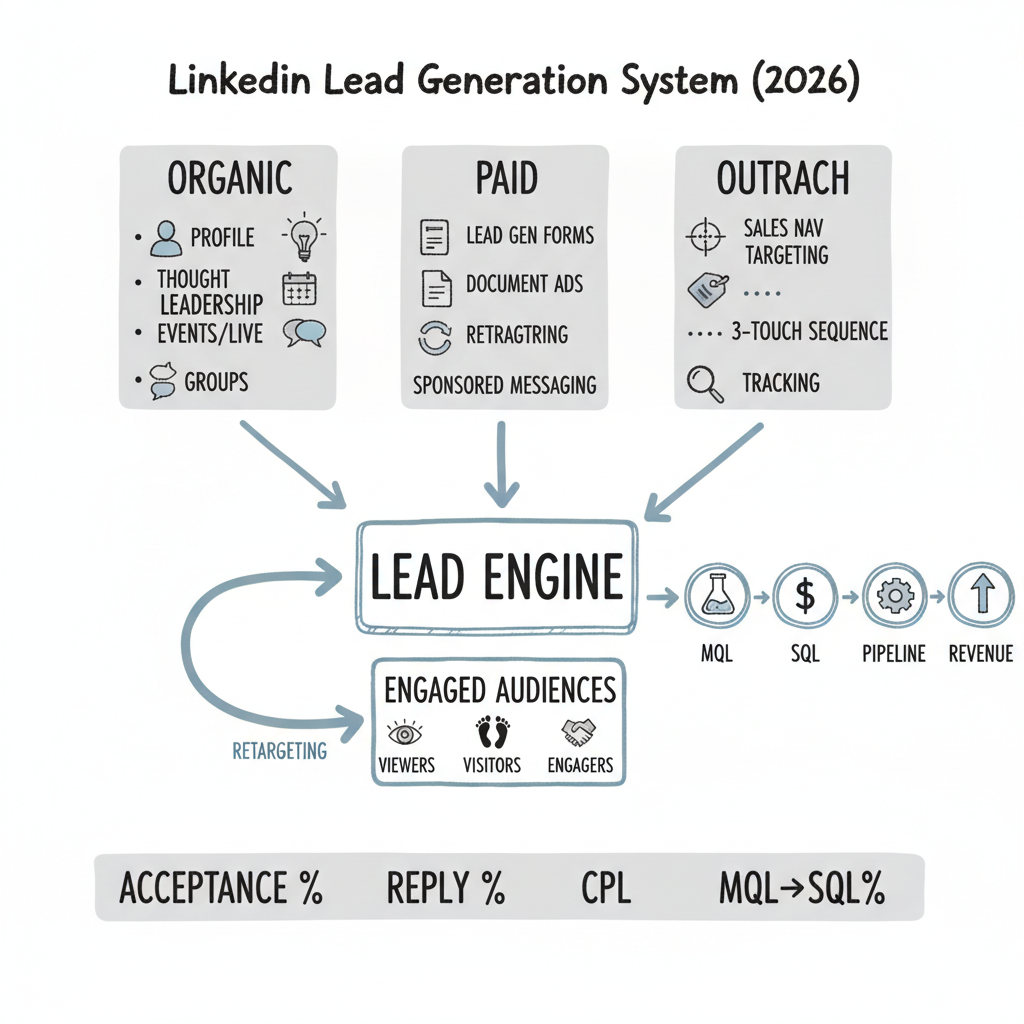
Organic strategies build trust and familiarity before you ever ask for a meeting. In 2026, the brands winning on LinkedIn aren't just running strong ads—they're building demand before they pay for a click.
Your LinkedIn profile is often the first thing prospects check before responding to outreach or engaging with your content.
Company Page Optimization:
Personal Profile Optimization:
The algorithm now rewards depth, clarity, and content that teaches something worth saving. Three formats drive the most engagement in 2026:
Narrative "Teach-Through-Story" Posts
These posts stand out because they build emotional connection and show how you think, not just what you sell. Structure them as:
Carousels: The Save-Generating Format
Carousels dominate because they increase dwell time, make information digestible, and drive saves—LinkedIn's strongest quality signal. Structure your carousels:
Comment-to-Download Posts
These posts act like soft lead magnets without forcing users off-platform. Offer valuable resources (templates, checklists, guides) in exchange for a comment. Low friction leads to high-quality engagement that paid campaigns can later retarget.
LinkedIn event ads build community and position your brand as a connector, not just a vendor. Successful B2B brands create regular "roundtable" or discussion-style events that facilitate genuine dialogue rather than pitch presentations.
Event Strategy Framework:
While less dominant than they once were, niche groups still provide access to engaged professional communities. The key is participation, not promotion:
Paid strategies scale what organic starts. The most effective approach combines both: organic creates warmth, paid creates scale. Whether you choose to work with a LinkedIn PPC agency or manage campaigns in-house, understanding these fundamentals is critical.
LinkedIn's native Lead Gen Forms consistently outperform landing page campaigns for several reasons:
When planning your LinkedIn lead generation campaign, consider that native forms typically deliver better completion rates than external landing pages.
Lead Gen Form Best Practices:
LinkedIn Document Ads deliver exceptional lead generation performance. Platform benchmarks show Document Ads achieve 22.73% lead form completion rates—dramatically higher than video (2.26%) or single image formats.
Document Ad Strategy:
LinkedIn Sponsored Messaging reaches prospects directly in their LinkedIn inbox. They work best for:
InMail Best Practices:
Retargeting converts engaged visitors into leads. Build sequential campaigns:
Stage 1: Engagement Audiences
Stage 2: Website Retargeting
Stage 3: Conversion Retargeting
Content fuels both organic and paid lead generation. The key is creating content that earns trust before asking for anything. Many LinkedIn lead generation companies focus heavily on content strategy as their primary differentiator.
Build a progression from low-commitment to high-commitment content:
Level 1: Micro-Content (Free, No Exchange)
Level 2: Value Content (Free, Light Exchange)
Level 3: Deep Content (Gated)
Level 4: Diagnostic Content (High Intent)
The highest-converting lead magnets follow this formula:
One deep insight + One quick win + One clear next step
Examples that work:
LinkedIn newsletters build owned audience and regular touchpoints. Strategy elements:
Direct outreach remains effective when done right. The "spray and pray" tactics of previous years no longer work—effective outreach requires personalization at a level automation cannot fake. Those just starting should review LinkedIn advertising for beginners to understand the fundamentals.
Sales Navigator provides advanced search and lead management:
Building Targeted Lists:
Understanding LinkedIn ads audience size helps ensure your targeting isn't too narrow or too broad.
Trigger-Based Outreach:
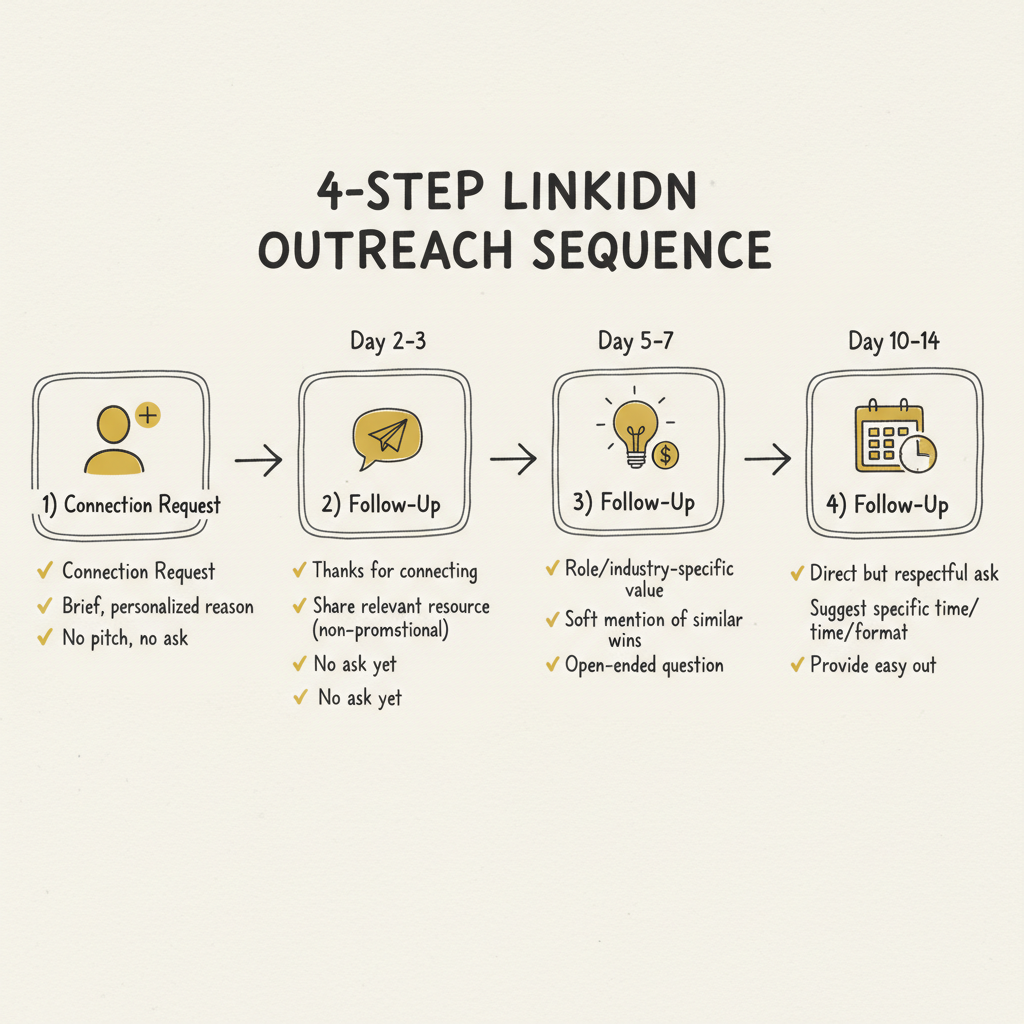
Effective sequences follow this structure:
Connection Request:
First Follow-Up (Day 2-3):
Second Follow-Up (Day 5-7):
Third Follow-Up (Day 10-14):
For volume-based outreach, use tools strategically:
Volume metrics tell one story; quality metrics tell another. Build measurement that captures both. Understanding LinkedIn ads cost per lead helps you benchmark performance against industry standards.
Top-of-Funnel Metrics:
Mid-Funnel Metrics:
Bottom-of-Funnel Metrics:
When evaluating how much LinkedIn ads cost, remember that CPL alone doesn't tell the full story—lead quality matters more than volume.
Not all leads deserve equal attention. Score based on:
Fit Score (Demographics):
Intent Score (Behavior):
Sync LinkedIn activity with your CRM for complete visibility:
Organic strategies typically need 90+ days of consistent execution before generating meaningful lead flow. Paid campaigns can generate leads within days of launch, though optimization usually takes 30-60 days. The best results come from combining both approaches over 6-12 months.
The most effective strategy combines thought leadership content (organic) with targeted paid campaigns and strategic outreach. Top performers use this formula: create demand with valuable content, capture demand with lead gen forms and retargeting, and accelerate with personalized outreach to high-intent prospects.
For paid campaigns, plan minimum $3,000-$5,000 monthly to gather meaningful data. For organic efforts, the primary investment is time: expect 5-10 hours weekly for content creation, engagement, and outreach. Companies seeing best results typically invest in both simultaneously. Many businesses choose to outsource LinkedIn ads to specialized agencies to maximize ROI.
By submitting this form, you agree to our Privacy Policy and Terms & Conditions.



