February 19, 2026


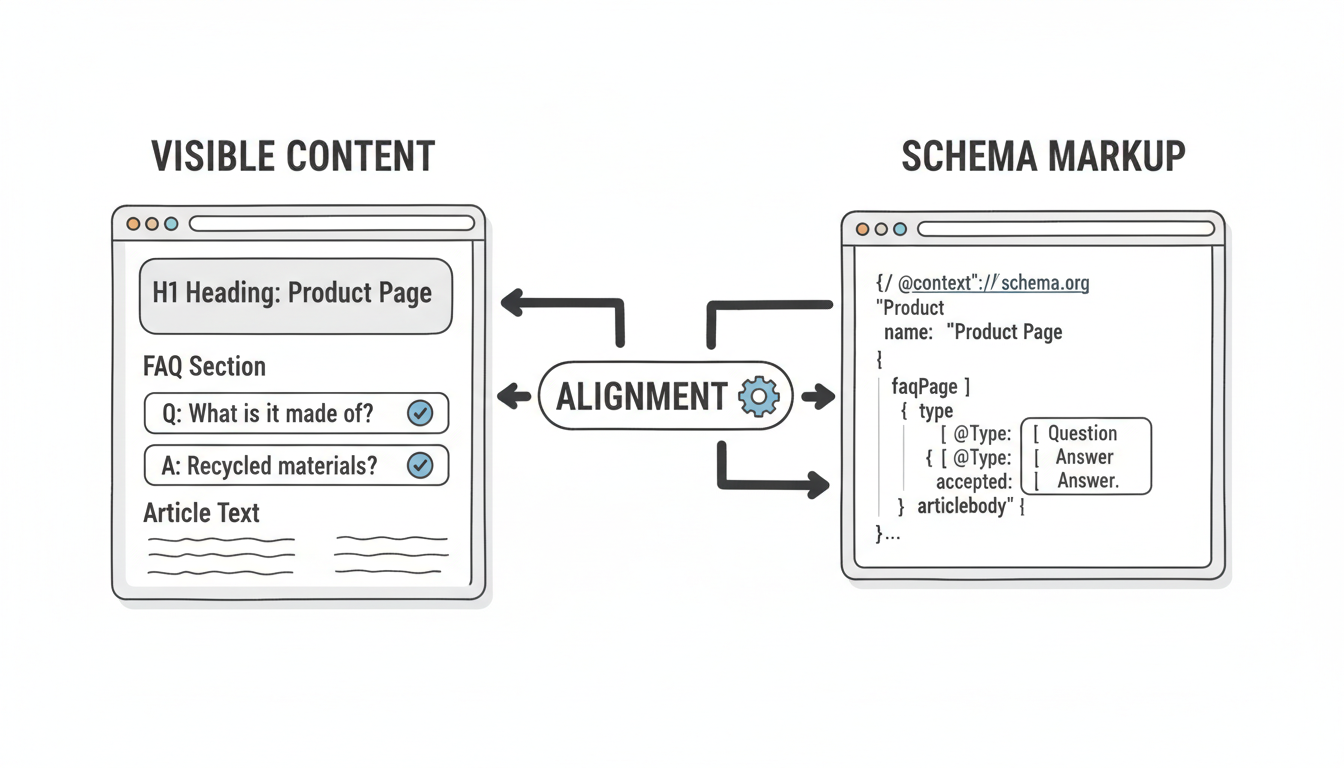
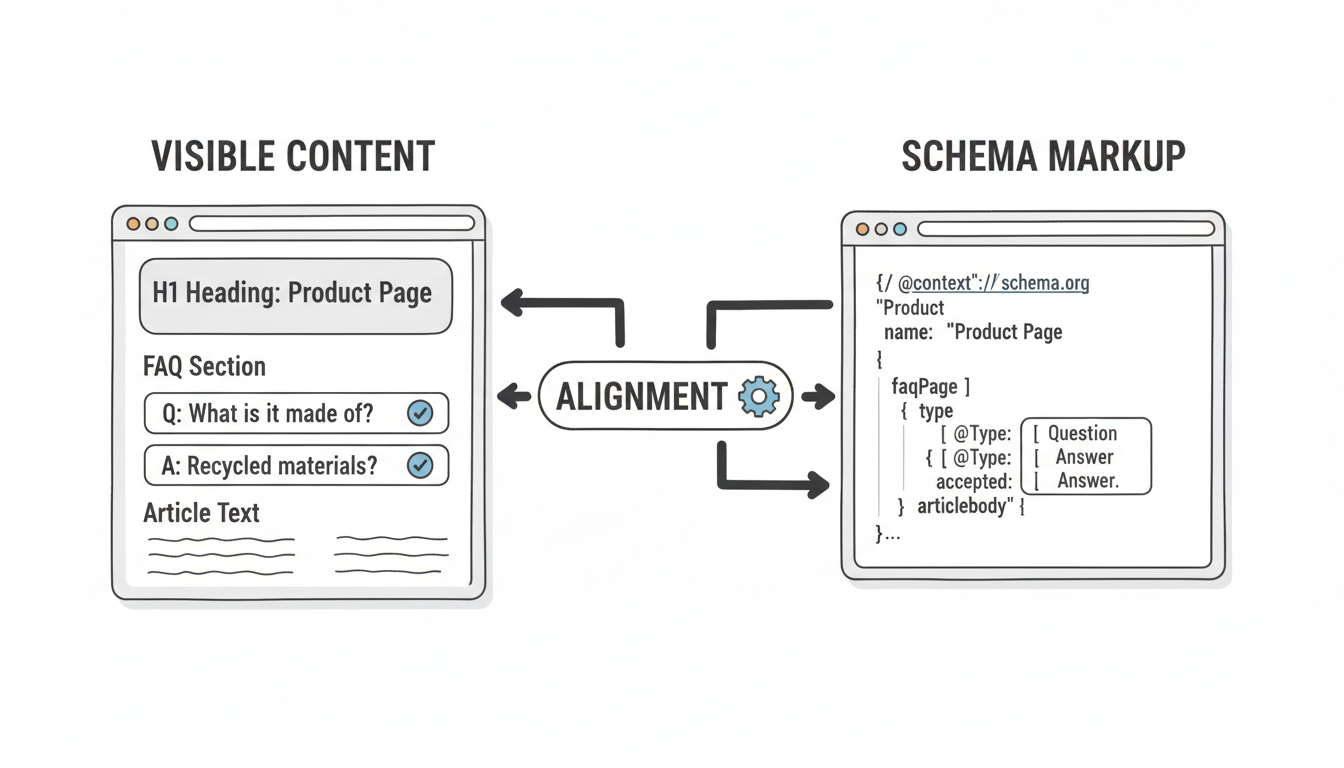
Schema markup acts as a translation layer between your content and AI systems. But here's what many miss: structured data only works when it accurately reflects what's visible on the page. Misaligned schema—where markup doesn't match content—can trigger penalties and reduce AI citation rates.
Here's how to implement schema markup that aligns with visible content for maximum AEO impact in 2026.
According to Addlly.ai's AEO guide, schema markup helps search engines understand page content. It describes pages using a standardized vocabulary so search engines know what the data means, not just what it says.
The alignment principle:
According to IDX.inc's structured data research, pages with properly aligned schema receive 40-60% more AI citations than pages with mismatched or missing structured data.
According to Connect Media Agency's AEO analysis, implementing schema markup increases AI visibility by 2.5x. Different schema types serve different content purposes when optimizing for AI search.
High-impact schema types for AEO:
Schema Type | Best For | Citation Impact |
FAQPage | Q&A content | Very high |
HowTo | Process/tutorial content | Very high |
Article | Blog posts, news | High |
Organization | Brand/company pages | Medium |
Product | E-commerce pages | Medium |
LocalBusiness | Location-based businesses | Medium |
According to Wellows' schema and NLP guide, AI systems look for depth, intent, and meaningful connections between topics and entities. Schema markup helps establish these connections explicitly.
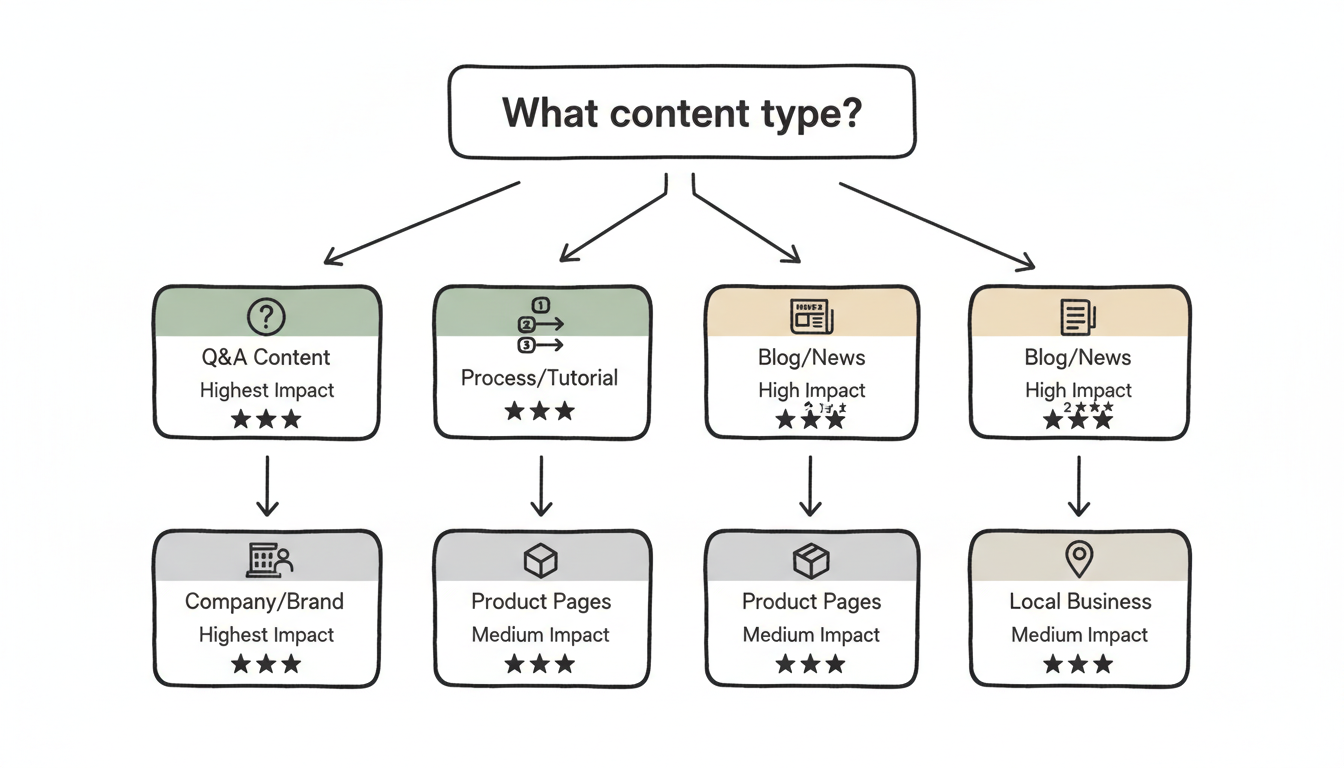
According to SEO.com's AEO guide, FAQ schema directly supports answer engine optimization by structuring content as explicit question-answer pairs that AI systems can easily extract.
FAQPage implementation rules:
According to Backlinko's structured data research, pages with FAQ schema are 2.1x more likely to earn featured snippets—and featured snippets strongly correlate with AI citations.
According to Elsner Technologies' AEO analysis, HowTo schema helps search engines identify step-by-step content that answers procedural queries. This structured approach is essential for comprehensive AEO optimization strategies.
HowTo schema requirements:
According to ALM Corp's AI search optimization guide, HowTo content with proper schema appears in AI-generated responses 3x more frequently than unstructured process content.
According to Search Engine Journal's SEO predictions, Article schema helps AI systems understand content type, authorship, and publication context—all signals that influence citation decisions.
Article schema essentials:
According to Higher Education Marketing's research, Article schema with author credentials increases AI citation rates by 23% compared to anonymous content.
According to NoGood's analysis of search marketing, JSON-LD is the preferred structured data format for AI systems. It's easier to maintain and less prone to alignment errors than inline markup.
JSON-LD advantages:
According to Corpowid.ai's structured data guide, JSON-LD implementation errors occur 60% less frequently than microdata or RDFa errors.
According to USIM's AI marketing analysis, schema misalignment is one of the most common technical AEO mistakes—and one of the easiest to prevent. Tools like the Google Analytics 4 for AI search tracking can help identify these issues.
Frequent alignment errors:
Mistake | Problem | Fix |
Hidden content in schema | Schema describes content users can't see | Only markup visible content |
Outdated schema | Prices, dates, or details have changed | Update schema when content changes |
Keyword stuffing schema | Adding irrelevant keywords to description fields | Use natural, accurate descriptions |
Duplicate schema | Same schema on multiple pages | Use unique schema per page |
Missing required fields | Incomplete schema implementation | Validate with Google's testing tool |
According to RevvGrowth's AEO research, pages with schema validation errors receive 45% fewer AI citations than pages with clean, aligned implementations.
According to Search Engine Journal, regular schema auditing is essential for maintaining AI visibility. Using specialized answer engine optimization tools can streamline this process.
Alignment audit process:
According to Addlly.ai, quarterly schema audits catch alignment drift that accumulates as content evolves.
Schema alignment is foundational to AEO success:
Proper schema alignment doesn't guarantee AI citations—but misaligned schema almost guarantees you won't get them.
By submitting this form, you agree to our Privacy Policy and Terms & Conditions.