SearchGPT Directory Optimization: Wikipedia, Hoovers, and Bloomberg Strategies
Last Updated: January 2026
Getting your business cited by SearchGPT requires more than on-page optimization. Directory presence in authoritative business databases directly influences whether OpenAI's search engine recognizes and references your company.
This guide covers the specific directories SearchGPT prioritizes and tactical steps to optimize your presence in each.
Why Directory Listings Matter for SearchGPT
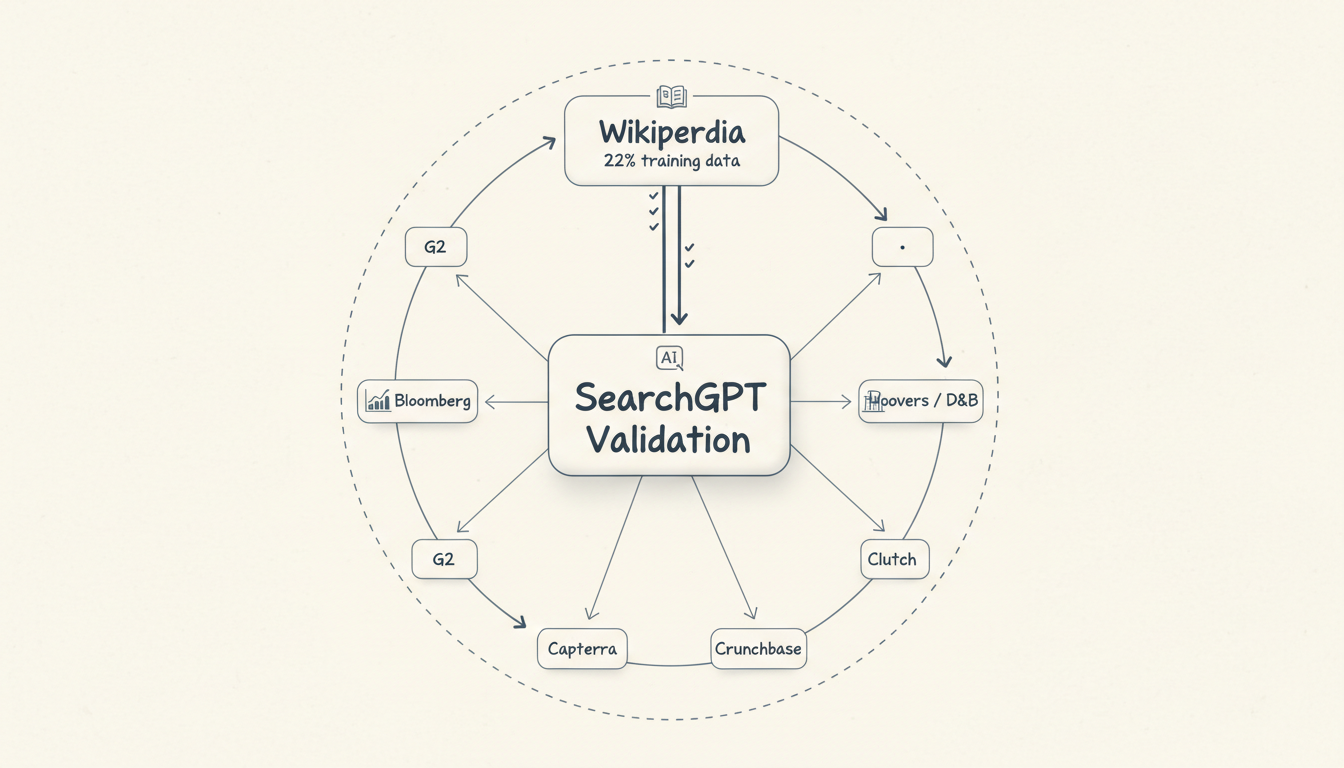
SearchGPT validates company information through third-party database cross-referencing, similar to how Google builds its Knowledge Graph. When SearchGPT answers queries about companies or services, it pulls from trusted data sources to verify legitimacy and accuracy.
According to analysis of SearchGPT's ranking behavior, directory inclusion ranks as the second-most important factor behind authoritative list placements. This means your presence in key business databases directly affects whether your company appears in AI-generated responses.
Key directories SearchGPT references:
- Wikipedia (highest authority)
- Bloomberg (financial and business data)
- Hoovers (D&B business database)
- Industry-specific directories
The algorithm uses these sources for entity validation—confirming your company exists, operates legitimately, and matches claimed credentials.
Wikipedia Optimization for AI Search
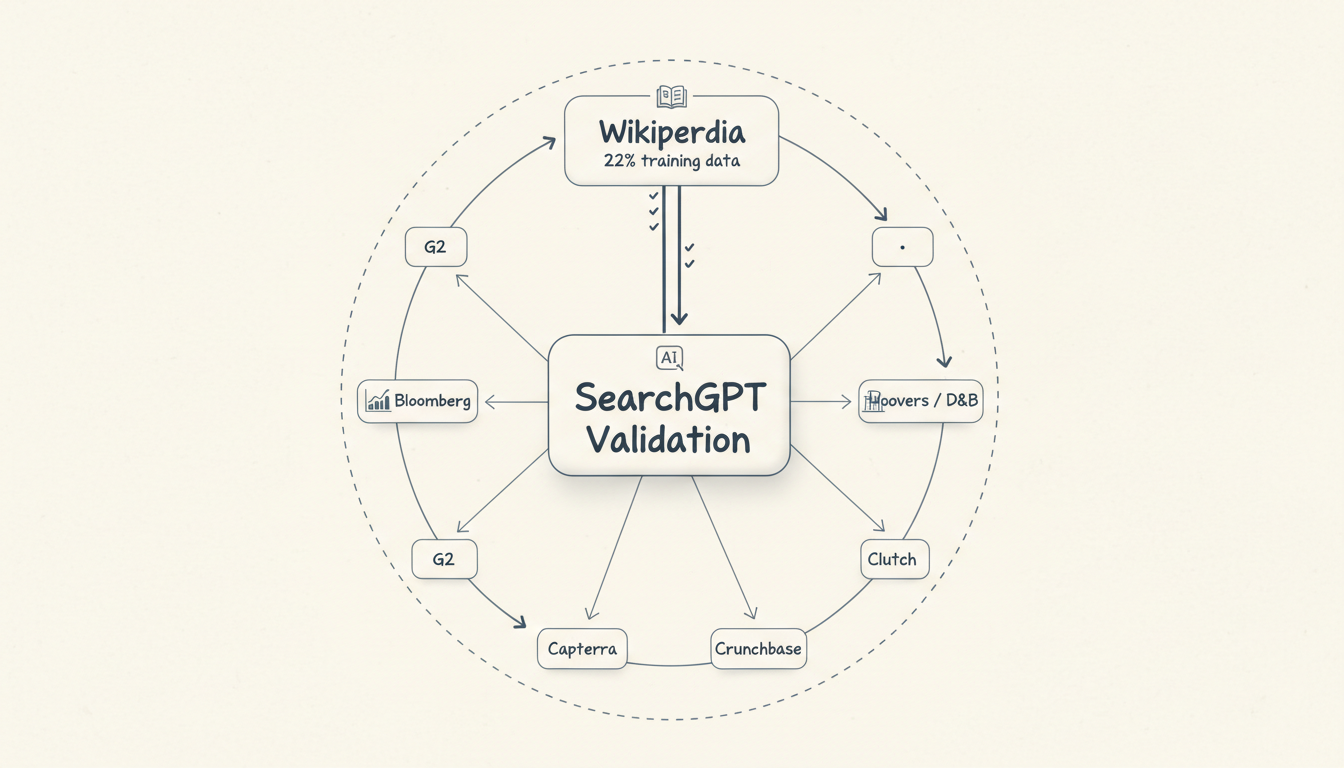
Wikipedia represents the highest-authority directory for SearchGPT citations. Research indicates Wikipedia accounts for approximately 22% of major LLM training data, making it foundational to AI knowledge systems.
Notability Requirements
Wikipedia requires demonstrable notability before creating a company page. Your organization must have:
- Significant coverage in reliable, independent sources
- Multiple third-party news articles or industry publications
- Evidence of lasting impact beyond routine coverage
What qualifies as reliable sources:
- Major news outlets (Wall Street Journal, Forbes, TechCrunch)
- Industry trade publications
- Academic or research citations
- Government reports or filings
Creating a Wikipedia Presence
If your company meets notability criteria:
- Don't create your own page - Wikipedia editors flag and often delete self-promotional entries
- Build source coverage first - Secure press coverage in reliable publications
- Request through proper channels - Use Wikipedia's Articles for Creation process
- Provide neutral, factual content - Focus on verifiable facts, avoid marketing language
For companies not meeting full page notability, consider:
- Adding relevant company mentions to industry topic pages
- Contributing to pages about your technology or service category
- Ensuring any existing Wikipedia references are accurate
Maintaining Wikipedia Accuracy
If your company already has Wikipedia presence:
- Monitor the page for inaccurate information
- Request corrections through talk pages (don't edit directly if you have a conflict of interest)
- Update outdated statistics with proper citations
- Ensure executive information remains current
Bloomberg Profile Optimization
Bloomberg serves as a primary financial and business data source that SearchGPT references for company verification. Bloomberg profiles appear in responses about company size, leadership, funding, and market positioning.
Claiming Your Bloomberg Profile
Bloomberg aggregates company data from multiple sources. To ensure accuracy:
- Locate your existing profile - Search Bloomberg's company database for your organization
- Verify listed information - Check executive names, company description, industry classification, and financial data
- Submit corrections - Use Bloomberg's data correction process for inaccuracies
- Add missing details - Provide complete NAP (Name, Address, Phone) information
Bloomberg Data Elements That Matter
SearchGPT references these Bloomberg fields when answering business queries:
| Field |
Impact |
| Company description |
Used for "What does [company] do?" queries |
| Executive names |
Referenced in leadership queries |
| Industry classification |
Affects category-based recommendations |
| Employee count |
Validates company scale claims |
| Funding history |
Relevant for startup/investment queries |
Optimization Tactics
- Ensure your company description includes key service categories
- Verify executive profiles are current (departures, new hires)
- Confirm industry classification matches your target queries
- Link Bloomberg presence to your corporate communications
Hoovers (D&B) Business Database
Hoovers, now part of Dun & Bradstreet, provides business intelligence data that SearchGPT uses for company validation. D&B's database influences how AI systems categorize and recommend businesses.
D&B DUNS Number
Your DUNS number serves as a unique business identifier across databases. If you don't have one:
- Request a free DUNS number from Dun & Bradstreet
- Verify your business information is accurate
- Keep payment and credit information current (affects business credibility signals)
Hoovers Profile Elements
Key data points SearchGPT may reference from Hoovers:
- Business category and SIC/NAICS codes
- Company size (revenue range, employee count)
- Location and subsidiary information
- Key executive contacts
- Industry comparisons
Optimization Steps
- Claim your profile - Register with D&B to manage your company data
- Verify industry codes - Ensure SIC/NAICS codes match your actual services
- Update company metrics - Provide accurate employee count and revenue ranges
- Link subsidiaries - If applicable, ensure parent-subsidiary relationships are documented
Industry-Specific Directory Strategy
Beyond general business databases, SearchGPT references industry-specific directories when answering niche queries. Your optimization strategy should include directories relevant to your sector.
Technology and SaaS Companies
Priority directories:
- G2 (software reviews and comparisons)
- Capterra (software marketplace)
- Product Hunt (for launches and new products)
- Crunchbase (startup and funding data)
- GitHub (for technical credibility)
Professional Services
Priority directories:
- Clutch (agency reviews and rankings)
- UpCity (local business services)
- Better Business Bureau (trust signals)
- Industry association directories
B2B Companies
Priority directories:
- ThomasNet (industrial suppliers)
- Industry-specific trade associations
- LinkedIn Company Pages (professional network presence)
Directory Optimization Checklist
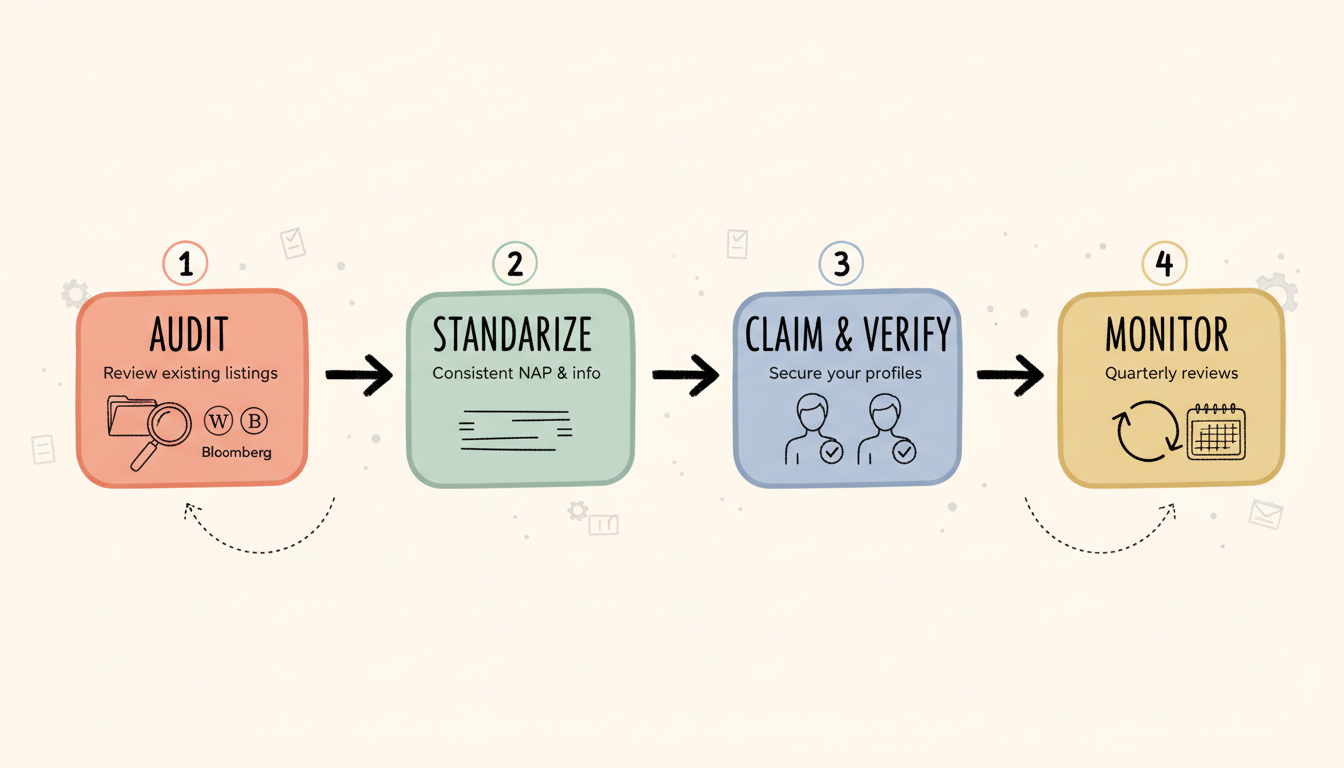
Use this checklist to ensure comprehensive directory coverage:
Entity Consistency
- [ ] Company name matches exactly across all directories
- [ ] Address format is consistent (abbreviations, suite numbers)
- [ ] Phone number uses same format everywhere
- [ ] Website URL is identical (with or without www)
Information Completeness
- [ ] All directories have complete company descriptions
- [ ] Executive names and titles are current
- [ ] Industry classifications are accurate
- [ ] Employee count and revenue data are updated
Verification Status
- [ ] Wikipedia presence is accurate (if applicable)
- [ ] Bloomberg profile is claimed and verified
- [ ] D&B/Hoovers data is current
- [ ] Industry directories have verified listings
Ongoing Maintenance
- [ ] Quarterly review of directory accuracy
- [ ] Update after executive changes
- [ ] Refresh after funding rounds or acquisitions
- [ ] Monitor for unauthorized edits
Measuring Directory Impact on AI Visibility
Track whether directory optimization improves SearchGPT citations:
Direct Testing
Query SearchGPT with questions about your company, industry, and competitors. Document:
- Whether your company appears in responses
- How accurately your information is presented
- Which competitors get cited instead
Citation Tracking
Use AI visibility monitoring tools to track:
- Brand mentions across AI platforms
- Citation accuracy (correct information or hallucinations)
- Competitive share of voice in AI responses
Traffic Attribution
Configure analytics to track referral traffic from:
- chat.openai.com
- Any SearchGPT-specific referrer strings
- Changes in branded search volume (users seeing your brand in AI responses and searching directly)
Common Directory Mistakes
Avoid these errors that reduce SearchGPT visibility:
Inconsistent Entity Information
Different company names, addresses, or descriptions across directories confuse AI systems trying to build entity profiles. Use identical information everywhere.
Outdated Executive Data
AI systems may cite departed executives or outdated leadership information. Keep all directories current after personnel changes.
Missing Industry Classification
Without proper SIC/NAICS codes or category assignments, SearchGPT may not include your company in relevant industry queries.
Ignoring Wikipedia Notability
Attempting to create Wikipedia pages without meeting notability criteria often backfires. Build press coverage first, then approach Wikipedia through proper channels.
Need help getting your business cited in AI search? Our AI search optimization services include comprehensive directory auditing and optimization. Contact us for a visibility assessment.
Related Articles:
Article Information:
- Word Count: ~1,300
- Primary Keyword: searchgpt directory optimization
- Secondary Keywords: wikipedia ai optimization, bloomberg business profile, hoovers listing, searchgpt visibility
- Last Updated: January 2026

