
February 19, 2026


The terminology around OpenAI's search capabilities creates confusion. SearchGPT, ChatGPT Search, and web browsing features overlap but represent different stages of OpenAI's evolution toward real-time web access. Understanding these distinctions matters for SEO professionals optimizing content for AI citation—because each configuration affects how ChatGPT discovers, processes, and cites web content differently.
According to WordStream's SearchGPT guide, SearchGPT is an AI-powered search engine that turns answers to ChatGPT user queries into conversational responses based on real-time information from across the web—similar to Google's AI Overviews. The search marketing community has predicted that SearchGPT will outperform AI Overviews on Google.
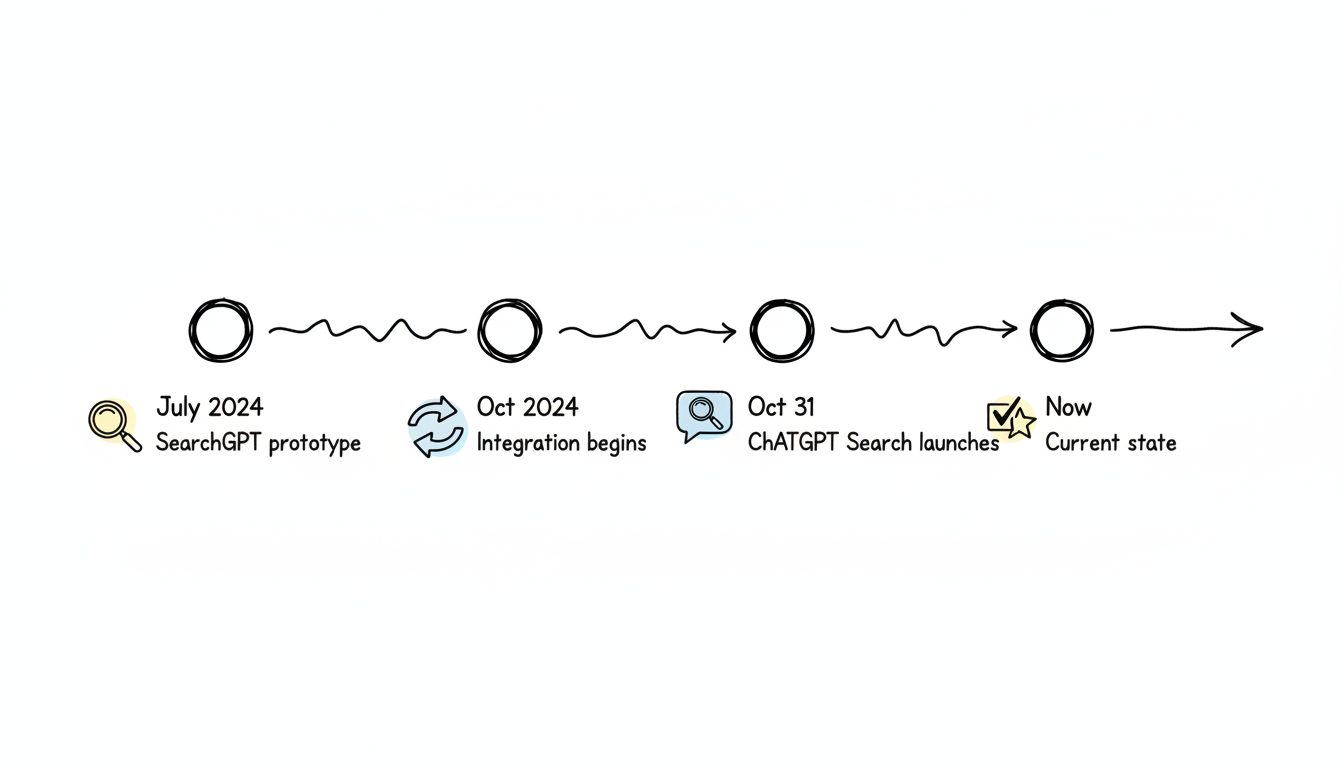
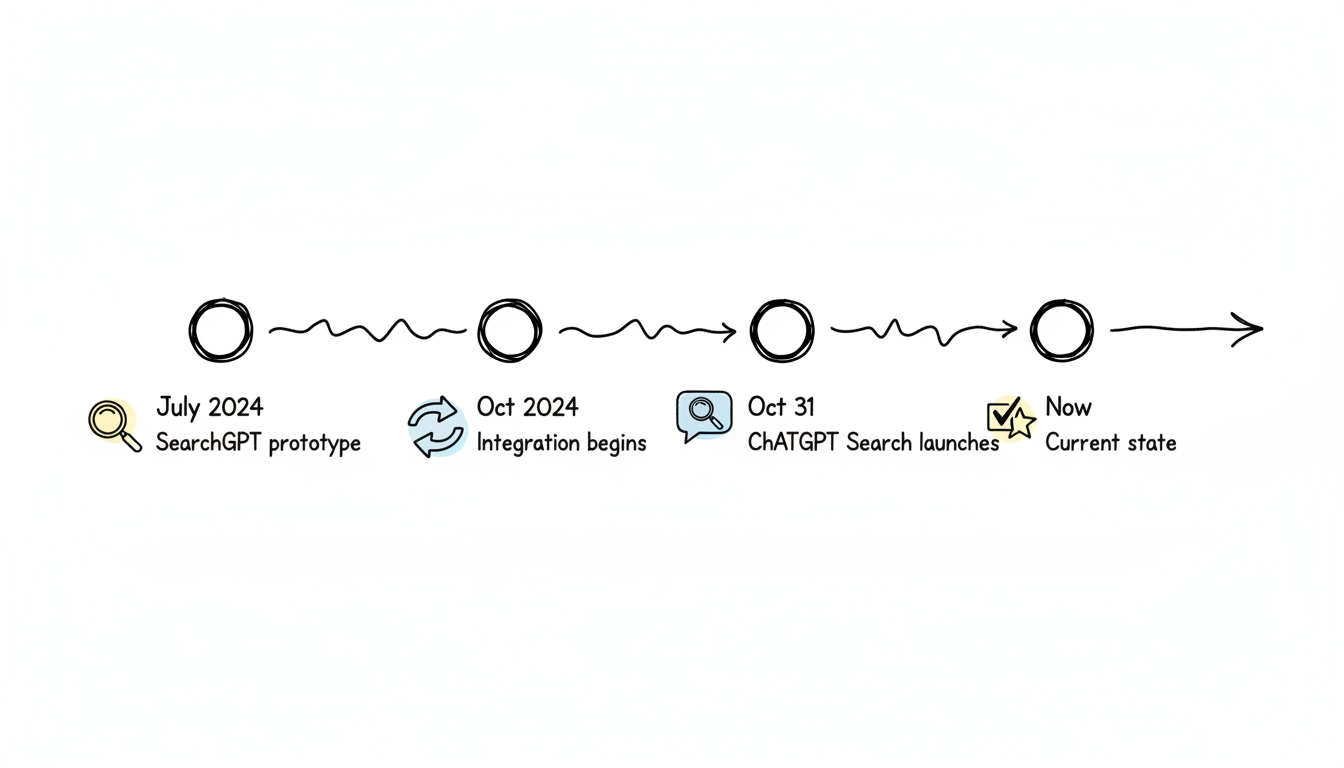
Understanding the timeline clarifies the terminology confusion.
According to BrightEdge news coverage, OpenAI announced plans to integrate SearchGPT into ChatGPT by end of 2024. ChatGPT Search began rolling out on October 31, 2024, initially for Plus and Team users—essentially bringing SearchGPT's real-time web capabilities directly into the main ChatGPT interface.
Timeline of OpenAI search capabilities:
Date | Milestone | Significance |
July 2024 | SearchGPT prototype announced | Standalone AI search engine testing |
October 2024 | SearchGPT integration begins | Merging into ChatGPT interface |
October 31, 2024 | ChatGPT Search launches | Plus/Team users get web search |
Late 2024 | Expanded availability | Free users gain access |
2025-2026 | Enhanced features | Shopping, citations, deep research |
The underlying architecture affects how each handles web content.
Feature comparison:
ChatGPT Search Architecture
├── Query Processing
│   ├── Real-time web crawling
│   ├── News source prioritization
│   ├── Publisher partnerships (News Corp, etc.)
│   └── Search index freshness
│
├── Response Generation
│   ├── Conversational synthesis
│   ├── Source attribution
│   ├── Citation display
│   └── Follow-up capability
│
├── Access Methods
│   ├── Desktop chat interface
│   ├── Mobile apps (iOS/Android)
│   ├── API access
│   └── Voice interactions
│
└── Current State (2026)
    ├── 800M weekly active users
    ├── 81% market share in AI assistants
    ├── Shopping integration active
    └── Deep Research available
According to Superlines' ChatGPT statistics, ChatGPT maintains an 81% market share in the Agentic Internet with 800 million weekly active users and 5.72 billion monthly visits, making AI Search Brand Visibility and Citation Rate critical KPIs for brands in 2026.
Three distinct concepts that often get conflated.
Capability distinctions:
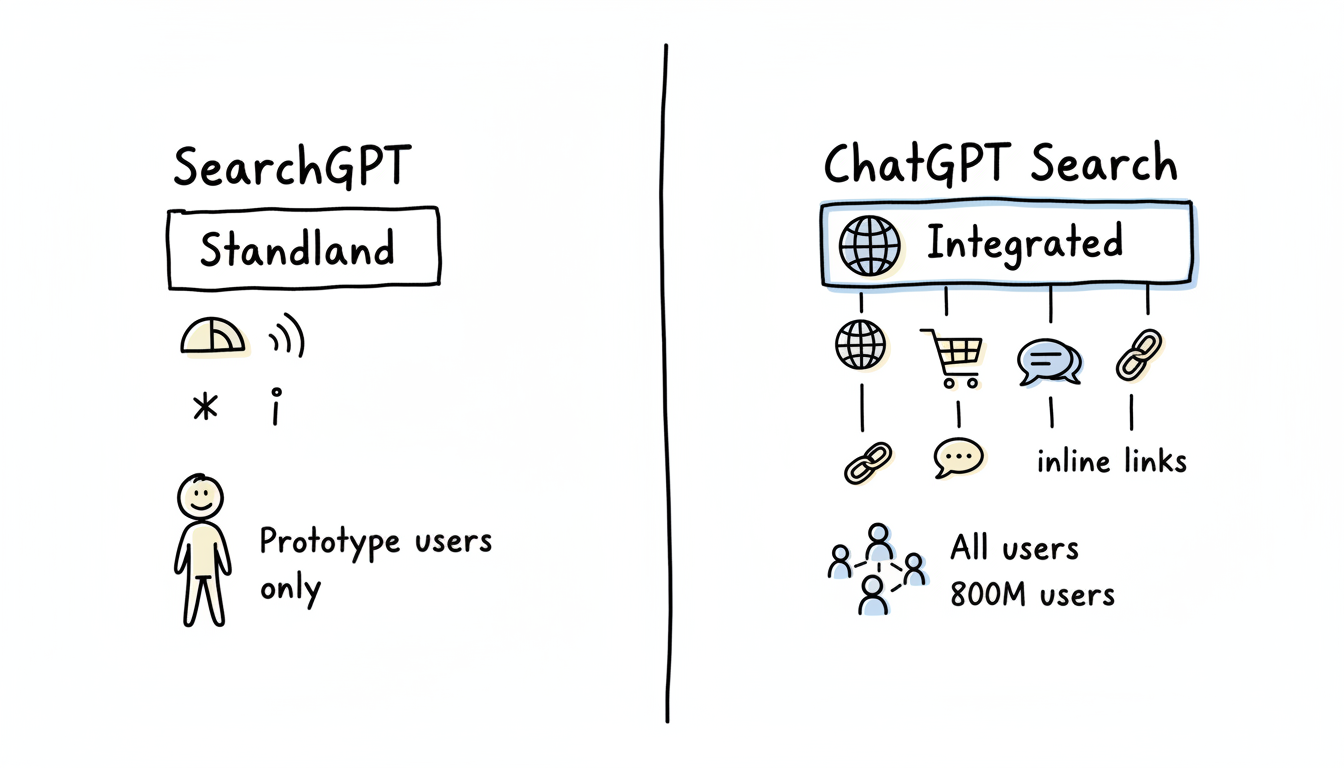
Feature | Web Browsing (Legacy) | ChatGPT Search | SearchGPT (Historic) |
Real-time web access | Limited | Full | Full |
News freshness | Variable | High | High |
Citation style | Footnotes | Inline links | Inline links |
Shopping support | No | Yes | Limited |
User availability | Paid tiers | All users | Prototype only |
Current status | Superseded | Active | Merged into ChatGPT |
According to TechCrunch's ChatGPT overview, OpenAI has released updates that caused the platform to become overly sycophantic for many users, leading the company to revert updates to GPT-4o. OpenAI continues refining how ChatGPT handles web search queries and response generation.
Understanding the pipeline helps with optimization strategy.
According to AI Tech Boss's AI search comparison, the era of "10 blue links" is officially over. Perplexity forces AI to ground answers in search results, but ChatGPT Search synthesizes information conversationally while maintaining citation transparency.
Query processing flow:
ChatGPT Search Query Pipeline
├── Query Analysis
│   ├── Intent classification
│   ├── Temporal relevance check
│   ├── Entity recognition
│   └── Web search trigger decision
│
├── Web Search Execution
│   ├── Multiple source queries
│   ├── News source prioritization
│   ├── Freshness weighting
│   └── Authority signals
│
├── Content Processing
│   ├── Information extraction
│   ├── Fact synthesis
│   ├── Conflict resolution
│   └── Citation preparation
│
└── Response Generation
    ├── Conversational formatting
    ├── Citation integration
    ├── Follow-up preparation
    └── Confidence signaling
Implementing a comprehensive SearchGPT social monitoring strategy can help brands track how their content appears across different AI search contexts and citation patterns.
How each configuration cites sources affects SEO strategy.
Citation patterns:
Aspect | Web Browsing (Legacy) | ChatGPT Search (Current) |
Citation format | Numbered footnotes | Inline hyperlinks |
Source diversity | Moderate | High |
News recency | Variable | Prioritized |
Wikipedia reliance | Higher | Balanced |
Publisher partnerships | Limited | Active (News Corp, etc.) |
According to Search Engine Land's brand visibility guide, platforms to compare visibility across include Google AI Mode, SearchGPT, ChatGPT, Gemini, and Perplexity—indicating that while SearchGPT as a standalone term persists in tools, it now refers to ChatGPT's search functionality.
ChatGPT Search dominates the AI search landscape.
According to A16Z's State of Consumer AI, OpenAI's consumer strategy was pushing new models and experiences through the existing ChatGPT interface rather than creating separate products. This consolidation strategy brought SearchGPT into ChatGPT rather than maintaining it as a standalone search engine.
Competitive positioning:
Platform | Monthly Visits | AI Search Approach |
ChatGPT Search | 5.72B | Conversational with citations |
Perplexity | ~500M | Citation-first answers |
Google AI Overviews | Billions (in SERP) | SERP integration |
Microsoft Copilot | ~200M | Bing-powered responses |
Optimization strategies vary by target platform.
According to Vertu's AI visibility tools guide, the best AI visibility tools for 2026 help businesses track brand mentions, citations, and visibility across major AI search engines like ChatGPT, Perplexity, Google AI Overviews, and Gemini.
Optimization priorities:
ChatGPT Search Optimization Focus
├── Content Structure
│   ├── Answer-first formatting
│   ├── Clear factual claims
│   ├── Current information (freshness)
│   └── Comprehensive coverage
│
├── Authority Signals
│   ├── Third-party citations
│   ├── News coverage
│   ├── Expert credentials
│   └── Platform presence
│
├── Technical Factors
│   ├── Schema markup
│   ├── Site accessibility
│   ├── Mobile optimization
│   └── Page speed
│
└── Visibility Monitoring
    ├── Citation tracking tools
    ├── Competitor analysis
    ├── Query testing
    └── Performance benchmarking
For marketers tracking performance across AI platforms, using an AEO checker helps monitor how content performs in answer engine results compared to traditional search rankings.
ChatGPT Search has evolved beyond information to transactions.
According to OpenAI's release notes, shopping research is available on ChatGPT Web, iOS, and Android for logged-in Free, Go, Plus, and Pro users. These improvements are gradually rolling out globally across all ChatGPT plans.
Commerce capabilities:
Understanding how AI search optimization differs from traditional SEO becomes critical when targeting conversational interfaces with shopping capabilities integrated directly into search results.
Understanding SearchGPT vs ChatGPT Search distinctions clarifies optimization strategy:
According to PCMag's AI search engine guide, AI search engines like ChatGPT give you answers in one tab rather than forcing you to click through multiple results. For SEO professionals, this consolidation means optimizing for ChatGPT Search covers what was previously SearchGPT—there's no separate optimization required for a product that no longer exists independently. Brands should also consider conducting an AI overview impact analysis to measure how the shift from traditional search to conversational AI affects their organic traffic and citation rates.
By submitting this form, you agree to our Privacy Policy and Terms & Conditions.



