February 19, 2026


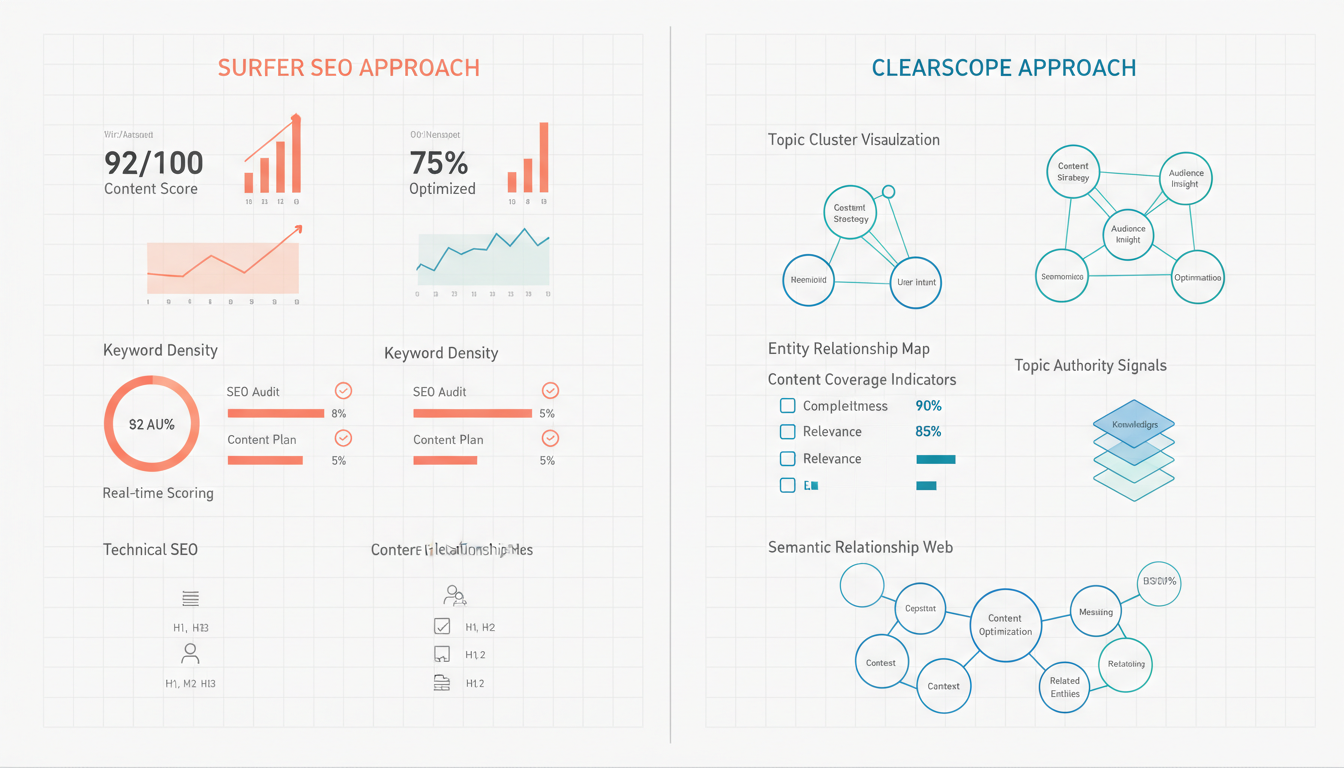
Both Surfer SEO and Clearscope dominate the AI content optimization market, but they approach the problem differently. Surfer prioritizes granular, data-driven optimization with real-time scoring. Clearscope focuses on comprehensive topic coverage and enterprise-grade content intelligence.
Choosing between them depends on your team size, budget, and workflow priorities. This comparison breaks down the features, pricing, and ideal use cases for each platform.
Understanding the fundamental philosophy behind each tool reveals which fits your needs.
Surfer SEO: Data-Driven Optimization
Surfer analyzes top-ranking pages for your target keyword using natural language processing (NLP). It extracts patterns—word count, keyword density, semantic terms, heading structures—and scores your content against these benchmarks. The Content Editor provides real-time feedback as you write, gamifying optimization into a clear target score.
The platform focuses on matching proven ranking patterns. If top results for "content marketing strategy" average 2,500 words with 15 headings and specific semantic terms, Surfer guides your content toward those metrics.
Clearscope: Topic Authority Approach
Clearscope emphasizes comprehensive topic coverage over keyword density metrics. The platform identifies the entities, concepts, and related terms that signal topical authority to search engines. Rather than counting keywords, Clearscope evaluates whether your content addresses the full scope of a subject.
The grading system (A++ to F) measures how thoroughly your content covers a topic compared to ranking competitors. Writers focus on comprehensiveness rather than hitting specific word counts or keyword frequencies. This approach aligns with broader schema markup alignment aeo strategies that help search engines understand content structure.
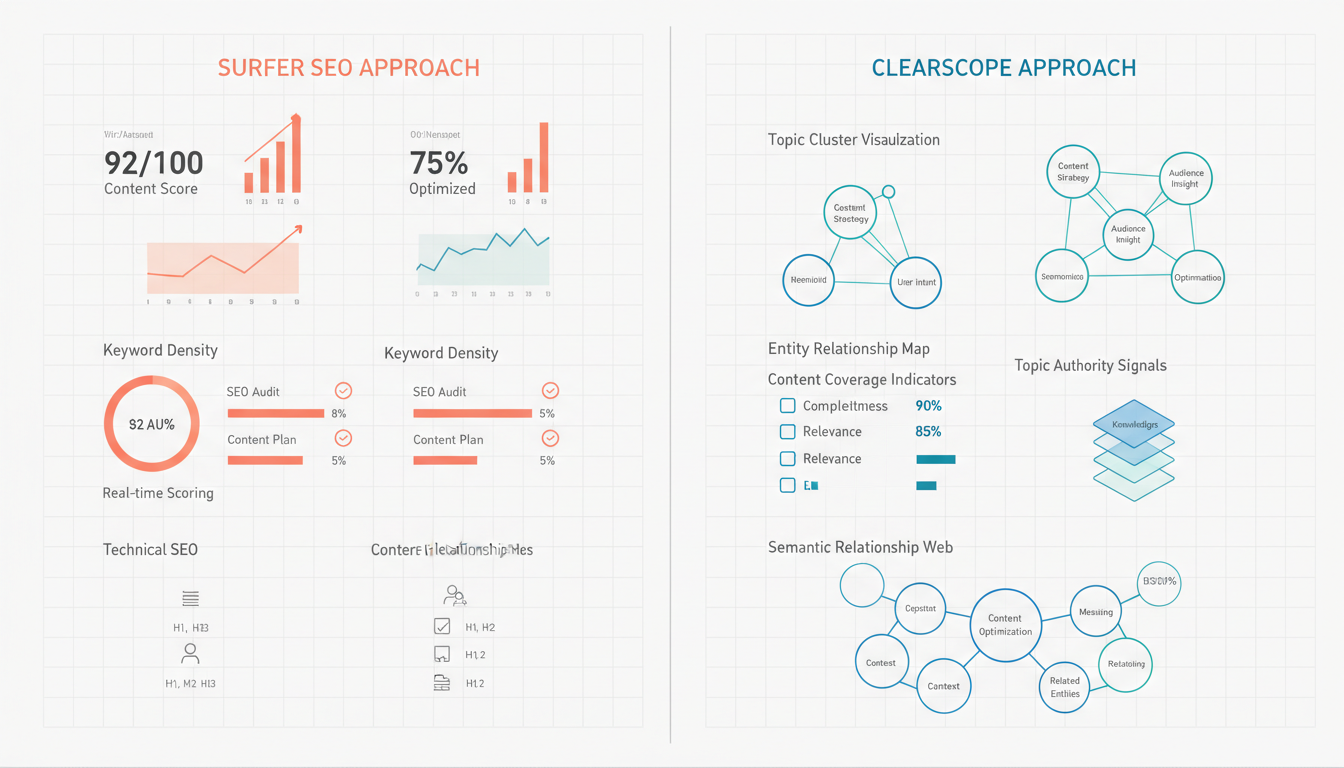
Both platforms share core optimization capabilities but differ in execution and scope.
Surfer SEO The Content Editor displays real-time scores as you write, with specific recommendations for word count, headings, paragraphs, and term usage. A sidebar shows exactly which terms to include and how often. The visual interface makes optimization feel achievable—watch your score climb as you incorporate suggestions.
Integrations with Google Docs and WordPress allow optimization within existing workflows. Writers don't need to copy content between systems.
Clearscope The editor grades content on a letter scale with a clean, focused interface. Recommendations emphasize topic coverage over keyword frequency. The system highlights which concepts are missing rather than prescribing exact term counts.
Clearscope's interface prioritizes writer experience over technical metrics. Non-SEO writers often find it less overwhelming than dashboards packed with numbers.
Surfer SEO Surfer AI generates complete SEO-optimized drafts based on your target keyword. The AI analyzes ranking content and produces articles designed to score well in Surfer's own editor. This creates a fast starting point, though human editing remains essential for accuracy and voice.
AI writing costs extra—per-article fees apply beyond your subscription.
Clearscope AI Drafts generate content outlines and full drafts within the platform. The monthly allocation varies by plan (20 AI Drafts at both Essentials and Business tiers). Clearscope's AI focuses on topical completeness rather than keyword optimization.
Surfer SEO Keyword research and SERP analysis tools identify target opportunities. The platform shows keyword clusters, search intent signals, and competitive difficulty. Content Audit features analyze existing pages for optimization opportunities.
Clearscope Topic Explorations provide deep research into subject areas before writing. The platform maps related concepts, questions users ask, and content gaps in your coverage. This pre-writing research helps plan comprehensive content strategies that align with what is an answer engine best practices.
Content Inventory monitors published pages and flags content needing updates based on competitive shifts or declining performance.
Surfer SEO AI Tracker monitors how your brand appears in AI-powered search engines. This Generative Engine Optimization (GEO) feature tracks visibility across ChatGPT, Perplexity, and other AI platforms—essential as search fragments across traditional and AI interfaces.
AI Tracker is an optional add-on starting around $95/month.
Clearscope Recent updates position Clearscope as a "discoverability platform" tracking visibility across Google Search and AI chatbots including ChatGPT, Gemini, and Perplexity. AI Tracked Topics monitor how your content appears in AI-generated answers, similar to dedicated generative engine optimization companies services.
AI tracking is included in subscription plans (20-50 tracked topics depending on tier).
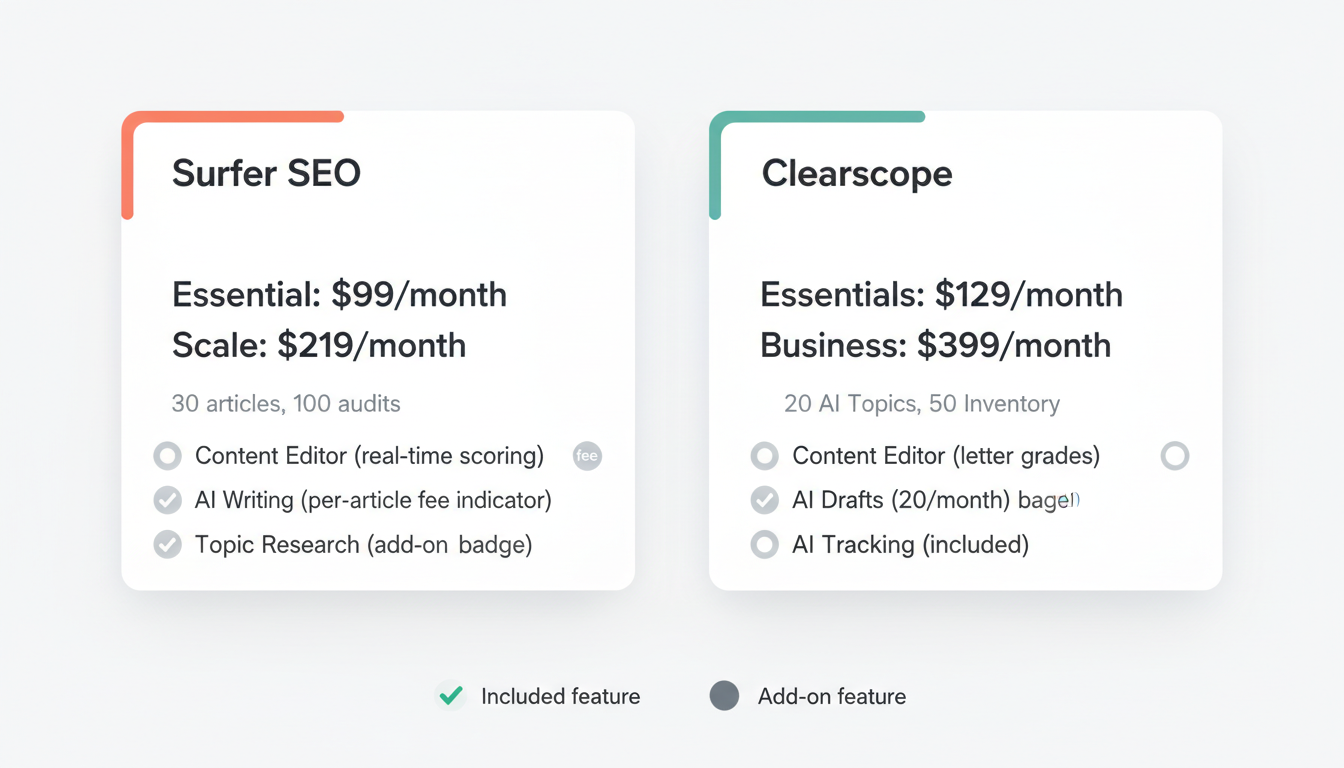
Cost structures differ significantly between platforms.
Plan | Monthly Price | Key Limits |
Essential | $99 | 30 articles, 100 audits |
Scale | $219 | Higher article/audit limits |
Enterprise | Custom | Custom allocations |
AI writing carries per-article fees beyond subscription costs. AI Tracker for GEO visibility is a separate add-on.
Plan | Monthly Price | Key Limits |
Essentials | $129 | 20 AI Tracked Topics, 20 Topic Explorations, 50 Inventory pages |
Business | $399 | 50 AI Tracked Topics, 50 Topic Explorations, 300 Inventory pages |
Enterprise | Custom | Custom allocations, SSO, dedicated support |
All plans include unlimited users and projects. No per-article fees for AI features.
Surfer's entry point ($99) undercuts Clearscope's Essentials ($129) by $30/month. However, adding Surfer's AI Tracker brings costs closer. For teams prioritizing GEO tracking, Clearscope's bundled AI visibility features may offer better value.
Clearscope's unlimited users benefit larger teams. Surfer's per-credit model works better for smaller operations with predictable content volumes.
Each platform serves different organizational needs.
You're a content writer or small team The visual Content Editor makes optimization accessible. Real-time scoring provides immediate feedback without deep SEO knowledge.
You need granular control Surfer's specific recommendations (exact term counts, word targets) suit teams wanting precise optimization guidance.
Budget constraints matter Lower entry pricing and pay-per-use AI writing fit tighter budgets, especially for freelancers or small agencies.
You prioritize Google Docs workflow Native Google Docs integration keeps content creation in familiar tools.
You're an enterprise content team Unlimited users, dedicated account managers, and enterprise features (SSO, crawler whitelisting) serve large organizations.
Non-SEO writers produce content The cleaner interface and topic-focused approach works better for writers uncomfortable with technical metrics.
Content strategy drives decisions Topic Explorations and Content Inventory support strategic planning, not just article-level optimization. Understanding the aeo vs geo distinction helps inform which approach fits your strategy.
AI visibility tracking is essential Built-in tracking across Google and AI chatbots avoids add-on costs.
Budget is flexible Higher pricing reflects enterprise positioning. Teams able to invest get comprehensive features without nickel-and-diming on add-ons.
Neither platform is perfect.
Integration | Surfer SEO | Clearscope |
Google Docs | Yes | Yes |
WordPress | Yes | Yes |
Google Search Console | Yes | Yes |
API Access | Scale+ plans | Enterprise |
Both integrate with essential content workflows. API access for custom integrations requires higher-tier plans on both platforms.
Many advanced SEO teams use both tools strategically:
This combination leverages Clearscope's strategic capabilities with Surfer's tactical optimization—at the cost of two subscriptions.
For most content teams, the choice comes down to scale and focus:
Start with Surfer SEO if you're a freelancer, small team, or budget-conscious operation wanting powerful optimization at accessible pricing. The Content Editor delivers immediate value for individual articles.
Invest in Clearscope if you're an enterprise team, agency, or organization prioritizing comprehensive content strategy over article-level tactics. The topic intelligence and AI visibility features justify premium pricing for teams that use them fully.
Both platforms deliver on their core promise: data-driven content optimization that improves rankings. The right choice depends on your organizational context, not which tool is objectively "better."
By submitting this form, you agree to our Privacy Policy and Terms & Conditions.