February 19, 2026


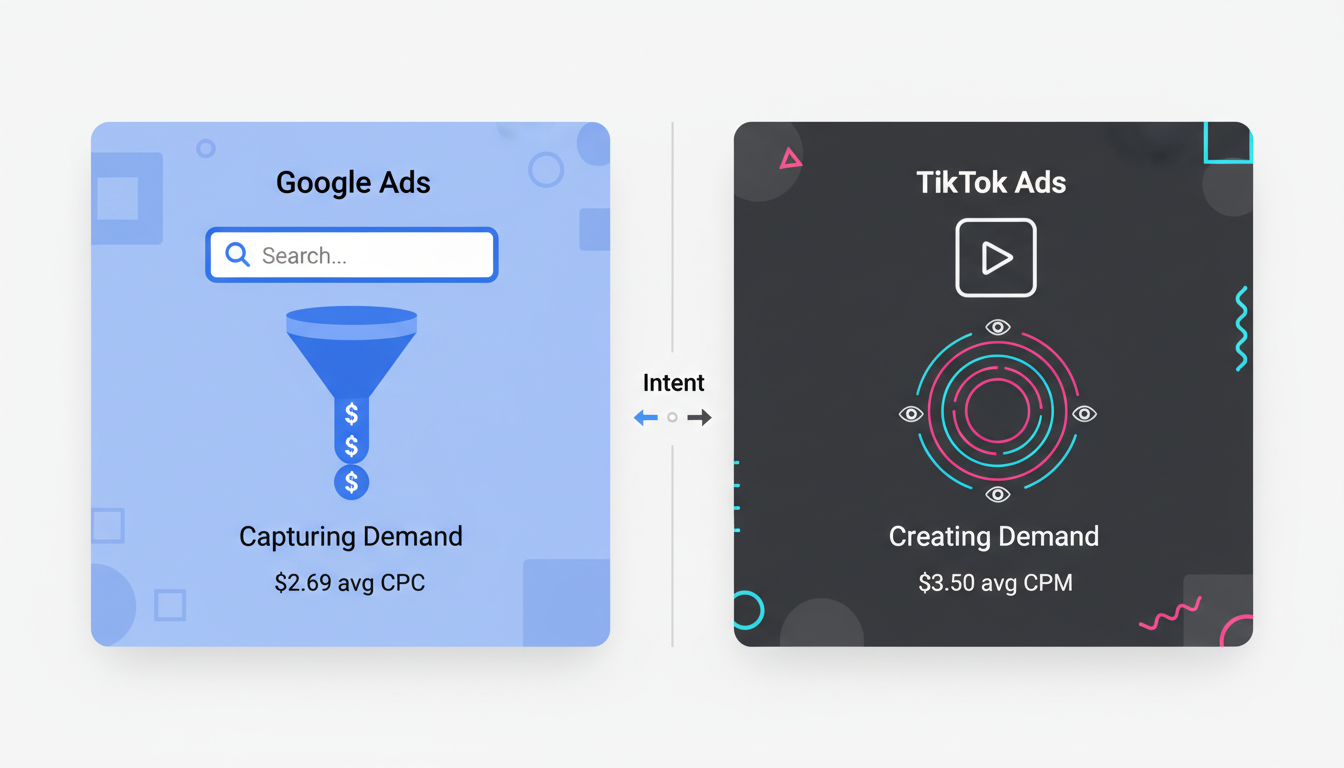
Choosing between TikTok and Google Ads isn't about which platform is "better"—it's about understanding when each delivers maximum value for your specific goals. These two advertising giants serve fundamentally different purposes in the customer journey.
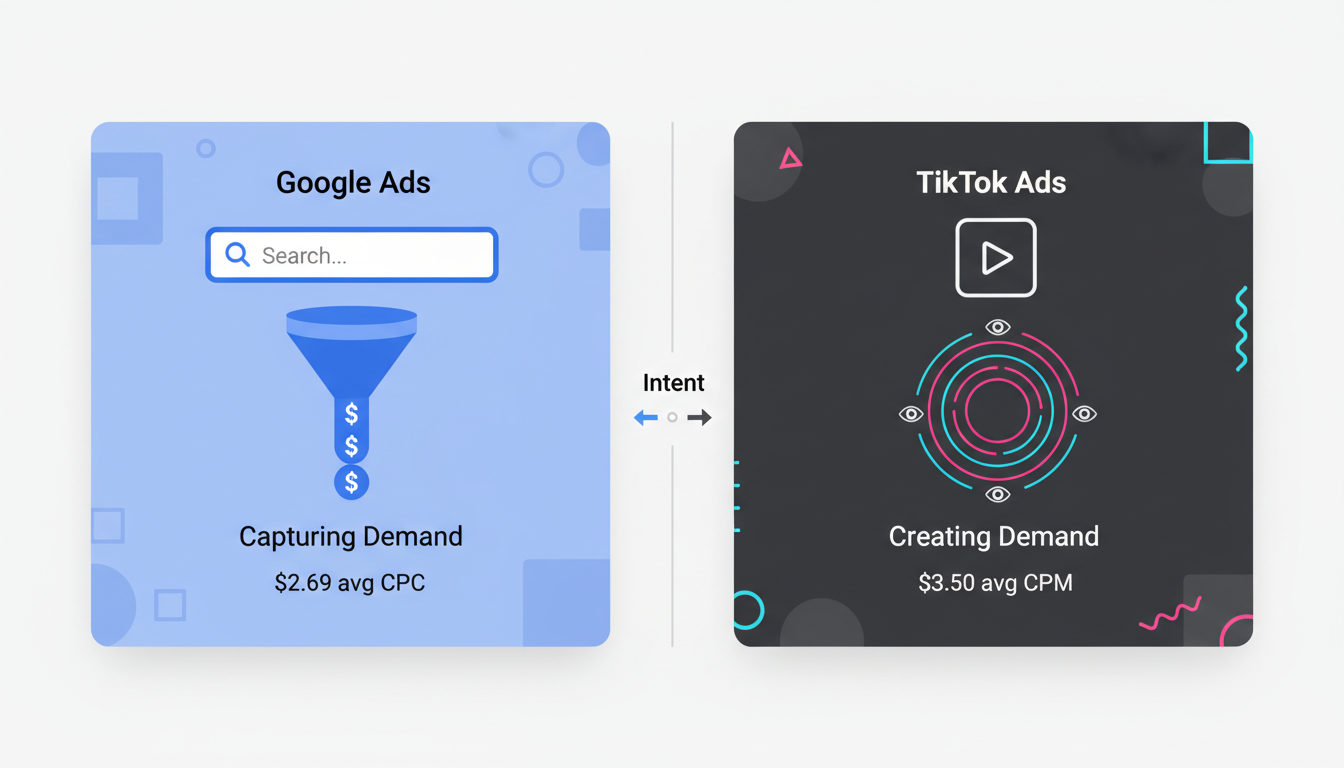
Google captures existing demand. TikTok creates new demand. The brands winning in 2026 understand this distinction and deploy both strategically.
The core difference between TikTok and Google Ads comes down to one word: intent.
Google Ads intercepts people actively searching for solutions. When someone types "best running shoes for flat feet" into Google, they're demonstrating clear purchase intent. They've identified a problem and are seeking answers.
Research shows that 87% of industries saw CPC increases in 2025, yet 65% also saw conversion rates rise. Despite higher costs, Google Ads remains defensible because you're reaching people ready to act.
Google Ads excels at:
TikTok reaches people who aren't looking for your product yet. Users open TikTok for entertainment, not shopping. But TikTok users are 1.2x more likely to impulse-shop than users on other platforms—precisely because they're not in "skeptical shopper" mode.
41% of U.S. consumers have used TikTok as a search engine, with significantly higher usage among Gen Z. The platform is increasingly where product discovery happens, particularly for TikTok ads for ecommerce 2026 strategies.
TikTok Ads excels at:
Understanding where each platform fits in the buyer's journey helps you allocate budget effectively.
Google users arrive with problems to solve:
This intent-driven behavior means higher conversion rates but also higher competition. Everyone wants to capture that ready-to-buy traffic, which drives costs up.
TikTok users arrive to be entertained:
As advertising expert Jaclyn VanSloten notes: "It's cheaper to get the impression out there, but there may be less actions happening on TikTok" because many users are in discovery rather than purchase mode.
This creates opportunity. Understanding TikTok CPM benchmarks 2026 helps you gauge whether your campaigns are cost-effective for top-of-funnel brand building. You're planting seeds rather than harvesting.
Let's look at actual numbers for 2026.
According to 2026 benchmarks from multiple industry sources:
Metric | TikTok Range | Notes |
CPM | $2.62 - $9.16 | Awareness: $4-10; Conversion: higher |
CPC | $0.30 - $1.50 | Traffic: $0.40-1.20; Conversion: $1-2.50 |
CPV | $0.01 - $0.07 | Per 6+ second view |
Minimum campaign | $500 | Plus $50/day ad group minimum |
TikTok's global average CPM sits around $3.50, making it one of the most cost-effective platforms for reach, especially compared to Meta's $6.59 average CPM.
Google Ads costs vary significantly by industry:
Industry | Average CPC (Search) | Average CPC (Display) |
E-Commerce | $1.16 | $0.45 |
B2B | $3.33 | $0.79 |
Legal | $6.75 | $0.72 |
Consumer Services | $6.40 | $0.81 |
Finance & Insurance | $3.44 | $0.86 |
The U.S. average Google Search CPC is approximately $2.69, with costs trending up 12% year-over-year.
Raw CPM and CPC comparisons can be misleading. What matters is cost per result.
TikTok typically delivers:
Google typically delivers:
For a product launch, TikTok might spend $3 CPM to reach 100,000 people and generate awareness. Google might spend $2.50 per click to reach 400 high-intent searchers who convert at 4%—generating 16 sales.
Different goals, different metrics.
New product launches: TikTok excels at introducing products people didn't know they wanted. The entertainment-first format lets you demonstrate value before viewers realize they're being sold to.
Building brand awareness: With TikTok expecting $77 billion from TikTok Live by 2027 and shop sales forecast to exceed $20 billion in 2026, the platform is becoming a full-funnel solution for brand building.
Reaching younger demographics: 25-44 is TikTok's fastest-growing segment, but the platform still over-indexes for Gen Z and younger millennials who increasingly use it as a search engine.
Visual products: Fashion, beauty, food, and home goods that benefit from demonstration thrive on TikTok's video-first format. TikTok advertising beauty brands have seen particularly strong results with the platform's visual storytelling capabilities.
Impulse purchases: Products under $50 with emotional appeal convert well when users discover them mid-scroll, particularly when using TikTok ads for dropshipping 2026 strategies.
Capturing existing demand: When people are already searching for your product category, Google ensures you're present at the decision moment.
High-consideration purchases: B2B software, legal services, financial products—categories where buyers research extensively before committing.
Service-based businesses: Local services where geographic targeting and immediate intent matter (plumbers, accountants, medical providers).
Bottom-funnel conversions: When users have awareness and just need the final push, Google's intent-based targeting closes deals.
Competitive categories: Industries where being absent from search means losing to competitors who are there.
The most effective advertising strategies combine both platforms, using each where it performs best.
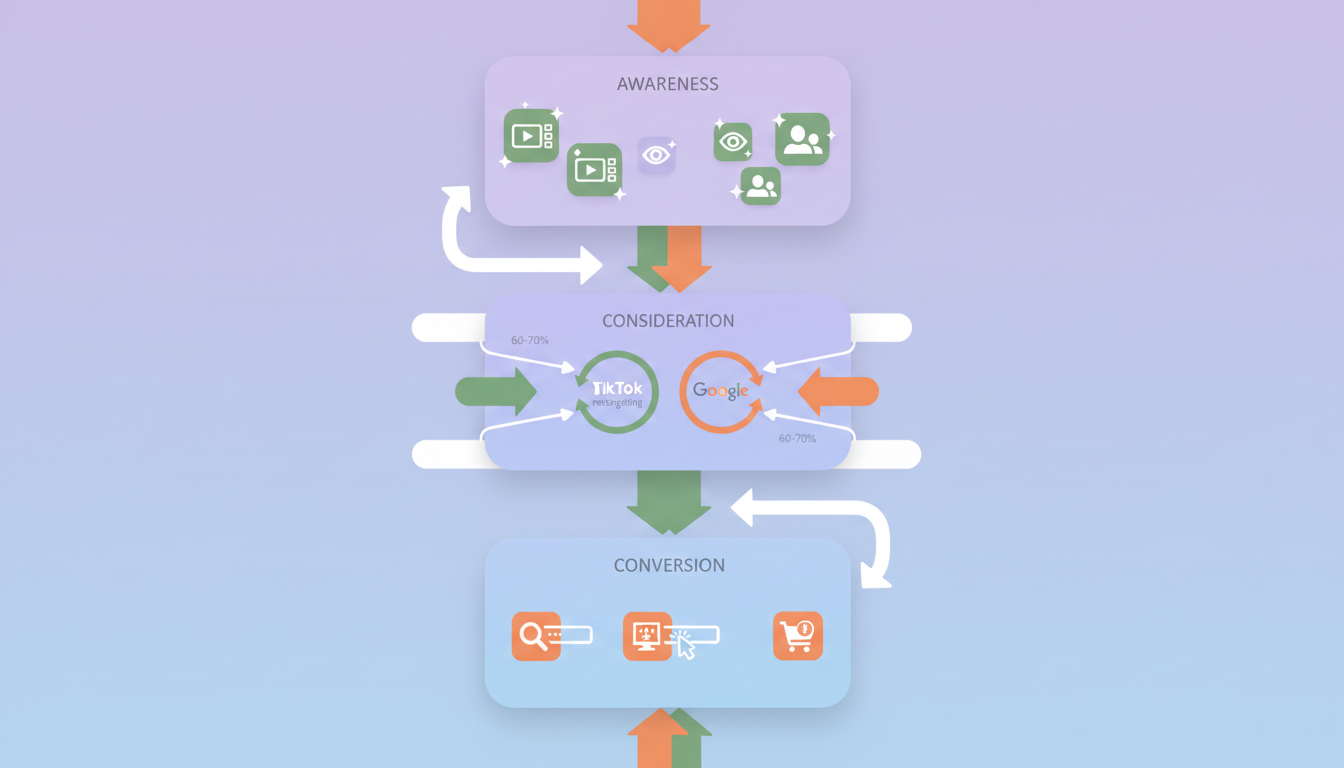
TikTok for top/mid funnel:
Google for mid/bottom funnel:
TikTok's impact often doesn't show in last-click attribution. Someone might discover your product on TikTok, then search for it on Google a week later. Google gets the conversion credit, but TikTok drove the awareness.
Track:
For most e-commerce brands in 2026:
Adjust based on your conversion data and customer acquisition cost targets.
Yes, on a CPM basis. TikTok's average CPM ($3.50) is significantly lower than Google's costs. However, Google's intent-driven users convert at higher rates, so cost-per-acquisition can favor either platform depending on your product and targeting.
No. They serve different purposes. TikTok creates demand among users who aren't searching. Google captures demand from users ready to buy. Most businesses benefit from using both—TikTok for awareness, Google for conversion.
It depends on your goals. TikTok claims 96% higher ROAS compared to traditional digital channels for brands leveraging the creator economy. Google delivers strong ROI for capturing high-intent searches. Measure both platforms against your specific KPIs.
By submitting this form, you agree to our Privacy Policy and Terms & Conditions.