February 19, 2026


Basic GEO optimization gets brands mentioned by AI systems. Advanced GEO optimization ensures brands become the go-to authority that AI consistently cites, recommends, and trusts across platforms. Moving beyond foundational tactics requires sophisticated approaches to citation engineering, entity development, and cross-platform optimization.
According to Omnius's GEO agency analysis, top agencies employ comprehensive GEO strategies with 22+ specialized techniques, including AI crawler optimization, strategic keyword placement, and schema markup that go far beyond basic content optimization.
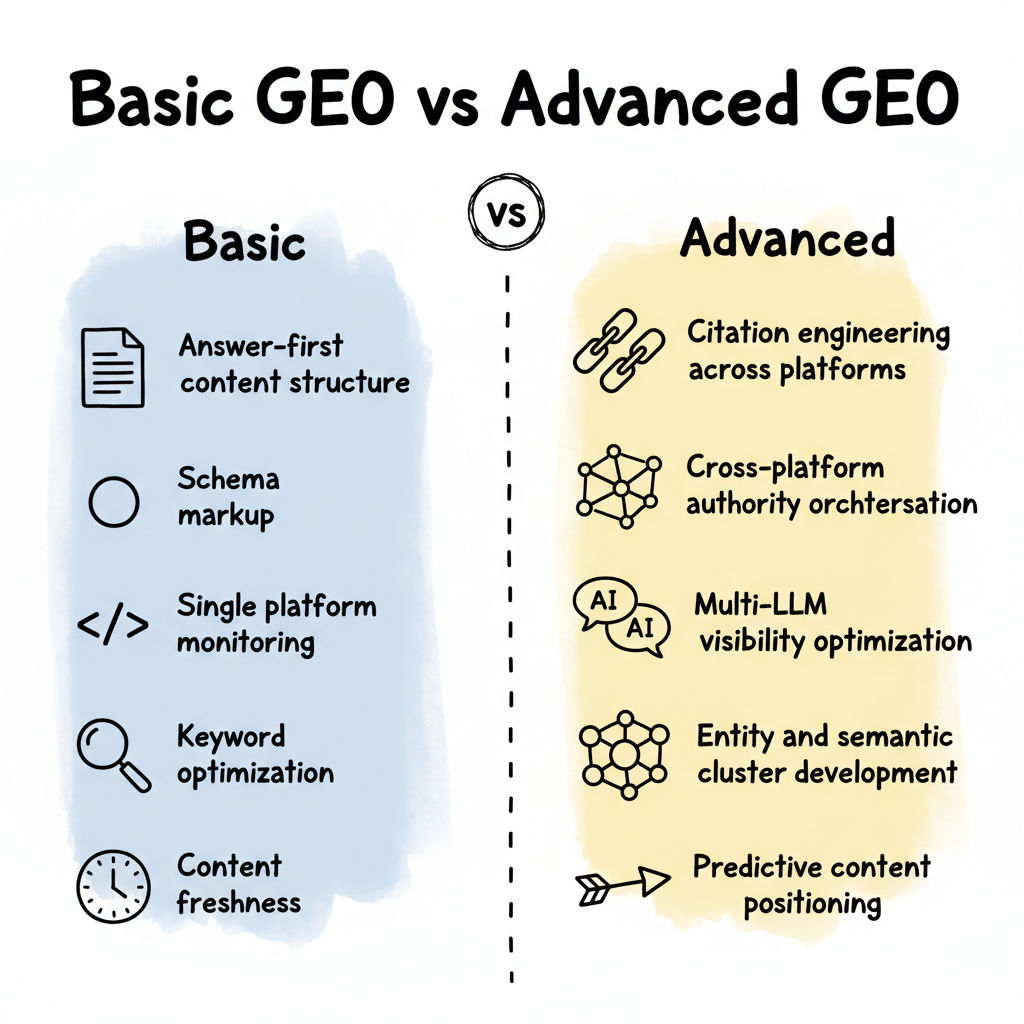
Basic GEO focuses on making content AI-accessible. Advanced GEO focuses on making your brand the authoritative source AI systems prefer to cite.
According to Wellows' citation research, across ChatGPT, Perplexity, and Google AI Overviews, brands are surfaced based on citation eligibility, source overlap, and entity signals rather than backlink volume. Platforms surface sources based on structure, authority signals, entity clarity, and cross-platform consensus.
Basic vs advanced GEO:
Basic GEO | Advanced GEO |
Answer-first content structure | Citation engineering across platforms |
Schema markup implementation | Cross-platform authority orchestration |
Single platform monitoring | Multi-LLM visibility optimization |
Keyword optimization | Entity and semantic cluster development |
Content freshness | Predictive content positioning |
Citation engineering goes beyond hoping AI mentions your brand—it systematically increases citation probability through strategic content positioning.
According to Xponent21's citation analysis, AI SEO is the practice of structuring a brand's information ecosystem—content, architecture, semantic clusters, and workflow-level expertise—so generative AI systems like Google's AI Overviews and LLMs such as ChatGPT, Perplexity, and Gemini can accurately retrieve, interpret, and cite it.
Citation engineering tactics:
Tactic | Implementation | Impact |
Citation overlap analysis | Study which sources AI cites together | Position alongside trusted sources |
Semantic cluster coverage | Build comprehensive topic ecosystems | Establish topical authority signals |
Cross-reference density | Include verifiable facts with sources | Pass AI verification checks |
Quote-ready passages | Create extractable authoritative statements | Increase direct citation probability |
Entity disambiguation | Clarify brand identity across web | Reduce citation confusion |
According to Nick Lafferty's AI SEO tools review, citation volume varies dramatically by platform—Google AI Overviews cites approximately 7.7 domains per response while ChatGPT only cites approximately 5.0 domains, meaning brands have 50% fewer opportunities for inclusion in ChatGPT answers.
Different AI platforms evaluate authority differently. Advanced GEO requires platform-specific optimization strategies that align with how each system evaluates and ranks content for generative engine optimization.
According to The Ad Firm's 2026 AI data analysis, businesses measuring AI SEO report a 527% increase in AI search traffic, with top performers exceeding that mark through structured content and consistent citation signals.
Platform-specific authority signals:
Google AI Overviews
├── Prioritizes existing SERP authority
├── Values structured data heavily
├── Cites based on topical clusters
└── Responds to freshness signals

ChatGPT
├── Values encyclopedic comprehensiveness
├── Prefers balanced perspectives
├── Cross-references training data
└── Cites fewer sources per response

Perplexity
├── Heavy emphasis on recency
├── Real-time web search integration
├── Values direct source attribution
└── Frequent re-crawling of sources

Claude
├── Values nuanced expertise
├── Prefers well-reasoned arguments
└── Cross-platform source validation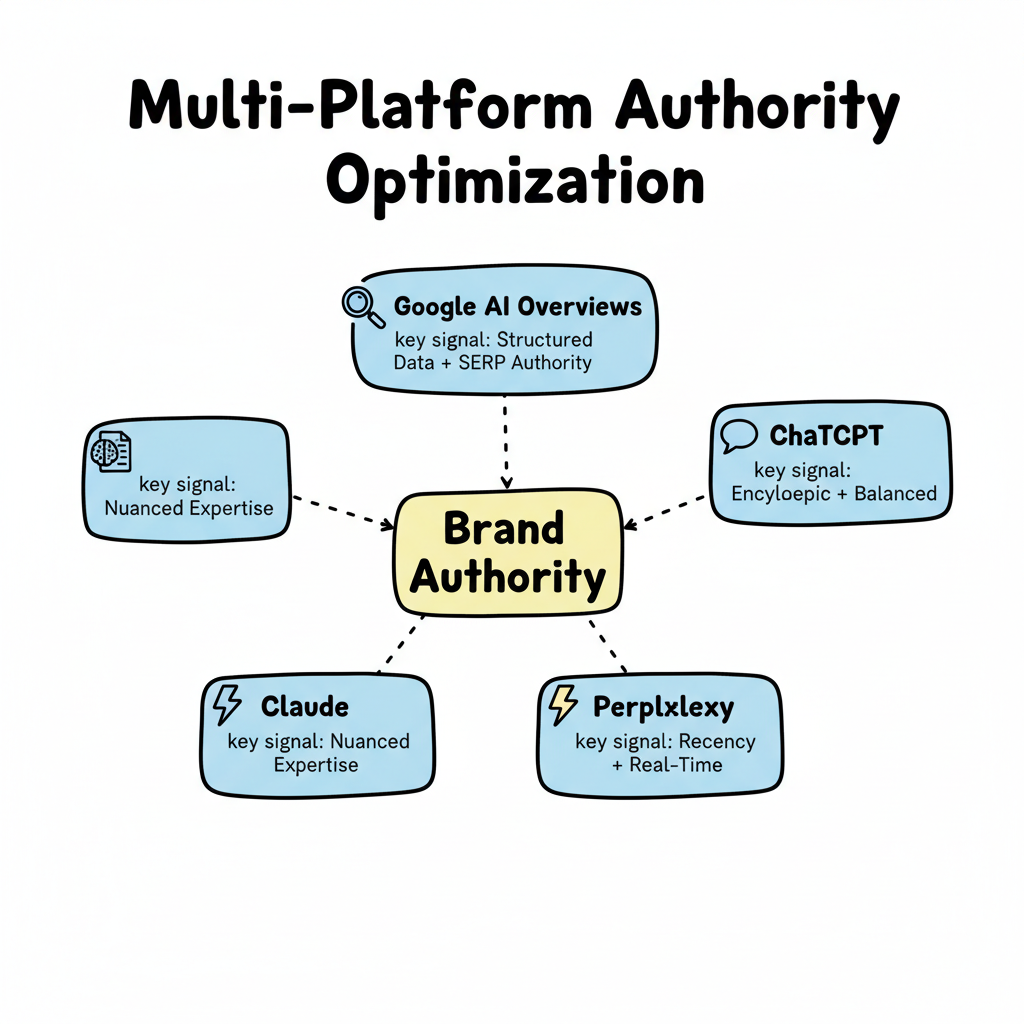
AI systems recognize and trust entities—distinct concepts with consistent identity across the web. Advanced GEO requires systematic entity development.
According to Exaalgia's LLM visibility guide, LLM visibility is the ability of a large language model to refer to your brand, product, or content in their responses with the desired level of frequency, accuracy, and sentiments. When a user asks an AI a question, the AI returns a response, and your brand needs to be in that response for high visibility.
Entity optimization framework:
Element | Purpose | Implementation |
Consistent NAP+E | Name, Address, Phone, Entity type | Identical across all platforms |
Knowledge graph signals | Machine-readable entity data | Schema, Wikipedia, Wikidata |
Entity associations | Connect to related authoritative entities | Co-mentions, partnerships, citations |
Brand search demand | Create search volume for brand terms | PR, advertising, content marketing |
Sentiment management | Maintain positive entity associations | Review management, PR response |
Beyond basic schema and site structure, advanced technical GEO addresses AI crawler behavior and content accessibility. Understanding these technical elements provides the foundation for maximizing generative engine optimization benefits.
According to PageTraffic's AI optimization guide, LLMS.txt will become a common standard for helping AI models understand how to explore, read, and use content from websites. This standardization helps content creators and AI developers work together better.
Advanced technical implementations:
Technical priority matrix:
Implementation | Effort | Impact | Priority |
Comprehensive schema | Medium | High | 1 |
LLMS.txt deployment | Low | Medium | 2 |
AI crawler configuration | Low | Medium | 3 |
API endpoints | High | Medium | 4 |
Semantic markup refinement | Medium | Medium | 5 |
Advanced GEO anticipates what AI systems will need to answer, not just what they currently cite.
According to LSEO's State of SEO report, advanced engine optimization encompasses a more advanced understanding of search engine algorithms, user intent, and personalization, requiring predictive and personalized SEO strategies.
Predictive positioning tactics:
Advanced optimization requires advanced measurement beyond basic citation counting, similar to how AEO metrics and KPIs provide comprehensive performance insights.
According to PR News Online's GEO guide, advanced GEO tools increasingly provide insight into which journalists, outlets, and websites shape AI understanding of a brand. Reports that place GEO metrics alongside SEO metrics provide a more complete view of brand visibility.
Advanced GEO metrics:
Metric | What It Measures | Why It Matters |
Citation velocity | Rate of new citations over time | Growth trajectory |
Platform distribution | Coverage across AI engines | Reach breadth |
Citation context quality | Accuracy and favorability of mentions | Brand representation |
Competitive citation share | Your citations vs competitors | Market position |
Attribution chain depth | How sources cite you citing others | Authority positioning |
Advanced GEO optimization requires systematic expertise development:
According to Dashspert's optimization guide, technical optimization for AI and LLM-driven search is no longer just about canonical tags and fast load times—it's about translating your on-page expertise into machine-readable language that empowers search algorithms to understand, distill, and present your content as authoritative answers.
By submitting this form, you agree to our Privacy Policy and Terms & Conditions.