
February 19, 2026


GEO content optimization transforms existing content into material AI systems want to cite. Most businesses have content libraries full of valuable information that AI platforms overlook—not because the content lacks quality, but because its structure makes extraction difficult.
Systematic content transformation turns invisible assets into cited sources.
Random optimization wastes effort. Start by understanding what you have and how AI platforms currently treat it.
Content inventory questions:
Current visibility assessment:
Test your priority content against relevant AI queries. Note which pages get cited, which get mentioned without links, and which never appear.
This audit reveals optimization priorities—content with high potential that underperforms due to structural issues. Understanding ai-search-user-demographics helps target your transformation efforts toward queries your audience actually uses.
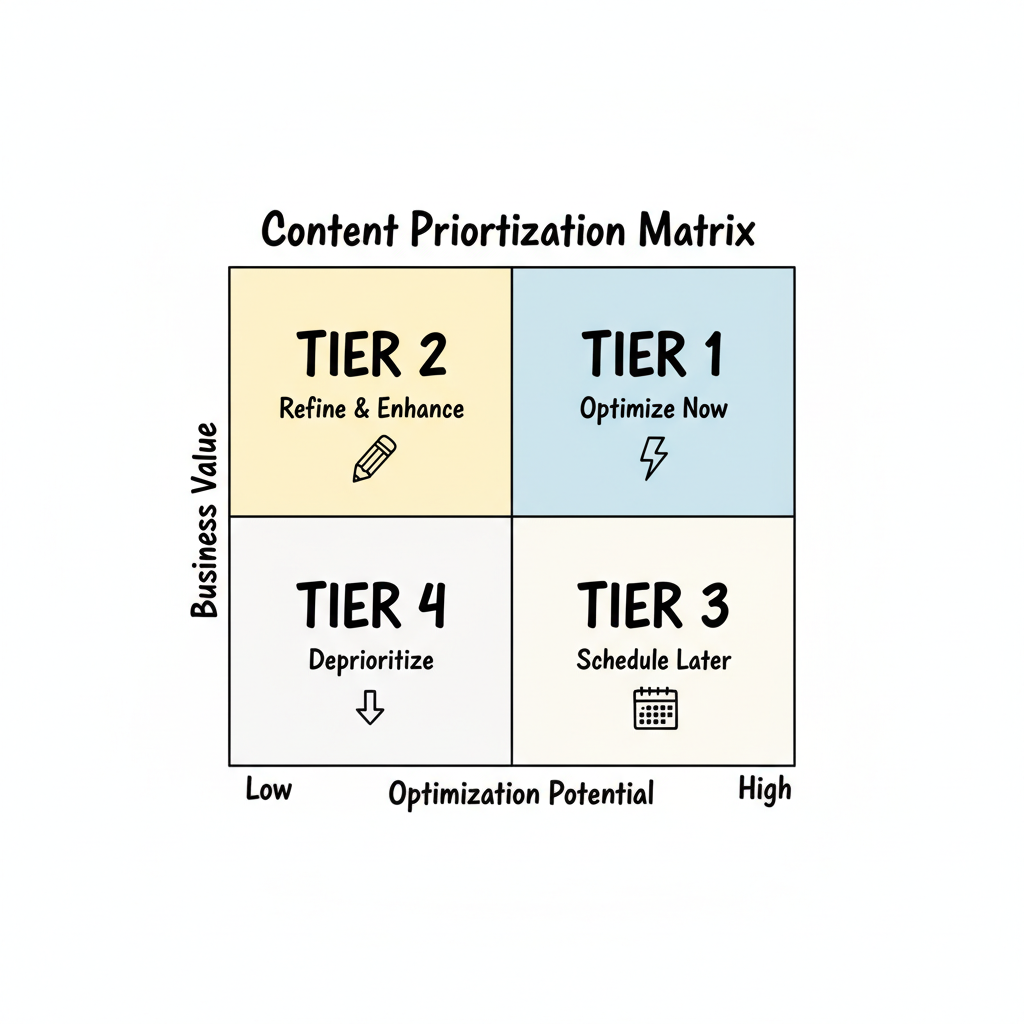
Not all content deserves equal optimization investment. Prioritize based on two factors:
Business value: How important is this topic for driving leads, sales, or brand awareness?
Optimization potential: How much improvement is possible given current state?
Priority tiers:
Priority | Business Value | Current State | Action |
Tier 1 | High | Poorly structured | Optimize immediately |
Tier 2 | High | Partially optimized | Refine and enhance |
Tier 3 | Medium | Poorly structured | Schedule optimization |
Tier 4 | Low | Any | Consider deprioritizing |
Focus Tier 1 content first. Visible improvements come faster when starting with high-value content that has obvious structural problems.
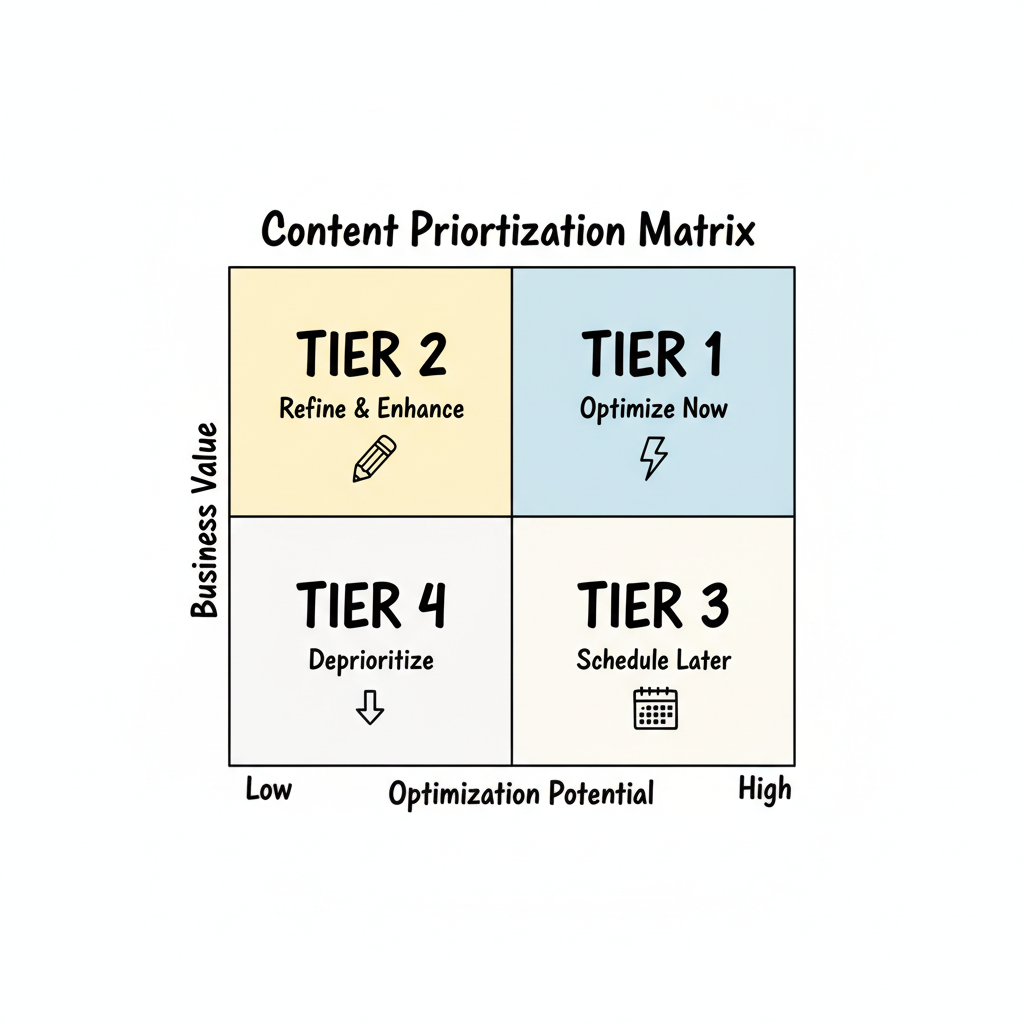
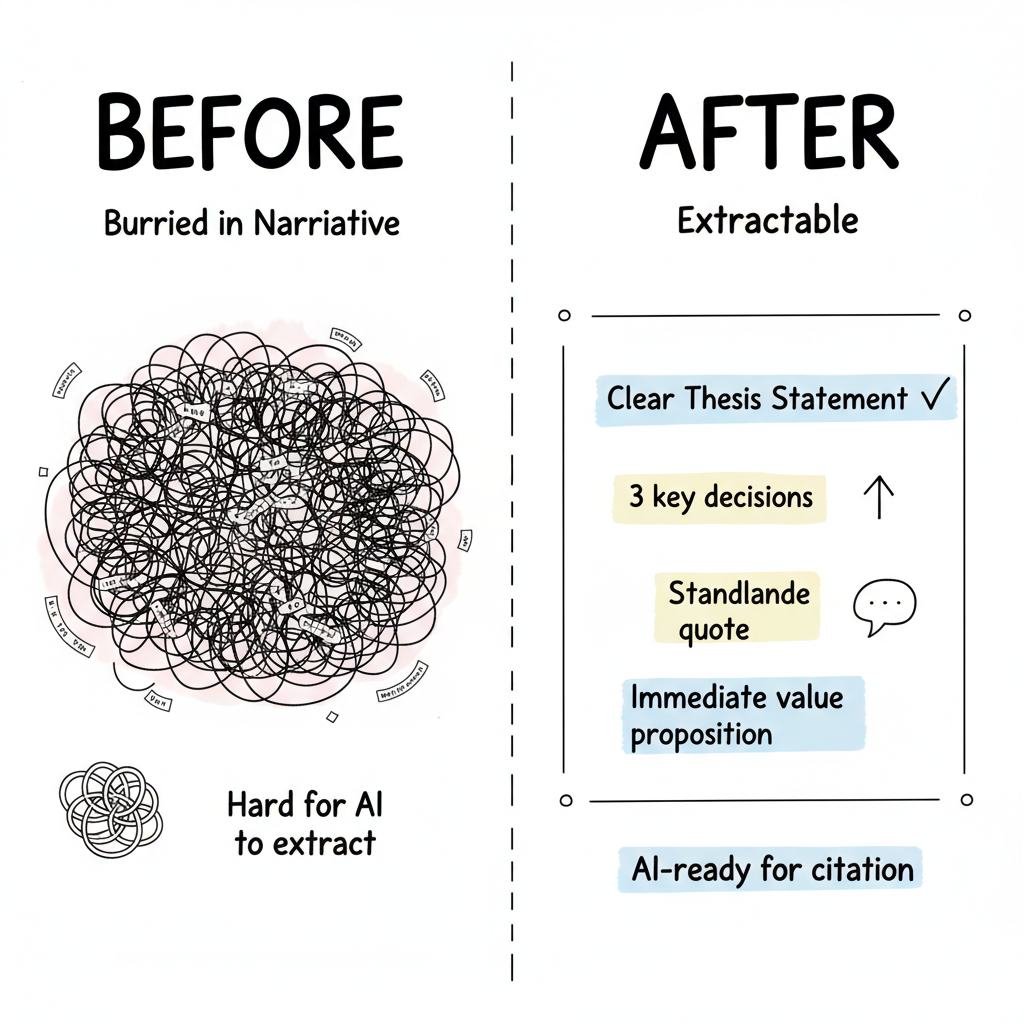
Traditional content often buries information in flowing narrative. AI systems struggle to extract clean statements from this format.
Before (narrative):
"When thinking about implementing a CRM system, many businesses struggle with the initial decisions. There are various factors to consider, and the choices can seem overwhelming at first. However, by focusing on a few key areas, you can simplify the decision-making process considerably."
After (extractable):
"CRM implementation success depends on three key decisions: selecting the right platform for your team size, planning your data migration strategy, and establishing user adoption processes. Each decision has specific criteria that simplify choices."
The transformed version:
AI systems match content to user queries. Headers that reflect actual questions improve this matching.
Before:
## Implementation Considerations
## Common Challenges
## Success Factors
After:
## What Should You Consider Before CRM Implementation?
## What Challenges Do Teams Face During CRM Rollout?
## What Makes CRM Implementation Successful?
Question headers signal that the following content answers that specific question—exactly what AI systems seek. This technique complements broader aeo-optimization strategies that improve content discoverability across AI platforms.
Each paragraph should function as a potential AI citation. Test by reading paragraphs in isolation.
Paragraph checklist:
Paragraphs failing this test need restructuring. Split compound paragraphs. Add context that currently lives only in surrounding text. Remove hedging language that undermines quotability.
AI extraction often focuses on first sentences after headers. These positions require your strongest information.
Weak opening:
"There are many things to think about here..."
Strong opening:
"Email marketing delivers $42 ROI for every dollar spent, making it the highest-return digital channel."
Front-load facts, statistics, and definitive statements. Save caveats and nuance for subsequent sentences.
While restructuring content, add supporting schema markup.
FAQ schema: Add to pages with question-answer content. Makes Q&A pairs explicitly machine-readable.
Article schema: Include author credentials, publication date, and modification date. Supports freshness and authority signals.
HowTo schema: Implement on procedural content. Structures steps for easy extraction.
Schema adds approximately 10% improvement to how AI systems understand and rank content. Combined with proper ai-overview-content-requirements, these elements significantly boost citation potential.
Update timestamps during transformation. AI platforms favor recently maintained content.
Freshness elements:
A content transformation opportunity is also a freshness opportunity.
While restructuring, improve internal link context. AI systems follow links to understand topic relationships.
Linking improvements:
For each transformed page, document:
After 30-60 days post-transformation:
Tracking improvements using searchgpt-citation-tracking-measuring-visibility provides concrete metrics for transformation success.
Transformation isn't one-time. Establish ongoing monitoring:
Weekly: Spot-check priority queries for citation changes Monthly: Comprehensive review across transformed pages Quarterly: Full audit including competitive analysis
Use monitoring insights to refine transformation techniques for future content.
Stuffing every paragraph with keywords and statistics creates unnatural content. AI systems recognize and penalize obvious manipulation.
Guideline: Optimize for extraction while maintaining natural readability. If content sounds robotic when read aloud, you've over-optimized.
Transformation should improve structure, not sacrifice accuracy. Never add statistics you can't source or claims you can't support.
Inaccurate content might initially get cited, but AI platforms increasingly verify information. Short-term visibility from dubious claims creates long-term credibility damage.
Some content requires surrounding context to be accurate. Don't transform nuanced content into oversimplified statements that misrepresent your position.
Example: "This approach works in most situations" shouldn't become "This approach always works." Preserve accuracy even when creating quotable statements.
Not every page benefits from the same transformation. Generic bulk updates miss content-specific opportunities.
Take time with high-value pages. Generic templates work for lower-priority content, but Tier 1 pages deserve individual attention.
By submitting this form, you agree to our Privacy Policy and Terms & Conditions.



