February 19, 2026


Google's AI Overviews have transformed how search results appear—compressing multiple sources into synthesized answers that directly address user queries. For content creators, this shift demands understanding not just how to rank, but how to become citable by AI systems.
This guide covers the specific content requirements that make your pages more likely to appear in AI Overview citations, based on current patterns and Google's guidance.
AI Overviews don't simply pull from the top-ranking result. Google's systems evaluate content for:
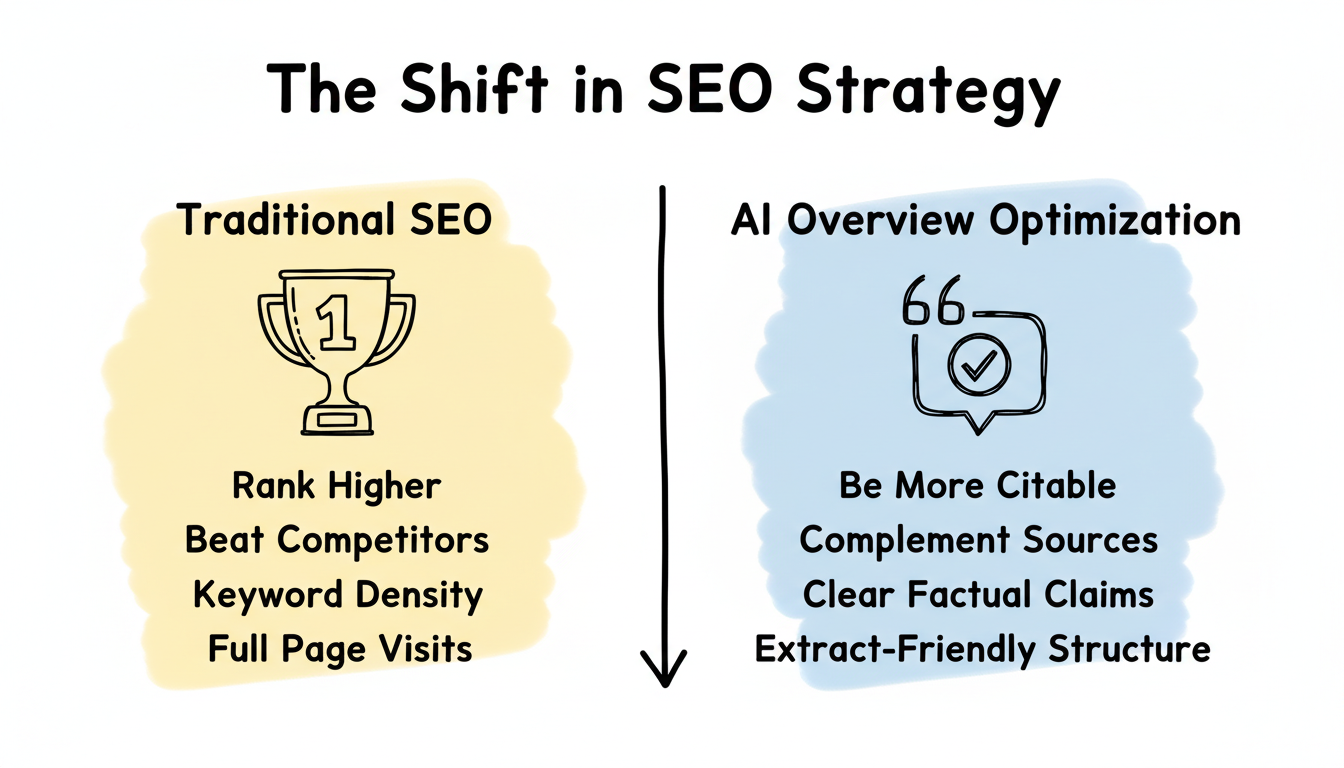
Traditional SEO focuses on ranking position. AI Overview optimization focuses on citability—being useful as a source matters more than being first.
Traditional SEO | AI Overview Optimization |
Rank higher | Be more citable |
Beat competitors | Complement other sources |
Full page visits | Extract-friendly structure |
Keyword density | Clear, factual claims |
AI systems favor content structured for easy information extraction. Similar to how table featured snippets optimization requires precise formatting, AI Overviews benefit from clear structural signals.
Clear, descriptive headings help AI identify relevant sections:
Effective headings:
Heading example:
H1: AI Overview Content Requirements
  H2: How AI Overviews Select Content
  H2: Content Structure Requirements
    H3: Strong Heading Hierarchy
    H3: Clear Factual Claims
  H2: Content Types That Perform Best
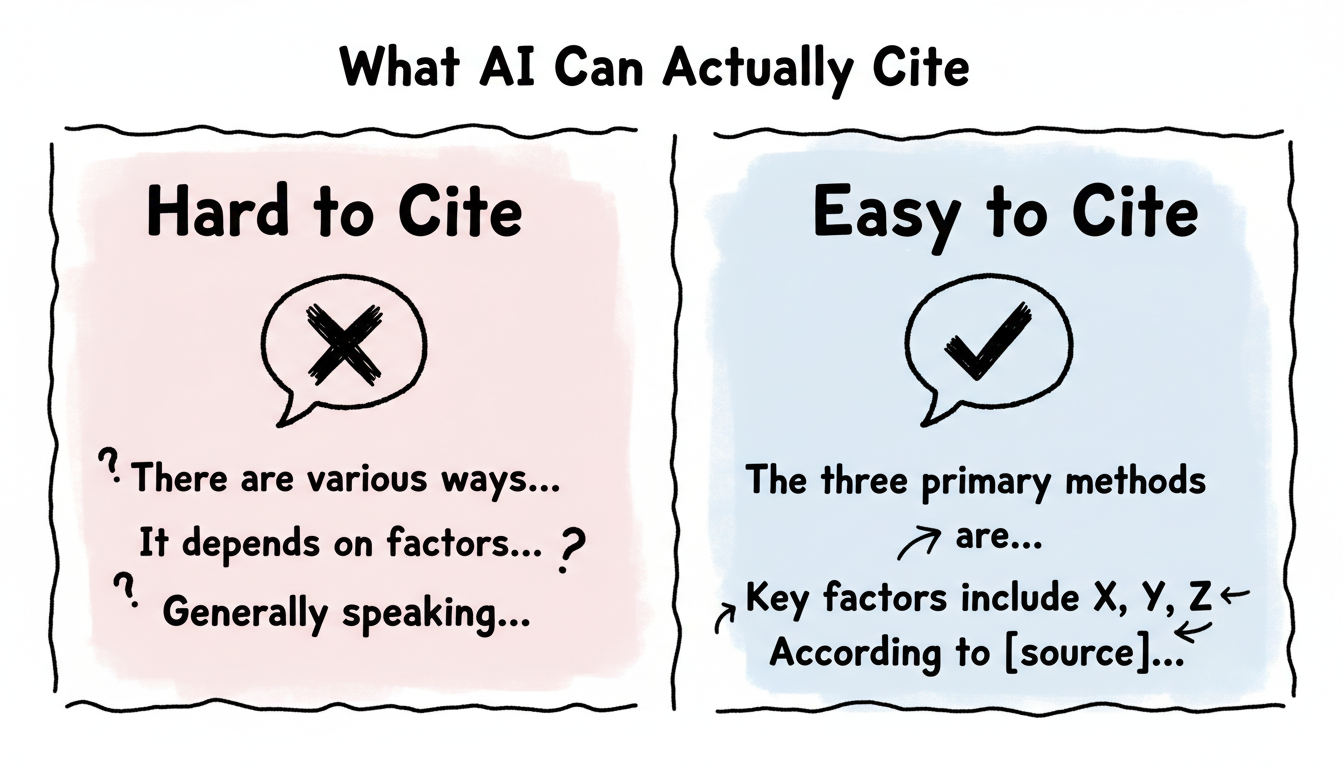
AI Overviews extract definitive statements. Vague or hedged content gets passed over.
Citable content patterns:
Weak (Hard to Cite) | Strong (Easy to Cite) |
"There are various ways to..." | "The three primary methods are..." |
"It depends on many factors" | "Key factors include X, Y, and Z" |
"Generally speaking..." | "According to [source], specifically..." |
"Many experts believe..." | "[Expert] states that..." |
For how-to content, break processes into numbered, discrete steps:
Structure example:
Each step should be extractable as a standalone instruction while contributing to the complete process.
Content length requirements vary by query type and intent.
Content Type | Recommended Length | AI Overview Likelihood |
Quick answers | 400-800 words | High for simple queries |
Standard guides | 1,200-1,800 words | High for moderate complexity |
Comprehensive guides | 2,500-5,000+ words | High for complex topics |
Reference content | Variable | High for factual queries |
AI Overviews favor comprehensive coverage. Thin content covering many topics superficially performs worse than deep content on specific subjects.
Depth indicators AI recognizes:
Structured data helps AI understand your content, though schema alone won't guarantee citation. Many SEO automation tools include schema generation capabilities to streamline this process.
FAQ Schema: Mark up frequently asked questions with direct answers. AI Overviews often pull from FAQ-structured content.
{
  "@type": "FAQPage",
  "mainEntity": [{
    "@type": "Question",
    "name": "What content requirements apply to AI Overviews?",
    "acceptedAnswer": {
      "@type": "Answer",
      "text": "AI Overviews favor content with clear headings, factual claims..."
    }
  }]
}
HowTo Schema: For instructional content, HowTo schema makes steps explicit:
{
  "@type": "HowTo",
  "name": "How to Optimize Content for AI Overviews",
  "step": [{
    "@type": "HowToStep",
    "name": "Structure content with clear headings",
    "text": "Use descriptive H2 and H3 headings..."
  }]
}
Organization and Author Schema: E-E-A-T signals from Organization and Person schema support content authority.
Schema markup supports AI understanding but doesn't replace content quality. Implement schema to clarify what your content covers—not to manipulate what AI extracts.
Certain content formats consistently earn AI Overview citations.
Comprehensive guides (2,500+ words): Deep coverage of topics with multiple sections, examples, and expert insights.
Original research: Proprietary data, surveys, and analysis that other sources cite. AI values unique information, particularly AI-powered search engine statistics that provide concrete metrics.
Comparison content: Side-by-side evaluations with clear criteria and conclusions. AI Overviews often synthesize comparison data.
Case studies: Real examples with specific metrics and outcomes. Concrete data performs better than general claims.
Expert roundups: Multiple expert perspectives compiled with attribution. Diverse viewpoints increase citability.
Experience, Expertise, Authoritativeness, and Trustworthiness signals influence AI citation likelihood.
Experience indicators:
Expertise indicators:
Authoritativeness indicators:
Trustworthiness indicators:
Use this checklist to evaluate content for AI Overview citability:
No. AI Overviews synthesize from multiple sources, prioritizing citability and relevance over ranking position. Content at position 5 can be cited while position 1 is not.
There's no minimum, but comprehensive content (1,200+ words) generally performs better. Quick answers for simple queries can be shorter if sufficiently authoritative.
No. Schema helps AI understand your content but doesn't guarantee citation. Content quality, accuracy, and authority remain primary factors.
Review and update content quarterly at minimum. AI systems favor current information, and outdated content loses citation potential over time. Understanding content freshness signals answer engines use can help prioritize update schedules.
By submitting this form, you agree to our Privacy Policy and Terms & Conditions.