February 19, 2026


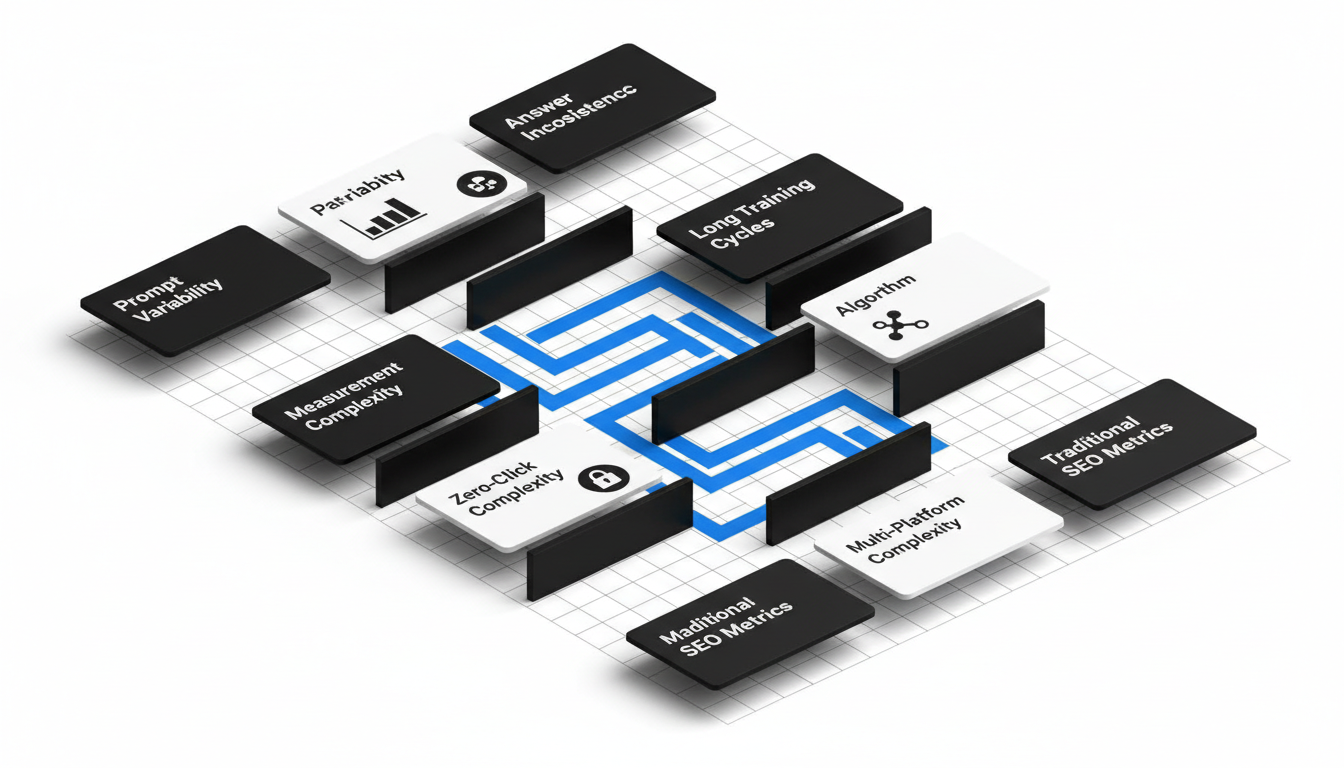
Answer Engine Optimization promises visibility in the new AI search landscape, but the path from strategy to results isn't straightforward. AEO introduces challenges that traditional SEO practitioners haven't faced before—from measurement difficulties to unpredictable AI outputs.
Here are the most significant AEO challenges and how to navigate them in 2026.
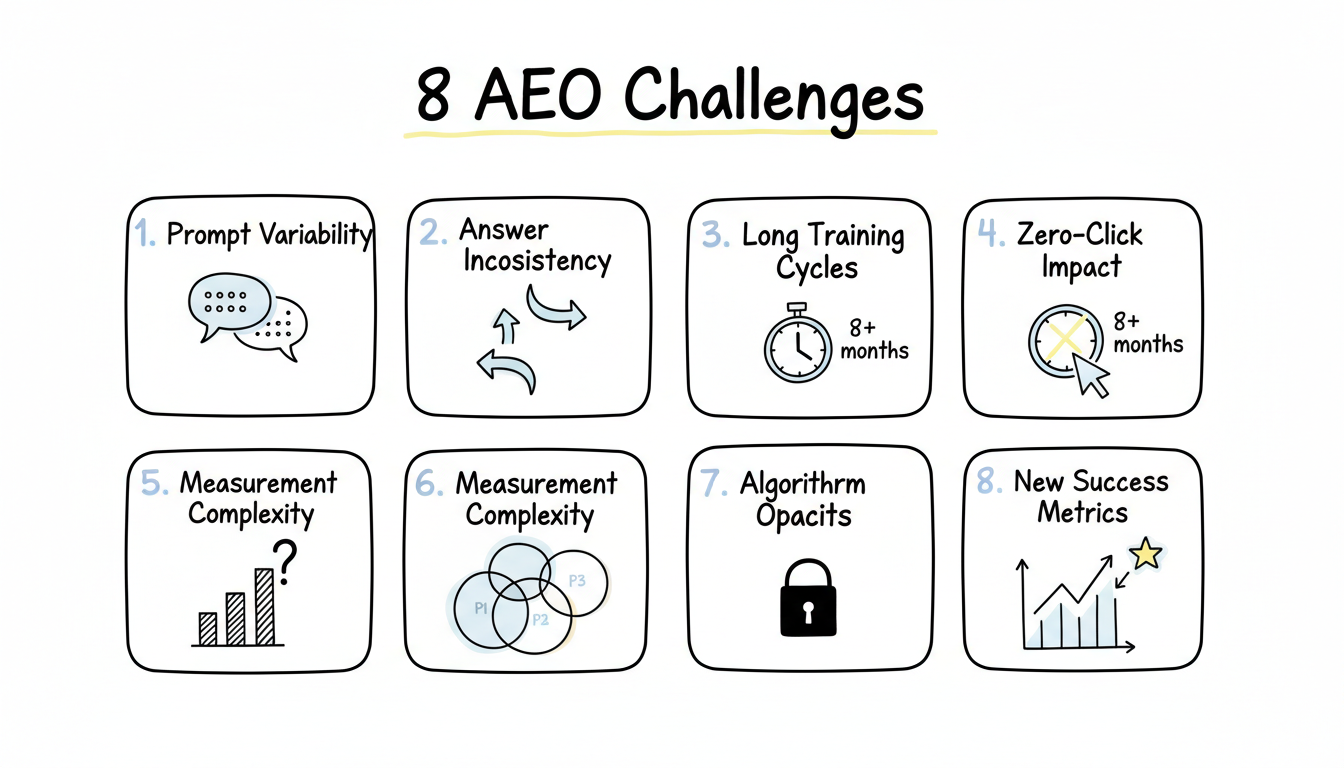
According to Shopify's analysis of AEO challenges, traditional SEO benefited from standardized query formats—three to eight words per search. AEO operates differently. Typical AI prompts run 20 to 30 words, and two users with identical intent may use completely different phrasing.
The problem:
The workaround: Focus on comprehensive topic coverage rather than specific query optimization. AI systems synthesize content based on topical relevance, not exact keyword matches. Build content clusters that address topics from multiple angles.
According to Shopify, you can ask the same question ten times and receive slightly different AI responses each time. This variability is inherent to how large language models generate text—it's a feature, not a bug.
The problem:
The workaround: Look at aggregate trends rather than individual responses. Track visibility over time across multiple queries rather than obsessing over specific prompt results. According to Tailored Tactiqs' LLM optimization guide, monitoring overall citation frequency and sentiment provides more reliable signals than individual query testing.
According to Shopify's AEO research, if your goal is to become part of an AI's training data rather than just getting cited in real-time searches, expect at least eight months before seeing results. This delay makes it difficult to attribute improvements to specific optimization efforts.
The problem:
The workaround: Pursue a dual strategy. Optimize for real-time retrieval systems (RAG-based AI search) for faster results while simultaneously building authority for eventual training data inclusion. Track both short-term citations and long-term brand recognition metrics.
According to Elsner Technologies' AEO analysis, most searches now show AI Overviews at the top, with users reading synthesized answers without clicking through to websites. This fundamentally challenges traditional traffic-based success metrics. Understanding how to turn Google AI Overview on or off can help you see how these features impact search behavior.
The problem:
The workaround: Reframe success metrics. According to Meltwater's LLM metrics guide, AI visibility should be measured through brand mentions, citation frequency, and share of voice—not just clicks. Track brand lift and downstream conversions rather than direct traffic alone.
According to Conductor's AI visibility platform guide, most companies are flying blind when it comes to tracking LLM visibility. Traditional analytics tools weren't designed for AI search measurement, which is why selecting the right AEO tools and software is essential for tracking performance.
The problem:
The workaround: Invest in dedicated AI visibility tools. Platforms like Profound, SE Visible, and Otterly.AI specifically track AI citations and brand mentions. Use these alongside traditional SEO tools for complete visibility understanding.
Unlike Google, which provides webmaster guidelines and Search Console data, AI systems offer minimal transparency about citation selection criteria. You're optimizing for a black box.
The problem:
The workaround: Focus on fundamentals that appear to work across all AI systems: comprehensive coverage, clear structure, authority signals, and factual accuracy. According to Authority Tech's LLM SEO research, third-party publications earn 5x more citations than brand websites—earned media matters more than on-site optimization.
According to PageTraffic's AI optimization guide, AI search operates across three distinct layers: pre-trained LLMs, retrieval systems (RAG), and agentic capabilities. Each requires different optimization approaches. Understanding the differences between GEO vs AEO can help you decide where to allocate resources across platforms.
The problem:
The workaround: Prioritize based on your audience. Enterprise B2B brands may prioritize Microsoft Copilot; consumer brands may focus on ChatGPT and Perplexity. Start with the platforms most relevant to your customers and expand from there.
According to PageTraffic, 95% of AI citation variance cannot be explained by website traffic. Sites with minimal visitors can earn over 900 AI mentions, while high-traffic sites often get fewer citations than expected.
The problem:
The workaround: Treat AI visibility as a separate channel. According to LinkedIn's Semrush study analysis, AI systems have their own trust hierarchies that don't mirror Google's rankings. Build an AEO strategy that complements but doesn't replicate your SEO approach.
According to ChiefMartec's B2B predictions, AEO tactics may prove temporary as AI improves at reading human-optimized content. The solution: build durable authority rather than gaming transient optimization tactics. Success requires mastering generative engine optimization (GEO) alongside traditional AEO practices.
Sustainable approach:
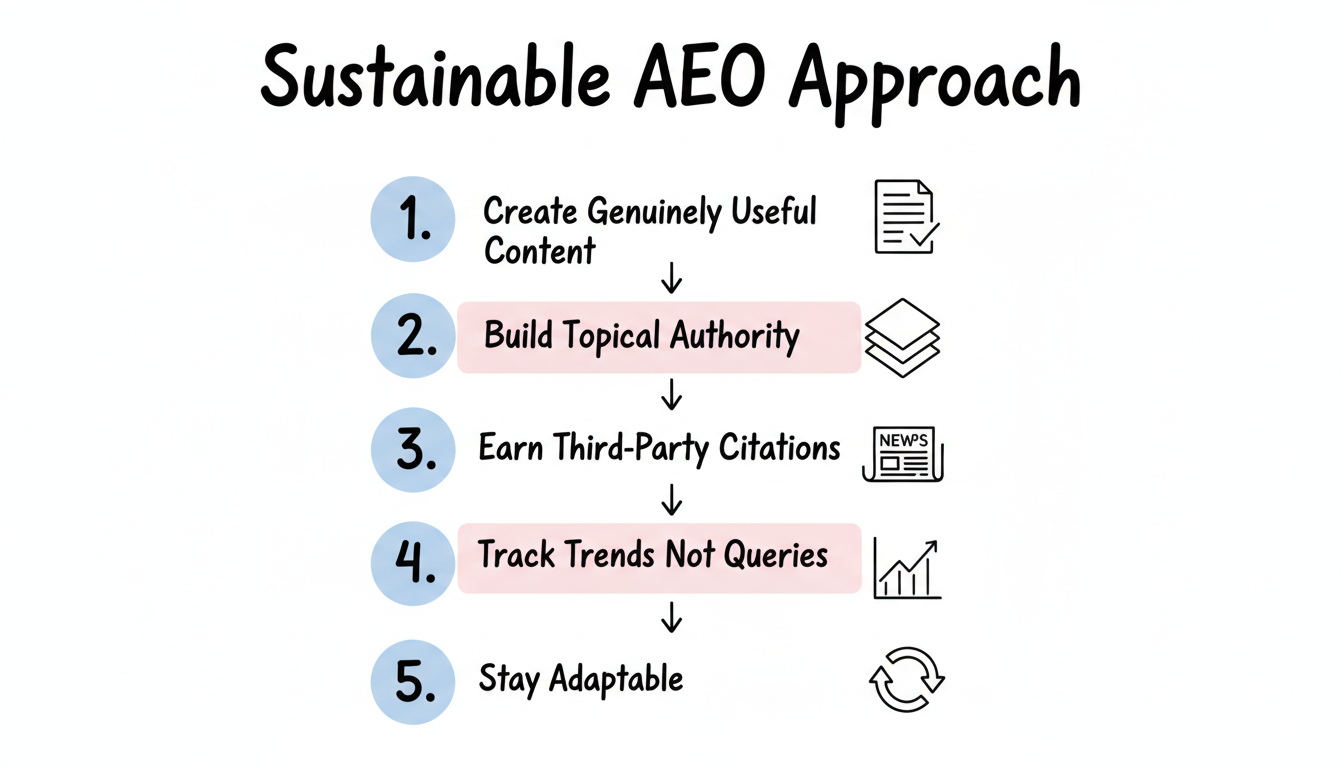
AEO challenges are real but manageable:
Understanding these challenges positions you to navigate them strategically rather than being surprised by unexpected obstacles.
By submitting this form, you agree to our Privacy Policy and Terms & Conditions.