AEO Content Audit: Optimizing Existing Content for AI Search

Most organizations have substantial content libraries that can drive AI visibility—with proper optimization. An AEO content audit evaluates existing content for AI citation potential and identifies high-impact optimization opportunities. Rather than creating everything new, strategic auditing helps maximize value from current assets.

Why Audit Existing Content for AEO

New content creation is resource-intensive. Existing content often has advantages new content lacks.

Advantages of existing content:

  • Established indexing and crawl history
  • Accumulated backlinks and authority signals
  • Proven user engagement metrics
  • Existing organic search visibility (transfers to some AI platforms)

AEO audit benefits:

  • Faster visibility improvements than new content creation
  • More efficient resource allocation
  • Identification of underperforming assets to deprioritize
  • Foundation for strategic content planning

Auditing reveals where optimization effort will generate greatest returns.

AEO Content Audit Framework

Systematic auditing requires structured evaluation criteria.

Technical AEO Readiness

Evaluate whether content meets technical requirements for AI access.

Technical factors to audit:

  • Crawler accessibility (GPTBot, PerplexityBot, ClaudeBot allowed)
  • Page load speed (under 3 seconds)
  • Mobile optimization quality
  • Schema markup implementation
  • Internal linking structure
  • URL structure clarity

Audit actions:

  • Test robots.txt for AI crawler permissions
  • Run page speed diagnostics
  • Validate schema markup
  • Review crawl logs for AI bot activity

Technical barriers can prevent otherwise excellent content from earning citations.

Content Structure Assessment

AI systems extract information more effectively from well-structured content.

Structure evaluation criteria:

  • Clear heading hierarchy (H1, H2, H3)
  • Direct answer formatting in opening paragraphs
  • Scannable sections with descriptive headers
  • FAQ sections addressing common questions
  • Lists and tables where appropriate
  • Concise summaries or key takeaways

Common structure issues:

  • Buried answers requiring scrolling
  • Wall-of-text formatting without headers
  • Missing FAQ sections for question-based topics
  • Inconsistent heading hierarchy
  • Tables rendered as images instead of HTML

Structure improvements often provide quick citation wins.

Answer Quality Evaluation

Assess whether content provides the definitive answers AI systems seek.

Quality dimensions:

  • Accuracy and factual correctness
  • Comprehensiveness covering topic thoroughly
  • Specificity with concrete details and data
  • Clarity without jargon or unnecessary complexity
  • Currency with up-to-date information

Quality audit questions:

  • Does this content fully answer the target question?
  • Would an expert consider this the best available answer?
  • Does the content include specific facts AI can cite?
  • Is information current or outdated?

Content providing incomplete or unclear answers rarely earns citations regardless of technical optimization.

Authority Signals Assessment

Evaluate content credibility signals AI systems use for source selection.

Authority indicators:

  • Author credentials and expertise
  • Publication date and update frequency
  • Source citations and references
  • External backlinks from authoritative sources
  • Brand mentions across web

Audit approach:

  • Review author attribution and bios
  • Check publication and update dates
  • Count and evaluate outbound citations
  • Analyze backlink profile quality
  • Monitor brand mentions via AI queries

Weak authority signals limit citation potential even for quality content.

Conducting the AEO Content Audit

Follow this systematic audit process.

Step 1: Inventory Target Content

Compile content assets to evaluate.

Inventory approach:

  • Export URLs from sitemap or CMS
  • Segment by content type (blog, product, resource pages)
  • Tag by topic cluster and target keyword
  • Note current traffic and engagement metrics

Focus initial audits on content targeting high-value topics for your AEO strategy.

Step 2: Score Content Against Criteria

Rate each content piece against audit criteria.

Scoring framework example:

Criterion Score 1-5 Weight
Technical accessibility _ 20%
Content structure _ 20%
Answer quality _ 30%
Authority signals _ 20%
Competitive position _ 10%

Weighted score calculation: Multiply each score by its weight, sum for overall AEO readiness score.

Step 3: Categorize by Action

Group content by required action level.

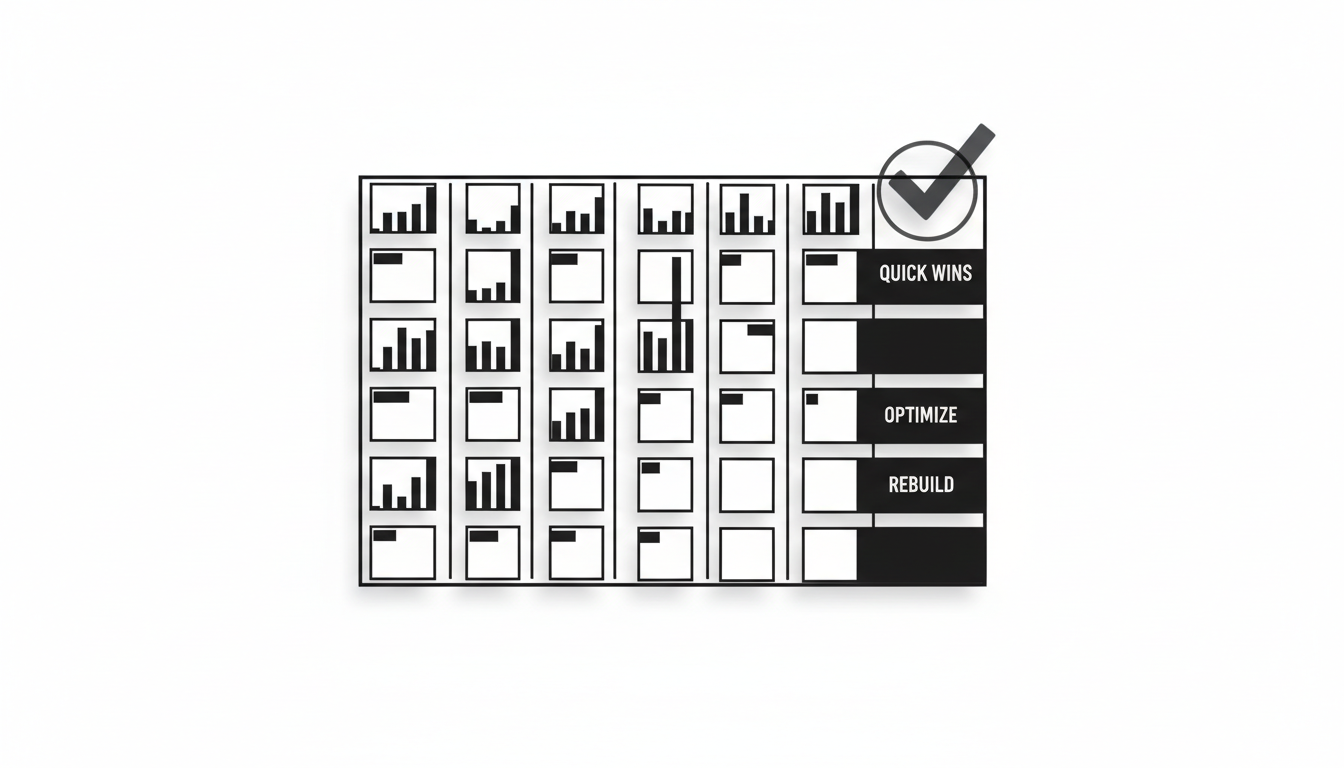
Action categories:

Quick wins (Score 70-85%): Minor optimizations will significantly improve citation potential. Prioritize these first.

Major optimization (Score 50-70%): Substantial improvements needed but content has foundation to build on.

Rebuild required (Score below 50%): Content needs comprehensive rewrite or may not warrant investment.

Already optimized (Score above 85%): Monitor and maintain; focus optimization resources elsewhere.

Step 4: Prioritize by Opportunity

Rank quick wins and major optimizations by opportunity value.

Prioritization factors:

  • Search volume for target queries
  • Competitive gap opportunity
  • Business value of topic
  • Effort required for improvement
  • Current citation status (already cited = protect; never cited = opportunity)

High-traffic content on business-critical topics with fixable issues should top priority lists.

Step 5: Create Optimization Roadmap

Transform audit findings into action plans.

Roadmap elements:

  • Prioritized content list
  • Specific optimizations required for each piece
  • Resource requirements and timeline
  • Success metrics and measurement approach
  • Review and iteration schedule

Roadmaps ensure audit insights translate to systematic improvement.

Common AEO Optimization Opportunities

Audits frequently reveal these optimization opportunities.

Structure Improvements

Quick fixes:

  • Add FAQ sections to high-performing pages
  • Improve heading structure for clarity
  • Add summary paragraphs with key takeaways
  • Convert text to scannable lists where appropriate

Content Enhancements

Depth improvements:

  • Add missing subtopics competitors cover
  • Include specific data, statistics, and examples
  • Expand thin sections with comprehensive detail
  • Update outdated information and statistics

Technical Optimizations

Infrastructure fixes:

  • Implement or enhance schema markup
  • Improve page load speed
  • Ensure AI crawler access
  • Fix mobile usability issues

Authority Building

Credibility enhancements:

  • Add or improve author credentials
  • Include expert quotes and citations
  • Update publication dates for refreshed content
  • Build internal links from authoritative pages

Audit Tools and Resources

Leverage available tools for efficient auditing.

Content Inventory Tools

  • CMS export functions
  • Screaming Frog for technical crawling
  • Google Search Console for performance data
  • Analytics platforms for engagement metrics

Technical Audit Tools

  • PageSpeed Insights for performance
  • Schema validators for structured data
  • Robots.txt testers for crawler access
  • Mobile-friendly testing tools

Quality Assessment

  • AI platform testing for current citation status
  • Competitor content comparison
  • Expert review for accuracy validation

Ongoing Audit Cadence

AEO auditing should be continuous, not one-time.

Recommended schedule:

  • Monthly: Quick review of top-priority content
  • Quarterly: Comprehensive audit of major content sections
  • Annually: Full library assessment and strategic planning
  • Continuous: Monitor for AI platform changes requiring updates

AI platforms evolve rapidly—content optimized in early 2026 may need adjustment by mid-year.

FAQs

How many content pieces should I audit at once?

Start with 25-50 high-priority pieces for manageable initial audit. Scale process after establishing efficient workflow. Full library audits may include hundreds of pages but require systematic approaches and potentially team resources.

Should I prioritize auditing or creating new content?

Balance both. Audit existing content for quick wins while creating new content filling identified gaps. Often, optimizing 10 existing pages generates faster results than creating 10 new pages from scratch.

What if most content scores poorly in audit?

Focus on highest-value topics first. Rebuild one section at a time rather than attempting comprehensive site overhaul. Some low-scoring content may not warrant investment—deprioritize appropriately.


Related Articles:

Get started with Stackmatix!

Get Started

Share On:

blog-facebookblog-linkedinblog-twitterblog-instagram

Join thousands of venture-backed founders and marketers getting actionable growth insights from Stackmatix.

Thank you! Your submission has been received!
Oops! Something went wrong while submitting the form.

By submitting this form, you agree to our Privacy Policy and Terms & Conditions.

Related Blogs