
February 19, 2026


Optimizing for multiple AI search platforms inevitably creates conflicting requirements. Google AI Overviews favors different content characteristics than ChatGPT, which prioritizes different signals than Perplexity. When platform best practices contradict each other, organizations need a systematic framework for resolution rather than paralysis or arbitrary choices.
Search behavior has fragmented across platforms with distinct optimization requirements.
The current landscape:
Each platform uses different ranking factors, citation criteria, and content preferences. Research shows only approximately 12% result overlap between ChatGPT and Google for identical queries—meaning success on one platform doesn't guarantee visibility on others.
Specific optimization recommendations often contradict across platforms.
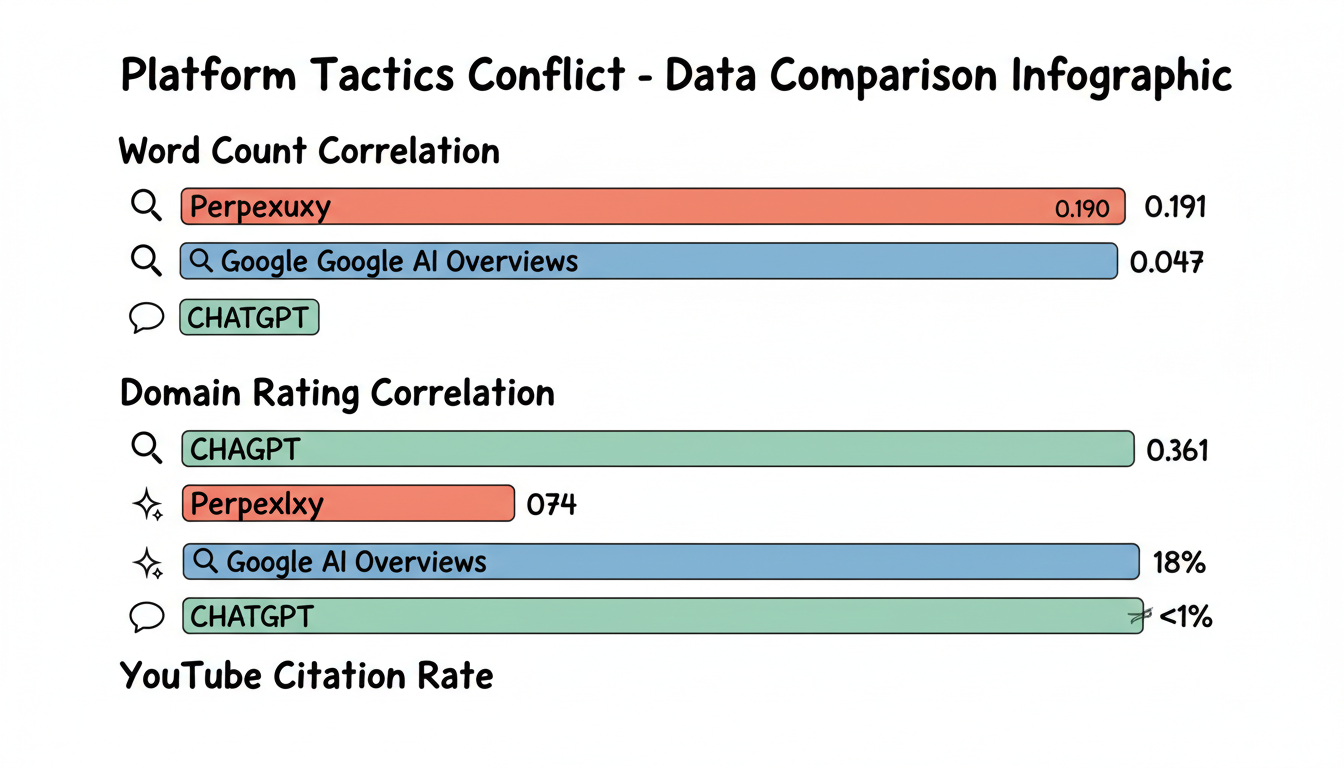
Word count conflicts: Research analyzing LLM citation correlations reveals platform-specific preferences:
Perplexity rewards comprehensive, lengthy content while ChatGPT favors other factors. Optimizing word count for one platform may underperform on another, which is why developing a comprehensive ai seo strategy becomes essential for balancing these competing demands.
Authority signal conflicts:
ChatGPT weighs domain authority more heavily, while other platforms prioritize different credibility signals.
Content format conflicts:
Video content optimization yields vastly different returns across platforms.
A systematic approach for navigating platform conflicts.
Not all platforms matter equally to every business.
Determine platform priority based on:
B2B companies may prioritize Google and LinkedIn search. Consumer brands might weight ChatGPT and Perplexity higher. Enterprise SaaS often needs strong Google AI Overview presence. Your priority hierarchy should reflect business reality, not generic best practices.
Many apparent conflicts resolve through content layering.
Complementary approach: SEO remains foundational. Research shows pages ranking in Google's top 10 correlate strongly (~0.65) with LLM mentions, and 76% of AI Overview citations pull from top-10 positions. Traditional SEO success supports AI visibility rather than conflicting with it.
Layering strategy: Build foundational SEO first—technical health, relevance, authority. Then layer AEO (Answer Engine Optimization) tactics: clear Q&A formatting, structured explanations, extractable snippets. Finally add GEO (Generative Engine Optimization) elements: citation-worthy depth, semantic structure, machine-readable formatting.
This layered approach serves multiple platforms simultaneously rather than forcing either/or choices. Understanding the differences between geo vs aeo helps teams decide which optimization layers to prioritize based on their platform hierarchy.
Core content quality serves all platforms regardless of algorithmic differences.
Universal success factors:
Content excelling on these fundamentals performs adequately across platforms even without platform-specific optimization. Start here before pursuing conflicting tactics.
After establishing the unified base, optimize for priority platforms.
For Google AI Overviews:
For ChatGPT:
Organizations implementing chatgpt seo optimization should prioritize domain authority signals and content structure that makes information easily extractable for citations.
For Perplexity:
Teams focused on perplexity ai search optimization benefit from investing in longer, more comprehensive content formats that establish research-grade authority in their subject areas.
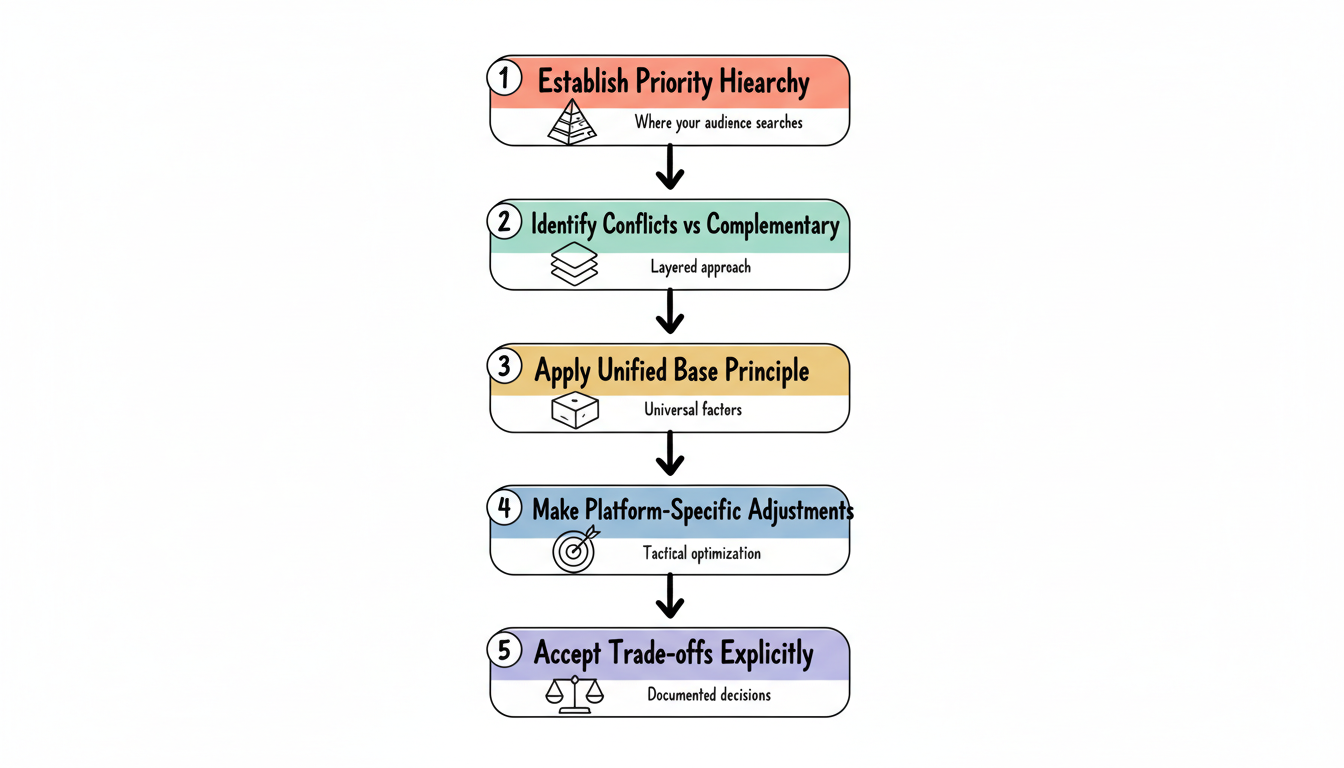
Some conflicts cannot be resolved—only managed through explicit trade-offs.
When trade-offs are necessary:
An organization prioritizing ChatGPT might accept lower Perplexity performance from shorter content. A brand focused on Google AI Overviews might invest heavily in video despite ChatGPT's video blindness. Explicit trade-offs beat implicit ones.
Applying the framework to common scenarios.
Scenario: Content length decision
Conflict: Perplexity rewards long content; ChatGPT doesn't weight length heavily.
Resolution:
Scenario: Video content investment
Conflict: YouTube content earns Google AI Overview citations but not ChatGPT citations.
Resolution:
Scenario: Authority building investment
Conflict: Domain authority matters more for ChatGPT than other platforms.
Resolution:
Platform algorithms evolve continuously.
Ongoing monitoring:
Adjustment triggers:
Organizations treating multi-platform optimization as ongoing practice rather than one-time configuration adapt more successfully to evolving AI search landscape.
Sustainable conflict resolution requires organizational investment.
Capability development:
The complexity of multi-platform AI search optimization will only increase. Organizations building systematic resolution capabilities now establish advantages that compound over time.
No. Resource constraints make equal optimization impractical, and business value varies by platform. Establish clear priority hierarchy based on where your audience searches and which platforms drive conversions. Invest proportionally to platform importance rather than attempting equal coverage across all AI search surfaces.
True opposites are rare—most conflicts involve degree differences rather than contradictions. When genuine conflicts exist, prioritize based on business impact. Accept explicit trade-offs rather than pursuing impossible compromises. Most organizations find layered approaches serve both platforms adequately even without perfect optimization for either.
Review platform priorities quarterly at minimum. AI search is evolving rapidly—market share shifts, algorithm changes, and new platform emergence can alter the optimal priority hierarchy. Monitor traffic sources continuously and adjust priorities when data indicates significant changes in platform value.
By submitting this form, you agree to our Privacy Policy and Terms & Conditions.



