February 19, 2026


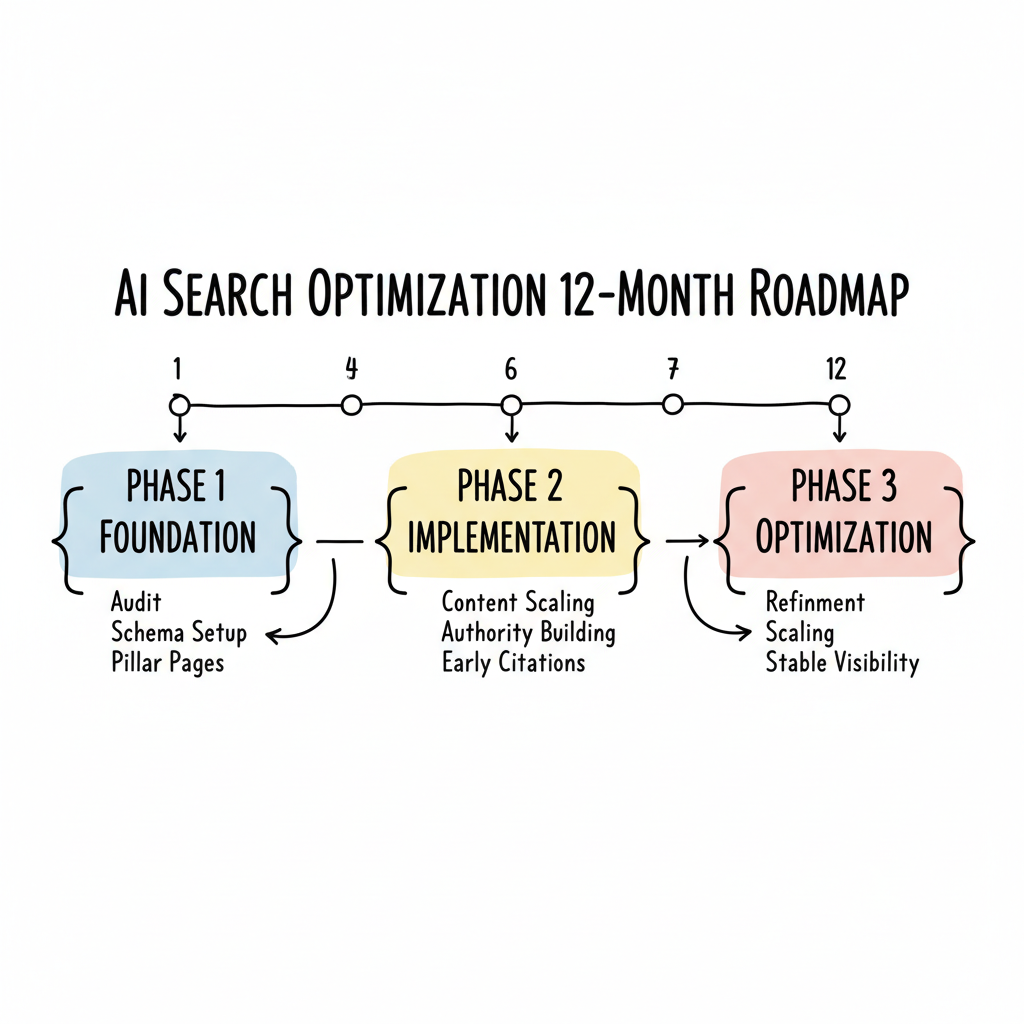
AI search optimization delivers results on different timelines than traditional SEO. While Google rankings might take 6-12 months to improve significantly, AI citation visibility can show early signals within 60-90 days—but sustained results still require long-term commitment. Understanding realistic timelines prevents premature abandonment and helps allocate resources effectively across foundation building, implementation, and optimization phases.
According to The Spearpoint's AEO analysis, initial results from answer engine optimization typically appear within 60-90 days, while substantial improvements generally require six to twelve months of consistent effort. This timeline matches the learning cycles of AI systems that need to re-crawl and re-evaluate your content.
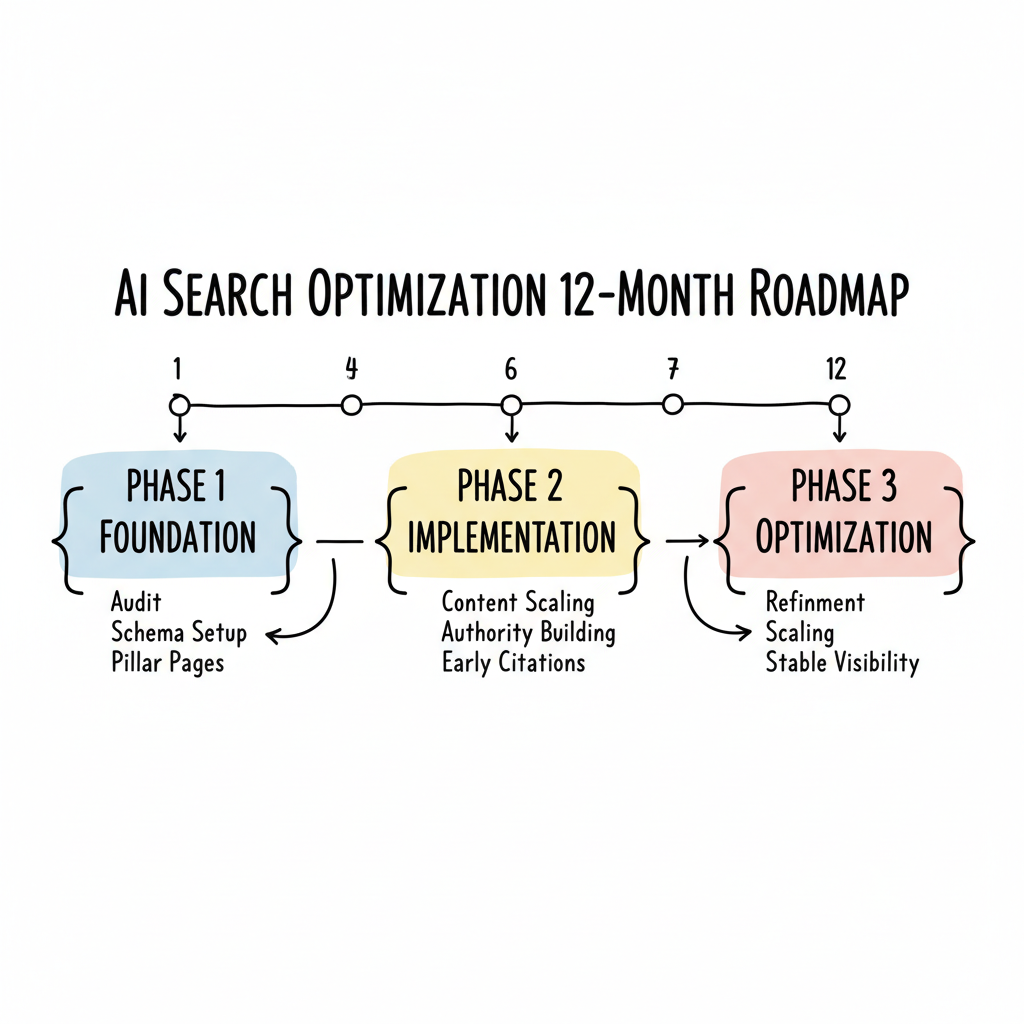
Establish the groundwork for AI search visibility.
According to Vertu's GEO implementation guide, Phase 1 focuses on creating the foundation through comprehensive keyword research, initial content audits to identify AI-ready content, technical SEO improvements, and implementing structured data markup. This phase builds the infrastructure that later optimization depends on.
Foundation phase activities:
Week | Focus Area | Deliverables |
1-2 | Audit & Analysis | Current AI visibility baseline, content inventory |
3-4 | Strategy Development | Keyword targeting, content gap analysis |
5-8 | Technical Foundation | Schema markup, site structure, entity optimization |
9-12 | Initial Content | First pillar pages, FAQ implementations |
Phase 1 milestones:
Foundation Phase Checklist
├── Research & Planning
│   ├── AI search visibility audit
│   ├── Competitor AI citation analysis
│   ├── Target query identification
│   └── Content gap assessment
│
├── Technical Setup
│   ├── Schema markup implementation
│   ├── Entity optimization (Organization, Person)
│   ├── Site structure improvements
│   └── Page speed optimization
│
├── Content Foundation
│   ├── 2-3 pillar pages created
│   ├── FAQ schema on key pages
│   ├── Author/expertise pages
│   └── About/trust signals
│
└── Measurement Setup
    ├── GA4 AI traffic channel
    ├── Citation tracking baseline
    ├── Search Console integration
    └── Competitive monitoring
Scale content production and optimization efforts.
According to Digital Applied's 90-day roadmap, the implementation phase builds on foundations with aggressive content scaling, systematic schema markup deployment across the site, and beginning to see early citation signals from AI platforms.
Implementation phase activities:
Month | Primary Focus | Expected Outcomes |
4 | Content scaling | 8-12 supporting articles, cluster expansion |
5 | Schema expansion | Site-wide structured data, FAQ coverage |
6 | Authority building | Backlinks, third-party mentions, Reddit presence |
What to expect in Phase 2:
According to WebFX's SEO timeline analysis, noticeable improvements typically emerge at 3-6 months for traditional SEO. For AI search specifically, this phase often shows:
Refine based on data and scale successful patterns.
According to Pipeline Velocity's GEO timeline, months 9-18 involve deeper integration with brand mentions, thought leadership content, and systematic optimization based on citation data. This phase converts early wins into sustainable visibility.
Optimization phase focus:
Optimization Phase Activities
├── Content Refinement
│   ├── Update underperforming pages
│   ├── Expand successful topics
│   ├── Add depth to cited content
│   └── Improve answer formatting
│
├── Authority Acceleration
│   ├── Strategic backlink building
│   ├── Industry publication placement
│   ├── Reddit/forum engagement
│   └── Podcast/media appearances
│
├── Technical Enhancement
│   ├── Advanced schema types
│   ├── Entity relationship strengthening
│   ├── Cross-linking optimization
│   └── Mobile experience improvements
│
└── Scale & Systematize
    ├── Content production workflows
    ├── Regular citation monitoring
    ├── Competitive response protocols
    └── Quarterly strategy reviews
Set appropriate expectations by milestone.
According to Infuse's B2B research, 61% of B2B stakeholders are using private generative AI engines for purchasing decisions—making AI visibility increasingly urgent. However, results compound over time rather than appearing immediately.
Timeline benchmarks:
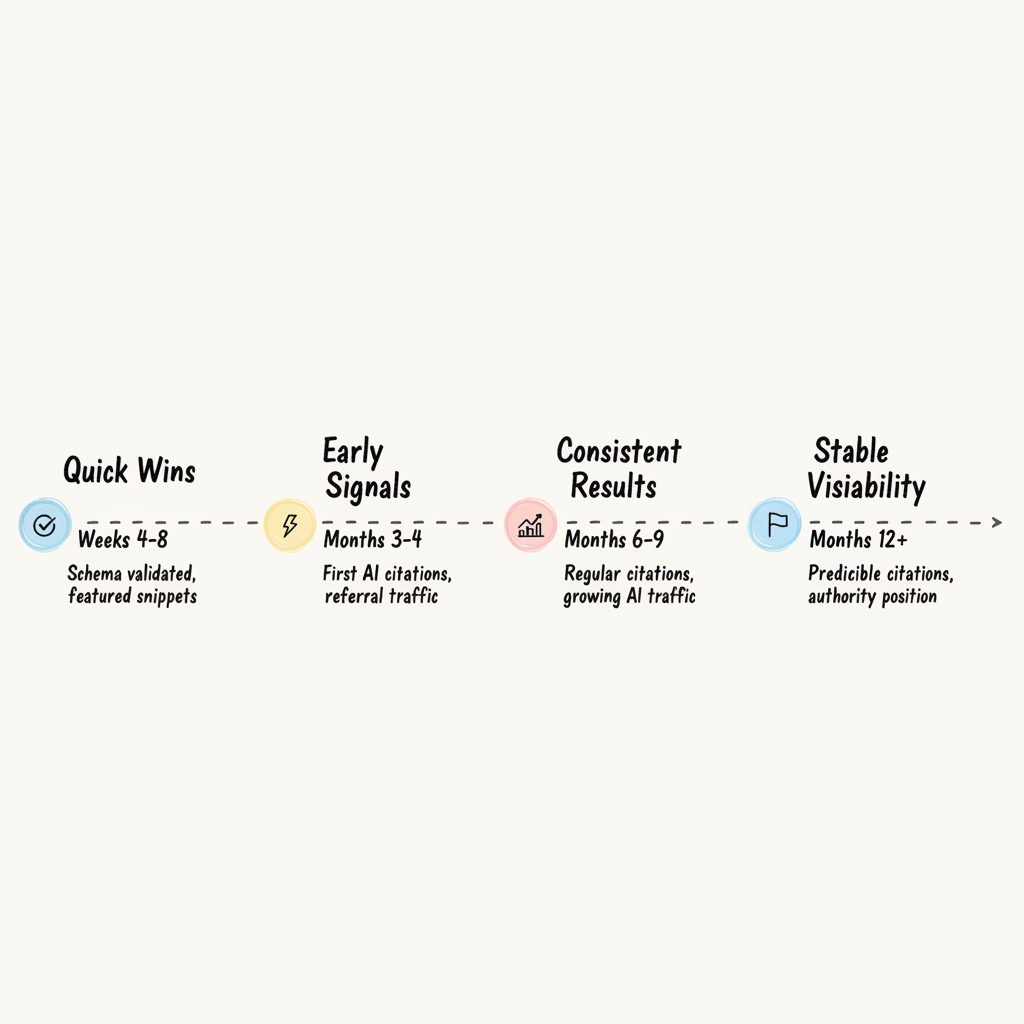
Timeframe | What to Expect | Success Indicators |
Weeks 4-8 | Quick wins | Schema validation, featured snippet improvements |
Months 3-4 | Early signals | First AI citations, measurable referral traffic |
Months 6-9 | Consistent results | Regular citations, growing AI traffic |
Months 12+ | Stable visibility | Predictable citation rates, authority position |
Budget time and resources appropriately.
Recommended resource distribution:
Phase | Time Investment | Budget Focus |
Foundation (1-3) | 40% of total effort | Technical setup, strategy, tools |
Implementation (4-6) | 35% of total effort | Content production, link building |
Optimization (7-12) | 25% of total effort | Refinement, scaling, maintenance |
Team considerations:
For teams wanting accelerated early results.
According to Digital Applied, a focused 90-day roadmap can establish strong foundations through three phases: Foundation (Weeks 1-4), Implementation (Weeks 5-8), and Scale (Weeks 9-12).
90-day sprint structure:
90-Day AI Search Sprint
├── Weeks 1-4: Foundation
│   ├── AI visibility audit
│   ├── Top 10 target queries identified
│   ├── Schema markup on 5 key pages
│   ├── GA4 AI tracking configured
│   └── 2 pillar pages created
│
├── Weeks 5-8: Implementation
│   ├── 8-10 supporting articles
│   ├── FAQ schema site-wide
│   ├── Entity optimization complete
│   ├── Initial backlink outreach
│   └── Reddit presence established
│
└── Weeks 9-12: Scale
    ├── Citation monitoring active
    ├── First optimization iterations
    ├── Content calendar established
    ├── Competitive tracking in place
    └── Month 4+ roadmap defined
Avoid errors that delay results.
Mistakes to avoid:
AI search optimization follows a predictable timeline when executed systematically:
According to The Spearpoint, patience combined with consistent execution determines success. Brands that understand AI search optimization is a 12-month journey rather than a 12-week project position themselves for sustainable visibility as AI search continues its growth trajectory through 2026 and beyond. For teams seeking expert guidance through this process, evaluating how to choose an AEO agency or reviewing AEO services pricing can help accelerate results while maintaining strategic focus on AI search conversion optimization.
By submitting this form, you agree to our Privacy Policy and Terms & Conditions.