February 19, 2026


A well-structured AEO services proposal differentiates your agency from competitors while setting clear expectations with prospective clients. Whether you're adding AEO to existing SEO services or launching a dedicated practice, a professional proposal template accelerates client acquisition.
This guide provides a comprehensive AEO proposal framework agencies can adapt for their needs.
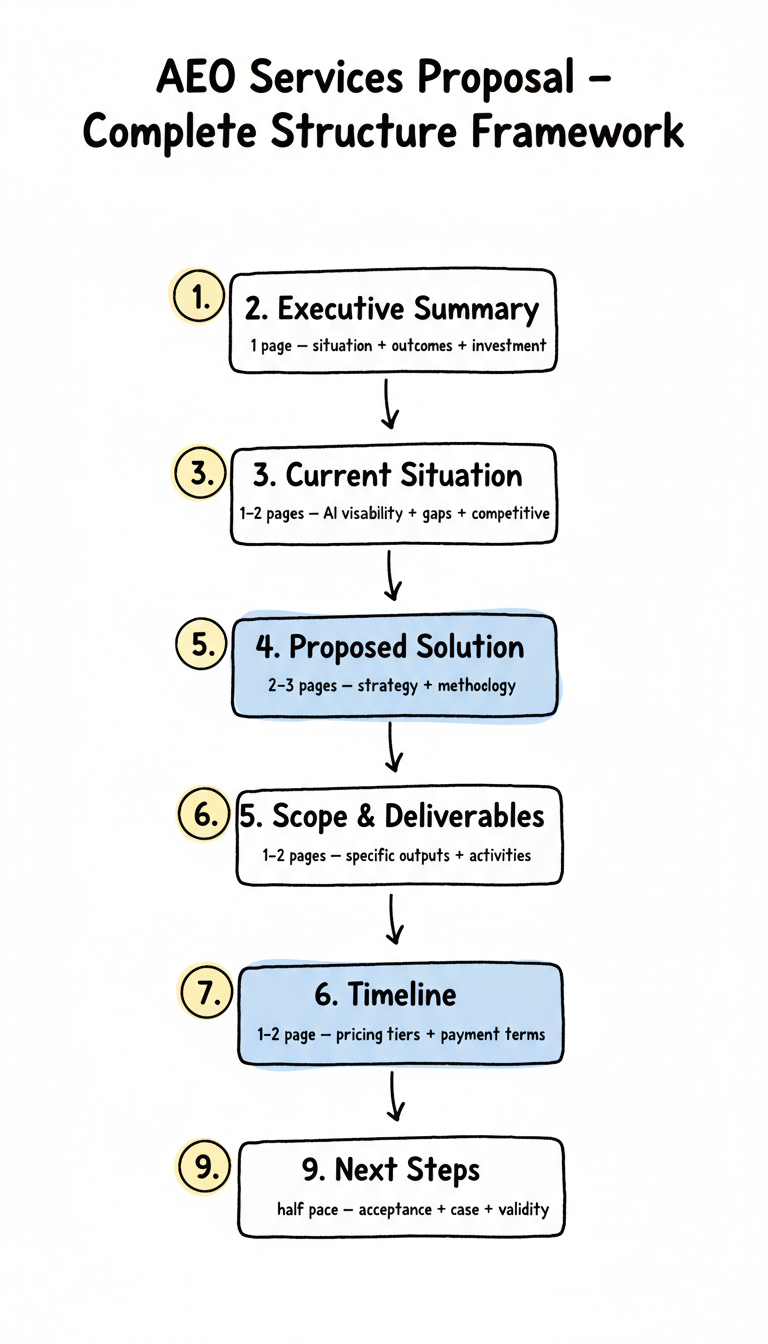
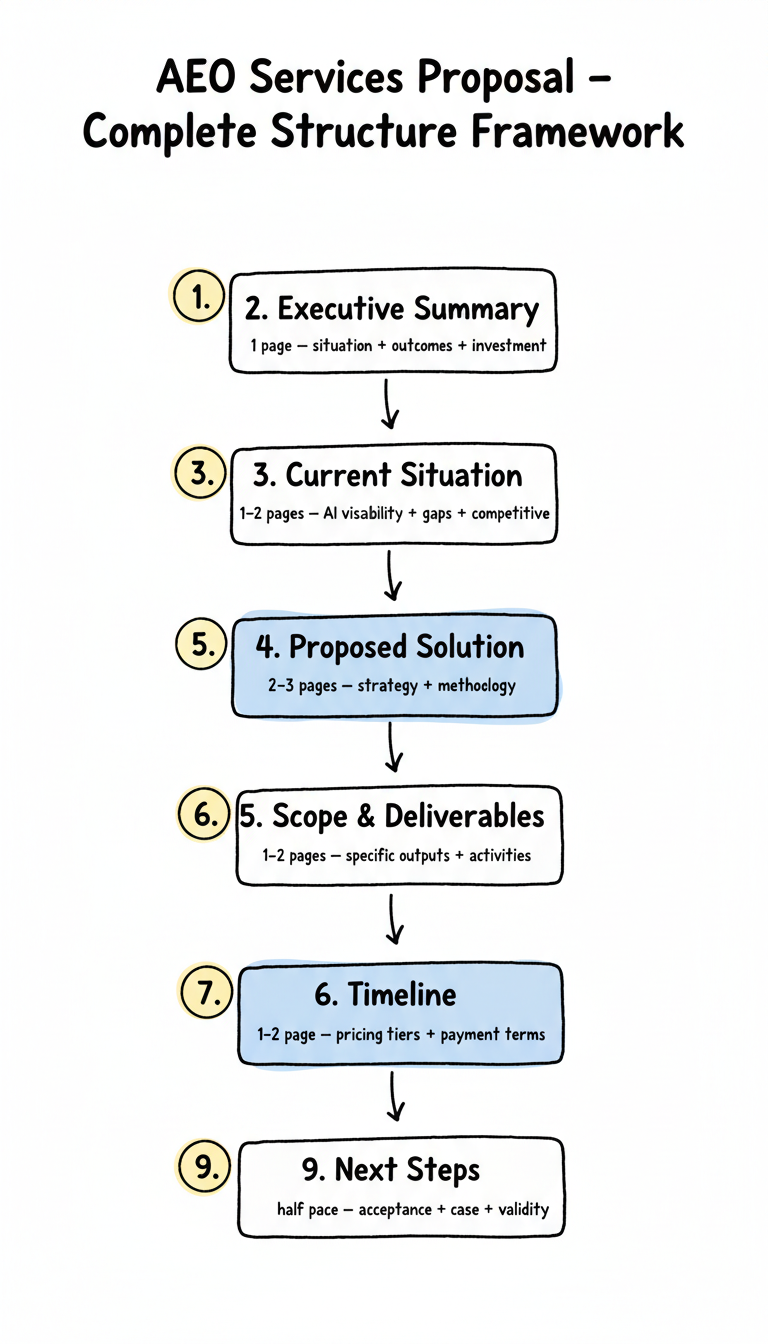
Effective AEO proposals include specific sections that address prospect concerns and demonstrate expertise.
Open with a brief overview tailored to the prospect's situation.
Include:
Keep executive summaries under one page—busy executives read this section first and may skip detailed sections.
Demonstrate understanding by summarizing the prospect's current position.
Analysis elements:
This section proves you've done homework rather than sending a generic template. Before proposing solutions, consider conducting an AEO competitor analysis to identify specific gaps in their current AI search positioning.
Detail what you'll deliver to address their challenges.
Solution components:
Strategy development: Outline discovery, audit, and planning phases establishing the foundation.
Technical optimization: Describe infrastructure work enabling AI crawler access and content processing.
Content optimization: Explain how you'll restructure existing content and develop new AEO-focused material. For comprehensive guidance on this process, reference our SearchGPT optimization guide.
Authority building: Detail activities strengthening their entity recognition and credibility.
Monitoring and reporting: Describe ongoing tracking and communication cadence.
Provide specific, measurable deliverables prospects can evaluate.
Deliverable examples:
Specific deliverables justify pricing and create accountability for both parties. Implementation should include knowledge graph SEO implementation to strengthen entity recognition across AI platforms.
Visualize the engagement progression.
Typical AEO timeline phases:
Phase 1 (Weeks 1-4): Discovery, audit, and strategy development
Phase 2 (Weeks 5-8): Technical implementation and content optimization foundations
Phase 3 (Ongoing): Continuous optimization, monitoring, and authority building
Include realistic expectations—meaningful AI visibility improvements typically require 2-4 months. Set up proper tracking early using Google Analytics 4 for AI search tracking to measure progress accurately.
Present pricing clearly with justification.
Pricing presentation options:
Include:
Build credibility with relevant background.
Credibility elements:
Focus on AEO expertise specifically rather than general agency capabilities.
Generic proposals lose to customized approaches.
Conduct preliminary research before drafting.
Pre-proposal activities:
This research enables specific recommendations rather than generic promises.
Reference specific concerns from discovery conversations.
Example: If the prospect mentioned losing traffic to AI-powered search, address that concern directly with your solution approach.
Adapt proposal tone to prospect culture.
Select case studies matching the prospect's situation.
Relevance factors:
Use this structure as your starting framework.
1. Cover Page
2. Executive Summary (1 page)
3. Current Situation (1-2 pages)
4. Proposed Solution (2-3 pages)
5. Scope and Deliverables (1-2 pages)
6. Timeline (1 page)
7. Investment (1 page)
8. About Us (1 page)
9. Next Steps (half page)
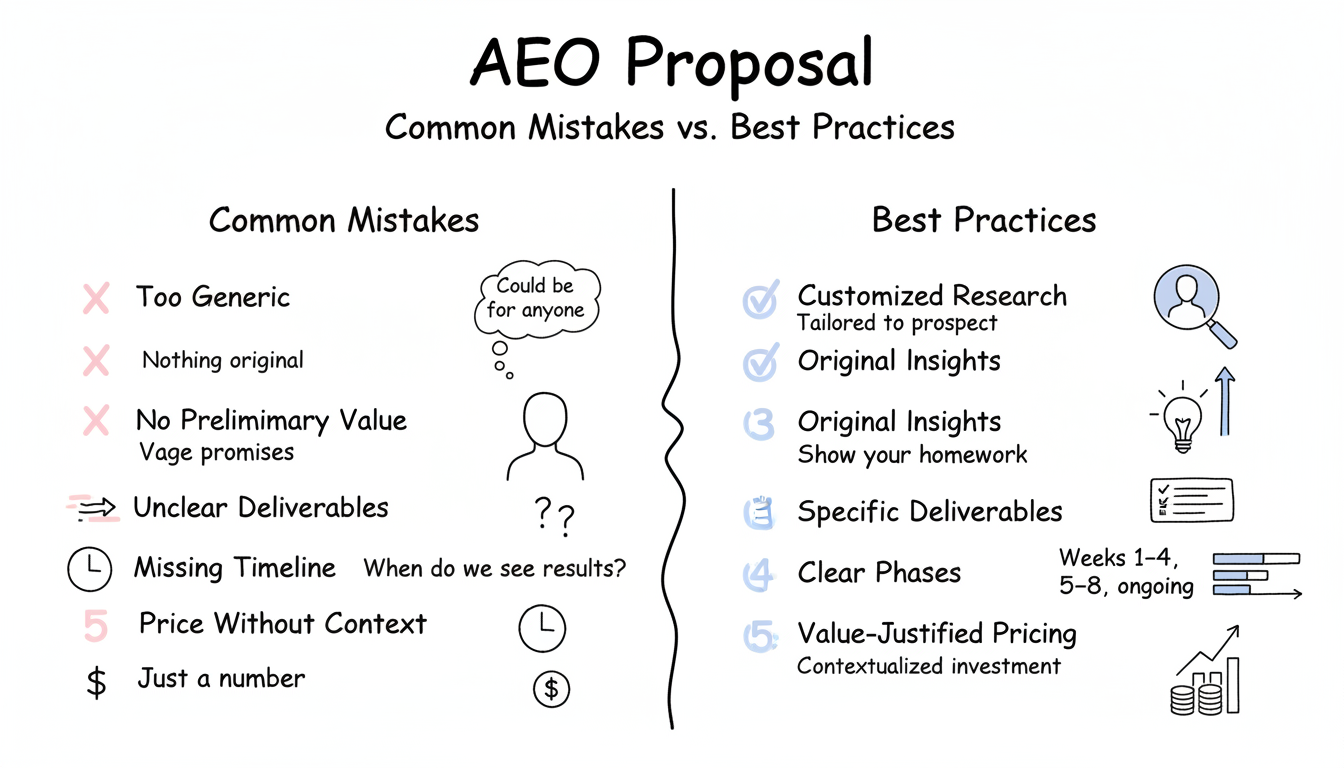
Avoid these errors that reduce win rates.
Too generic: Proposals that could apply to any client suggest lack of attention and expertise.
No preliminary value: Proposals lacking any original insight give prospects nothing they couldn't find elsewhere.
Unclear deliverables: Vague promises like "ongoing optimization" raise concerns about accountability.
Missing timeline: Prospects need to understand when they'll see results and deliverables.
Price without context: Numbers without justification invite price shopping rather than value comparison.
Eight to twelve pages typically balances thoroughness with readability. Enterprise proposals may run longer; smaller engagements may be shorter.
Options (typically three tiers) increase close rates by giving prospects control while anchoring perception around your preferred option.
Within 48-72 hours while conversations remain fresh. Faster proposals demonstrate responsiveness and organization.
By submitting this form, you agree to our Privacy Policy and Terms & Conditions.