
February 19, 2026


Answer Engine Optimization is transforming from emerging tactic to essential strategy. The numbers tell a compelling story: AI-powered search adoption has accelerated beyond most predictions, and the competitive landscape is crystallizing around a few dominant platforms.
Here are the statistics and trends shaping AEO in 2026.
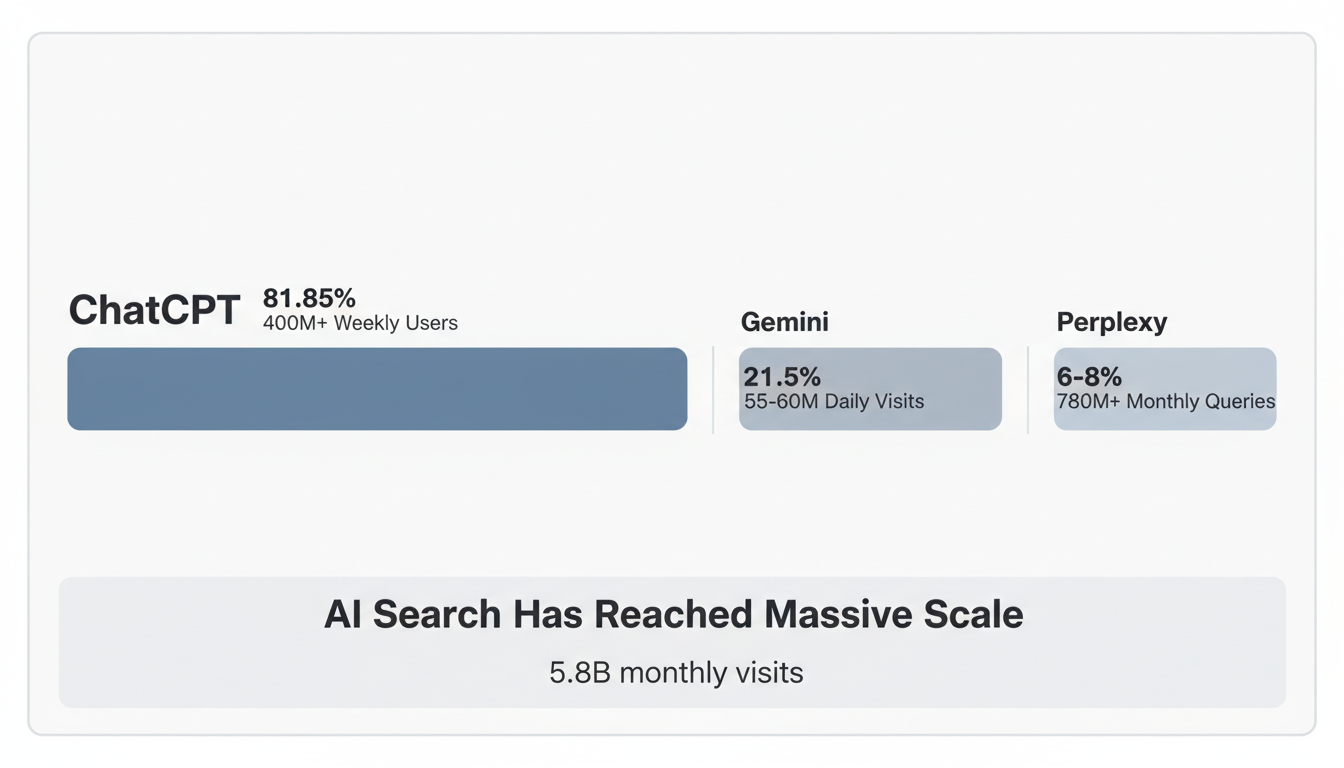
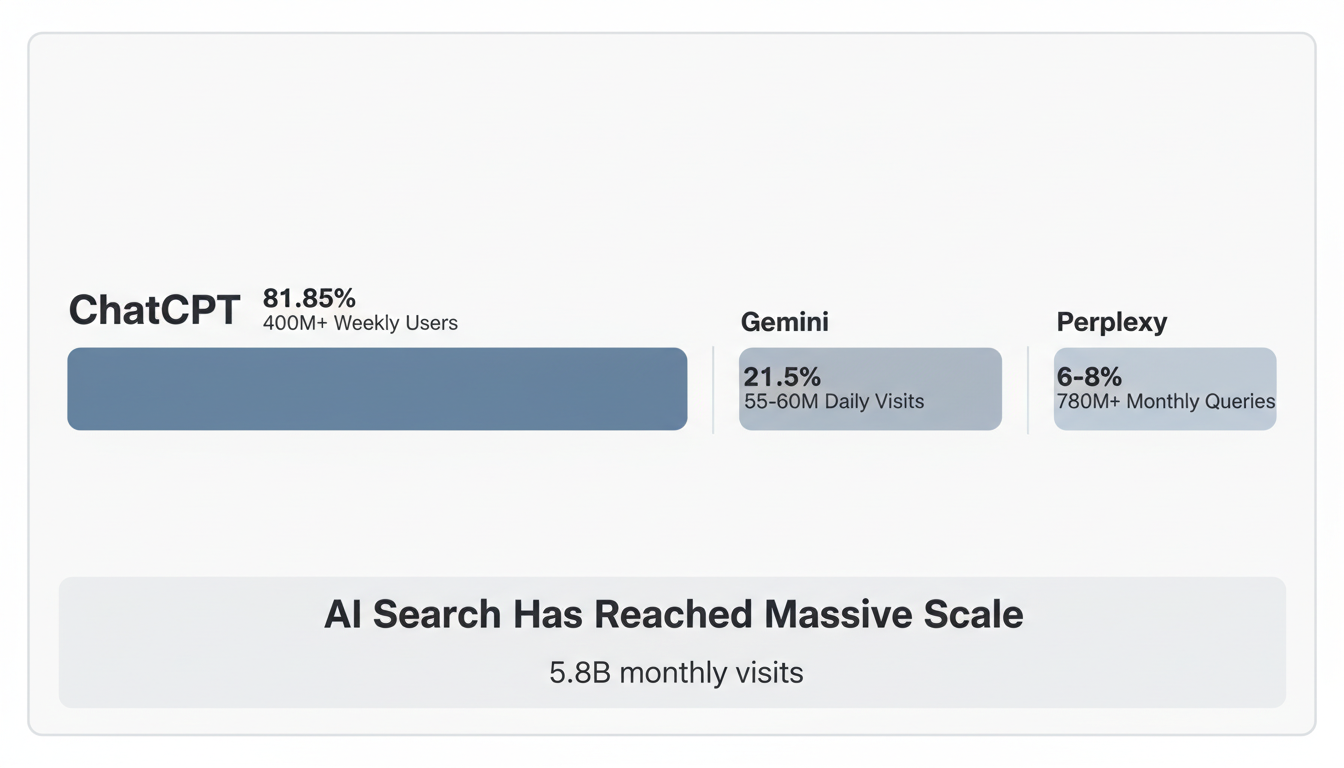
According to Exploding Topics' AI chatbot research, AI search adoption has reached massive scale. ChatGPT now has over 400 million weekly active users—a figure that's doubled since late 2024.
AI search platform usage:
Platform | Weekly/Monthly Users | Market Share |
ChatGPT | 400M+ weekly active | 81.85% global |
Google Gemini | 55-60M daily visits | ~21.5% |
Perplexity | 20-50M monthly users | 6.2-8.2% |
Microsoft Copilot | Growing enterprise base | Enterprise-focused |
Claude | Significant growth | Not disclosed |
According to Tech-now.io's analysis of ChatGPT statistics, ChatGPT receives approximately 5.8-6.165 billion monthly visits, demonstrating the scale of AI search behavior that marketers must now address.
According to NoGood's future of search marketing analysis, 60% of all searches now end without a click. AI-generated answers increasingly satisfy user queries directly within the search interface.
Zero-click trends:
According to Digital Commerce 360's traffic analysis, websites generate 34 times more traffic from Google than from AI chatbots. This highlights both the continued importance of traditional SEO and the emerging opportunity in AI search optimization.
According to Morningstar's Perplexity market analysis, Perplexity has established itself as a dedicated AI search challenger with significant traction among knowledge workers.
Perplexity usage data:
Metric | Value |
Monthly queries | 780 million+ |
Monthly active users | 20-50 million |
Market share | 6.2-8.2% |
Daily searches | Growing 40%+ YoY |
According to Search Engine Journal's analysis, Perplexity's focus on real-time web search with citations makes it particularly important for brands seeking AI visibility with clear attribution.
According to Medium's Serpstat analysis of AI Overviews, Google's AI integration has accelerated beyond expectations. AI Overviews now appear for a significant portion of informational queries.
AI Overview trends:
According to Conductor's research on AI and SEO, AI Overviews are replacing featured snippets rather than complementing them—creating both new opportunities and new competitive pressures for those focused on AI SEO vs traditional SEO.
According to WordStream's analysis of AI search marketing, the quality of AI search traffic differs meaningfully from traditional organic traffic.
Conversion metrics:
Traffic Source | Conversion Rate | Quality Indicator |
AI search referrals | 4.4x higher | High-intent visitors |
Traditional organic | Baseline | Mixed intent |
Paid search | 2-3x higher | Targeted but expensive |
According to Marketer Milk's analysis, AI search visitors convert significantly better because they arrive with specific intent—having already received initial information from AI and seeking to take action. Understanding AEO conversion rates is critical for measuring ROI.
According to USIM's analysis of AI marketing trends, marketing budgets are shifting toward AI optimization as traditional search metrics become less reliable predictors of visibility.
Investment statistics:
According to DW Media's AEO research, companies with dedicated AEO strategies report 3.4x more traffic from AI-referred sources compared to those relying solely on traditional SEO.
According to LinkedIn's analysis of chatbot market trends, the broader AI chatbot market is experiencing exponential growth that directly impacts AEO opportunities.
Market projections:
Year | Market Size | Growth |
2025 | $10.32 billion | - |
2026 | ~$14 billion | 35%+ |
2029 | $29.5 billion | 186% from 2025 |
According to Intuition's chatbot statistics, 987 million people worldwide now use AI chatbots for search and information tasks. This represents a massive audience that traditional SEO alone cannot reach.
According to CJ Online's AI citation research, AI systems show consistent preferences in how they select sources for citation.
Citation trends:
According to Prodigmar's AEO research, 95% of citation variance cannot be explained by traditional SEO metrics like traffic or backlinks. AI systems use their own trust signals that don't mirror Google's ranking factors.
According to NoGood's analysis, enterprise adoption of AI search is accelerating, particularly through Microsoft Copilot integration.
Enterprise trends:
For B2B marketers, Bing and Microsoft Copilot visibility has become essential—enterprise users encounter AI search throughout their Microsoft-powered workflows. Understanding Microsoft Copilot ROI for B2B companies is critical for budget allocation.
According to Conductor's AI visibility platform guide, certain content types consistently outperform others in AI citation patterns.
High-performing content types:
Content Type | Citation Rate | Best Platform |
How-to guides | High | All platforms |
Definition content | Very high | ChatGPT, Perplexity |
Comparison content | High | Perplexity |
Statistical/data content | Very high | All platforms |
Opinion/editorial | Low | Limited citation |
Content that provides clear, factual answers in structured formats consistently earns more AI citations than subjective or promotional content.
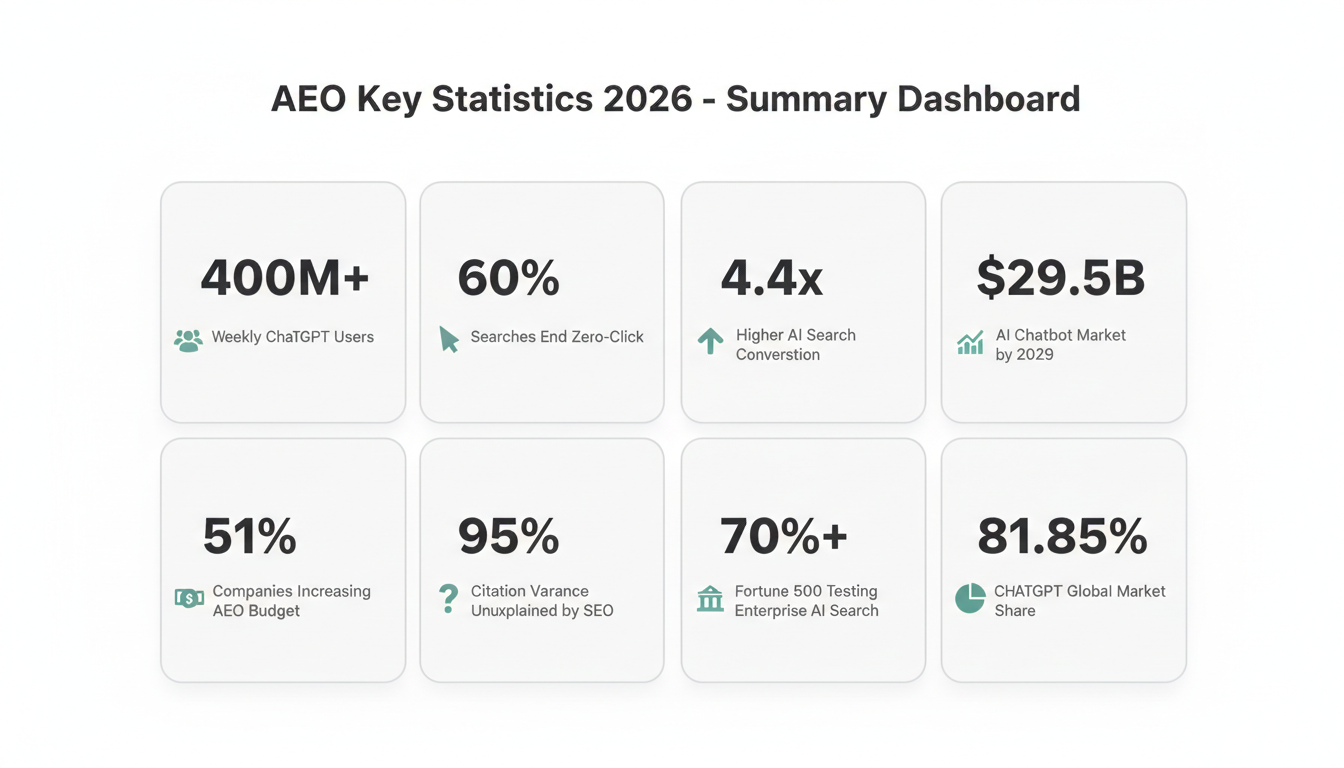
AEO statistics reveal a rapidly maturing landscape:
These statistics make the case clear: AEO is no longer optional for visibility in modern search environments.
By submitting this form, you agree to our Privacy Policy and Terms & Conditions.



