February 19, 2026


AI Overviews have fundamentally changed how users interact with search results—and the click-through rate data tells a complex story. While overall organic CTR has declined for queries showing AI Overviews, being cited within those overviews can actually increase traffic. Understanding these dynamics is essential for modern SEO strategy.
This guide compiles the latest CTR research and explains what the data means for your visibility strategy.
Multiple studies have documented how AI Overviews affect click behavior, with findings that reveal both challenges and opportunities.
Metric | Finding | Source |
Overall CTR decline | 34.5% decrease for top-ranking pages | Ahrefs study |
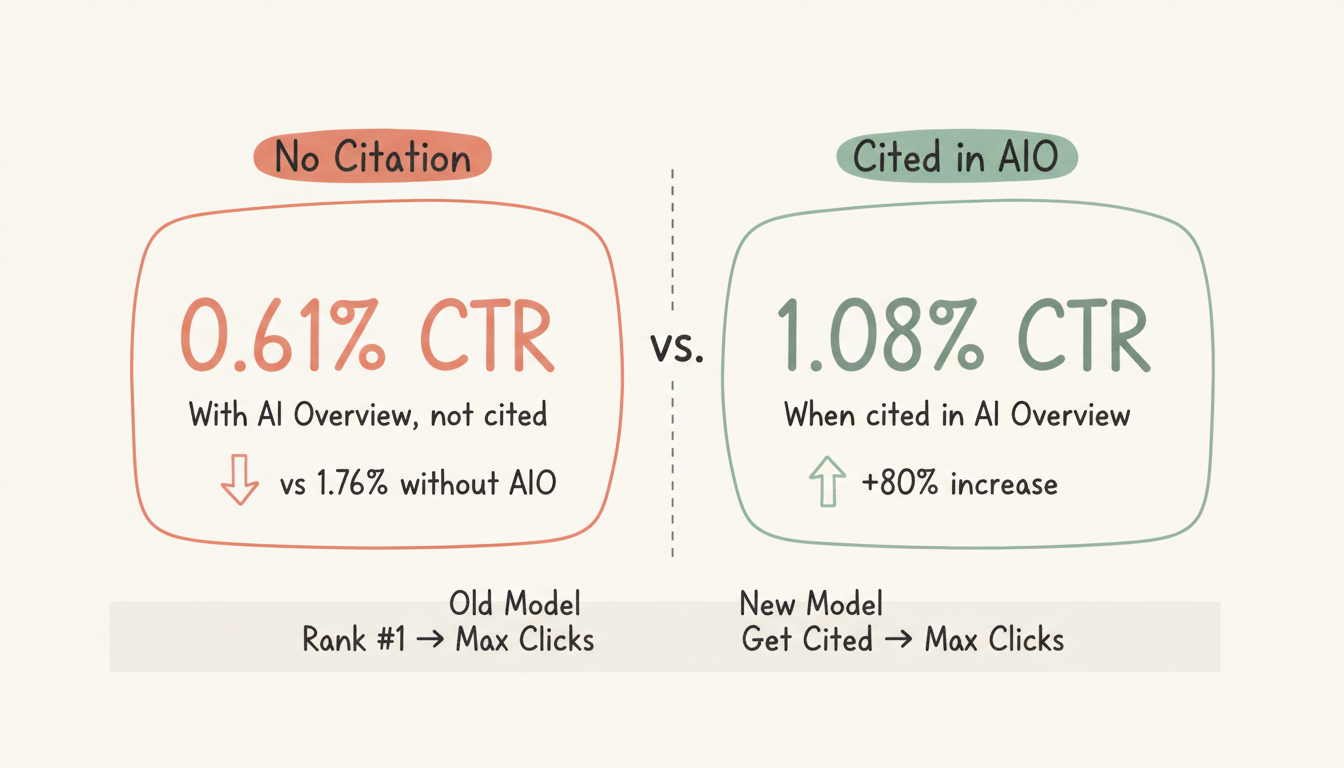
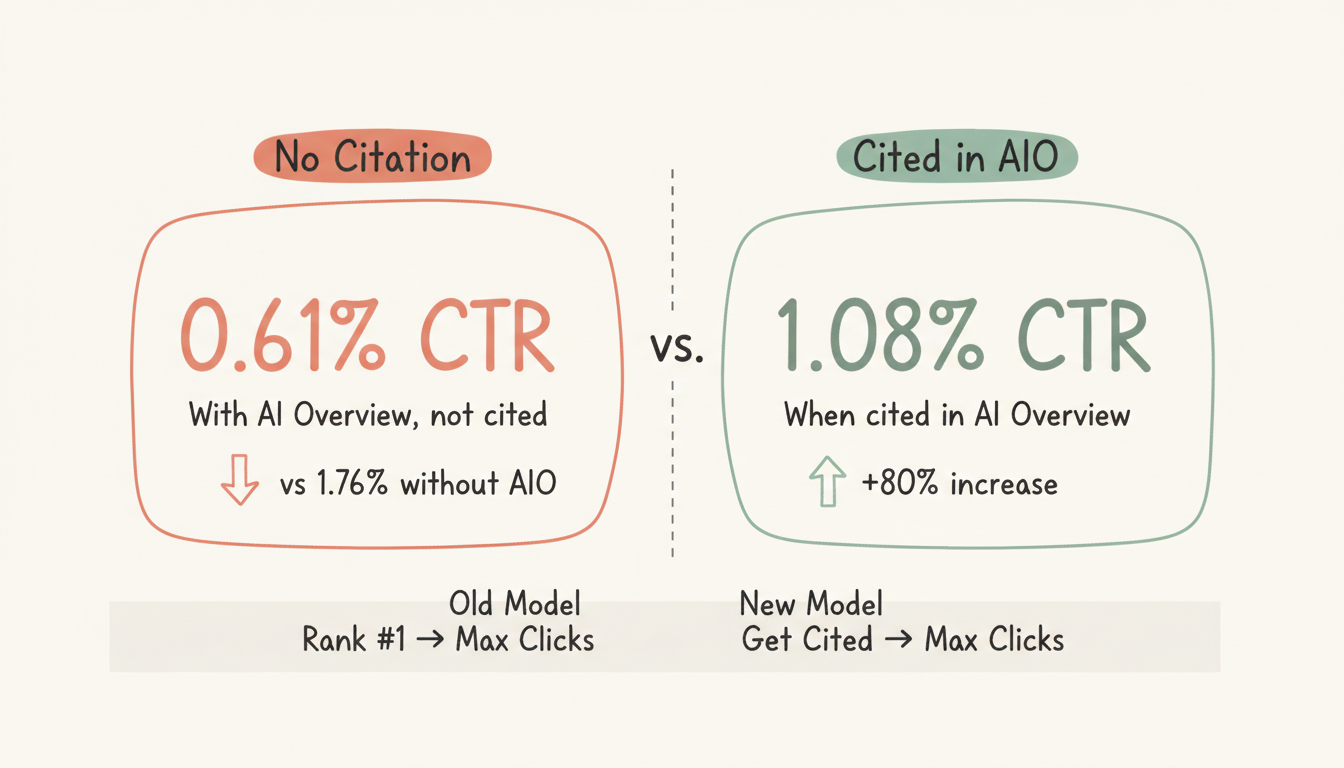
Organic CTR with AIO | 0.61% (down from 1.76% without) | Seer Interactive |
Citation CTR boost | +80% increase for cited sources | Semrush analysis |
Zero-click rate | 60% of queries resolved without clicks | Industry research |
Research from Seer Interactive found organic CTR plummeted 61% when AI Overviews appear—from 1.76% to 0.61%. This represents a dramatic shift in user behavior, making AEO optimization strategies increasingly critical for maintaining visibility.
CTR comparison by study:
Study | Without AIO | With AIO | Change |
Seer Interactive | 1.76% | 0.61% | -65.3% |
Amsive | 2.13% | 0.89% | -58.2% |
Ahrefs (Position 1) | Varies | Varies | -34.5% |
These declines reflect user behavior changes—when AI provides a synthesized answer, many users don't need to click through.
The data reveals a critical opportunity: being cited within AI Overviews significantly increases click-through rates.
Citation impact:
This creates a new optimization priority: earning citations matters more than traditional ranking position for many queries. Understanding the fundamental differences between SEO vs AEO key differences helps prioritize which approach to emphasize for different query types.
Understanding user behavior helps explain the CTR patterns.
According to recent research:
Zero-click searches now dominate for informational queries:
This suggests that simple informational queries increasingly result in no website visits—the answer appears directly in search. Leveraging long-tail keywords featured snippets remains an effective tactic for capturing these high-intent, low-volume searches.
AI Overview impact varies significantly by industry and query type.
Industry | AIO Presence | CTR Impact |
Science | 25.96% | High decline |
Computers & Electronics | 17.92% | High decline |
People & Society | 17.29% | Moderate decline |
B2B Technology | 70% (up from 36%) | Significant decline |
Insurance | 63% (up from 17%) | Significant decline |
Some sectors see minimal AI Overview presence:
The pattern suggests Google is more cautious with commercial and transactional queries—where user intent involves purchasing.
The CTR data points to strategic shifts required for modern SEO.
Traditional SEO focused on ranking position—higher rankings meant more clicks. The new equation:
Old Model | New Model |
Rank #1 for maximum CTR | Get cited in AIO for maximum CTR |
Beat all competitors | Be the most citable source |
Optimize for position | Optimize for inclusion |
For informational queries, being cited in the AI Overview can drive more traffic than ranking #1 in traditional results.
High-value approaches:
Declining value approaches:
Given zero-click trends, diversifying traffic sources becomes essential. Many B2B companies are rethinking their approach—explore how SearchGPT B2B companies strategy addresses these challenges.
Measuring your AI Overview performance requires specific monitoring.
Metric | How to Measure |
Citation appearances | Manual monitoring or AEO tools |
Click changes | GSC data for AIO-affected queries |
Traffic trends | Compare periods with/without AIO presence |
Brand mentions | Monitor AI responses for brand references |
Several tools now track AI Overview visibility:
Despite concerning CTR declines, the data reveals significant opportunities.
The 80% CTR increase for cited content means:
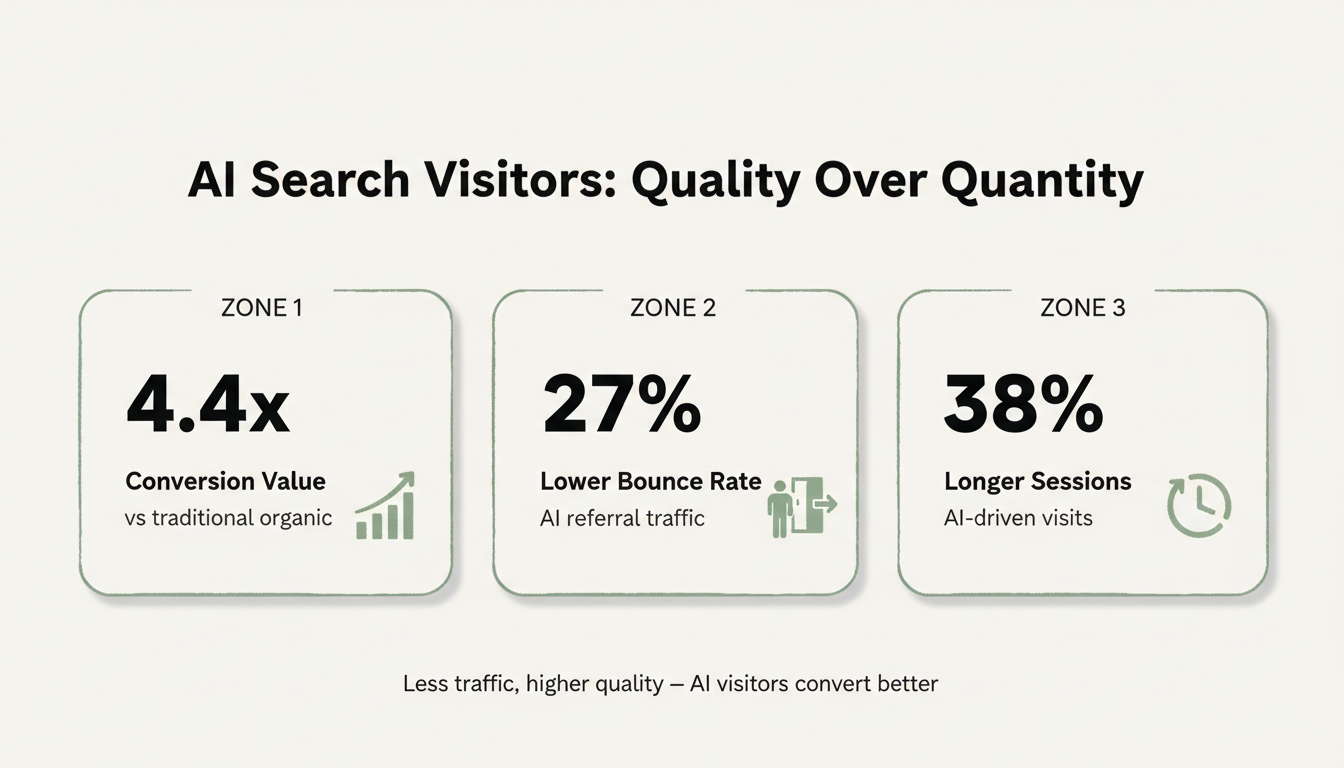
AI search visitors convert at dramatically higher rates:
Less traffic but higher quality can maintain or improve business outcomes.
Ecommerce and shopping queries remain largely unaffected by AI Overviews. For commercial content:
Not necessarily. While overall CTR declines for most queries with AI Overviews, sites cited within the overview can see traffic increases up to 35%. The impact depends on whether you're cited.
Yes, but less so for informational queries. For commercial and transactional queries where AI Overviews rarely appear, ranking position remains critical. For informational queries, citation in the AI Overview may matter more.
Focus on earning citations by creating authoritative, factual content that AI systems trust. Implement schema markup, build E-E-A-T signals, and structure content for easy extraction.
Consider focusing on commercial intent queries (lower AIO presence), long-form content opportunities where citations add value, and brand-building content that drives direct traffic.
By submitting this form, you agree to our Privacy Policy and Terms & Conditions.