February 19, 2026


B2B buying fundamentally differs from consumer purchases—complex evaluation processes, multi-stakeholder decisions, and sales cycles stretching months rather than minutes. These differences require specialized AI search optimization strategies that generic approaches fail to address. SearchGPT and similar AI platforms are increasingly shaping which vendors appear on initial shortlists, making B2B-specific optimization essential for maintaining competitive visibility.
The nature of B2B decision-making creates distinct AI visibility challenges.
B2B buying characteristics:
Research indicates B2B buyers increasingly turn to AI tools during early evaluation phases. AI doesn't make final purchasing decisions, but it dramatically shapes which vendors reach the shortlist. Companies missing from AI-generated recommendations face significant disadvantage before traditional sales conversations even begin.
The shortlist problem:
When a procurement manager asks ChatGPT "What are the best enterprise CRM options for manufacturing companies?", the response determines initial vendor consideration. B2B companies optimized for AI search earn mentions in these critical early-stage queries—those who aren't get filtered out before evaluation properly starts.
B2B prospects ask AI questions differently than consumers.
Consumer query patterns:
B2B query patterns:
B2B queries include technical specifications, compliance requirements, integration needs, and industry-specific contexts. Optimizing for these complex, multi-faceted questions requires content addressing specific scenarios rather than generic product descriptions. Companies using AI SEO software can analyze these query patterns at scale to identify optimization opportunities.
Prompt-based content strategy:
Work backward from the exact prompts your buyers type into AI tools. Interview recent customers about how they found you and what questions they asked AI during evaluation. The answers reveal which queries your content must address to earn citations.
B2B purchases involve different stakeholders with different concerns.
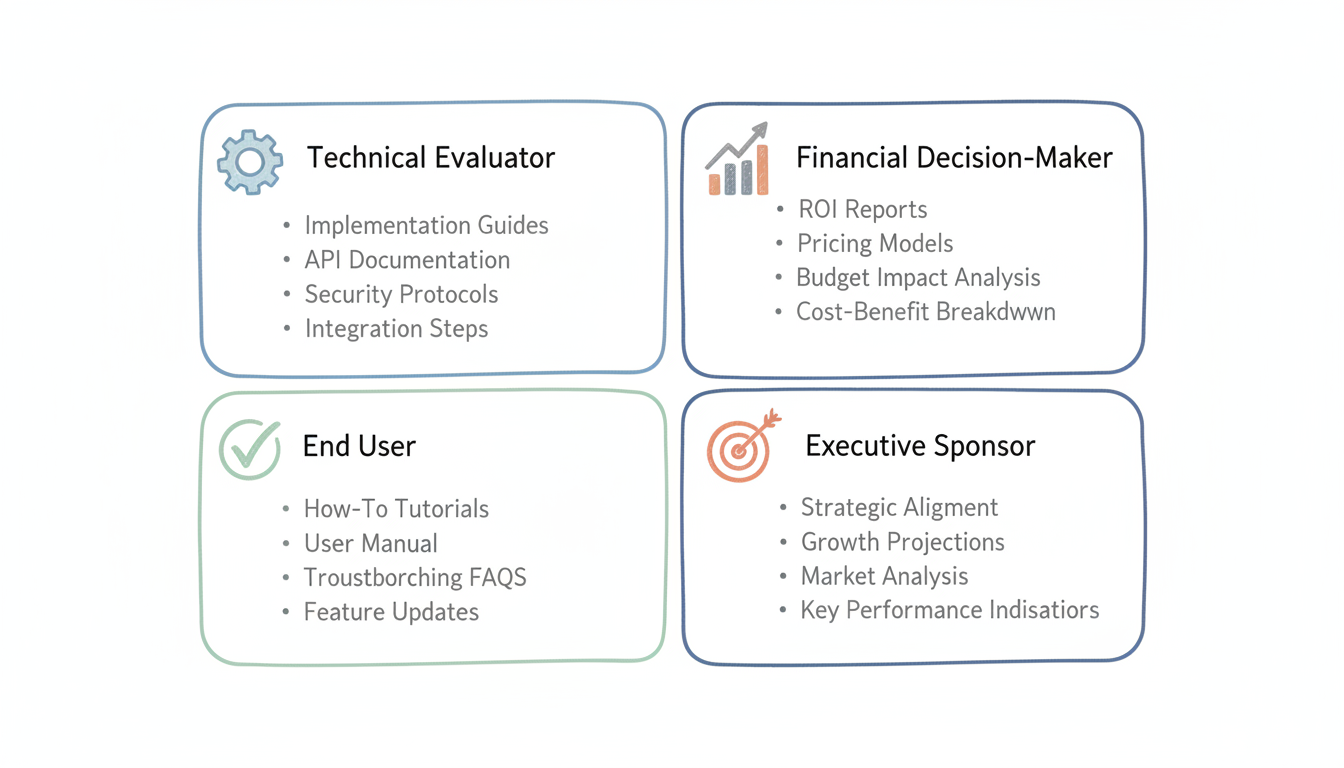
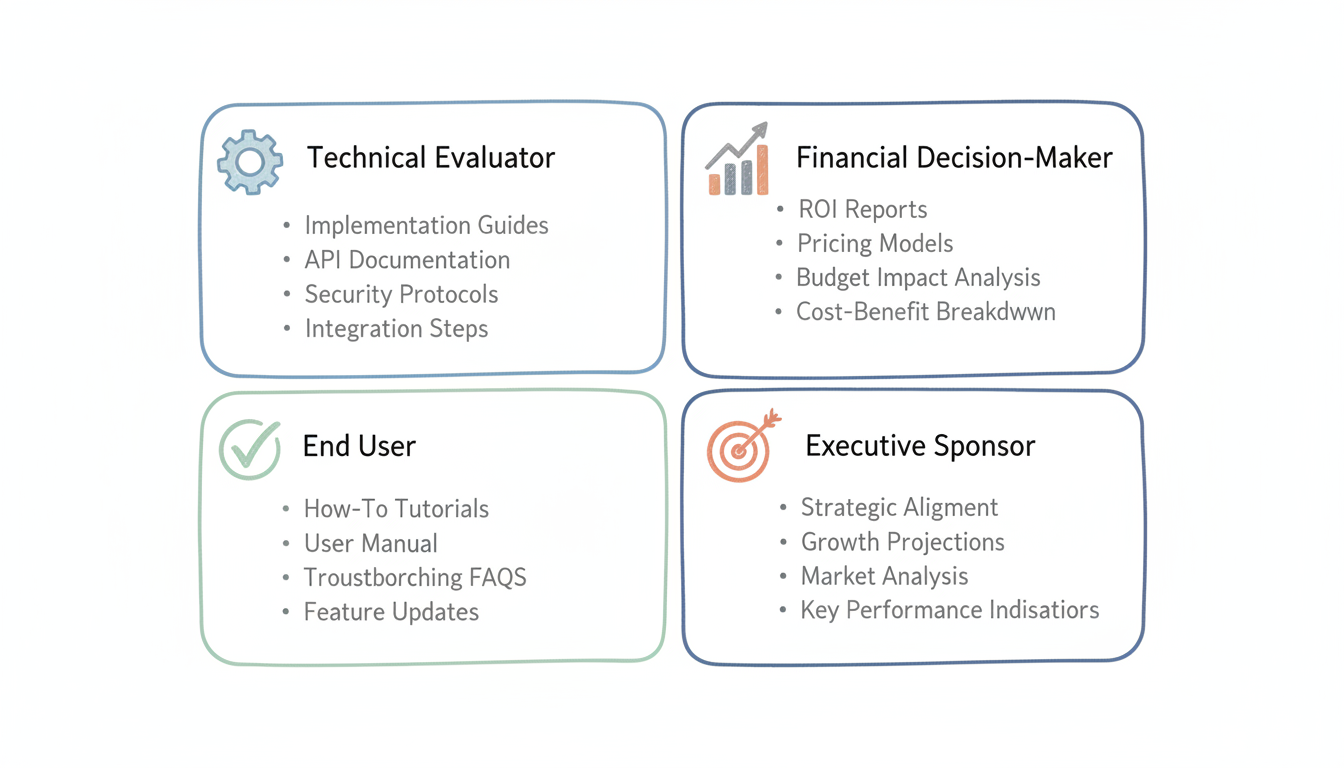
Stakeholder-specific content needs:
Technical evaluators: Require detailed architecture documentation, integration specifications, API capabilities, and security certifications. Content must demonstrate technical depth matching their expertise level.
Financial decision-makers: Need ROI frameworks, total cost of ownership analysis, implementation timeline impacts, and competitive pricing context.
End users: Seek workflow improvements, ease-of-use evidence, training requirements, and day-to-day functionality explanations.
Executive sponsors: Want strategic alignment evidence, vendor stability indicators, and transformation capability demonstrations.
Creating content addressing each stakeholder's specific concerns increases the range of B2B queries where your brand earns AI citations. A single comprehensive page can't satisfy all stakeholder perspectives—building content libraries targeting different roles expands citation opportunities.
B2B AI optimization demands stronger authority signals than consumer contexts.
Authority building for B2B:
Technical documentation depth: Comprehensive API documentation, architecture guides, and integration specifications signal technical credibility. AI systems cite sources demonstrating genuine expertise over marketing materials.
Industry-specific case studies: Named clients with specific outcomes in relevant industries provide verifiable authority. Generic success claims without details fail to differentiate in AI responses. Understanding how to get Google knowledge panel recognition can further strengthen your authority signals across AI platforms.
Certification and compliance evidence: ISO certifications, SOC 2 compliance, industry-specific accreditations, and security audits create machine-verifiable authority signals AI systems weight heavily.
Analyst recognition: Inclusion in Gartner, Forrester, or IDC reports provides third-party validation AI platforms trust. Being named in analyst quadrants or waves significantly increases citation likelihood for evaluation queries.
Research shows highly specialized B2B manufacturers often lead AI brand mention market share because they're authoritative sources for technical data, specifications, and application guides AI models require to answer complex queries.
B2B complexity requires comprehensive content depth.
Content depth requirements:
Definitive guides: 3,000+ word resources covering topics exhaustively position your brand as the authoritative source AI systems cite. These pillar pages earn citations across multiple related queries.
Comparison content: Side-by-side evaluations addressing specific B2B selection criteria help buyers—and get cited when AI assembles comparative answers.
Implementation guides: Step-by-step technical documentation demonstrates practical expertise and earns citations for "how to implement" queries in your category.
Industry-specific applications: Content addressing vertical-specific use cases captures niche queries larger competitors ignore.
The goal isn't just traffic—it's becoming the source AI systems trust for authoritative answers in your B2B category.
B2B buyers evaluate how solutions work within existing technology stacks.
Integration-focused optimization:
Platform partnerships: Document every integration clearly—API capabilities, supported platforms, certification levels, and implementation requirements.
Ecosystem content: Create pages specifically addressing integration with common enterprise platforms (Salesforce, SAP, Microsoft, Oracle) your prospects already use.
Technical specifications: Machine-readable structured data about compatibility, requirements, and integration methods helps AI systems surface your content for specific technical queries.
When a buyer asks "Which marketing automation platforms integrate with Microsoft Dynamics?", content explicitly addressing that integration question earns the citation.
B2B purchases, especially in regulated industries, require extensive compliance validation.
Compliance content strategy:
Certification documentation: Create dedicated pages for each certification, compliance achievement, and security audit. These become citable sources when AI answers compliance-related vendor queries.
Regulatory guidance: Content explaining how your solution addresses GDPR, HIPAA, SOC 2, or industry-specific regulations earns citations for compliance-focused evaluation queries. Applying Google AI overview optimization tips to compliance content ensures maximum visibility across AI platforms.
Security architecture: Technical security documentation demonstrates genuine capability versus marketing claims about security.
Regulated industries like healthcare, finance, and government generate compliance-heavy AI queries. Comprehensive compliance content captures this entire query category.
Track AI visibility metrics relevant to B2B evaluation patterns.
B2B-specific monitoring:
Evaluation query tracking: Monitor AI responses for queries matching your buyer's evaluation process—not just generic category terms.
Competitor comparison monitoring: Track whether your brand appears when AI answers head-to-head comparison queries against specific competitors.
Technical query coverage: Test AI responses for integration, implementation, and specification queries prospects ask during technical evaluation.
Stakeholder persona tracking: Monitor visibility across queries different buyer roles ask—not just decision-maker queries.
Sites optimized for AEO report 2-3x more referrals from AI engines than companies focused purely on traditional rankings. One enterprise SaaS company tracked 145x increase in ChatGPT referral traffic after implementing prompt-based optimization. Using an AI search analytics dashboard can help track these performance metrics systematically.
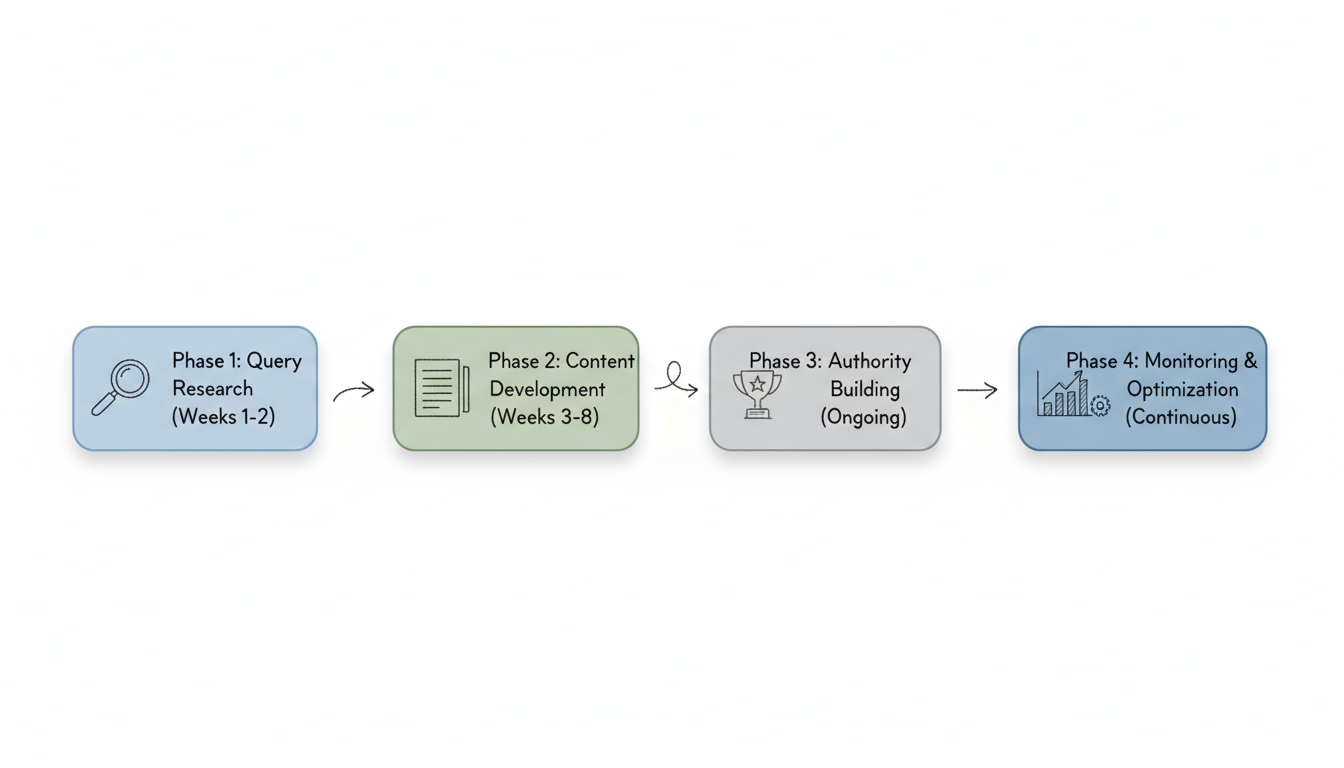
Systematic B2B AI optimization requires structured approach.
Implementation phases:
Phase 1: Query research (Weeks 1-2)
Phase 2: Content development (Weeks 3-8)
Phase 3: Authority building (Ongoing)
Phase 4: Monitoring and optimization (Continuous)
B2B companies frequently make specific AI optimization errors.
Mistakes undermining B2B AI visibility:
Generic content: Marketing-focused pages without technical depth fail to earn citations for specific B2B queries. AI systems cite sources demonstrating genuine expertise.
Ignoring technical buyers: Content targeting only decision-makers misses queries from technical evaluators who influence shortlisting decisions.
Vague case studies: Success stories without named clients, specific metrics, or implementation details don't provide citable evidence AI systems require.
Missing integration content: Failing to document integrations explicitly leaves visibility gaps when buyers ask platform-specific compatibility questions.
Compliance content gaps: B2B buyers in regulated industries generate compliance-heavy queries—missing this content cedes visibility to competitors.
B2B optimization must address longer evaluation cycles, multi-stakeholder journeys, and complex technical requirements. Content needs to satisfy different buyer personas (technical, financial, end-user, executive) rather than single consumer decision-makers. Query patterns are more complex, incorporating integration requirements, compliance needs, and industry-specific contexts.
ChatGPT/SearchGPT and Perplexity see significant B2B usage for vendor research and evaluation. Microsoft Copilot matters particularly for enterprises already in Microsoft ecosystems. Google AI Overviews impact research queries. B2B companies should optimize for multiple platforms given varied buyer tool preferences.
Initial citation improvements can appear within 4-8 weeks for well-optimized content. However, B2B buying cycles mean conversion impact takes longer to manifest—expect 3-6 months before pipeline influence becomes measurable. Start with high-value evaluation queries to demonstrate early wins.
By submitting this form, you agree to our Privacy Policy and Terms & Conditions.