February 19, 2026


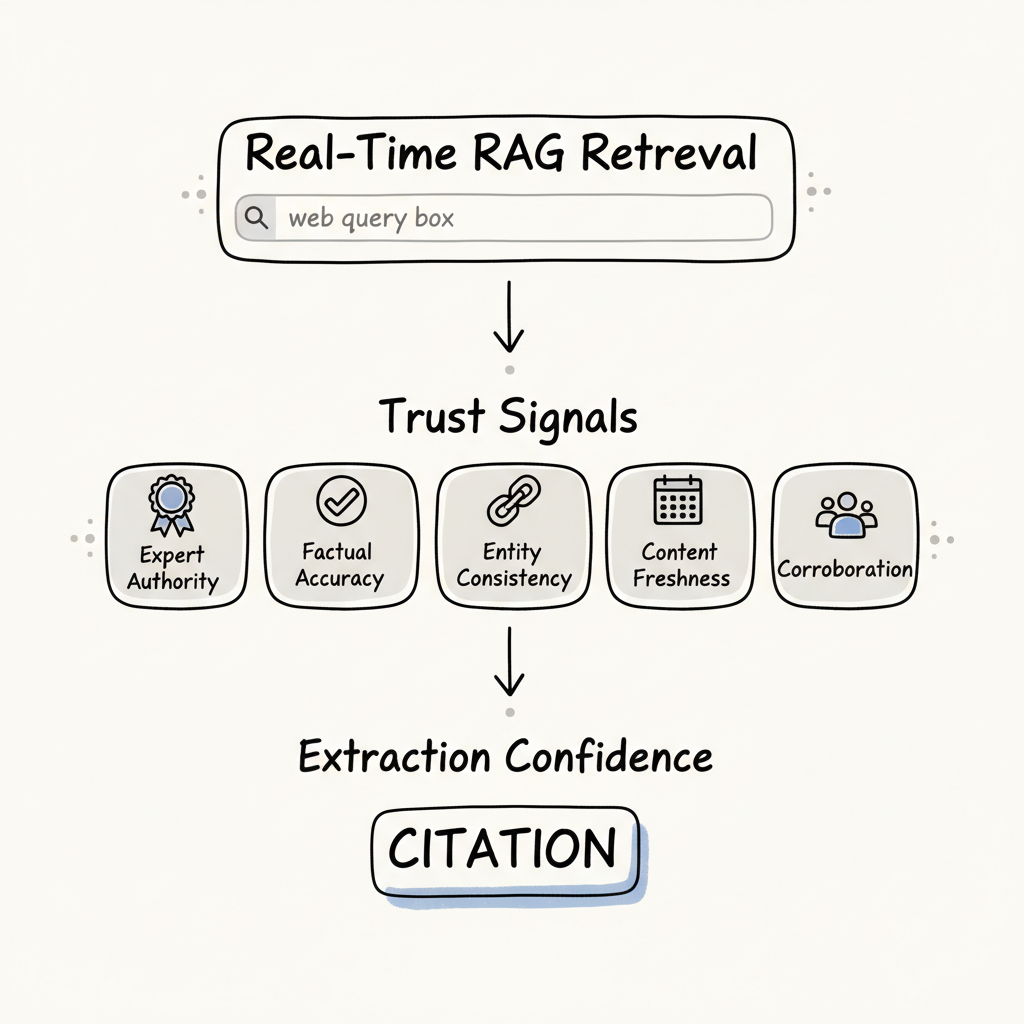
The competition for digital visibility has shifted. Being cited as a source in AI-generated answers has become the new SEO "win." When ChatGPT, Perplexity, or Google AI Overviews answer a user's question, the sources they reference capture attention at the moment of highest intent—often without requiring a click.
Understanding how AI search citations work—and what drives source selection—determines whether your content becomes the authoritative answer or disappears into algorithmic obscurity.
An AI search citation is a linked source reference displayed within an AI-generated answer to support a claim. Unlike traditional search results that present lists of blue links, AI search engines synthesize information from multiple sources and attribute that information through inline citations.
Citations differ from mentions. A mention occurs when your brand or concept appears in an AI response without a source link. Citations include explicit attribution—a clickable reference back to your content. This distinction matters: citations signal trust and enable verification, while mentions provide brand awareness without direct traffic opportunity.
The mechanics vary by platform. Perplexity displays numbered citations throughout responses with a reference list below. ChatGPT (with browsing enabled) shows citation links within answers. Google AI Overviews display expandable source cards users can explore. Each platform handles attribution differently, but the fundamental goal remains: earn the citation to establish authority and capture qualified traffic.
AI citation selection operates differently than traditional ranking algorithms. Research analyzing over 5.5 million AI-generated responses reveals consistent patterns in how platforms choose which sources to reference.
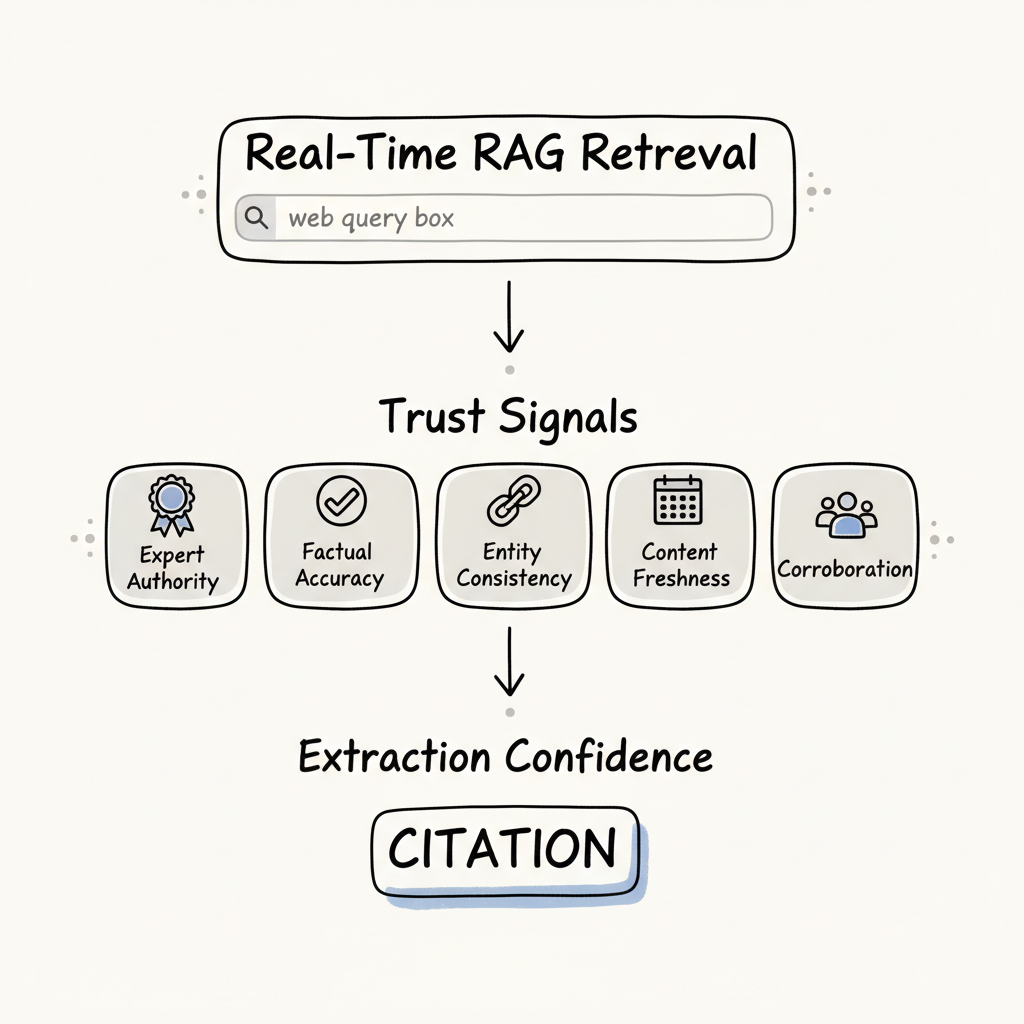
Retrieval-Augmented Generation (RAG) Most AI search platforms use retrieval-augmented generation—they query external sources in real-time rather than relying solely on training data. Perplexity retrieves and cites the broadest number of unique domains per query, achieving citation density 2-3 times higher than parametric models like base ChatGPT. This real-time retrieval creates the citation opportunity.
Trust Signal Evaluation AI platforms evaluate multiple trust dimensions before citing a source:
Extraction Confidence AI systems assess how confidently they can extract specific claims from your content. Pages with clear structure, direct answers, and explicit factual statements earn citations more consistently than content requiring interpretation. Understanding what is AEO in marketing helps you structure content for better extraction confidence.
Domain Convergence for Brand Queries All major AI models converge on official domains for brand-specific queries. Owned properties become the primary citation source for high-intent commercial searches—making your official website essential for brand-related citations.
Research from Princeton, Georgia Tech, and the Allen Institute tested nine optimization methods across thousands of content samples. The findings point to specific strategies that increase citation probability.
Answer-Ready Content Content directly answering questions within the first 100 words performs significantly better in AI citations. AI systems look for extractable answers—content structured so the platform can pull a clear response without extensive interpretation.
Lead with your answer. Place the direct response to a query in the opening sentences, then elaborate with supporting detail. This inverted pyramid structure makes your content citation-friendly and aligns with AEO content guidelines that prioritize immediate value delivery.
Structured Data and Clear Hierarchies AI prioritizes structured data and clear content hierarchies. Use descriptive headers, logical section organization, and explicit formatting (lists, tables, definition formats) that signal content meaning.
Schema markup—particularly FAQPage, HowTo, and Article schema—helps AI systems understand your content structure and extract relevant claims accurately. Implementing HowTo schema for AI search can significantly improve your citation eligibility.
Statistics Over Qualitative Claims AI systems favor quantifiable claims over vague qualitative statements. "Conversion rates increased 47% after implementation" earns citations more reliably than "conversion rates improved significantly." Specific data points give AI platforms confidence in the accuracy of extracted information.
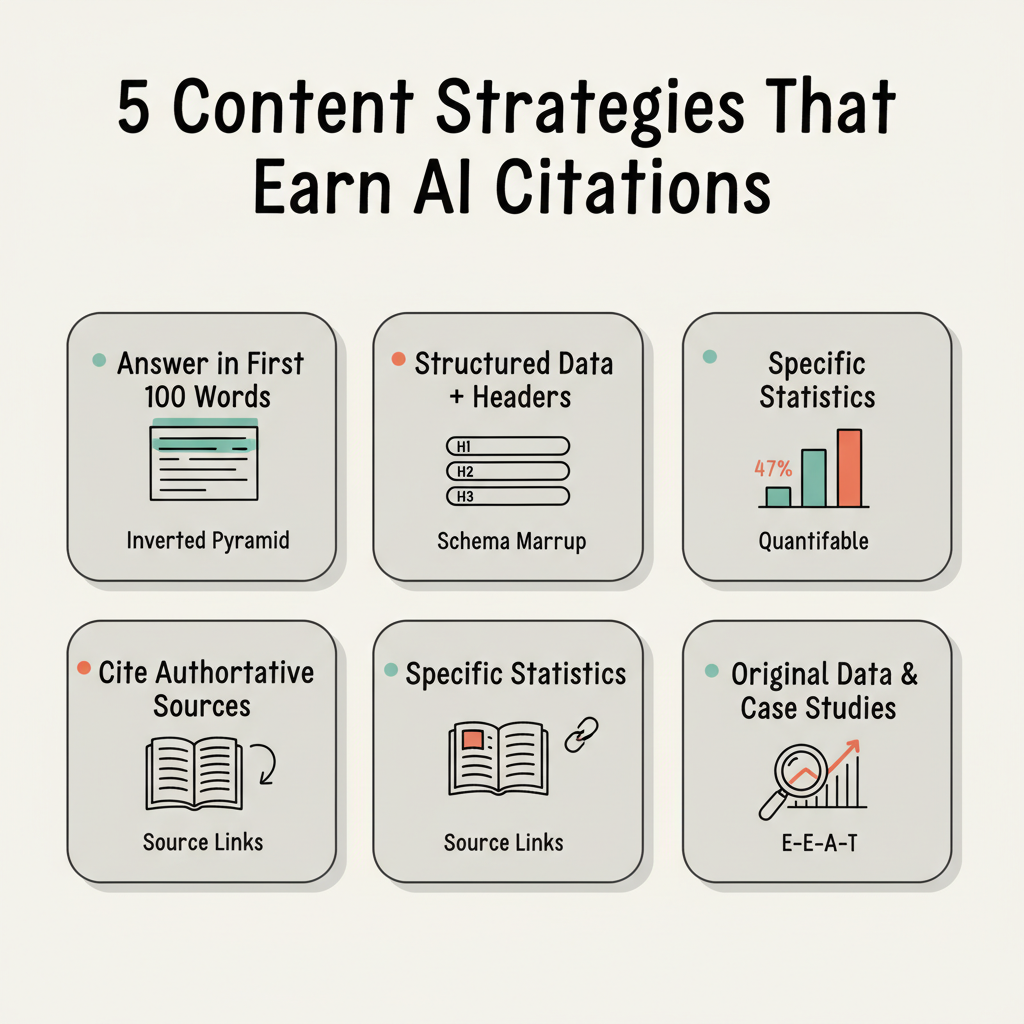
Citations to Authoritative Sources Citing your own sources signals credibility. Pages that reference authoritative external sources demonstrate research rigor and factual grounding—qualities AI systems associate with trustworthy content.
First-Hand Experience and Original Data E-E-A-T signals matter for AI citation. Content demonstrating first-hand experience—case studies, original research, proprietary data—provides information AI platforms can't find elsewhere. Unique contributions earn citations because they offer value unavailable in competing sources. Building AI overview authority signals through original research strengthens your citation potential.
Beyond content quality, technical factors determine whether AI platforms can access and cite your content.
AI Crawler Access Ensure your robots.txt permits AI crawlers:
Blocking these crawlers eliminates citation opportunities entirely. While AI platforms may have cached knowledge, real-time retrieval requires crawler access.
Page Speed and Rendering AI systems testing source quality evaluate load performance. JavaScript rendering issues, slow page speeds, and mobile unfriendliness create extraction barriers. Ensure pages load quickly and render completely for crawlers.
Fresh Content Signals AI search heavily penalizes stale content. Perplexity shows citation decay for content not updated within 2-3 days for fast-moving topics. Update publication dates, add current examples, and refresh statistics regularly.
Clean Extraction Formatting Avoid patterns that complicate extraction: excessive pop-ups, interstitial ads, paywalled content, or complex JavaScript-dependent interfaces. Clean, accessible HTML helps AI systems extract citations confidently.
Traditional SEO platforms don't fully monitor AI search visibility. Emerging tools now track citation performance:
What to Measure
Available Tools SEMrush added AI Overview tracking and citation analysis in 2025. HubSpot's AEO Grader shows how large language models see your brand. Specialized tools like MentionDesk focus specifically on AI visibility tracking.
Manual Testing Protocol Query AI platforms directly with questions relevant to your content. Track which competitors get cited, analyze what citation-earning content has in common, and identify gaps in your coverage.
The most damaging citation barriers:
Stale Content AI platforms penalize outdated information. A page last updated in 2022 will rarely be cited when 2025 content exists on the same topic.
Over-Optimization AI detects keyword stuffing and formulaic content. Natural, expert-level writing earns citations; manufactured SEO content doesn't.
Thin Coverage AI compares your content against everything available. Shallow articles covering topics superficially rarely earn citations when comprehensive alternatives exist.
Promotional Language AI favors educational over promotional material. Sales-focused content gets skipped for informational alternatives.
Missing E-E-A-T Signals Without verifiable expertise indicators—author credentials, source citations, demonstrated experience—AI platforms can't verify trustworthiness.
Citation earning compounds. Brands cited consistently build recognition in AI systems. This creates a flywheel: citations signal authority, authority increases citation likelihood, and increased citations reinforce authority.
Multi-Platform Distribution Limiting content to owned properties restricts discovery. Distribute expertise across industry publications, podcasts, video platforms, and social media. AI platforms aggregate signals from multiple sources.
Entity Consistency Ensure brand information matches across all digital properties. Inconsistent entity signals confuse AI systems and reduce citation confidence.
Ongoing Content Updates Fresh content earns citations. Build processes for regular content updates—new statistics, current examples, recent case studies—that signal ongoing relevance.
AI search citations represent the new measure of content authority. The brands earning consistent citations in 2026 aren't just well-optimized—they're genuinely authoritative, clearly structured, and continuously updated. That combination of substance and accessibility determines who gets referenced when AI answers the questions that matter.
By submitting this form, you agree to our Privacy Policy and Terms & Conditions.