
February 19, 2026


Selecting the right campaign objective is the most important decision you make when creating Facebook ads. Your objective tells Meta what result you want, and the platform optimizes every aspect of ad delivery to achieve that goal. Choose the wrong objective and you'll waste budget reaching people who never take the action you actually want.
This guide explains all six Facebook ads objectives available in 2026, when to use each one, and how to match objectives to your marketing funnel.
Meta consolidated its original 11 objectives into 6 streamlined options as part of the Outcome-Driven Ad Experiences (ODAX) update. Here's what each objective does and when to use it.
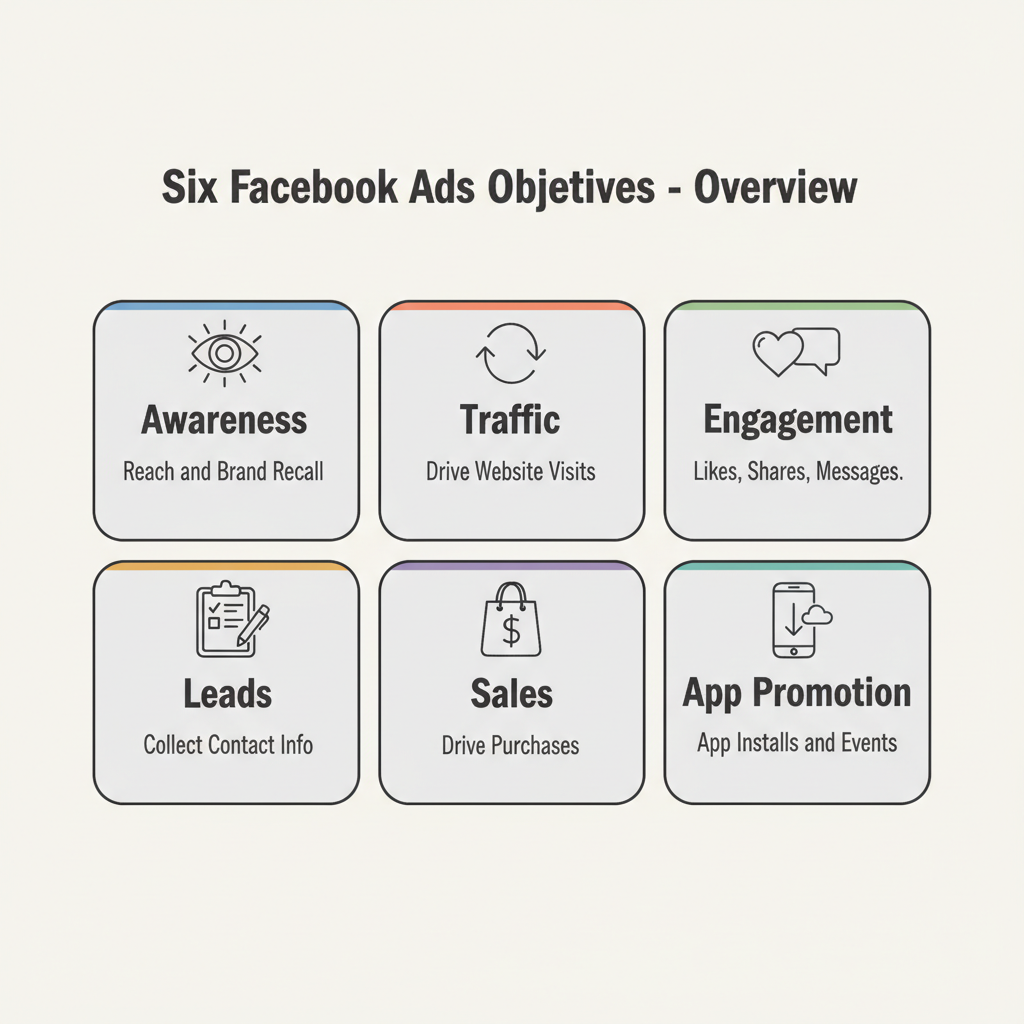
The Awareness objective maximizes how many people see your ad. Meta optimizes for reach and brand recall, showing your ads to users most likely to remember them.
Formerly included:
Best for:
Performance goals available:
Example: A new fitness studio running ads to introduce themselves to people within 10 miles of their location.
The Traffic objective sends people to a destination—your website, app, or Messenger conversation. Meta optimizes for link clicks or landing page views.
Best for:
Performance goals available:
Important note: Traffic campaigns optimize for clicks, not conversions. People who click may not buy, so use this objective when you cannot track sales or leads on your website, or when you specifically need traffic volume.
Example: A SaaS company driving visitors to a blog post to build their retargeting audience.
The Engagement objective gets people to interact with your content through likes, comments, shares, messages, or video views.
Formerly included:
Best for:
Performance goals available:
Example: An e-commerce brand promoting a product video to build an audience of viewers they can retarget with Sales campaigns.
The Leads objective collects contact information from potential customers. This objective works with lead forms that keep users on Facebook, or with conversion tracking on your website.
Best for:
Performance goals available:
Pro tip: The "Conversion Leads" performance goal uses your CRM data to optimize for leads most likely to become customers, not just people who fill out forms.
Example: A B2B software company collecting demo requests through an instant form that stays on Facebook.
The Sales objective drives purchases, sign-ups, or other valuable conversion actions. This is the most powerful objective for businesses selling products or services online.
Formerly included:
Best for:
Performance goals available:
Important: Sales campaigns require proper conversion tracking through the Meta Pixel and/or Conversions API. Without tracking, Meta cannot optimize delivery.
Example: An online retailer running dynamic product ads that automatically show users items they viewed on the website.
The App Promotion objective drives mobile app installs and in-app actions.
Best for:
Performance goals available:
Example: A gaming company running ads to drive downloads of their new mobile game.
Matching your objective to your actual business goal is critical. Here's a quick reference:
Your Goal | Use This Objective |
Get my brand seen by new people | Awareness |
Drive visitors to my website | Traffic |
Get comments, shares, video views | Engagement |
Collect contact information | Leads |
Make sales online | Sales |
Get app downloads | App Promotion |
Ask yourself these questions to choose correctly:
Different objectives work best at different stages of the customer journey.
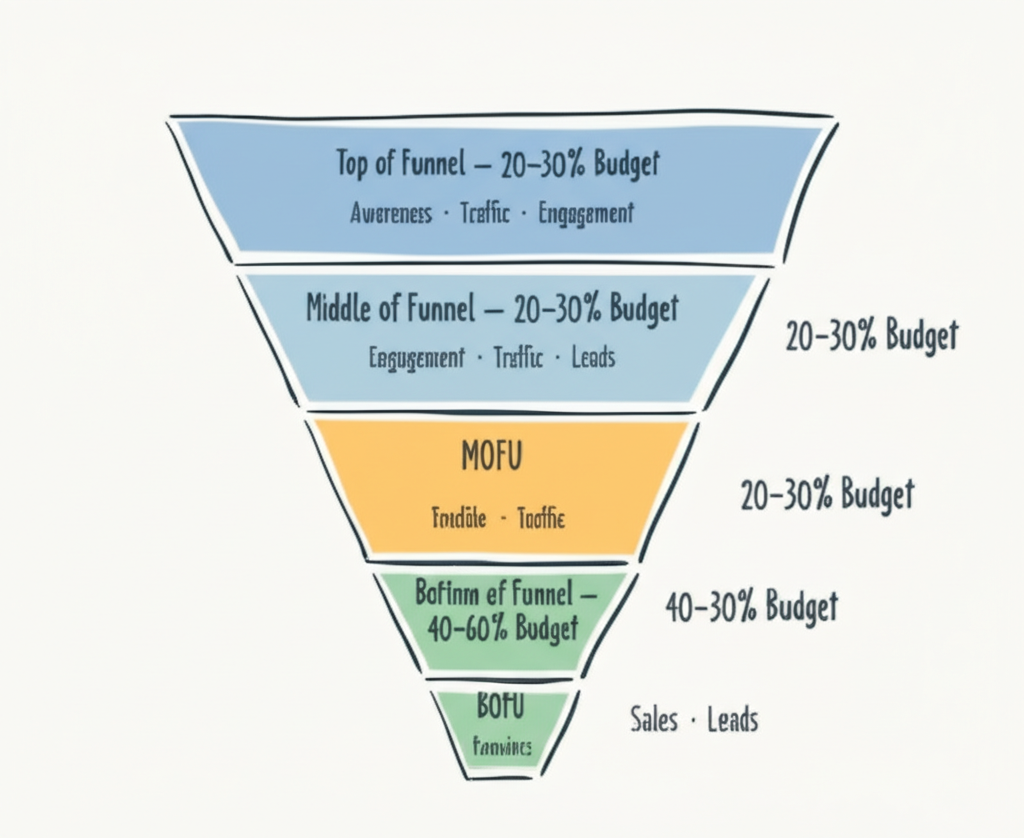
Goal: Introduce your brand to people who don't know you
Best objectives:
Recommended budget allocation: 20-30% of total ad spend
Goal: Nurture interested prospects toward a decision
Best objectives:
Recommended budget allocation: 20-30% of total ad spend
Goal: Convert warm prospects into customers
Best objectives:
Recommended budget allocation: 40-60% of total ad spend
A software company might structure campaigns like this:
Avoid these objective selection errors that waste budget and deliver poor results.
Running Traffic campaigns when you want conversions is one of the most common mistakes. Traffic campaigns find clickers—not buyers. Meta will show your ads to people who love clicking links but rarely purchase anything. If you need better conversion outcomes, understanding how to calculate ROI Facebook ads becomes essential for measuring actual sales performance.
Fix: If you can track purchases with the Pixel, use the Sales objective.
Awareness campaigns maximize eyeballs, not actions. If you need sales or leads, Awareness will underdeliver because Meta optimizes for completely different behaviors.
Fix: Reserve Awareness for true brand-building campaigns where recall matters more than immediate action.
The Sales and Leads objectives only work well when Meta can verify conversions. Without proper Pixel and Conversions API setup, Meta can't learn who converts and cannot optimize effectively. This is particularly critical when developing a comprehensive meta ads strategy that depends on accurate performance data.
Fix: Set up conversion tracking before launching Sales or Leads campaigns. Verify events are firing correctly in Events Manager.
Your ad creative should match your objective. Awareness campaigns need memorable branding; Sales campaigns need clear product benefits and CTAs.
Fix: Align creative with objective. Awareness gets storytelling; Sales gets product-focused offers.
Cold audiences who've never heard of you rarely convert immediately. Jumping straight to Sales campaigns often results in expensive, low-converting traffic. If you're just getting started, learning how to create facebook ads for beginners will help you understand proper audience warming techniques.
Fix: Warm up audiences first with Awareness or Engagement campaigns, then retarget with Sales.
Start with the objective that matches your business model. E-commerce businesses should use Sales with proper tracking. Service businesses often start with Leads. If you're unsure, Traffic campaigns are safer to test since they don't require conversion tracking. Before spending money, make sure you understand do Facebook ads cost money and budget accordingly.
No, you cannot change the objective of an existing campaign. You'll need to create a new campaign with the correct objective and pause or delete the old one.
Traffic campaigns optimize for clicks, not conversions. Meta shows your ads to people who click frequently, but frequent clickers aren't necessarily buyers. Switch to a Sales objective if you want purchases.
By submitting this form, you agree to our Privacy Policy and Terms & Conditions.



