
February 19, 2026


Generative engine content strategy means planning content for AI citation potential before you write it. Most GEO advice focuses on optimizing existing content—restructuring paragraphs, adding schema, improving extraction. But the most efficient path to AI visibility starts earlier: choosing topics and formats AI systems want to cite from the beginning.
Content planned for GEO outperforms content retrofitted for it.
Retrofitting content for AI citation works but wastes effort. Articles written for traditional engagement often require complete restructuring—breaking up flowing narratives, adding extractable statements, reformatting for quotability.
Planning for GEO from day one eliminates this double work. Writers create citation-ready content in their first draft. Editors review for GEO qualities alongside standard criteria. The content launches optimized.
Planning advantages:
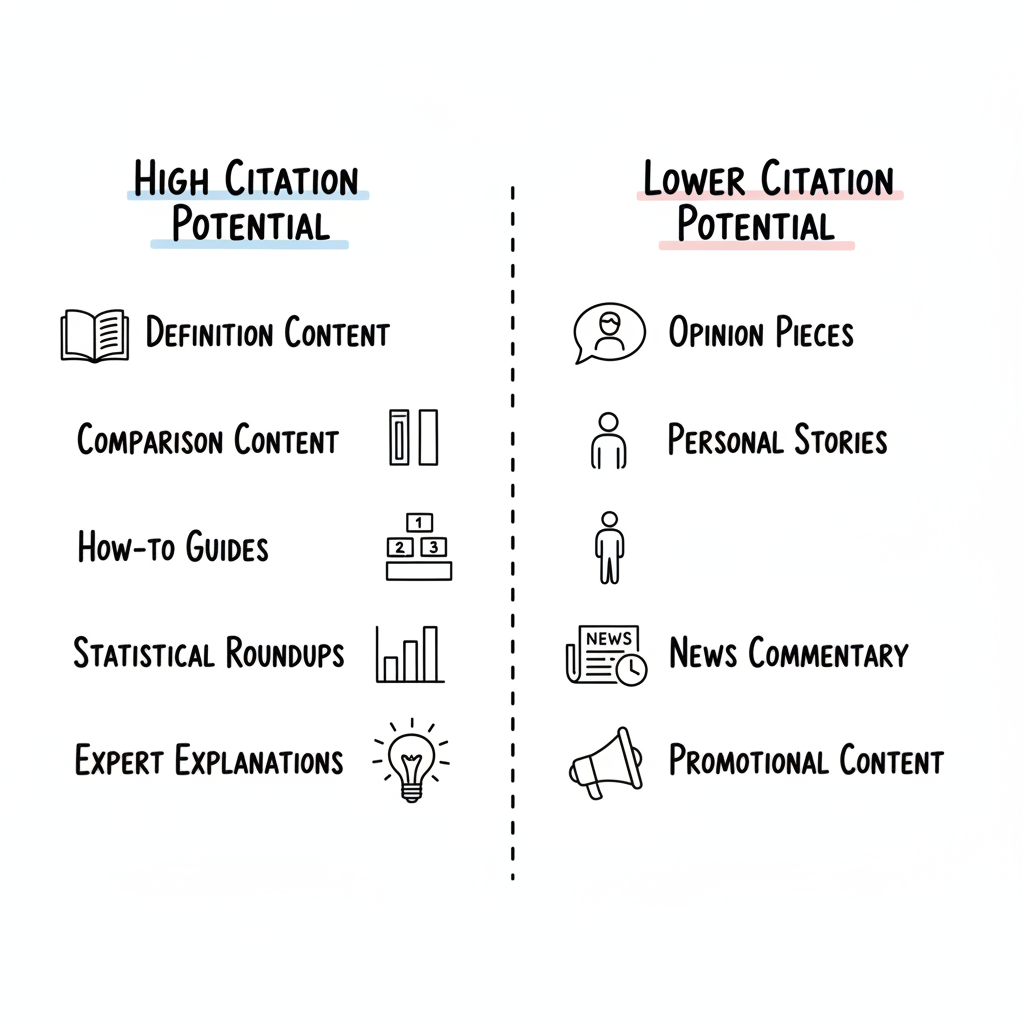
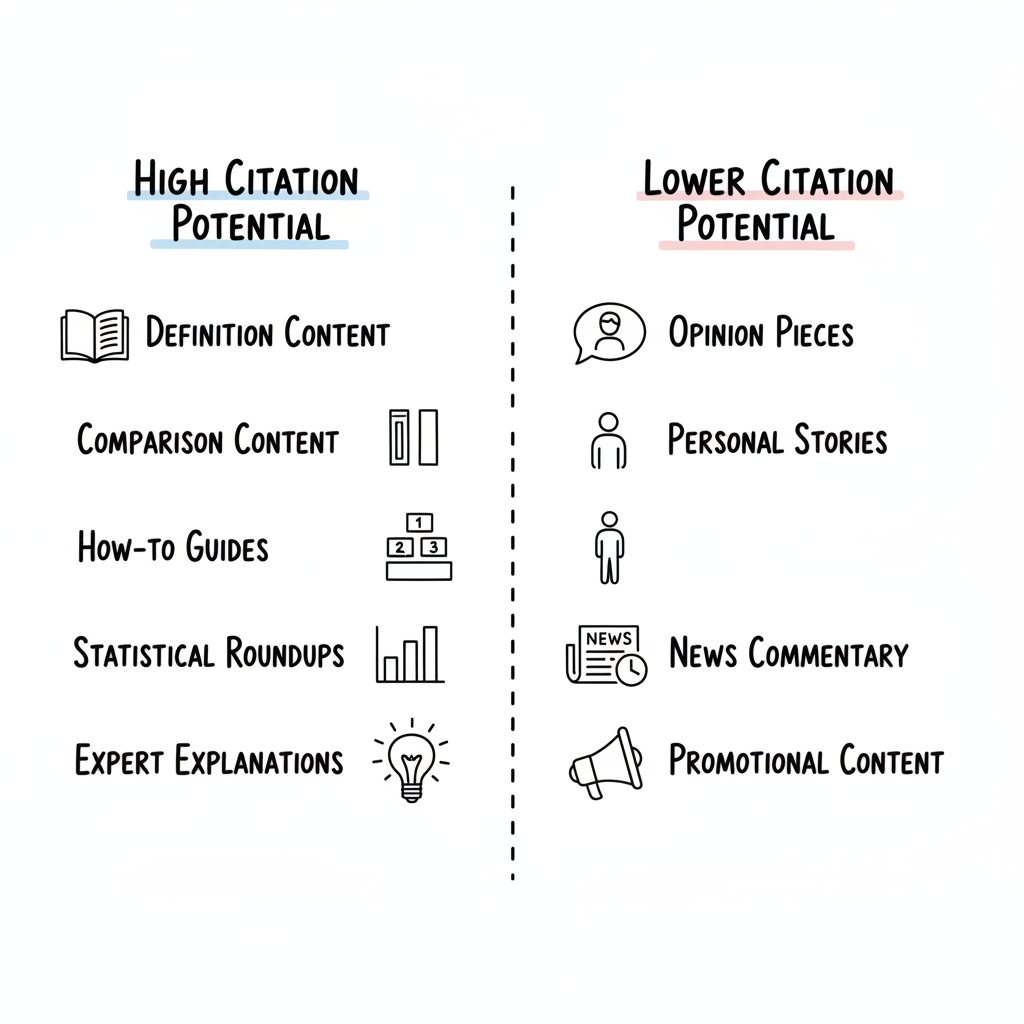
Not all content formats attract AI citations equally. Plan your content mix around formats AI systems prefer.
Definition content: Articles defining terms, concepts, or processes earn frequent citations. AI systems need clear definitions to answer user questions.
Comparison content: Side-by-side comparisons of products, approaches, or options provide the structured information AI systems summarize for users.
How-to guides: Step-by-step instructions for achieving specific outcomes match common AI queries. Users frequently ask "how do I..." questions.
Statistical roundups: Content compiling relevant statistics becomes a citation source for AI needing data points to support claims.
Expert explanations: Content explaining why things work—not just what to do—provides the reasoning AI systems use when synthesizing answers.
Opinion pieces: AI systems cite facts more than opinions. Subjective content has limited citation potential unless the author has exceptional authority.
Personal stories: Narrative content about individual experiences rarely earns citations. AI systems seek generalizable information.
News commentary: Time-sensitive reactions have short citation windows before becoming dated.
Promotional content: Product-focused content without informational value gets skipped by AI systems seeking neutral information.
Plan your content calendar weighted toward high-citation formats without eliminating content that serves other business purposes.
Topic selection determines citation potential more than any other factor. The right topics attract AI queries; wrong topics never surface regardless of optimization quality.
Identify questions your audience asks AI systems about your domain. These become topic priorities.
Research approaches:
When conducting this research, understanding the differences between ChatGPT vs Perplexity helps identify which platform your audience prefers for specific query types.
AI systems struggle with topics lacking authoritative coverage. Filling these gaps creates citation opportunities.
Gap identification:
AI systems cite content they can cross-reference. Topics with verifiable facts earn more citations than subjective domains.
Verifiability spectrum:
High Verifiability | Medium Verifiability | Low Verifiability |
Statistics, data | Best practices | Opinions |
Definitions | Recommendations | Predictions |
Processes | Comparisons | Speculation |
Historical facts | Case studies | Preferences |
Weight your topic selection toward higher-verifiability subjects where possible.
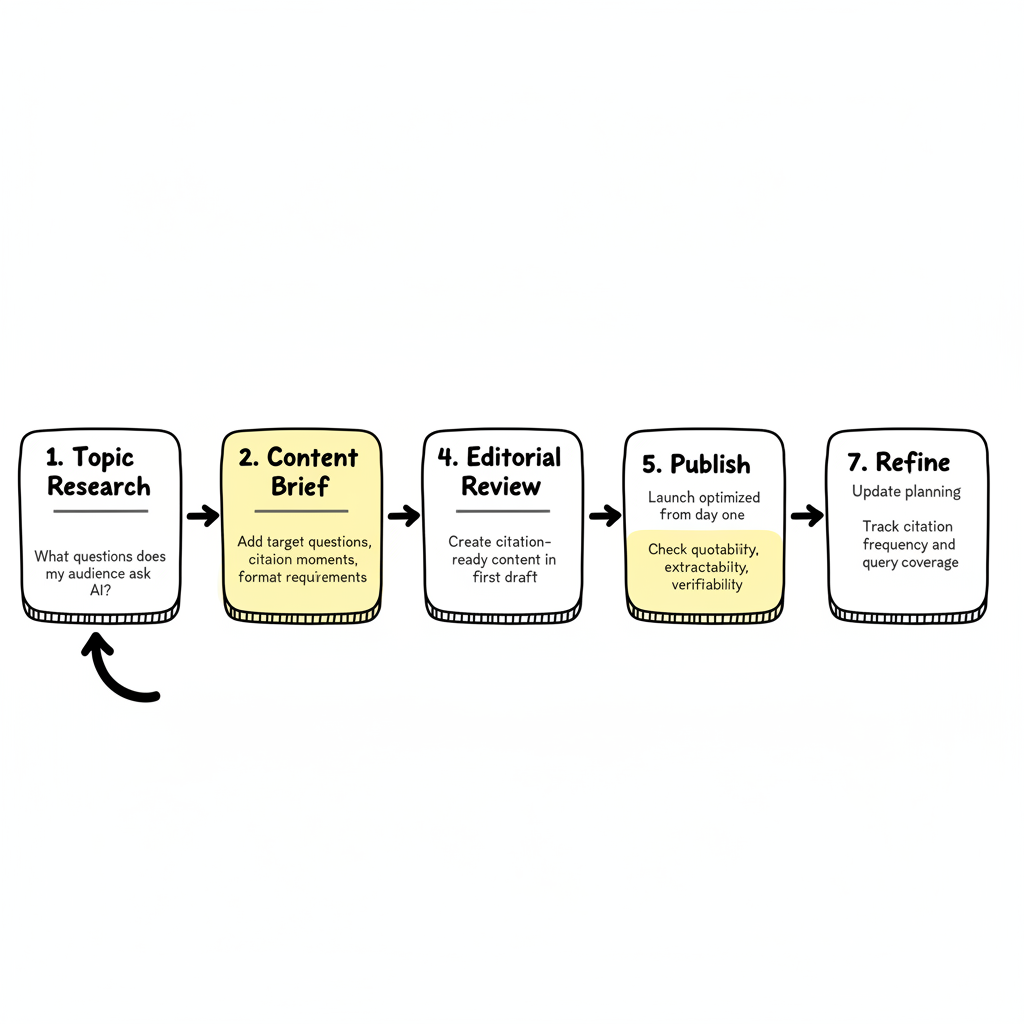
Integrate GEO requirements into editorial planning processes.
Standard content briefs specify audience, goals, and keywords. GEO-optimized briefs add:
Target questions: The specific AI queries this content should answer. Writers optimize for these questions.
Citation moments: Points in the content requiring quotable, extractable statements. Writers know where citation potential concentrates.
Format requirements: Structure expectations—tables, numbered lists, definition blocks—that improve AI extraction.
Fact requirements: Statistics, data points, or specific information the content must include for verifiability.
Add GEO criteria to editorial review checklists:
Review for GEO alongside traditional quality criteria. Organizations implementing AI SEO services should integrate these editorial standards into their existing content workflows.
Plan content types strategically across your calendar.
Balance example:
Month | High-Citation Content | Supporting Content |
Q1 | 3 definition articles, 2 comparisons | 2 opinion pieces, 1 news analysis |
Q2 | 2 how-to guides, 2 statistical roundups | 3 promotional articles |
This balance builds citation-earning content while maintaining diverse content purposes.
AI systems evaluate topical authority when selecting citation sources. Topic clusters demonstrate comprehensive expertise.
Hub content: Comprehensive articles covering broad topics thoroughly. These establish topical authority.
Supporting content: Focused articles answering specific questions within the topic. These earn citations for narrow queries.
Connecting content: Articles linking related topics, expanding your semantic footprint beyond single clusters.
Cluster topic: Email marketing automation
Hub content: "Complete Guide to Email Marketing Automation"
Supporting content:
Connecting content: "Email Automation and CRM Integration Guide"
This structure creates multiple citation opportunities while building topical authority. Teams should also consider how AI search team structure and roles impact content cluster development and execution.
Plan for measurement from the start.
Before publishing GEO-planned content, document:
Monitor new content against GEO metrics:
Citation frequency: How often does the new content earn citations?
Query coverage: Which target questions does the content now answer?
Citation quality: When cited, is information represented accurately?
Competitive impact: Has your share of voice improved?
Tracking SearchGPT citation and visibility metrics provides concrete data for measuring GEO content performance.
Use measurement insights to improve future planning:
Planning improves through iteration. Each content cycle provides data for better future planning.
Begin integrating GEO into content planning:
Immediate actions:
Next content cycle:
Ongoing:
Content planned for AI citation from the start captures visibility that retrofitted content struggles to earn.
By submitting this form, you agree to our Privacy Policy and Terms & Conditions.



