
February 19, 2026


ChatGPT and Perplexity have emerged as the two dominant AI platforms where users discover brands and information. But they work fundamentally differently—and optimizing for one doesn't automatically mean visibility in the other.
Understanding how each platform retrieves, processes, and cites information helps you build strategies that capture visibility across both. Here's what marketers need to know.
The scale difference between these platforms is significant:
Metric | ChatGPT | Perplexity |
Monthly visits | 5.6 billion | 240 million |
Market share | 59.47% | 2.55% |
Primary use case | Creative generation | Research & answers |
Citation style | Variable | Persistent numbered |
ChatGPT dominates in sheer volume, but Perplexity's research-focused users often have higher purchase intent. Both platforms matter for comprehensive AI visibility.
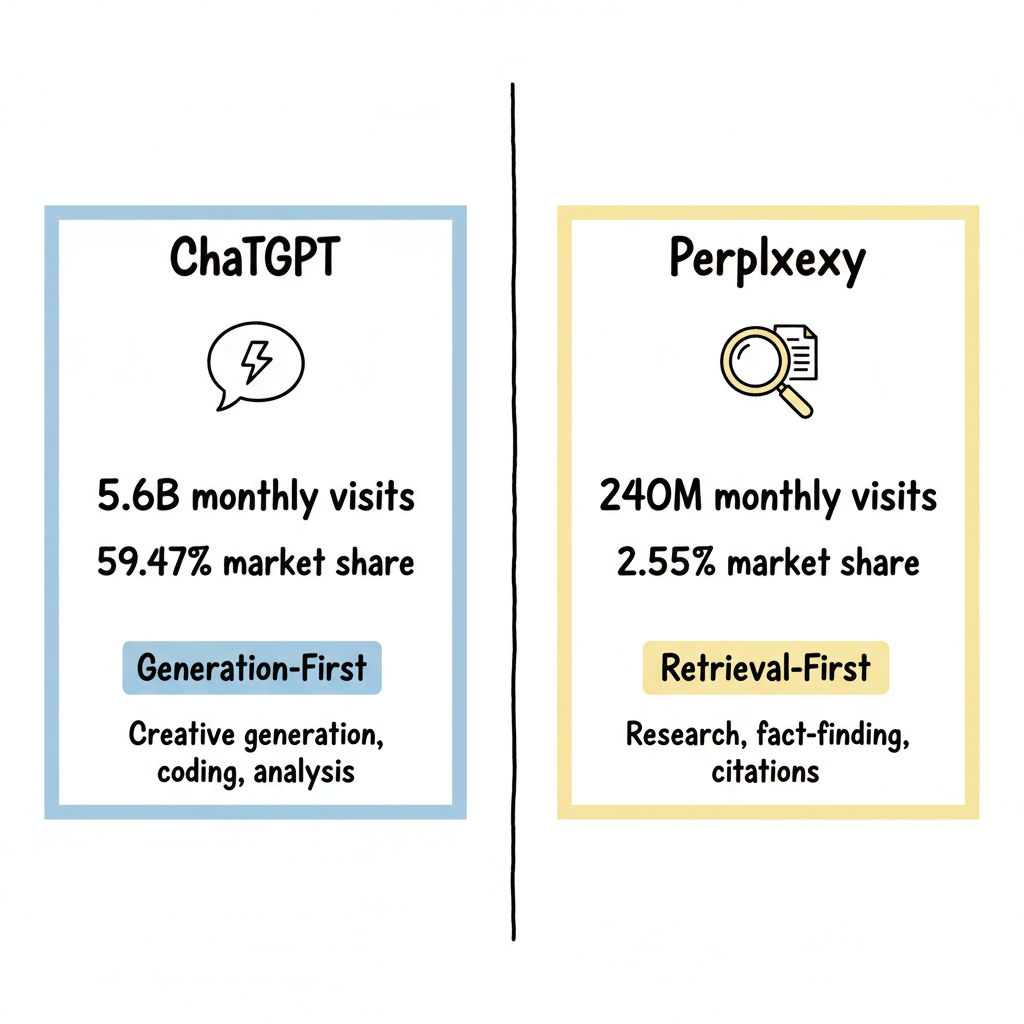
ChatGPT operates as a "Creative Engine." It generates responses primarily from its trained knowledge, adding web search when explicitly needed or when queries require current information.
How ChatGPT works:
When ChatGPT does cite sources, the references tend to be less prominent and may not persist throughout the conversation.
Perplexity operates as an "Answer Engine." It searches the web by default for every query, then synthesizes findings into structured answers with persistent citations.
How Perplexity works:
Perplexity's architecture means your content needs to be discoverable and extractable—it's actively pulling from the web in real-time.
The platforms handle source attribution very differently:
For brands, Perplexity's citation model provides clearer attribution when your content is used. ChatGPT's attribution is less reliable for measuring visibility.
ChatGPT draws heavily from its training data, which means:
Authority signals matter: Content from recognized, authoritative sources gets weighted in training data. Building domain authority improves ChatGPT visibility.
Comprehensive coverage helps: ChatGPT synthesizes information from its training. Thorough, well-structured content on topics you want to be known for improves representation.
Freshness is limited: ChatGPT's knowledge has cutoff dates. Real-time optimization is less effective unless you're targeting browsing-enabled queries.
Brand mentions count: If your brand is frequently mentioned across the web in relevant contexts, ChatGPT learns those associations.
Perplexity searches in real-time, requiring different tactics:
SEO fundamentals apply: Perplexity pulls from web search results. Strong traditional SEO improves Perplexity visibility directly.
Answer-first formatting: Structure content with direct answers early. Perplexity extracts key information, so placement matters. Using descriptive subheadings can significantly improve how AI engines extract and cite your content.
Fresh content wins: Unlike ChatGPT, Perplexity accesses current web content. Recent, updated pages have advantages.
Citation-worthy structure: Create content that's easy to cite—clear claims, data points, quotable insights.
Understanding why users choose each platform shapes optimization priorities:
If your target audience primarily researches before purchasing, Perplexity optimization becomes critical. If they're seeking creative solutions or analysis, ChatGPT matters more.
Tracking performance differs by platform:
For systematic monitoring, specialized AEO tools provide the most reliable data across both platforms.
Rather than choosing one platform, build strategies that work for both:
Consider your specific situation:
Prioritize ChatGPT if:
Prioritize Perplexity if:
Optimize for both if:
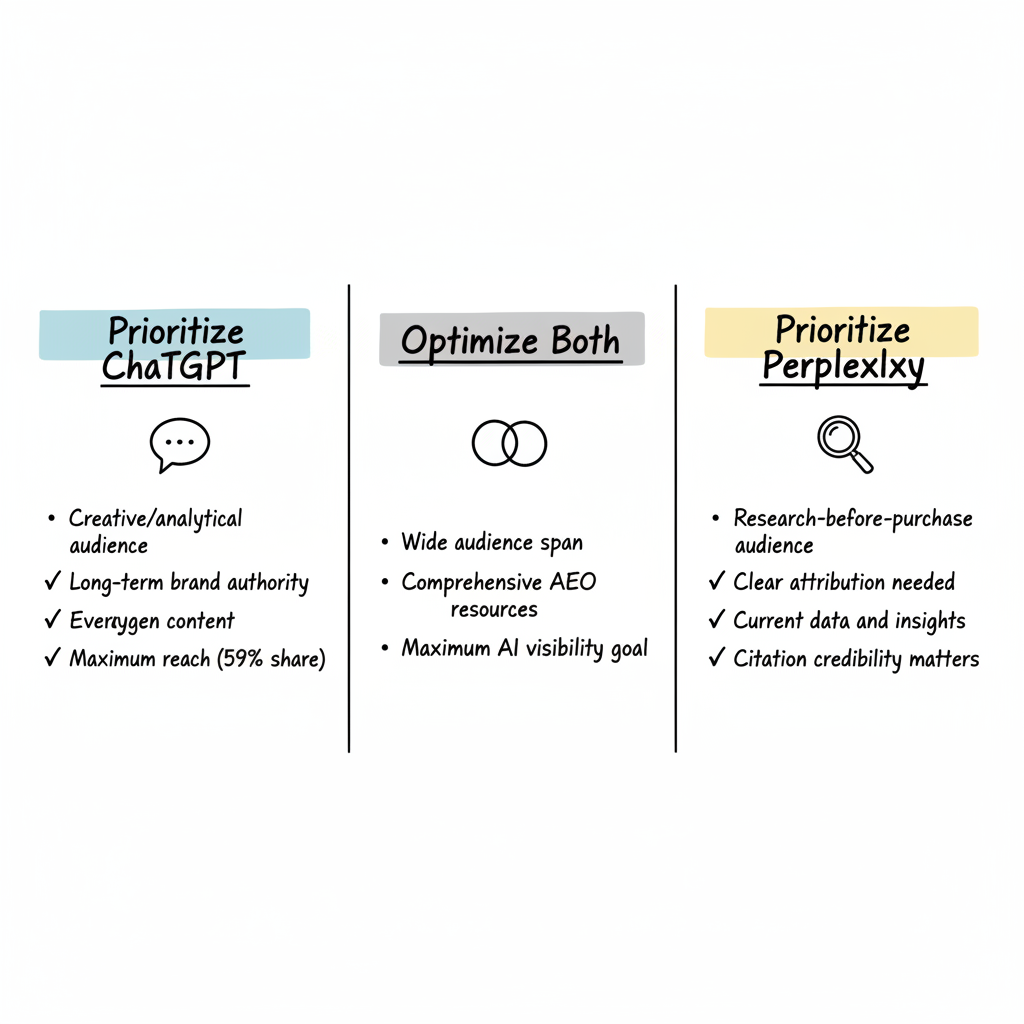
Organizations often benefit from developing a comprehensive AI search optimization case study template to track performance across multiple platforms and identify which strategies deliver the strongest results for their specific goals.
Yes. Foundation practices—strong SEO, comprehensive content, clear structure—benefit both platforms. Add platform-specific tactics on top: brand building for ChatGPT, citation-worthy formatting for Perplexity. Many companies find success by implementing a generative engine content strategy that addresses both platforms with unified frameworks.
Perplexity provides clearer attribution through persistent numbered citations. ChatGPT's attribution is more variable and less consistent, making it harder to track and verify visibility.
Both matter, but Perplexity's research-focused users often align with B2B buying behavior. Decision-makers researching solutions frequently use Perplexity for its source transparency. However, ChatGPT's larger audience means broader reach. Before allocating resources, consider conducting an AI overview impact analysis to understand which platform drives more qualified traffic for your specific industry.
By submitting this form, you agree to our Privacy Policy and Terms & Conditions.



