Generative Engine Optimization (GEO) has become essential for digital visibility in 2026. Unlike traditional SEO that focuses on ranking in search results, GEO concentrates on getting your brand mentioned and cited within AI-generated answers from platforms like ChatGPT, Google AI Overviews, and Perplexity.
This implementation guide provides a practical, step-by-step framework for businesses ready to optimize their content for AI-powered search engines.
Understanding the GEO Foundation
Before diving into implementation, you need to understand what makes GEO different from SEO. According to research from Incend Media, AI Overviews now appear on over 55% of high-traffic queries, and traditional #1 Google rankings only overlap with AI citations about 20% of the time.
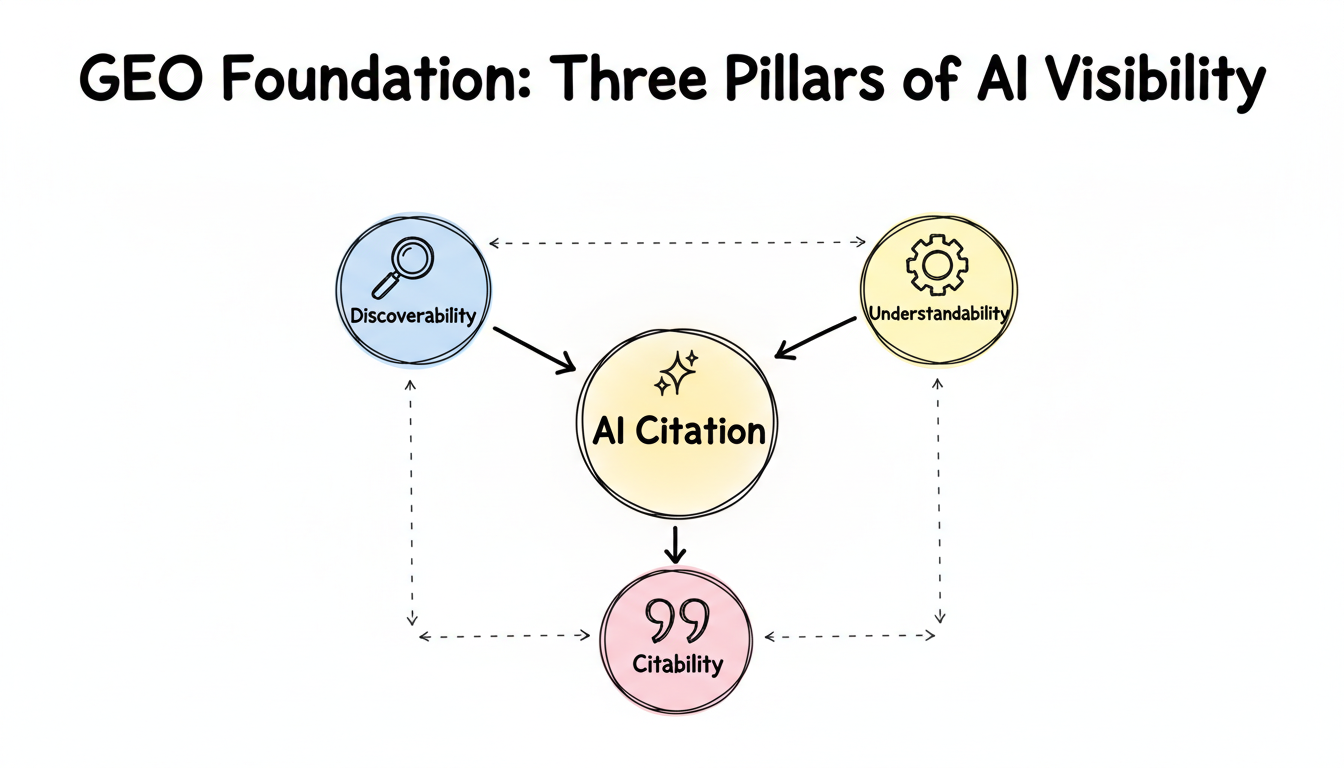
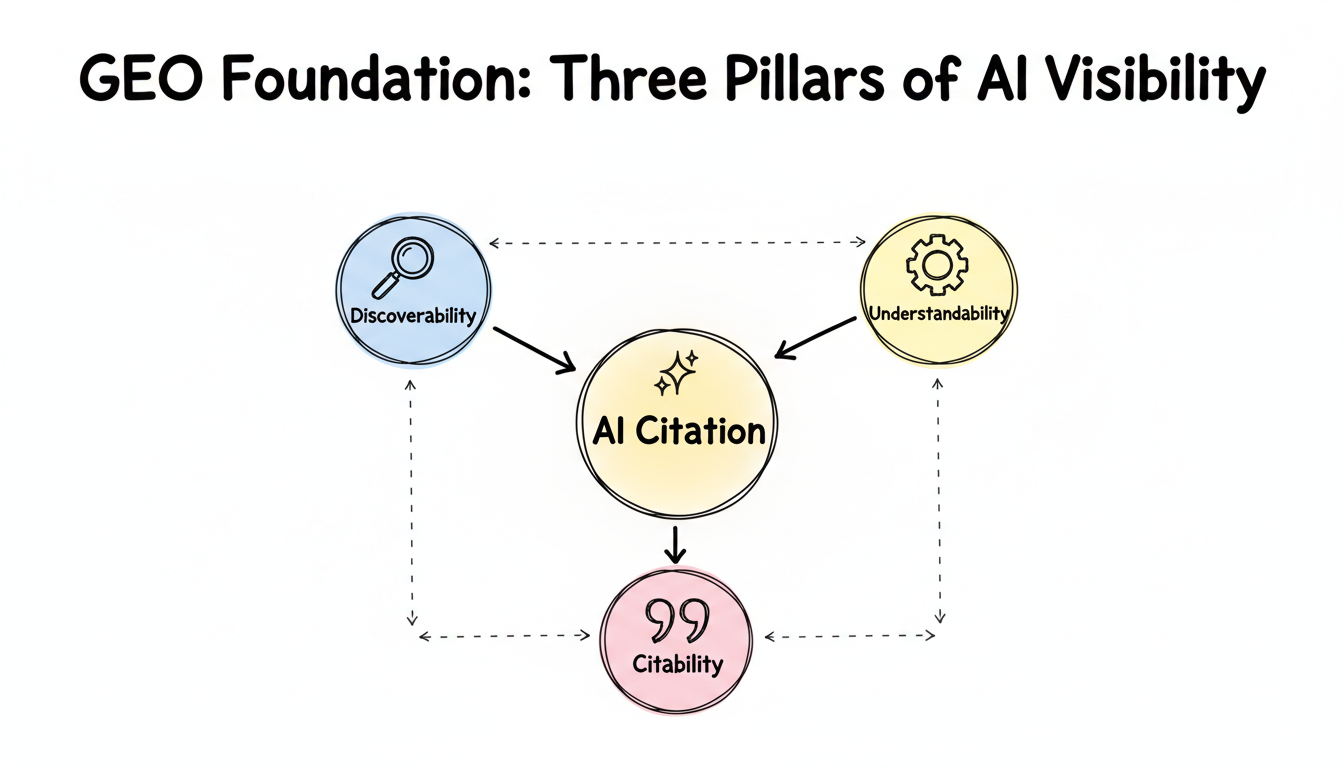
GEO focuses on three core objectives:
- Discoverability: Making your content accessible to AI crawlers
- Understandability: Structuring content so AI systems can parse and interpret it
- Citability: Positioning your content as authoritative enough to be cited
The shift from "optimizing pages" to "establishing authority over entities" requires a fundamental change in content strategy.
Phase 1: Audit and Baseline (Week 1-2)
Step 1: Conduct an AI Visibility Audit
Start by assessing your current visibility across major AI platforms:
- ChatGPT: Ask questions related to your industry and see if your brand appears
- Perplexity: Run relevant queries and check citation sources
- Google AI Overviews: Search your target keywords and examine AI summaries
- Microsoft Copilot: Test enterprise-related queries
Document where your brand appears, how it's described, and where competitors are cited instead.
Step 2: Build Your Question Inventory
AI search queries average 23 words compared to Google's 4 words, according to HubSpot's GEO research. Focus on conversational, question-based queries.
Create an inventory of questions your audience asks:
- Product/Service questions: "What is the best [solution] for [problem]?"
- Comparison questions: "How does [your product] compare to [competitor]?"
- Process questions: "How do I implement [your solution]?"
- Industry questions: "[Industry] best practices for [year]"
Step 3: Establish Baseline Metrics
Track these GEO-specific KPIs:
- Brand citations: How often AI platforms cite your content
- Share of voice: Your mention frequency vs. competitors
- Sentiment accuracy: Whether AI descriptions of your brand are accurate
- Referral quality: Conversion rates from AI-referred traffic
Phase 2: Content Optimization (Week 3-6)
Step 4: Implement Answer-First Content Structure
AI systems prefer content that provides direct answers quickly. Structure your content with:
Opening format:
- Lead with a 40-60 word direct answer to the primary question
- Follow with detailed explanations, examples, and citations
- Use clear heading hierarchies (H1 → H2 → H3)
Formatting best practices (from Microsoft's official guidance):
- Short paragraphs (2-3 sentences maximum)
- Bullet points and numbered lists for key information
- Tables for comparisons
- Q&A formats for common questions
- Avoid hiding critical information in tabs or expandable menus
Step 5: Deploy Schema Markup for AI
Schema markup is non-negotiable for GEO success. According to ALM Corp's 2026 schema guide, structured data dramatically improves AI retrieval and citation rates.
Priority schema types:
- Organization + sameAs: Cross-reference your entity across Wikipedia, Wikidata, and authoritative sources
- FAQPage: Mark up question-answer pairs
- HowTo: Structure step-by-step instructions
- Article: Define author credentials, publication dates, and topics
- Product/Review: Provide specifications, pricing, and customer feedback
Implementation checklist:
- Use JSON-LD format (preferred by Google and AI systems)
- Validate with Schema.org validator
- Test with Google Rich Results Test
- Ensure markup matches visible page content
Step 6: Optimize for Entity Recognition
Move beyond keywords to entity-based optimization:
Entity establishment tactics:
- Use proper nouns consistently across your website
- Create clear definitions for your products, services, and team members
- Link entities to authoritative external sources (Wikipedia, Wikidata, industry databases)
- Build relationships between entities using schema properties like about, mentions, isPartOf, and sameAs
Example entity markup:
{
  "@context": "https://schema.org",
  "@type": "Organization",
  "name": "Your Company",
  "sameAs": [
    "https://www.linkedin.com/company/yourcompany",
    "https://twitter.com/yourcompany",
    "https://en.wikipedia.org/wiki/Your_Company"
  ]
}
Step 7: Create Citeable Content Assets
AI systems favor content containing quotes, statistics, and original research. Semrush research shows that content with quotes and statistics achieves 30-40% higher AI visibility.
High-citation content types:
- Original research and surveys with unique data
- Expert interviews with attributed quotes
- Case studies with specific metrics
- Comprehensive guides covering topics end-to-end
Step 8: Build Cross-Web Authority Signals
AI systems weight unlinked brand mentions and cross-web presence heavily. Strengthen your authority through:
PR and media strategies:
- Guest contributions to industry publications
- Expert commentary for news outlets
- Podcast appearances and video interviews
- Press releases for company milestones
Platform presence:
- Maintain active Wikipedia entries (where applicable)
- Update LinkedIn company pages with comprehensive information
- Engage in relevant industry forums and communities
- Contribute to authoritative UGC platforms
Properly manage which AI systems can access your content. According to MonsterInsights, configure your robots.txt strategically:
Recommended allow rules:
User-agent: OAI-SearchBot
Allow: /

User-agent: PerplexityBot
Allow: /

User-agent: AndiBot
Allow: /
Consider blocking training-only crawlers:
User-agent: GPTBot
Disallow: /

User-agent: CCBot
Disallow: /
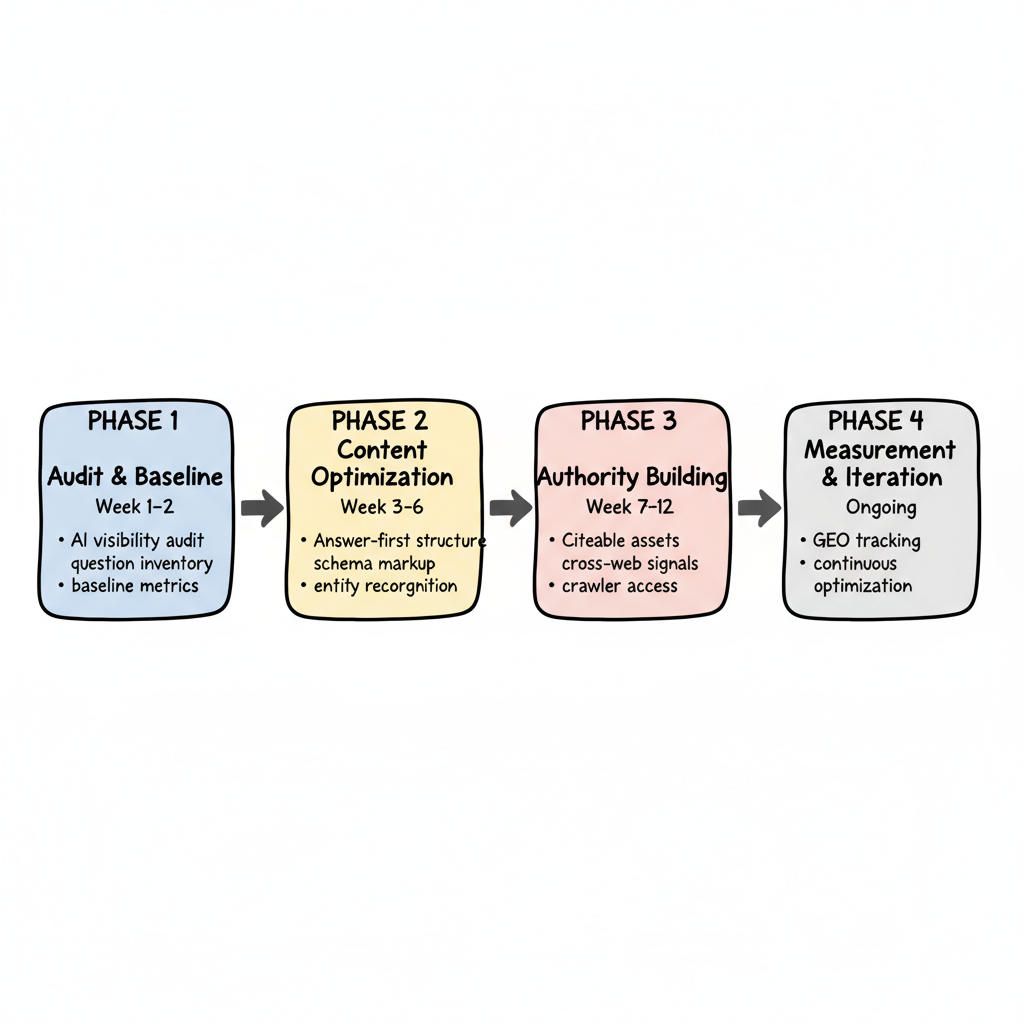
Step 10: Implement GEO Tracking
Monitor your GEO performance across platforms:
Manual tracking methods:
- Weekly queries across ChatGPT, Perplexity, and AI Overviews
- Document brand mentions, citation frequency, and sentiment
- Track competitor citations for comparison
Tool-based tracking:
- Google Search Console for AI Overview appearances
- Specialized GEO platforms (Bluefish, Semrush Enterprise AIO)
- Brand monitoring tools for unlinked mentions
Continuous Optimization
GEO compounds gradually as reputation, clarity, and trust signals accumulate. Laura Jawad Marketing notes that early progress often looks subtle—citations appear inconsistently before patterns emerge.
Monthly review checklist:
- Audit brand mentions across AI platforms
- Update outdated statistics and information
- Expand content to address new questions
- Refresh schema markup with current data
- Analyze competitor citation patterns
Common GEO Implementation Mistakes
Avoid these pitfalls that undermine GEO success:
- Relying on PDFs or images for essential information: AI systems may not parse these formats effectively
- Vague claims without supporting data: Replace "innovative solution" with specific, measurable outcomes
- Inconsistent messaging across platforms: Maintain identical positioning statements everywhere
- Ignoring technical SEO foundations: Crawlability, page speed, and mobile optimization still matter
- Focusing on single platforms: Optimize for the entire AI search ecosystem, not just ChatGPT
Conclusion
GEO implementation requires a systematic approach combining content optimization, technical configuration, and authority building. The brands that succeed in AI search are those that become so authoritative and comprehensive that AI systems cannot provide quality answers without citing them.
Start with your foundation audit, implement answer-first content structures with proper schema markup, and build cross-web authority signals. For businesses tracking their performance, consider using an AEO checker to measure your visibility across AI platforms. You can also explore AI SEO services that specialize in Google AI Overviews optimization and Microsoft Copilot optimization to accelerate your results.