February 19, 2026


GEO search optimization bridges traditional search infrastructure with AI discovery requirements. AI platforms like ChatGPT, Perplexity, and Google AI Overviews don't operate in isolation—they rely on crawlable content, trust signals, and structured data that already exist across the web. Optimizing for AI search means ensuring your technical foundation supports both traditional search engines and the AI systems that increasingly synthesize answers.
Understanding how AI systems discover and evaluate content determines whether your optimization efforts actually improve visibility.
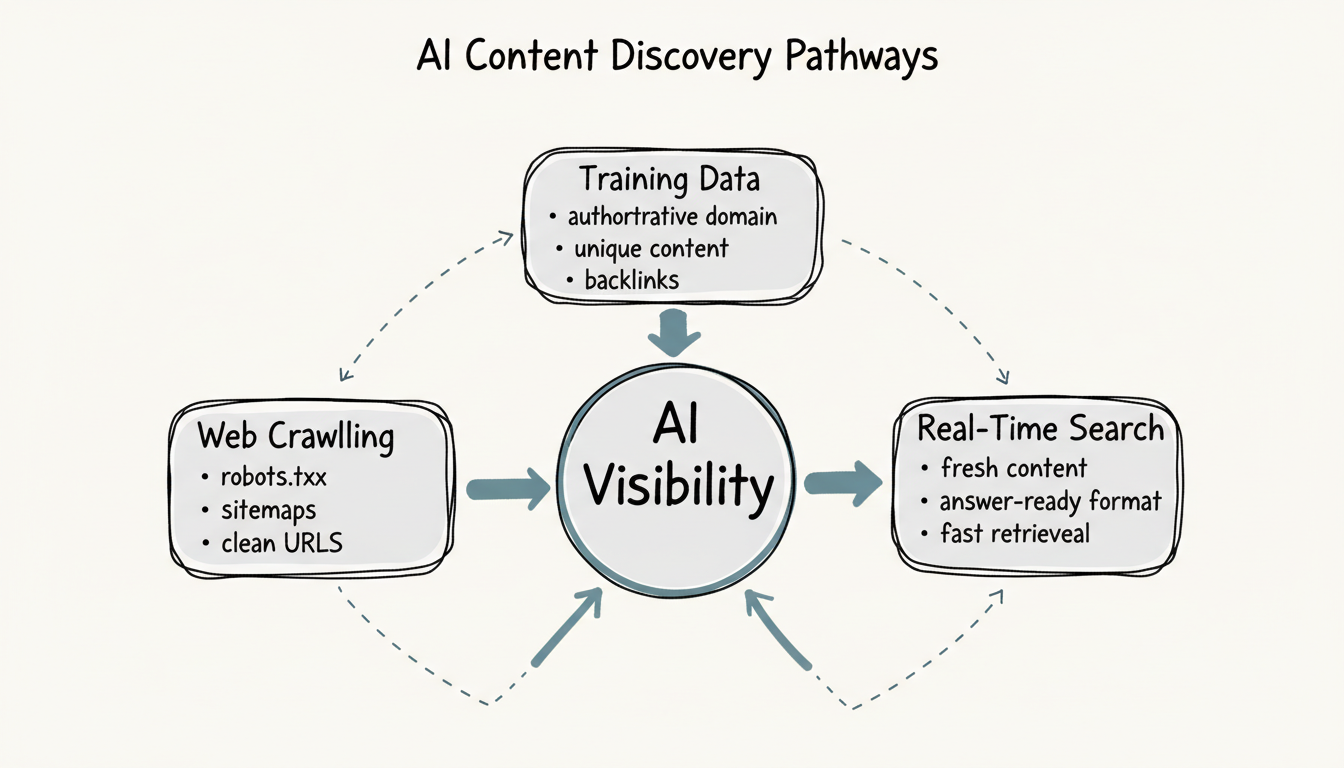
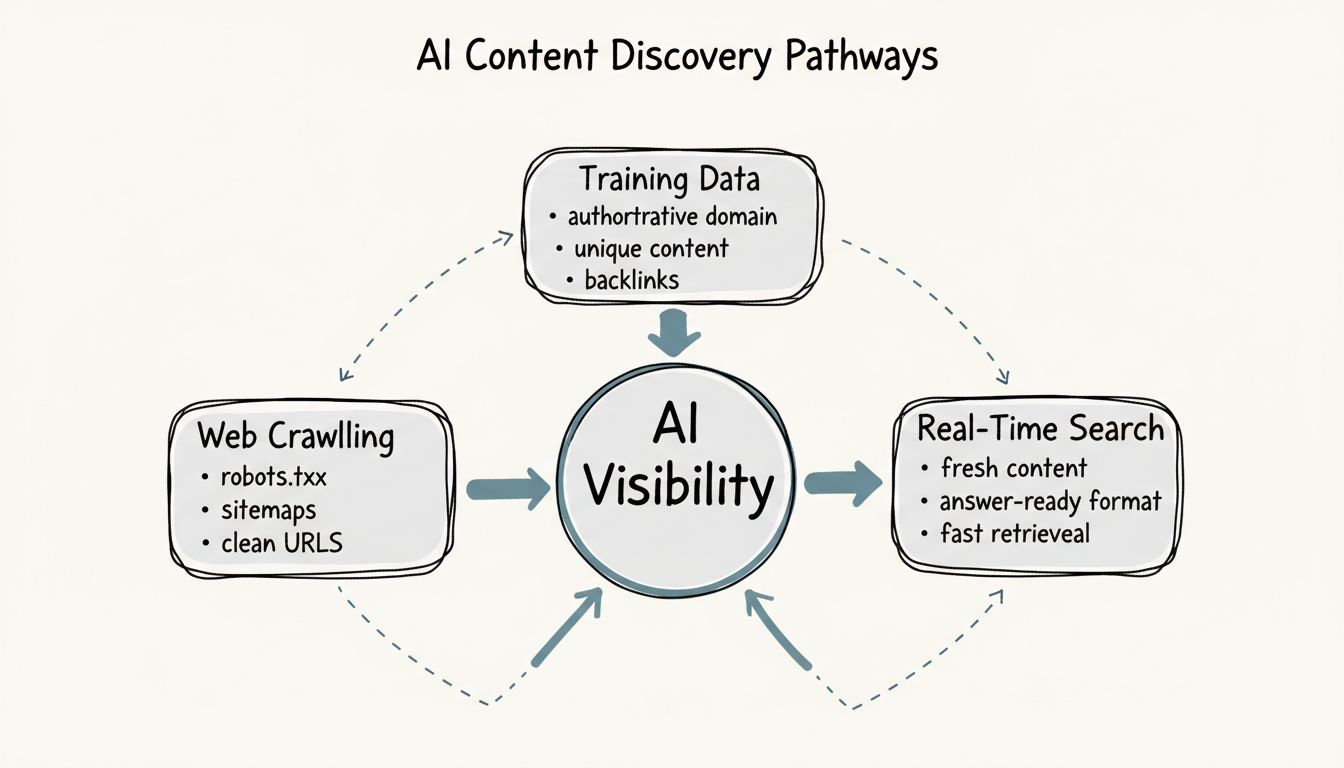
AI platforms access content through multiple pathways, each with distinct optimization implications.
AI systems employ crawlers that access publicly available web content. These crawlers evaluate page structure, extract information, and assess relevance to potential queries.
Technical requirements:
Common blockers:
Large language models incorporate content from their training data. While you can't directly optimize for training data inclusion, the same quality signals that earn crawling attention also influence training data selection.
What matters:
Platforms like Perplexity and ChatGPT with browsing access real-time web content. These systems search, retrieve, and synthesize information dynamically.
Optimization focus:
AI crawlers need unobstructed access to evaluate your content.
Site architecture:
Flat, logical site structures help crawlers efficiently discover content. Deep nesting (content requiring 4+ clicks from homepage) reduces crawl efficiency.
Implement clear internal linking connecting related content. AI systems recognize topical relationships through link patterns.
Server configuration:
Fast, reliable hosting ensures crawlers complete their work. Timeout errors mean missed indexing opportunities.
Configure proper HTTP status codes. 200 for live pages, 301 for permanent redirects, 404 for genuinely missing content. Misconfigured status codes confuse crawlers.
Robots.txt and meta tags:
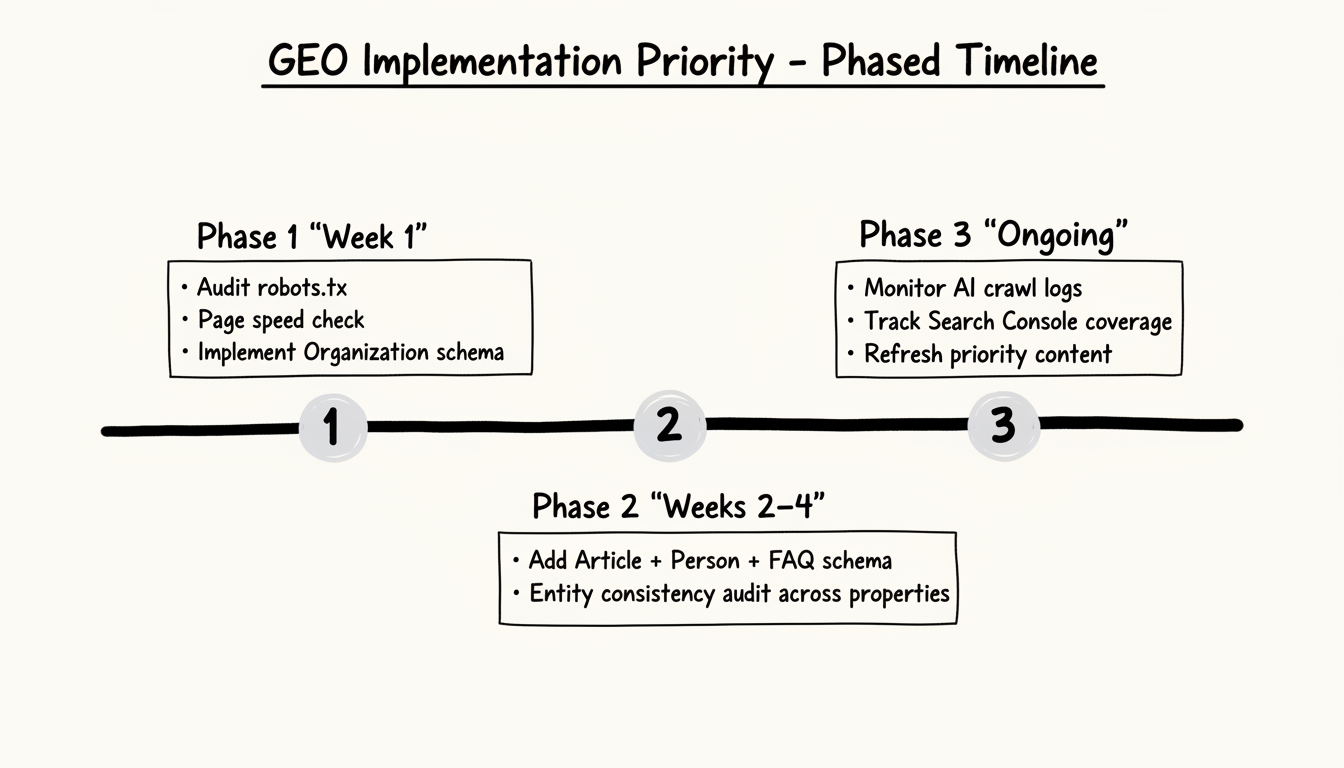
Review robots.txt for unintended blocks. Some AI crawlers use different user agents than traditional search bots.
Avoid blanket noindex directives on content you want AI systems to find. Check meta robots tags on priority pages.
Schema markup helps AI systems understand content context, not just content text. Proper schema markup alignment with visible content ensures AI systems can validate and trust your structured data.
Priority schemas for GEO:
Organization schema: Defines your brand entity—name, logo, founding date, contact information, social profiles. AI systems use this to understand who you are.
Person schema: Establishes author credentials. Include expertise areas, affiliations, and credentials. Author authority signals affect citation worthiness.
Article schema: Provides content metadata—publish date, update date, headline, description. Critical for AI systems evaluating content freshness.
FAQ schema: Explicitly structures question-answer pairs. High-value for direct answer extraction and voice search.
HowTo schema: Marks up step-by-step processes AI can extract and present as procedural answers.
Implementation approach:
Use JSON-LD format (preferred by Google and most AI systems). Validate with testing tools before deployment. Monitor for errors in search console reports.
Structured data contributes approximately 10% to how AI systems rank and understand content. Essential baseline optimization.
AI systems extract information from pages. Structure affects extraction success.
Header hierarchy:
Use logical H1 → H2 → H3 progression. AI systems use headers to understand content organization and section topics.
Format headers as questions when answering common queries. Headers structured as descriptive subheadings provide descriptive subheadings that boost AEO performance by signaling clear topic boundaries to AI extraction systems.
Paragraph formatting:
Keep paragraphs under 80 words with single ideas each. AI systems extract self-contained statements more reliably than information spread across paragraphs.
Place answers in the first sentence of sections. AI extraction often focuses on section-opening content.
Lists and tables:
Structured formats parse more reliably than prose for comparative and procedural information. Use lists for steps, features, and requirements. Use tables for multi-dimensional comparisons.
AI crawlers operate on time budgets. Slow pages get incomplete crawling or lower priority.
Speed optimization priorities:
Quick wins:
Speed improvements benefit both traditional SEO and AI crawlability. Investment pays dividends across channels.
Many AI crawlers use mobile user agents. Mobile-unfriendly pages may receive degraded crawling.
Mobile requirements:
Test critical pages with mobile user agent tools. Ensure crawlers see the same quality experience mobile users receive.
AI platforms increasingly weight recency, particularly for time-sensitive queries. Understanding how Google selects AI Overview sources reveals that freshness signals significantly influence which content gets featured in AI-generated answers.
Freshness optimization:
Update dates: Display last-modified dates visibly. Include dateModified in Article schema.
Regular updates: Establish systematic refresh schedules for priority content. Even small updates signal active maintenance.
Time-stamped elements: Include publication and update dates in page content, not just metadata.
Perplexity consideration: This platform weights freshness heavily. Content updated within 2-3 days outperforms static content for competitive queries.
AI systems cross-reference brand information across multiple sources. Inconsistencies reduce trust.
Consistency requirements:
Audit scope:
Single inconsistencies—different phone numbers, varying founding dates, conflicting credentials—undermine the trust signals AI systems evaluate.
Track how AI systems interact with your content.
Server log analysis:
Review logs for AI crawler user agents. GPTBot (OpenAI), ClaudeBot (Anthropic), and PerplexityBot are common examples.
Monitor crawl frequency, pages accessed, and any errors encountered. Declining crawl activity may indicate technical problems.
Search console data:
Google Search Console provides crawl statistics and coverage reports. Monitor for crawl errors, indexing issues, and coverage drops.
Third-party tools:
Emerging GEO platforms track AI visibility specifically. Tools like Otterly.AI monitor citation frequency across platforms.
Some sites block AI bots without realizing the visibility implications. Review robots.txt for overly broad restrictions.
Content requiring JavaScript to display may not render for all crawlers. Ensure critical content appears in HTML source, not just rendered DOM.
Heavy pages that load slowly on mobile connections frustrate both users and crawlers. Prioritize mobile performance.
Different information on different properties confuses AI systems trying to understand your brand. Audit and align.
Without schema markup, AI systems must infer context from content alone. Explicit structured data improves understanding.
By submitting this form, you agree to our Privacy Policy and Terms & Conditions.