
February 19, 2026


Generative Engine Optimization (GEO) determines whether AI systems cite your brand when answering user queries. Unlike traditional SEO rankings, GEO success depends on becoming a source that AI systems trust and reference. This article examines real-world examples of effective GEO implementation across industries.
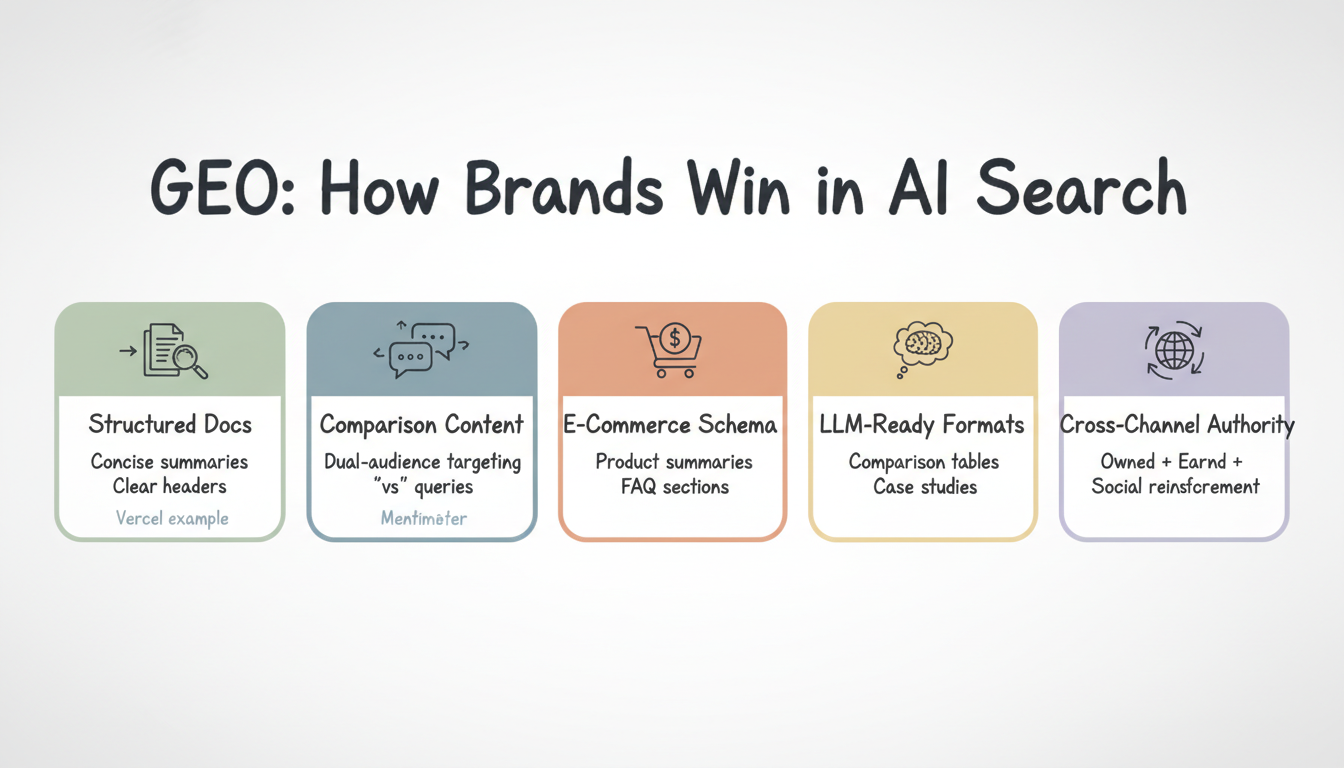
Vercel, the web infrastructure provider, has become a frequently cited source in AI-generated responses about web development. According to the GEO Industry Report 2025, ChatGPT referrals now drive approximately 10% of Vercel's new user sign-ups.
Vercel's documentation follows GEO best practices:
Every time ChatGPT cites Vercel's documentation, it reinforces Vercel's authority in the AI ecosystem, creating a compounding visibility effect similar to how ChatGPT optimization tactics can compound brand visibility over time.
Siege Media documented their work with Mentimeter, the interactive presentation platform. The strategy focused on software comparison content targeting users actively evaluating solutions.
Mentimeter earned AI citations for queries comparing presentation tools, capturing prospects at the decision stage of their journey.
According to BigCommerce's GEO guide, successful e-commerce brands are restructuring product pages for AI discovery.
Product Page Structure:
Example Product Summary:
"The XYZ Running Shoe provides maximum cushioning for long-distance runners, featuring responsive foam technology and a breathable mesh upper. Designed for neutral to mild overpronation, it weighs 9.2 oz and offers 8mm heel-to-toe drop."
This format gives AI systems the specific, citable information they need to answer product comparison queries. Using schema markup validators for AEO ensures your structured data is implemented correctly.
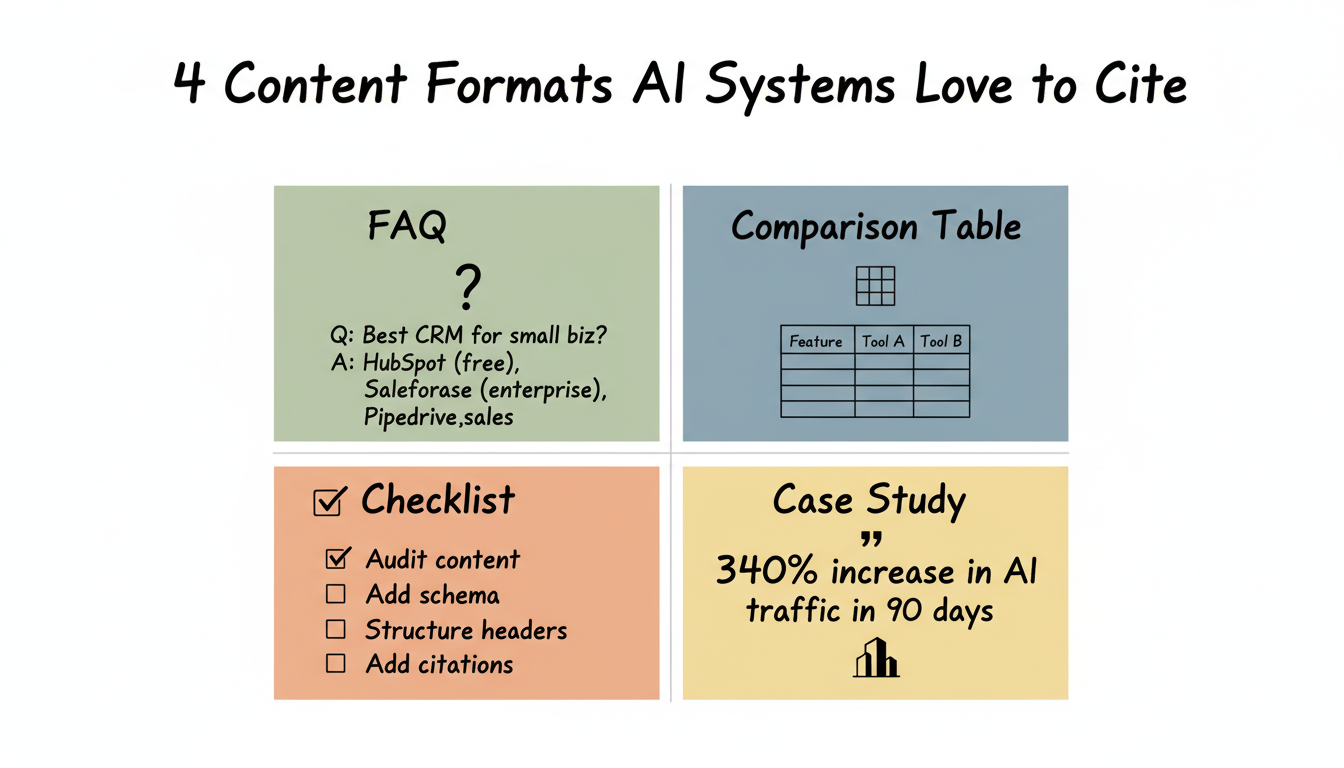
Firebrand Marketing's 2026 GEO best practices identifies content formats that AI systems prefer to cite:
FAQs: Question-answer pairs map directly to how users query AI systems
Q: What is the best CRM for small businesses?
A: The best CRM for small businesses depends on budget and needs.
HubSpot offers a free tier ideal for startups. Salesforce provides
enterprise features for growing teams. Pipedrive excels for
sales-focused organizations.
Comparison Tables: Structured data AI can easily extract and summarize
Feature | Tool A | Tool B | Tool C |
Price | $29/mo | $49/mo | $19/mo |
Users | 5 | Unlimited | 3 |
Storage | 10GB | 50GB | 5GB |
Checklists: Step-by-step formats that AI can cite directly
Case Studies: Specific metrics and outcomes AI systems can quote
"After implementing GEO strategies, Company X saw a 340% increase in AI-referred traffic within 90 days."
Understanding the history of AEO helps contextualize why these content formats have become essential for AI visibility.
According to Firebrand's Multiplier Marketing framework, GEO success requires coordinated presence across channels:
Owned Media:
Earned Media:
Social Reinforcement:
AI systems evaluate authority by looking beyond your website. A brand mentioned consistently across multiple trusted sources appears more authoritative than one with only on-site optimization. This builds the kind of AI Overview authority signals that generative engines prioritize.
Real-world examples also reveal what doesn't work:
Mistake 1: Keyword Stuffing in AI Content AI systems detect and penalize over-optimized content. Write naturally for human readers.
Mistake 2: Ignoring Schema Markup Without structured data, AI systems struggle to parse content accurately. Schema is non-negotiable for GEO.
Mistake 3: Single-Platform Focus Optimizing only for ChatGPT ignores Perplexity, Google AI Overviews, and other AI search engines. Each requires visibility.
Mistake 4: Vague Claims Without Specifics "Industry-leading solution" tells AI nothing. "Used by 10,000 companies with 4.8/5 average rating" provides citable facts.
From these examples, implement these GEO techniques:
These GEO examples demonstrate that AI search optimization follows learnable patterns. Brands succeeding in generative search combine structured content, consistent authority signals, and multi-platform presence to become the sources AI systems trust and cite. The common thread: create content so clear, authoritative, and well-structured that AI systems cannot provide quality answers without referencing it.
By submitting this form, you agree to our Privacy Policy and Terms & Conditions.



