
February 19, 2026


If you search Reddit for "Google Ads vs Facebook Ads," you'll find hundreds of threads debating this question. The real answer: it depends on your business, goals, and audience. But that generic response doesn't help you make a decision.
This guide synthesizes insights from Reddit's marketing communities, expert analysis, and 2026 benchmarks to help you understand when each platform wins—and when you need both.
Reddit's r/PPC, r/ecommerce, and r/Entrepreneur communities have strong opinions on this debate. Here's what marketers with real budgets consistently say.
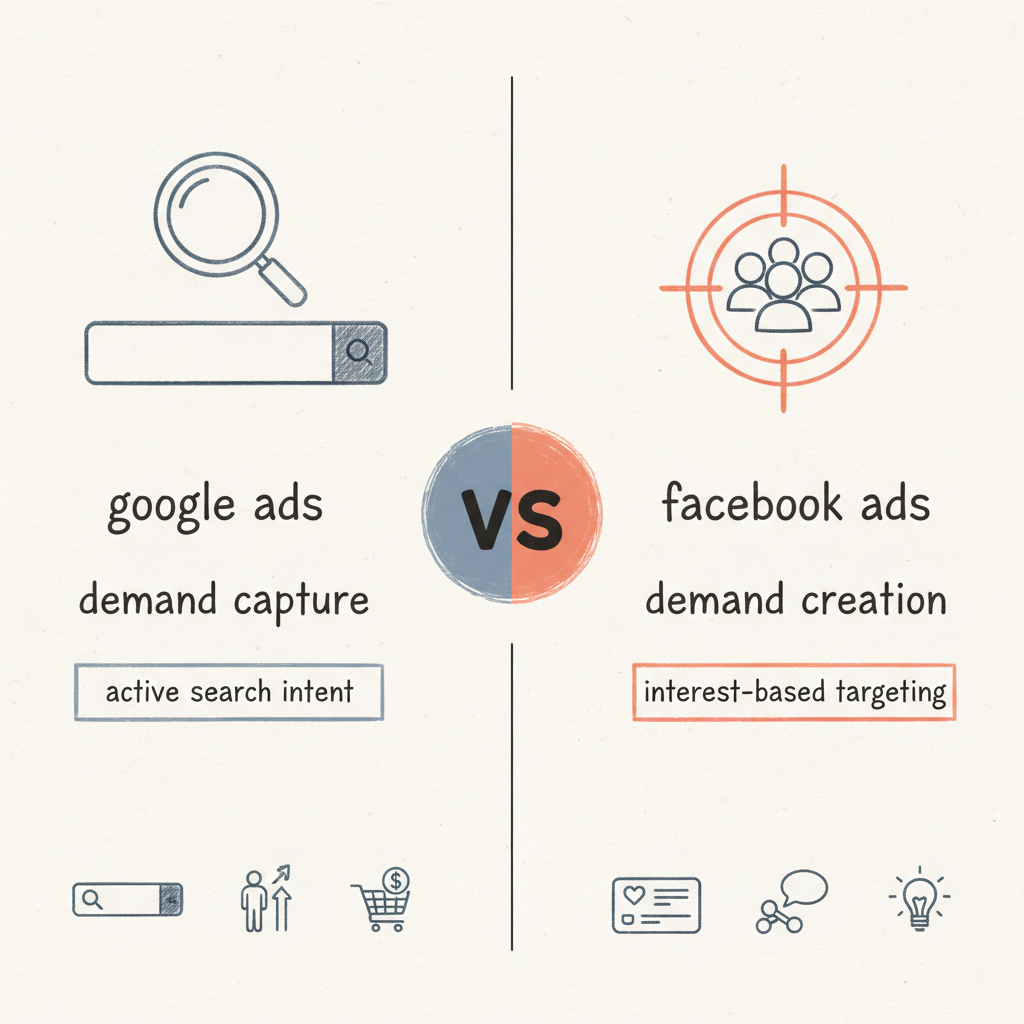
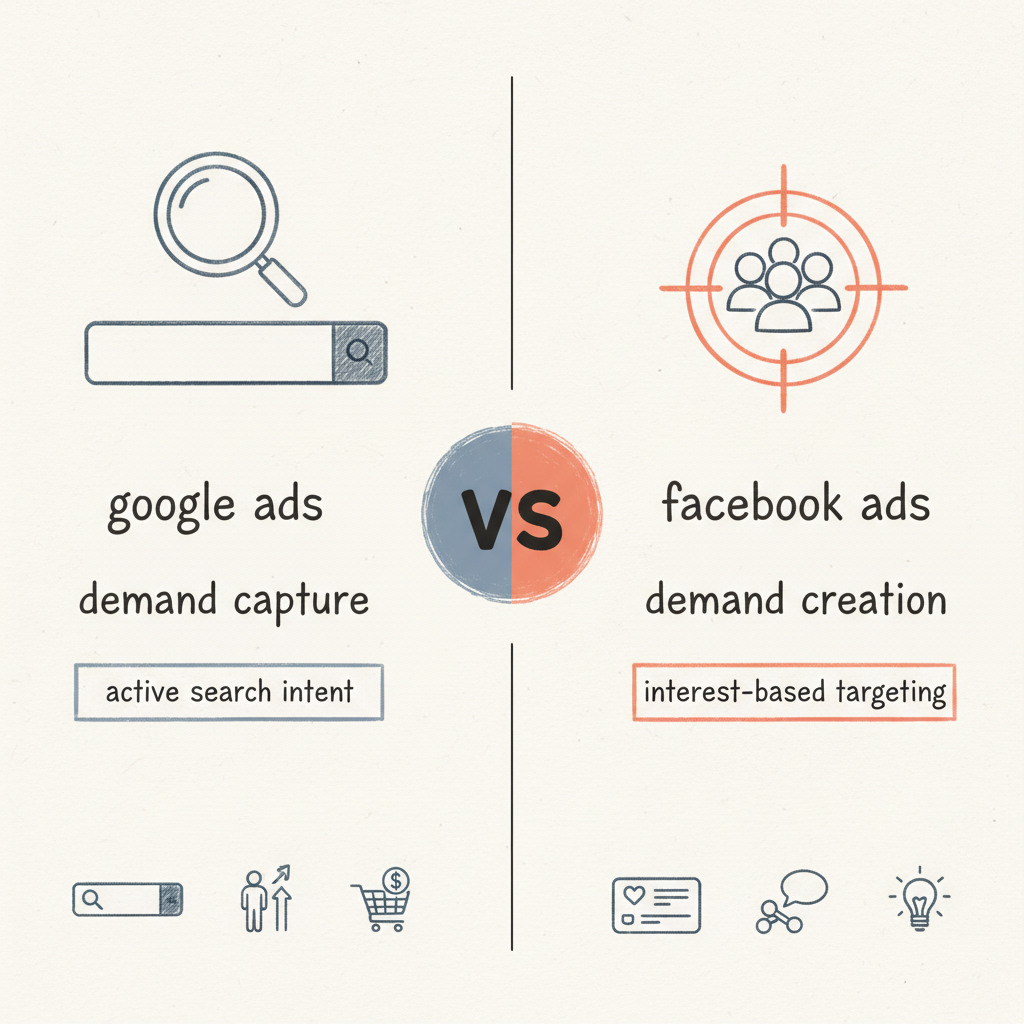
The most upvoted insight across Reddit threads: Google captures demand; Facebook creates it.
As one Redditor in r/Entrepreneur explained, "Google ads—specifically search—will win every time [for high-intent buyers]. Meta ads are also effective, but are higher funnel."
This reflects the core distinction:
According to advertising experts, "Meta wins because it knows your buyer better than you do. Google works only if people are already searching."
"Google for intent, Meta for discovery" – The most frequent advice. Use Google when people know they need your product; use Facebook to reach people who don't know they need it yet.
"Test both, but differently" – Many Redditors emphasize that you can't compare platforms without testing them for your specific business. Performance varies dramatically by industry.
"Attribution is broken" – Multiple threads highlight that comparing ROAS across platforms is misleading. Each platform wants credit for conversions.
"Facebook is easier to learn" – Newer advertisers often find Facebook's interface more intuitive, while Google Ads has a steeper learning curve.
Let's break down the most frequent comparisons from Reddit discussions.
PPC benchmark data for 2026 shows significant cost differences:
Metric | Google Search Ads | Facebook Ads |
Average CPC | $2.69 | $1.72 |
Average CTR | 3.17% | 0.9% |
Average CVR | 4.4% | 9.21% |
Google's higher CPC reflects higher intent—people clicking are further down the purchase journey. Facebook's lower CPC but higher CVR indicates its strength at targeting ready-to-buy audiences who just haven't searched yet.
As one Reddit discussion in r/ecommerce noted, "The issue is Facebook might show 3x ROAS on low-margin products while Google shows 2x ROAS on high-margin SKUs, making Google more profitable despite worse surface metrics."
When analyzing facebook-ads-cost-complete-guide, understanding how these benchmarks translate to real campaign budgets becomes essential for resource allocation.
Based on community consensus:
High search volume for your product – If people are actively searching for what you sell, Google captures that demand efficiently.
Service-based businesses – "Plumber near me" searches have clear intent. Google wins for local services.
High-consideration purchases – B2B software, legal services, and expensive products where buyers research first.
Competitive industries – While CPCs are higher, the intent quality often justifies the cost.
According to Google Ads benchmark data, "campaigns using AI Max with Smart Bidding saw an average 18% increase in conversions" in 2025-2026.
Visual products – Fashion, home goods, and anything that benefits from imagery.
Impulse purchases – Products people buy when they see them, not when they search.
New product categories – If people don't know to search for your innovation, Facebook can introduce it.
Broad target audiences – Facebook's interest targeting excels at finding customers you might not reach through search.
Retargeting – Almost everyone agrees Facebook's retargeting capabilities are exceptional.
For businesses running Facebook campaigns, understanding how-to-increase-roi-facebook-ads becomes critical to maximizing returns from the platform's unique targeting capabilities.
Beyond Reddit opinions, here's what the data and experts say.
According to platform comparison analysis, "Meta wins for 80% of businesses" because most products don't have enough search volume to scale Google Ads profitably.
This doesn't mean Google is wrong—just that the majority of businesses benefit more from demand generation than demand capture.
Marketing experts explain the fundamental difference: "The main difference lies in user intent. Google captures users who are searching right now, while Facebook creates demand and builds interest."
This maps to the classic marketing funnel:
Funnel Stage | Better Platform | Why |
Awareness | Interest-based targeting reaches cold audiences | |
Consideration | Both | Depends on search volume and product type |
Decision | Captures people ready to purchase | |
Retention | Retargeting keeps customers engaged |
According to advertising cost research, "Facebook advertising costs can vary widely—from a few cents per click to several dollars—depending on your audience, industry, ad quality, and timing."
The same applies to Google. The winning strategy often isn't choosing one—it's using both for different purposes:
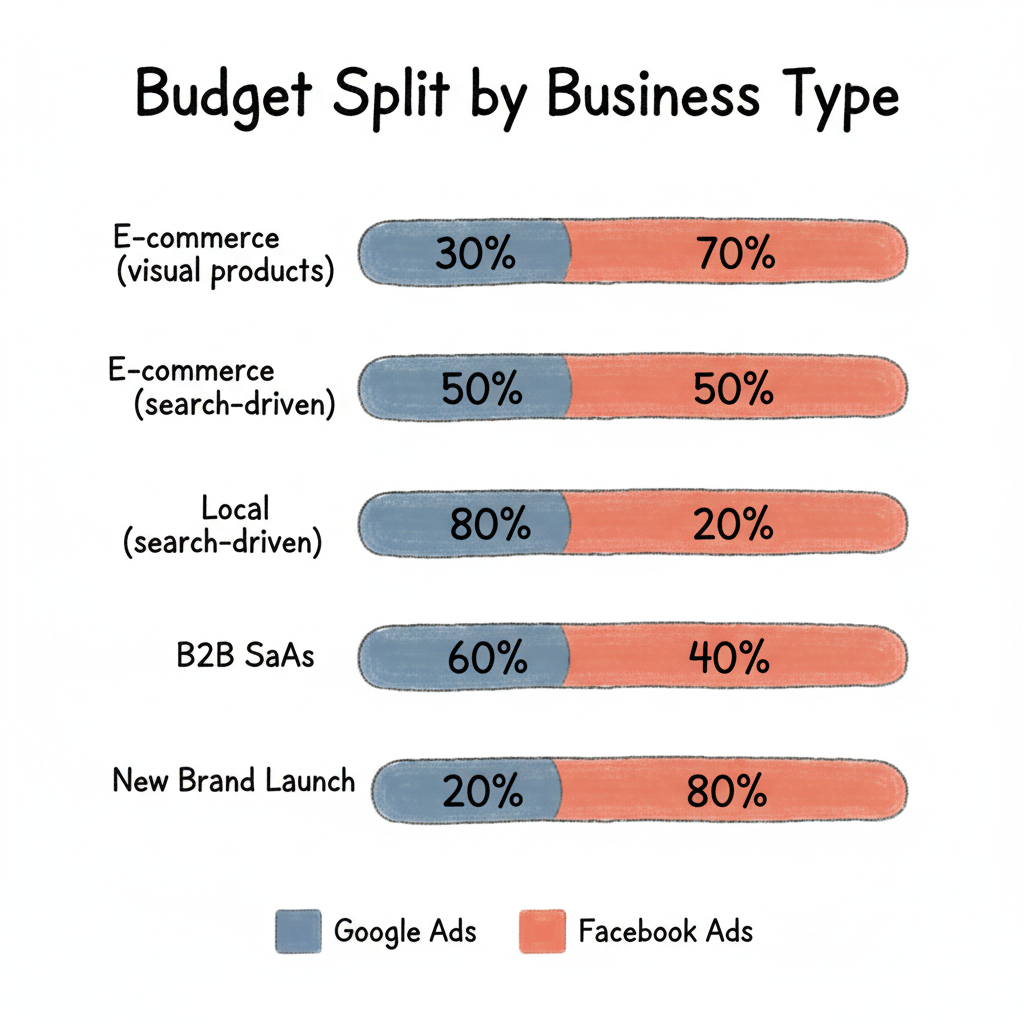
Based on Reddit insights and expert analysis, here's how to decide.
For e-commerce specifically, the debate deepens when evaluating google-ads-vs-facebook-ads-ecommerce performance across different product categories and customer acquisition costs.
Business Type | Suggested Split |
E-commerce (visual products) | 70% Facebook / 30% Google |
E-commerce (search-driven) | 50% Google / 50% Facebook |
Local services | 80% Google / 20% Facebook |
B2B SaaS | 60% Google / 40% Facebook |
New brand launch | 80% Facebook / 20% Google |
Most Reddit users say Facebook is easier to start with—the interface is more intuitive, and you can get results with smaller budgets. Google Ads has more complexity with match types, quality scores, and bidding strategies. However, Google's AI-powered features in 2026 have simplified campaign management significantly.
With under $1,500/month, most experts recommend focusing on one platform first. Split budgets make it hard to gather enough data for optimization. Choose based on your business type, master that platform, then expand.
Many Reddit marketing communities skew toward e-commerce and DTC brands, where Facebook traditionally performs well. The platform preference often reflects the community's industry mix rather than universal truth about platform quality.
By submitting this form, you agree to our Privacy Policy and Terms & Conditions.



