February 19, 2026


Google AI Overviews now appear in approximately 50% of all Google searches, fundamentally changing how users discover information. Understanding the factors that determine which content gets cited in these AI-generated summaries is essential for maintaining search visibility in 2026. This guide examines confirmed ranking factors, suspected influences, and actionable optimization strategies based on current research and industry analysis.
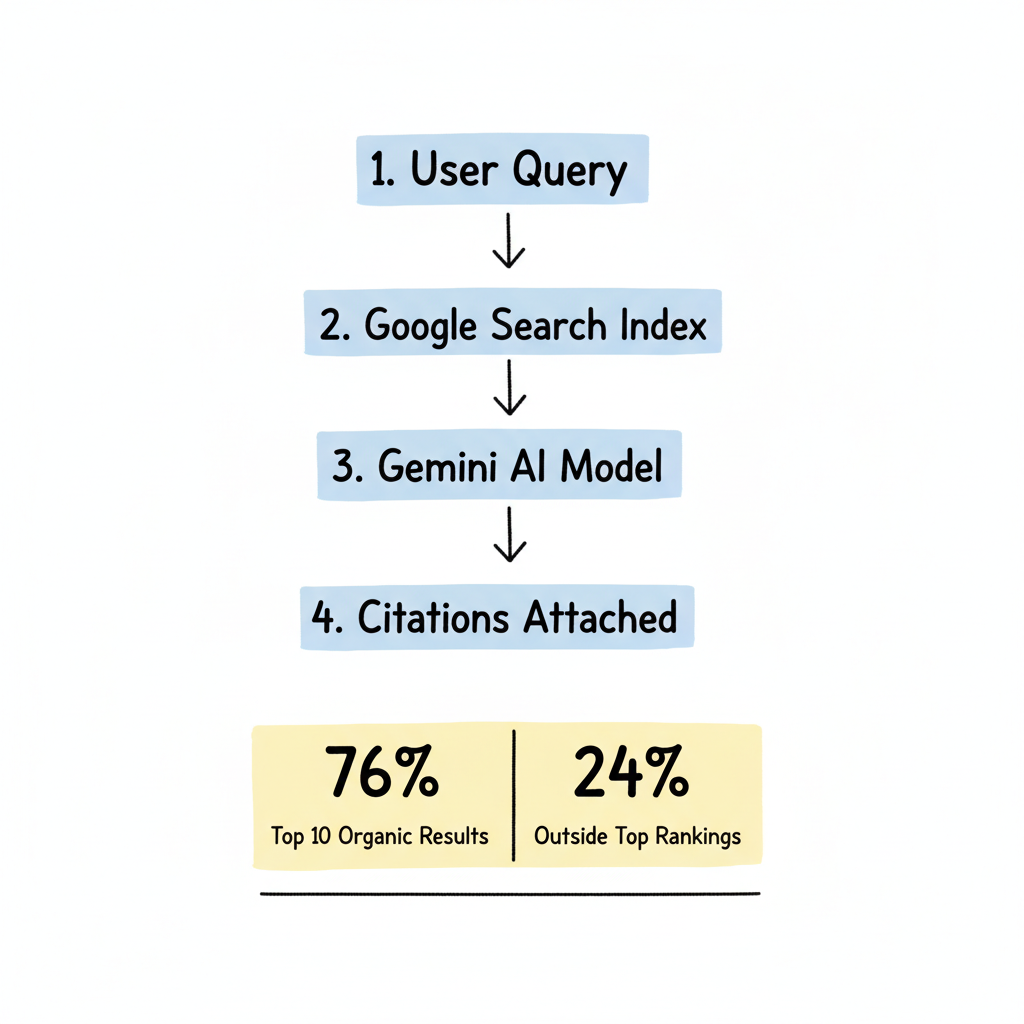
Google's AI Overviews use a distinct process for source selection that differs from traditional organic rankings.
The citation process:
Research indicates that 76% of AI Overview citations come from pages ranking in Google's top 10 organic results—but that leaves 24% coming from outside the top positions. Pages can earn citations based on content clarity and relevance even without top organic rankings.
Google has confirmed several factors influencing AI Overview citations.
AI Overviews inherit signals from Google's traditional ranking systems.
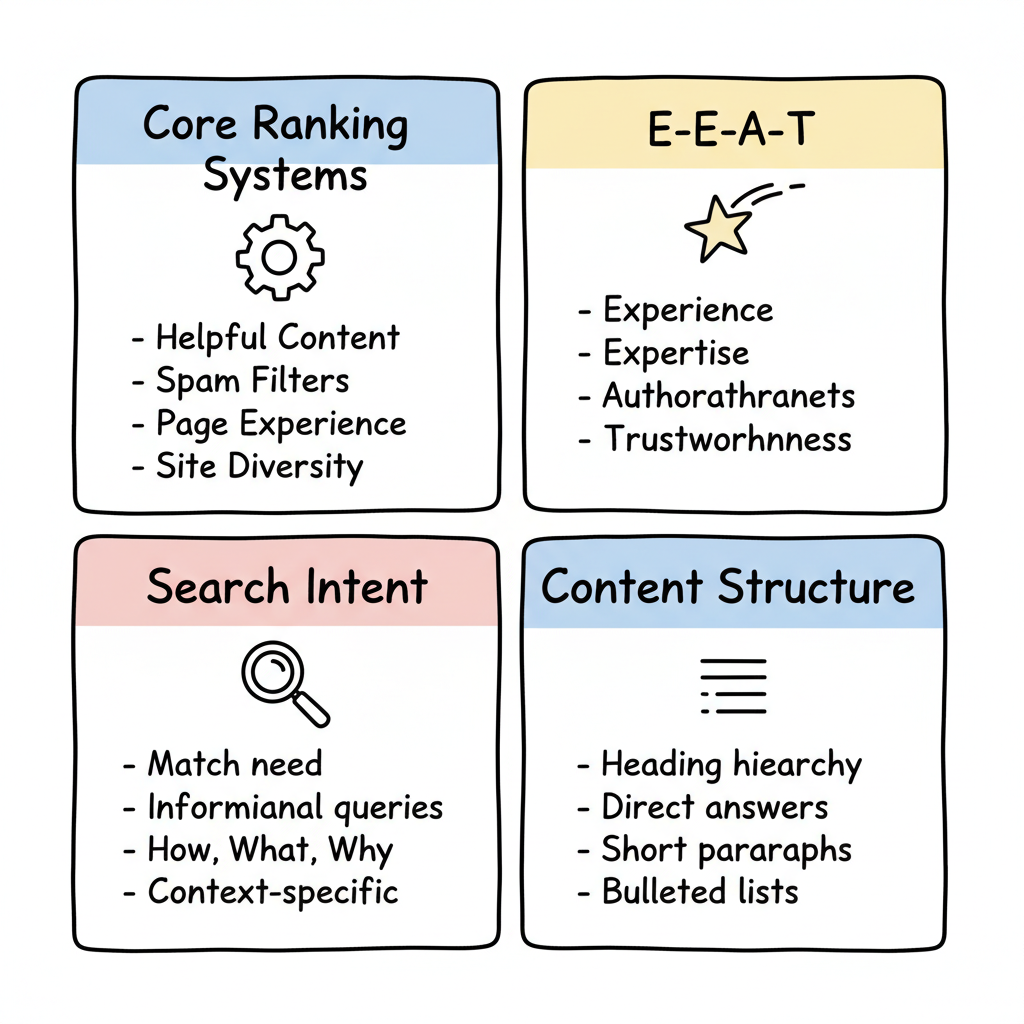
Confirmed ranking influences:
Pages performing well in traditional search have foundational advantages for AI Overview citations. However, strong organic rankings alone don't guarantee citation inclusion.
Experience, Expertise, Authoritativeness, and Trustworthiness remain critically important—arguably more so for AI Overviews than traditional search.
E-E-A-T components AI Overviews evaluate:
Experience: First-hand knowledge and practical application demonstrated in content. Content showing real-world usage, original screenshots, or personal testing earns higher trust.
Expertise: Credentials, qualifications, and specialized knowledge. Author bios, professional backgrounds, and demonstrated subject mastery influence citation selection.
Authoritativeness: Recognition as a go-to source by others in the field. Backlinks from authoritative sources, industry mentions, and citation history signal authority.
Trustworthiness: Accuracy, transparency, and security. HTTPS, clear attribution, fact-checking indicators, and correction policies demonstrate trustworthiness.
For YMYL (Your Money Your Life) topics, E-E-A-T requirements are particularly stringent.
AI Overviews prioritize content that precisely matches user intent.
Intent matching requirements:
Organizations optimizing for broad topics without addressing specific intents miss citation opportunities. Understanding geo-ai-optimization principles helps align content with location-specific user needs that often trigger AI Overviews.
AI systems need content they can easily parse and excerpt. The Gemini model powering AI Overviews processes content differently than traditional search algorithms—it needs discrete, well-organized information blocks it can synthesize into coherent responses.
Structure factors:
Dense paragraphs don't get cited. Content formatted for easy extraction significantly outperforms wall-of-text approaches. Testing shows that pages with clear question-answer formats earn citations at substantially higher rates than pages burying answers within narrative prose.
Research and testing suggest additional factors influencing citations.
Studies show that using an authoritative (but not commanding) tone improved AI Overview visibility by 89%. Adding trusted outbound citations generated a 132% increase in citation likelihood.
Citation optimization:
AI Overviews increasingly favor current, recently-updated content.
Freshness indicators:
Outdated content, even if comprehensive, loses citation potential to fresher alternatives.
Google's databases beyond search index influence AI Overviews.
Multimedia factors:
Multi-format content strategies that span video, images, and text capture broader citation opportunities.
AI systems need to clearly identify your brand and understand your topical authority.
Entity optimization:
Ambiguous entity signals reduce citation likelihood. Implementing schema-markup-alignment-visible-content strategies helps AI systems accurately identify and understand entities within your content.
Testing reveals some factors have minimal AI Overview impact. Organizations can deprioritize these elements when specifically optimizing for AI citations.
Low or no impact factors:
Traditional keyword-focused optimization approaches need adjustment for AI Overview targeting. The shift from keyword matching to semantic understanding and entity recognition represents a fundamental change in how content earns visibility in AI-powered search experiences. Understanding the differences between seo-vs-geo-vs-aeo helps organizations allocate resources appropriately across these distinct optimization disciplines.
AI Overviews draw from multiple Google databases beyond web index.
Key database sources:
Organizations with presence across multiple Google ecosystems gain citation advantages.
Apply these strategies to improve AI Overview citation potential.
Implementation steps:
Authority building actions:
Entity clarity improvements:
Freshness strategies:
Track AI Overview visibility alongside traditional rankings.
Measurement approaches:
Organizations tracking only organic rankings miss critical AI visibility data. Tools specializing in searchgpt-citation-tracking-measuring-visibility provide comprehensive insights into AI-powered search performance across multiple platforms.
Organic rankings and AI Overview citations correlate but aren't identical. Understanding this relationship helps organizations prioritize their optimization efforts appropriately.
Key distinctions:
The most effective strategy optimizes for both traditional rankings and AI citation factors. Organizations achieving strong organic visibility while implementing AI-focused content formatting capture the widest range of citation opportunities across query types.
No. While rankings help Google discover content, AI Overviews frequently cite pages outside the top position. Research shows 24% of citations come from pages ranking below position 10. Clarity, relevance, and extractability matter more than ranking position alone for many queries.
Google updates AI Overview systems regularly—significant changes occur quarterly or more frequently. Core principles like E-E-A-T and content quality remain stable, but implementation details and weighting evolve. Continuous monitoring and adaptation are necessary.
Optimize for both simultaneously. Strong organic rankings provide discovery advantage for AI Overview citation, while AI-focused structure and answer formatting improve citation likelihood. The strategies complement rather than conflict with each other.
By submitting this form, you agree to our Privacy Policy and Terms & Conditions.