Google AI Overviews represent a fundamentally different SERP feature than traditional rankings—one with distinct update patterns and freshness requirements. Understanding how often these AI-generated summaries change and what freshness signals they prioritize helps organizations maintain visibility in an increasingly AI-mediated search landscape.
How AI Overviews Differ from Traditional Rankings
AI Overviews behave differently from organic listings in their update patterns.
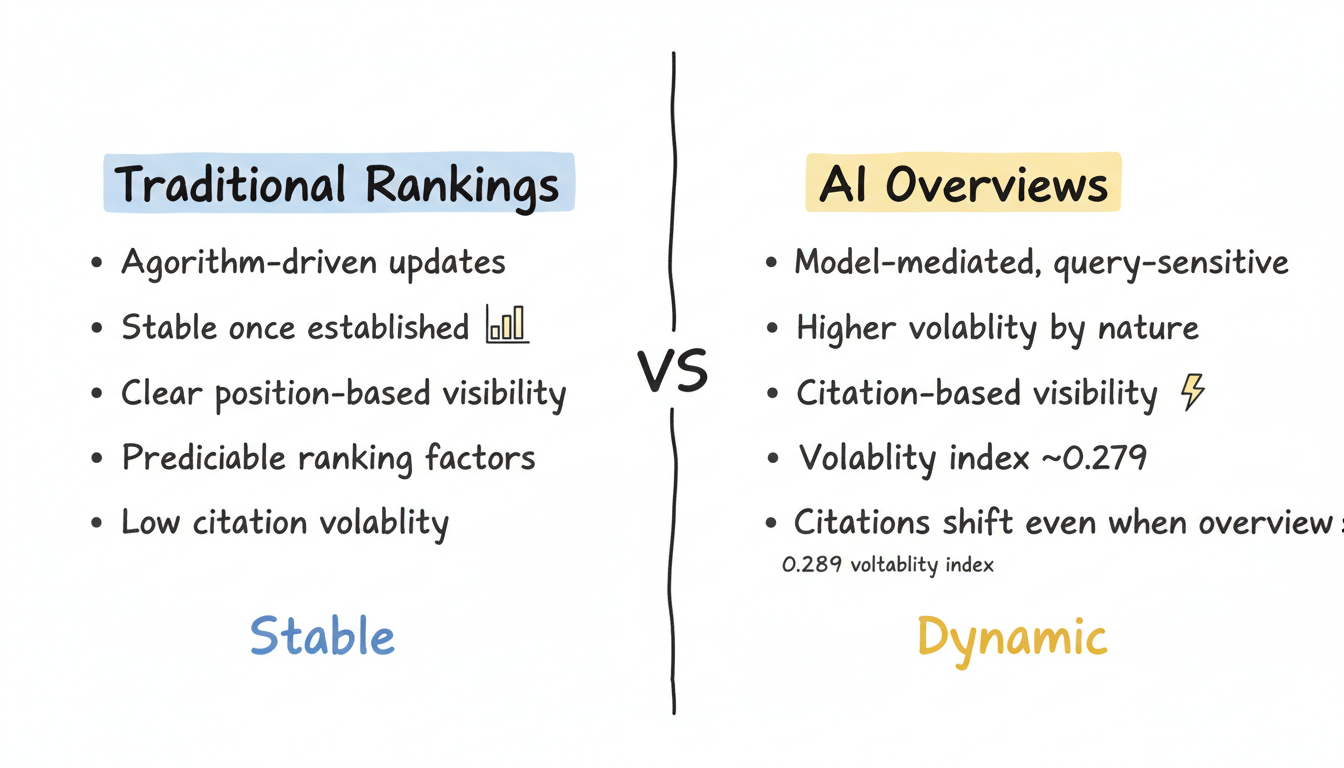
Traditional organic rankings:
- Change primarily with algorithm updates and index refreshes
- Relatively stable once established
- Clear position-based visibility
- Predictable ranking factor influence
AI Overview characteristics:
- Citations can change more frequently than classic rankings
- Output is model-mediated and query-interpretation sensitive
- Combines multiple sources into synthesized responses
- Higher volatility due to generative nature
Research analyzing over 35 million AI Overviews found that citation volatility—where the AI Overview remains present but cited URLs or their order change—occurs at a measurable rate of approximately 0.279 on volatility indexes. This means cited sources can shift even when the overall AI response remains stable.
AI Overview Update Frequency Patterns
Understanding when and how AI Overviews update helps inform content strategy. Organizations conducting an AEO technical audit can identify specific opportunities to align with these update patterns.
Observed update triggers:
- New content indexed matching query intent
- Existing content significantly updated
- Authority signals changing for cited sources
- Query interpretation refinements by Google
- Seasonal or temporal relevance shifts
Stability patterns:
- Informational queries show relatively consistent AI Overviews
- Breaking news and trending topics change rapidly
- Evergreen topics demonstrate more citation stability
- Commercial queries may vary based on product availability
AI Overviews for time-sensitive queries update more frequently than those for stable, factual topics—reflecting user expectations for current information.
Content Freshness Requirements for AI Citations
AI platforms strongly prefer recently updated content, with freshness becoming a critical citation factor.
Freshness data points:
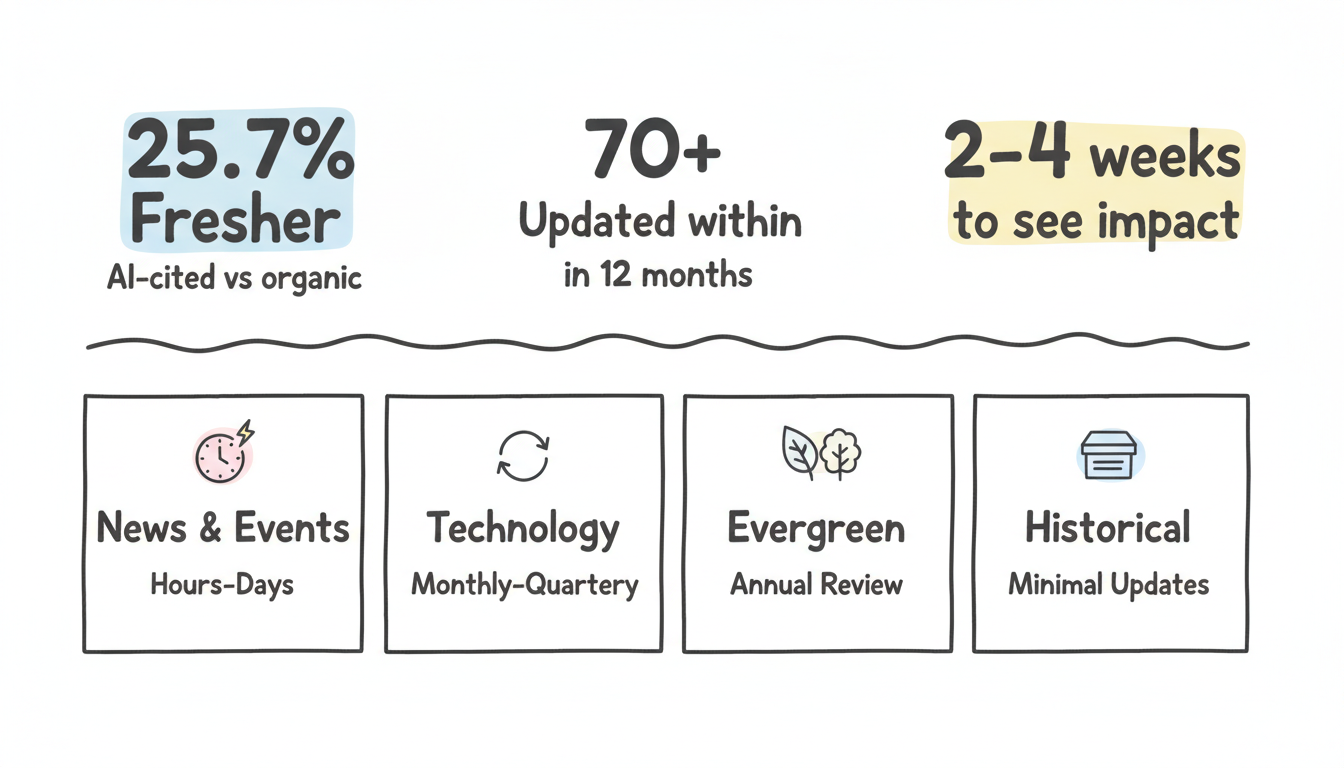
- AI-cited content is 25.7% fresher than traditional organic results on average
- ChatGPT shows strongest fresh content preference, citing URLs 393-458 days newer than Google organic results
- Over 70% of pages cited by ChatGPT were updated within 12 months
- Content updated within 3 months performs best across all intent types
- Google AI Overviews behave most like traditional search in freshness requirements
Why freshness matters to AI systems:
- LLMs parse last-updated metadata to assess source recency
- Recent information is assumed more accurate and relevant
- Users expect AI to provide current answers
- Outdated citations damage platform credibility
Legitimate vs. Fake Freshness Signals
Google has improved detection of genuine versus manipulated freshness signals. When choosing an AEO agency selection, prioritize partners who emphasize legitimate content improvements over artificial freshness manipulation.
Behaviors that help citation potential:
- Substantive content updates with new information
- Updated statistics, data, and examples
- Revised recommendations based on current circumstances
- Transparent update history showing what changed
- Removal of genuinely outdated information
Behaviors that trigger penalties:
- Changing publication dates without meaningful updates
- Adding "Updated for 2026" headers to unchanged content
- Cosmetic edits that don't add value
- Manipulative freshness signals across site-wide patterns
Google distinguishes between genuinely updated content, appropriately static evergreen content, fake freshness signals, and neglected outdated content. Only legitimate updates improve citation likelihood.
Update Frequency Recommendations by Content Type
Different content types require different update cadences for AI visibility.
News and current events:
- Freshness critical (hours to days)
- Continuous monitoring required
- Rapid update capability essential
- High citation volatility expected
Technology and product content:
- Moderate freshness important (months to quarterly)
- Update with new features, versions, changes
- Monitor competitive landscape for update triggers
- Regular review cycles recommended
Evergreen educational content:
- Annual review appropriate if fundamentally accurate
- Update statistics and examples quarterly
- Refresh for clarity and structure improvements
- Freshness less critical if information remains accurate
Historical and reference content:
- Freshness not expected—age may signal quality
- Avoid unnecessary updates that seem manipulative
- Appropriate framing as historical content
- Accuracy maintenance more important than recency
Monitoring AI Overview Changes
Track citation status and respond to changes systematically. When setting up tracking systems, establish clear AI search KPI goal setting frameworks to measure the impact of content updates.
Monitoring approaches:
- Regular manual checking of priority keywords
- AI SEO monitoring tools tracking citation presence
- Google Search Console AI Overview data
- Competitive citation tracking
Response strategies:
- Identify when citations are lost and investigate causes
- Assess competitor content that gained citations
- Update content to address gaps or freshness issues
- Monitor recovery after content updates
Organizations tracking AI Overview citations alongside traditional rankings gain complete visibility into their search presence.
Building Sustainable Citation Stability
Long-term citation maintenance requires systematic approaches. Avoid common AEO marketing mistakes like neglecting ongoing content maintenance or treating optimization as a one-time project.
Sustainability practices:
- Establish content refresh calendars by topic type
- Build processes for rapid updates when needed
- Monitor content accuracy continuously
- Develop authority signals that persist through updates
Resource allocation:
- Prioritize high-value content for regular updates
- Balance new content creation with refresh activities
- Invest in monitoring infrastructure
- Plan for ongoing maintenance, not one-time optimization
Content refresh strategies often produce faster ROI than new content creation—organizations can see results within 2-4 weeks versus 3-6 months for new content to rank.
The Volatility Challenge
AI Overview volatility presents both challenges and opportunities.
Challenges:
- Citation status less predictable than organic rankings
- Updates may not always produce consistent results
- Monitoring requires new tools and processes
- Competitive dynamics shift faster
Opportunities:
- Fresh, updated content can displace stale competitors
- Smaller sites with current information can earn citations
- Responsiveness becomes competitive advantage
- First-mover benefits for emerging topics
Organizations treating AI Overview optimization as ongoing practice rather than one-time effort navigate volatility more successfully.
FAQs
How often should I update content for AI Overview visibility?
Update frequency depends on content type. Time-sensitive topics need frequent updates (weekly or more), while evergreen content benefits from quarterly reviews with annual comprehensive refreshes. Focus substantive updates on adding new information rather than cosmetic changes.
Do AI Overviews cite the same sources consistently?
Not always. Research shows citation volatility exists even when AI Overviews remain present for queries. The same query can cite different sources over time as content freshness, authority signals, and Google's model interpretations evolve.
Will updating my content immediately improve AI citations?
Not immediately. After updates, Google must recrawl and reindex content, then AI systems must process changes. Meaningful updates typically show impact within 2-4 weeks, though highly competitive topics may take longer.