
February 19, 2026


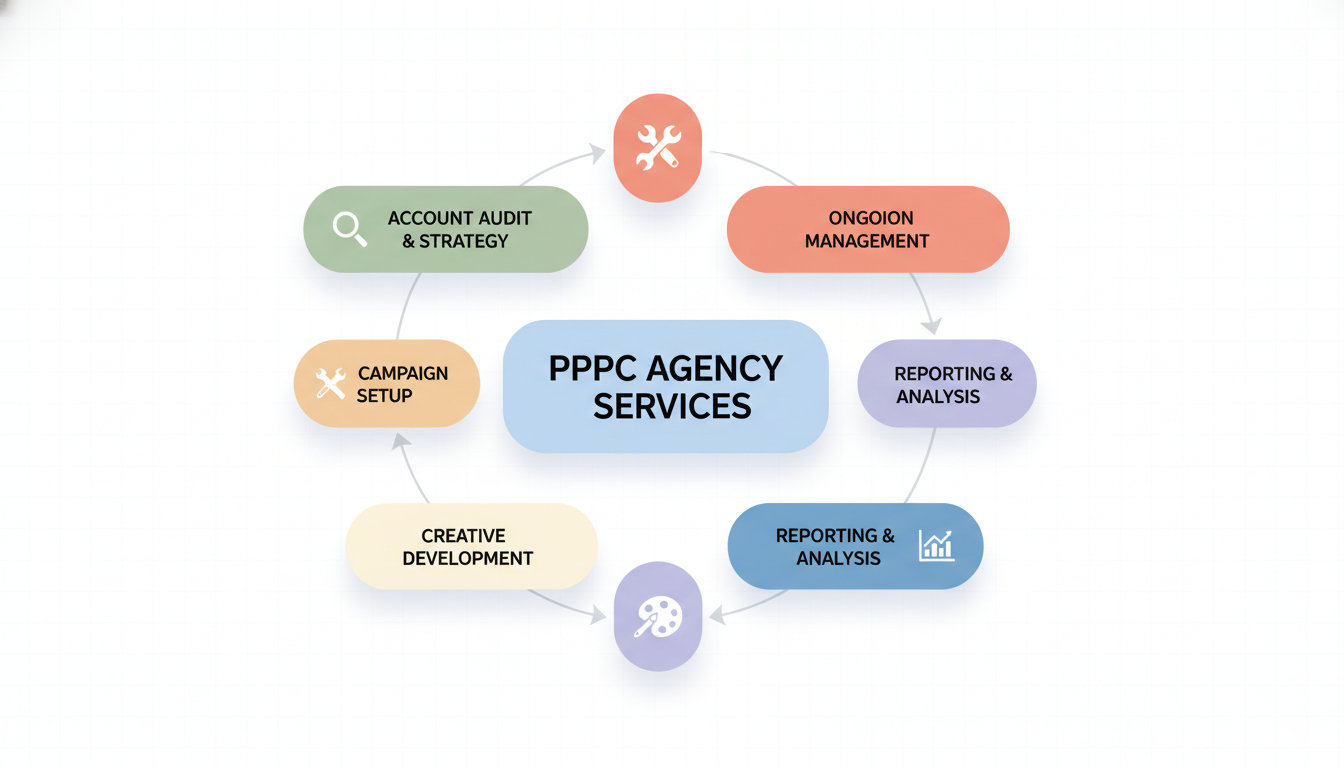
Hiring a PPC marketing agency is one of the most impactful decisions you can make for your paid advertising efforts. But what exactly do you get when you sign on with a professional PPC team? In 2026, agency services have evolved significantly, incorporating AI-powered optimization, omnichannel coordination, and advanced attribution modeling that weren't standard even two years ago.
This guide breaks down the core services, pricing models, and results you should expect from a quality PPC marketing agency partnership.
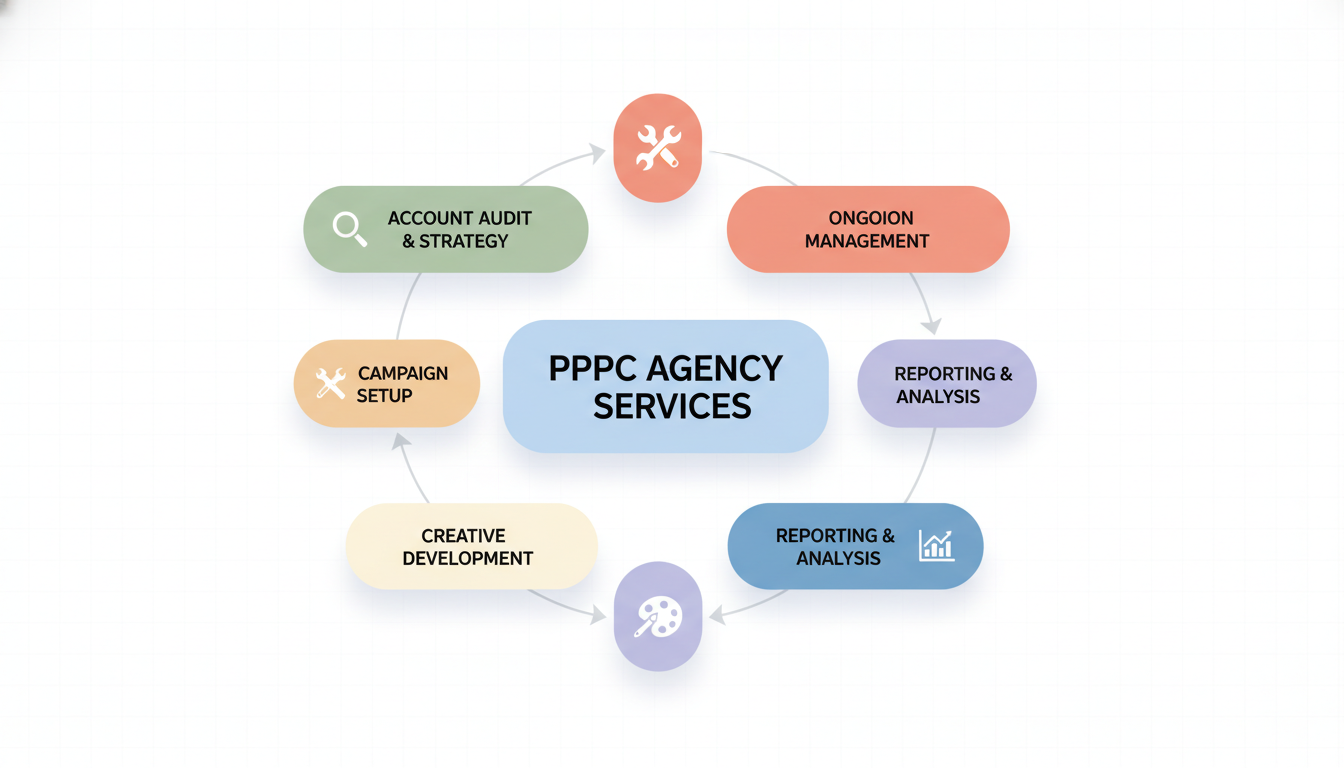
A reputable PPC marketing agency provides far more than just "running ads." Here's what's typically included in a comprehensive service package.
Every engagement should start with a thorough assessment. Your agency will analyze your current account structure, historical performance data, competitor positioning, and market opportunities. This discovery phase informs the strategic roadmap for your campaigns.
Key deliverables include:
Professional campaign architecture makes the difference between campaigns that scale and those that stagnate. Agencies design account structures that allow for granular control, efficient budget allocation, and clear performance tracking.
This includes building out:
Day-to-day management is where agencies earn their fees. According to industry benchmarks from 2026, full-service PPC management includes search advertising, shopping campaigns, display networks, and retargeting—all requiring continuous attention.
Core management activities include:
Strong ad copy drives clicks and conversions. Your PPC marketing agency should handle:
Transparent reporting builds trust and informs decisions. Expect regular updates that go beyond surface-level metrics to provide actionable insights.
Standard reporting includes:
Before a single ad runs, your agency should develop a comprehensive strategy aligned with your business objectives.
Not all businesses measure success the same way. An experienced agency will work with you to establish:
In 2026, effective PPC extends beyond Google. According to research from Think with Google, omnichannel campaigns achieve nearly 19% higher engagement than single-channel efforts. Your agency should recommend the right mix based on your audience and goals, whether you're pursuing paid search agency services or exploring other channels.
Common platform options include:
Understanding who you're reaching matters as much as what you're saying. Agencies conduct detailed audience research to identify:
The real work happens after launch. Here's what professional management looks like in practice.
Agencies use a combination of manual oversight and automated bidding strategies to maximize your budget efficiency. This includes:
Continuous improvement requires ongoing experimentation. Expect your agency to run structured A/B tests on:
Eliminating wasted spend is just as important as capturing good traffic. Your agency should maintain and expand negative keyword lists to filter out irrelevant queries.
Higher Quality Scores mean lower costs and better ad positions. Agencies work to improve:
Clear, actionable reporting separates professional agencies from amateur operations.
Your regular reports should include:
Metric | Why It Matters |
Impressions & Clicks | Traffic volume indicators |
CTR | Ad relevance measure |
CPC | Cost efficiency metric |
Conversions | Business outcome tracking |
Conversion Rate | Landing page effectiveness |
Cost Per Conversion | Acquisition efficiency |
ROAS | Return on ad spend |
Beyond the numbers, expect narrative context explaining:
Most agencies provide:
Results vary by industry, competition level, and budget. However, quality PPC management typically delivers measurable improvements.
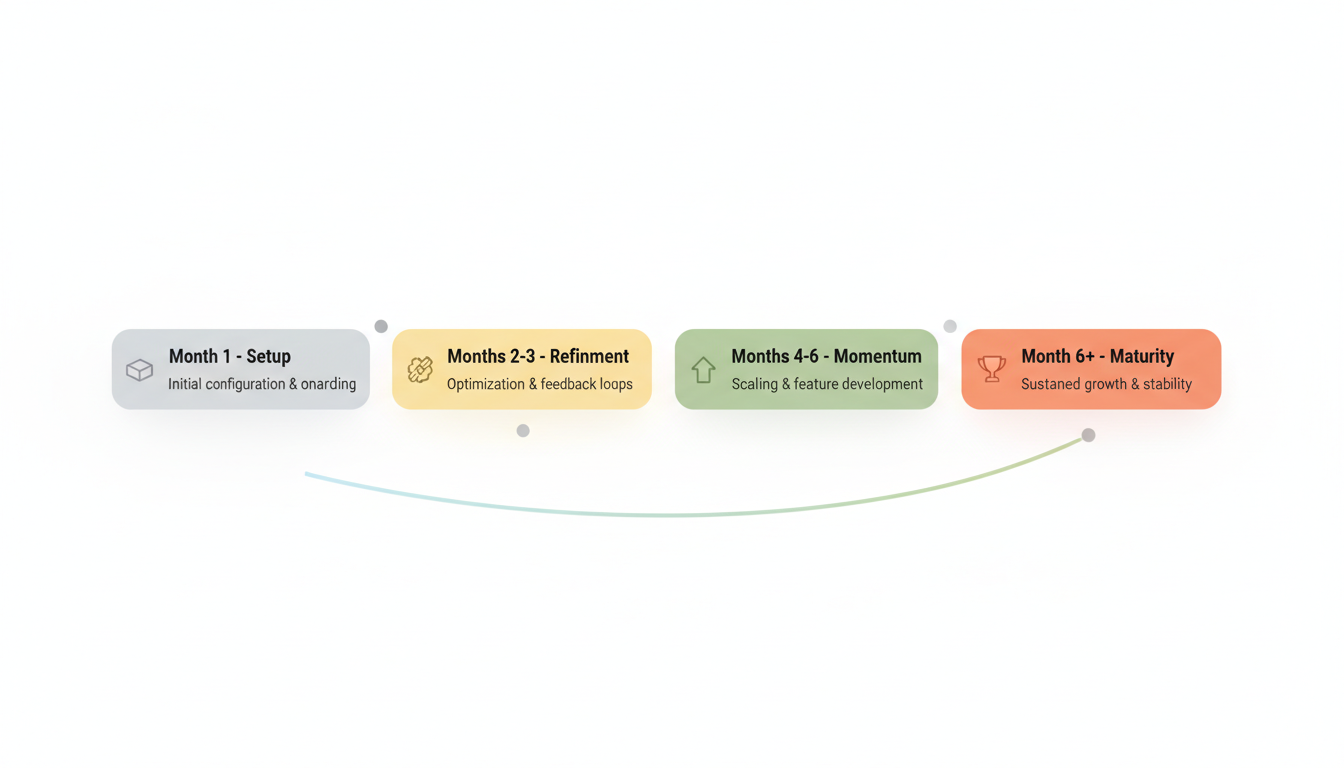
While specific results depend on your situation, professional agencies often deliver:
For Microsoft Advertising specifically, agencies report achieving 5-6x ROI on average when campaigns are properly managed through Bing Ads management services.
Understanding how agencies charge helps you budget appropriately and evaluate proposals.
Model | Typical Range | Best For |
Percentage of Ad Spend | 10-20% of monthly spend | Scaling businesses |
Flat Monthly Retainer | $1,500-$10,000/month | Predictable budgets |
Hybrid (% + Minimum) | 15% with $1,500 minimum | Most common approach |
Performance-Based | Varies | Risk-tolerant advertisers |
According to 2026 industry data, the typical agency fee structure is 15-20% of ad spend with a $1,000-$2,000 minimum monthly management fee. For example, managing $20,000 in monthly ad spend would cost approximately $3,000-$4,000 in management fees.
Several factors influence what you'll pay:
Most campaigns need 2-3 months of optimization before reaching peak performance. You'll see initial data within the first few weeks, but meaningful trends require time to develop. Expect gradual improvements rather than overnight transformations.
Agencies bring specialized expertise across multiple platforms, dedicated time for optimization, and experience from managing diverse accounts. In-house teams often lack the breadth of experience and may struggle to stay current with platform changes. Understanding what is paid search advertising and how it differs from other types of digital marketing helps explain why specialized agencies typically deliver better results for businesses spending $5,000+ monthly on ads.
Look for consistent communication, transparent reporting, and measurable progress toward agreed-upon goals. Good agencies explain their strategy, share both wins and challenges, and proactively recommend improvements. If you're not seeing clear performance data or getting straight answers to questions, that's a red flag.
Yes, in most cases. Managing both platforms together allows for unified strategy, efficient budget allocation, and consistent messaging. Microsoft Advertising often delivers 33-70% lower cost per click than Google, making it a valuable addition to any PPC portfolio.
By submitting this form, you agree to our Privacy Policy and Terms & Conditions.



