
February 19, 2026


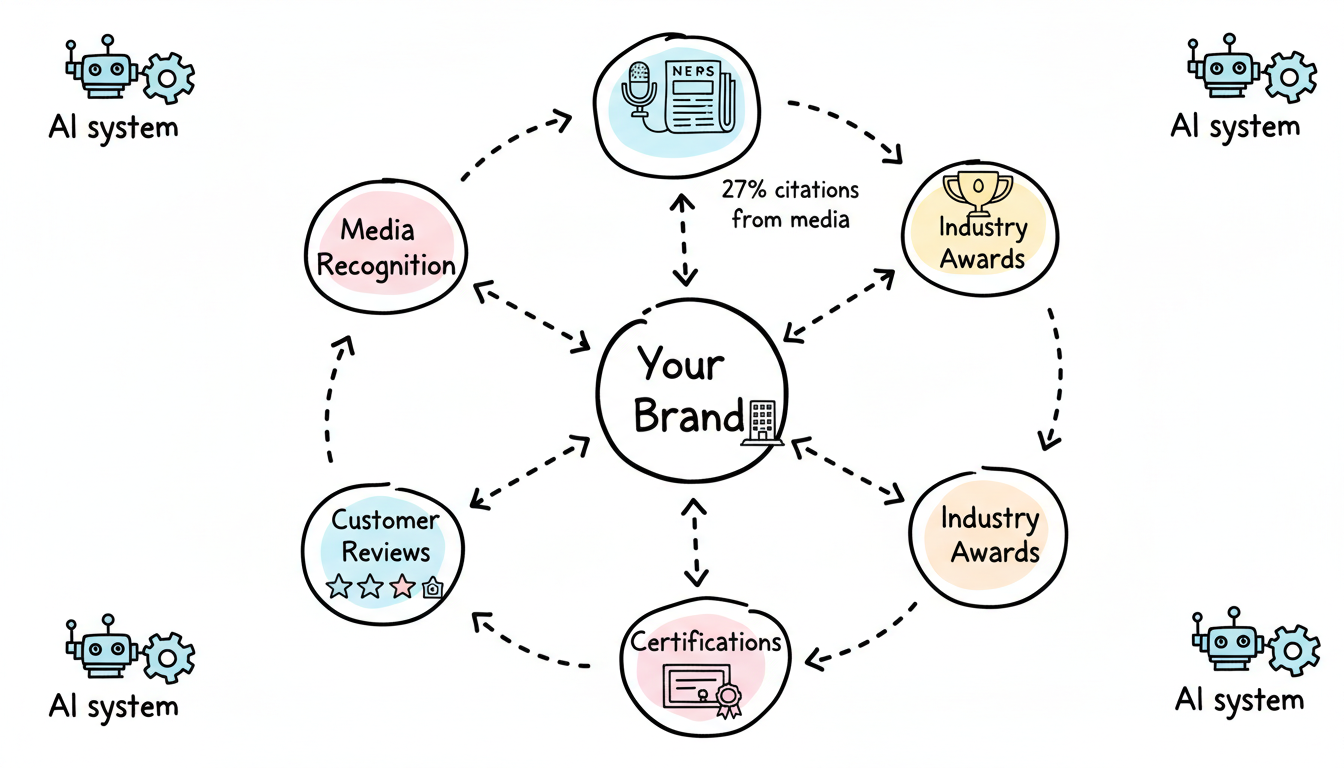
AI search engines like SearchGPT don't simply rank content—they evaluate trustworthiness before citing sources. Awards, certifications, and third-party recognition function as validation signals that demonstrate your brand is the safe recommendation when AI systems answer user queries. Understanding how to strategically promote achievements for AI visibility creates sustainable competitive advantages in the evolving search landscape.
AI systems prioritize sources they can verify as credible through external validation.
The validation principle:
AI models don't just evaluate your claims—they cross-reference whether others recognize your expertise. When multiple authoritative sources endorse, cite, or award your organization, AI systems gain confidence in recommending you.
Research findings:
Organizations lacking external validation struggle to earn AI citations regardless of content quality.
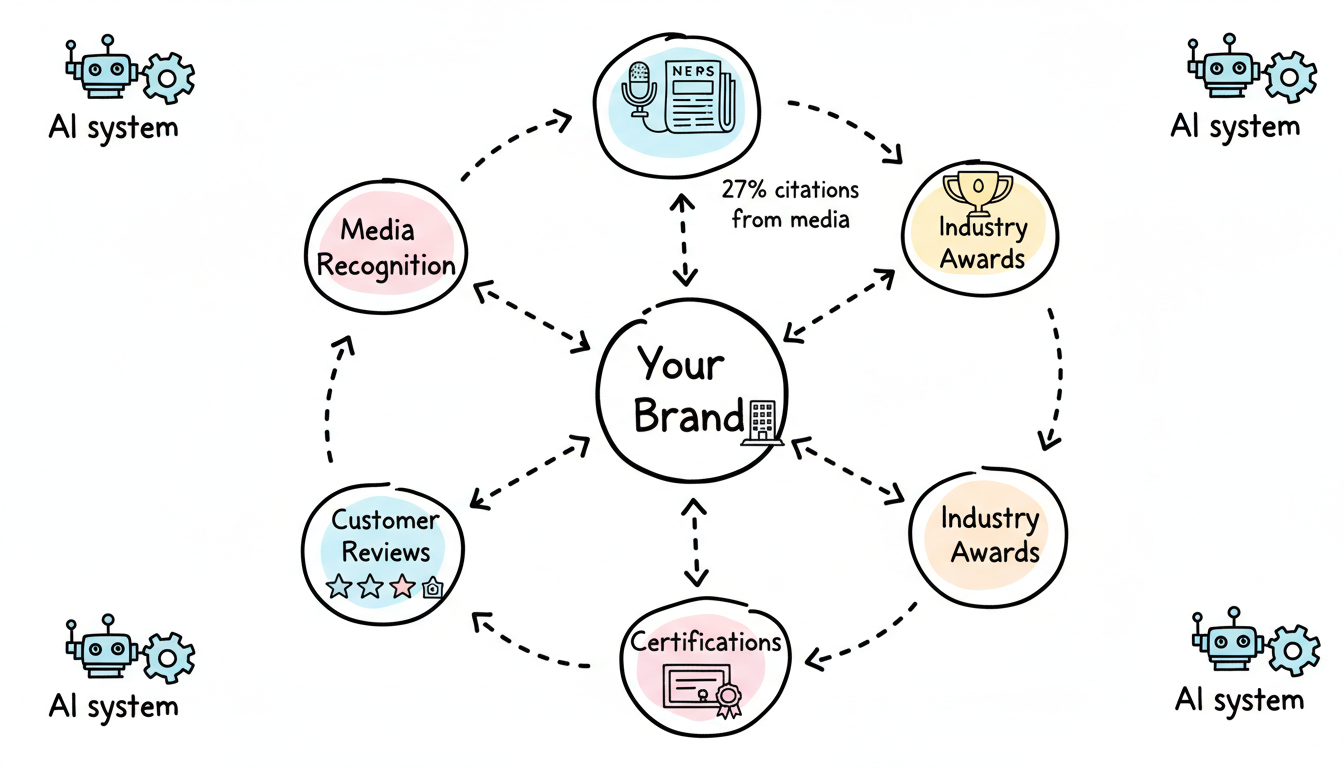
Different validation signals carry varying weight with AI search engines.
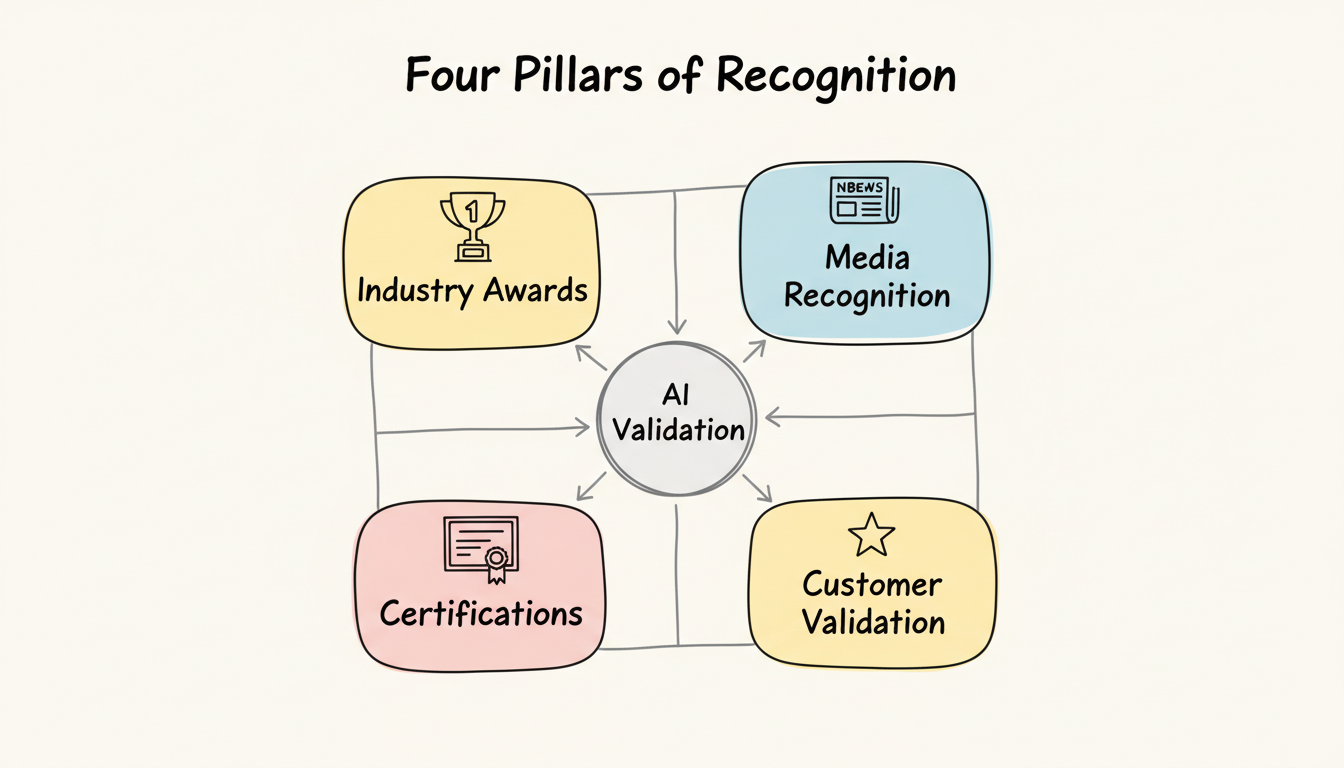
Formal recognition from established industry organizations demonstrates peer-validated excellence.
High-value award categories:
AI systems recognize these awards as objective third-party endorsement of expertise and quality. Similar to how schema markup helps AI search optimization, structured recognition data makes it easier for AI engines to validate your credibility.
Press coverage from authoritative publications signals broader credibility.
Valuable media recognition:
AI media placement strategies specifically target publications that AI engines cite most frequently.
Certifications validate specific expertise claims with verifiable credentials.
Certification types:
Certifications provide structured data AI systems can easily parse and verify.
Customer recognition demonstrates market acceptance of your expertise.
Customer validation signals:
Rating and review signals, particularly on Google Business Profile and third-party review sites, influence AI recommendations directly.
Earning recognition matters less than ensuring AI systems discover and understand your achievements.
Make achievements machine-readable for AI extraction.
Documentation practices:
AI systems parse structured achievement data when building brand understanding.
Ensure recognition appears consistently across your digital footprint.
Consistency requirements:
AI systems cross-reference multiple sources to validate claims. Inconsistent or missing information undermines credibility signals.
Weave achievements into relevant content naturally.
Integration approaches:
Awards mentioned in context strengthen topical authority more than isolated award pages. This approach complements broader generative AI SEO optimization strategies by reinforcing expertise signals throughout your content ecosystem.
Strategic recognition building requires ongoing effort.
Systematically pursue awards aligned with your expertise areas.
Strategy elements:
Not all awards carry equal AI weight—focus on recognized, authoritative programs.
Build relationships that generate ongoing coverage.
Relationship building:
Consistent media presence creates compounding authority signals AI systems value. For B2B companies specifically, targeted media strategies should align with SearchGPT B2B companies strategy to maximize citation opportunities.
Keep certifications current and expanding.
Maintenance practices:
Expired or outdated certifications can harm rather than help credibility.
Track whether recognition efforts translate to AI citation improvements.
Observe AI system behavior toward your brand.
Monitoring methods:
Recognition impact may appear gradually as AI systems update their understanding of your brand. Understanding AEO benefits and why it matters helps contextualize how these recognition signals contribute to overall answer engine visibility.
Watch for signs that recognition is influencing AI systems.
Positive indicators:
Document changes over time to understand what recognition types most influence AI visibility for your category.
Recognition strategies fail when executed poorly.
AI systems attempt to verify claims. Unverifiable or exaggerated achievements damage credibility.
Avoid:
Only promote achievements AI systems can verify through authoritative sources.
Awards isolated from broader content strategy provide limited value.
Avoid:
Integrate recognition throughout your content ecosystem for maximum impact.
Stale recognition information undermines current credibility.
Avoid:
Maintain current, active recognition signals across all platforms.
Yes. AI systems use third-party recognition as validation signals when determining which sources to trust and cite. Research indicates prominent media mentions account for roughly 27% of LLM citations. Awards from recognized organizations function similarly as external endorsement of your expertise.
Awards from organizations AI systems recognize as authoritative carry most weight. Industry association awards, major publication awards (Forbes, Inc.), and platform-specific awards (G2, Capterra) typically perform well. Local or obscure awards provide less AI visibility benefit unless they demonstrate specific expertise relevant to your target queries.
Create structured, machine-readable documentation of achievements. Implement Organization schema with awards properties, maintain consistent information across platforms, and integrate achievements naturally into relevant content. Isolated award displays provide less value than recognition woven throughout your content ecosystem.
By submitting this form, you agree to our Privacy Policy and Terms & Conditions.



