February 19, 2026


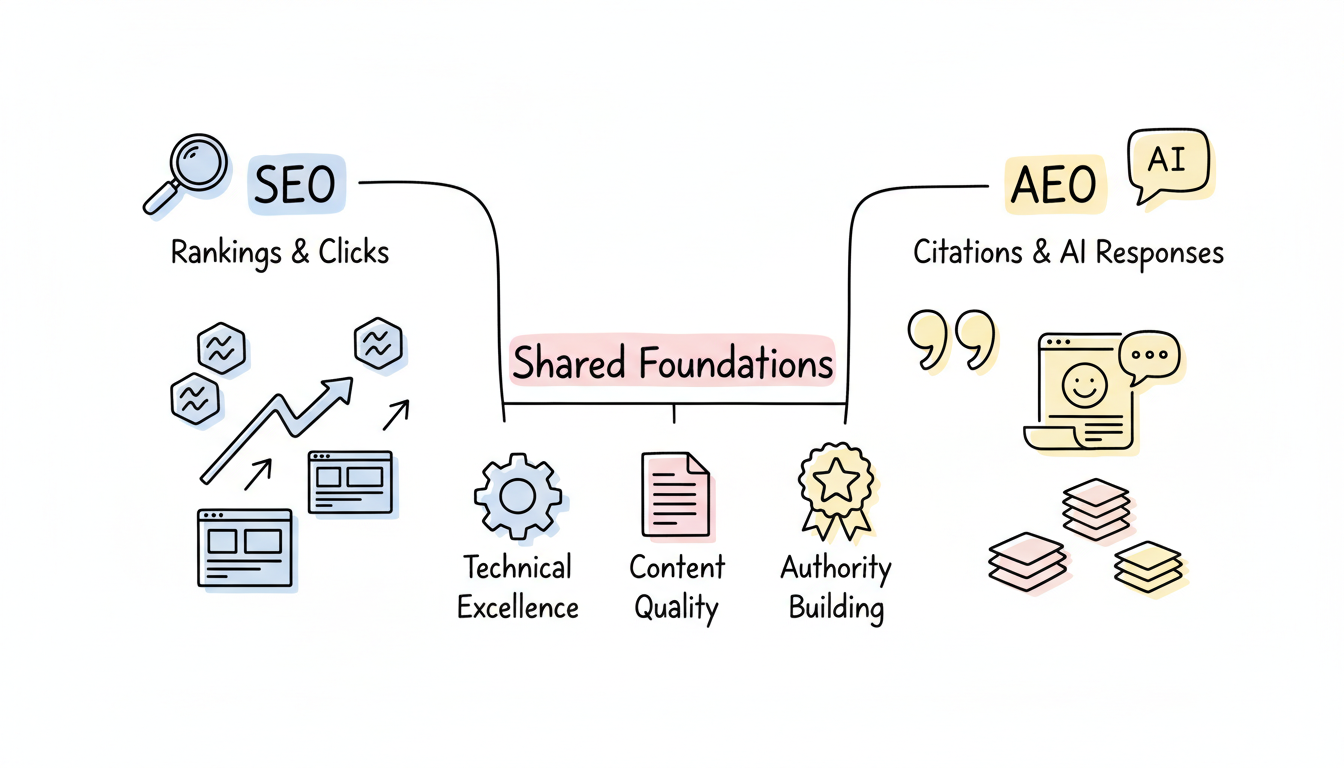
SEO and AEO represent complementary approaches to digital visibility that work best together. Search engine optimization (SEO) focuses on ranking in traditional search results, while answer engine optimization (AEO) focuses on getting cited in AI-generated responses. In 2026, with over 400 million weekly ChatGPT users and 60% of searches ending without clicks, organizations need both strategies.
This guide explains how to integrate SEO and AEO for comprehensive visibility across traditional and AI-powered search.
Search engine optimization improves your visibility in traditional search results on Google, Bing, and other search engines. When users type queries, SEO determines which pages appear in the ranked list of results.
SEO focuses on:
The goal of SEO is earning rankings that drive clicks to your website.
Answer engine optimization structures content so AI systems cite it when generating responses. Rather than competing for rankings, AEO positions your content as the trusted answer.
AEO focuses on:
The goal of AEO is becoming the source AI platforms reference when users ask questions. Understanding what is AEO in digital marketing helps organizations position their content for AI-powered discovery.
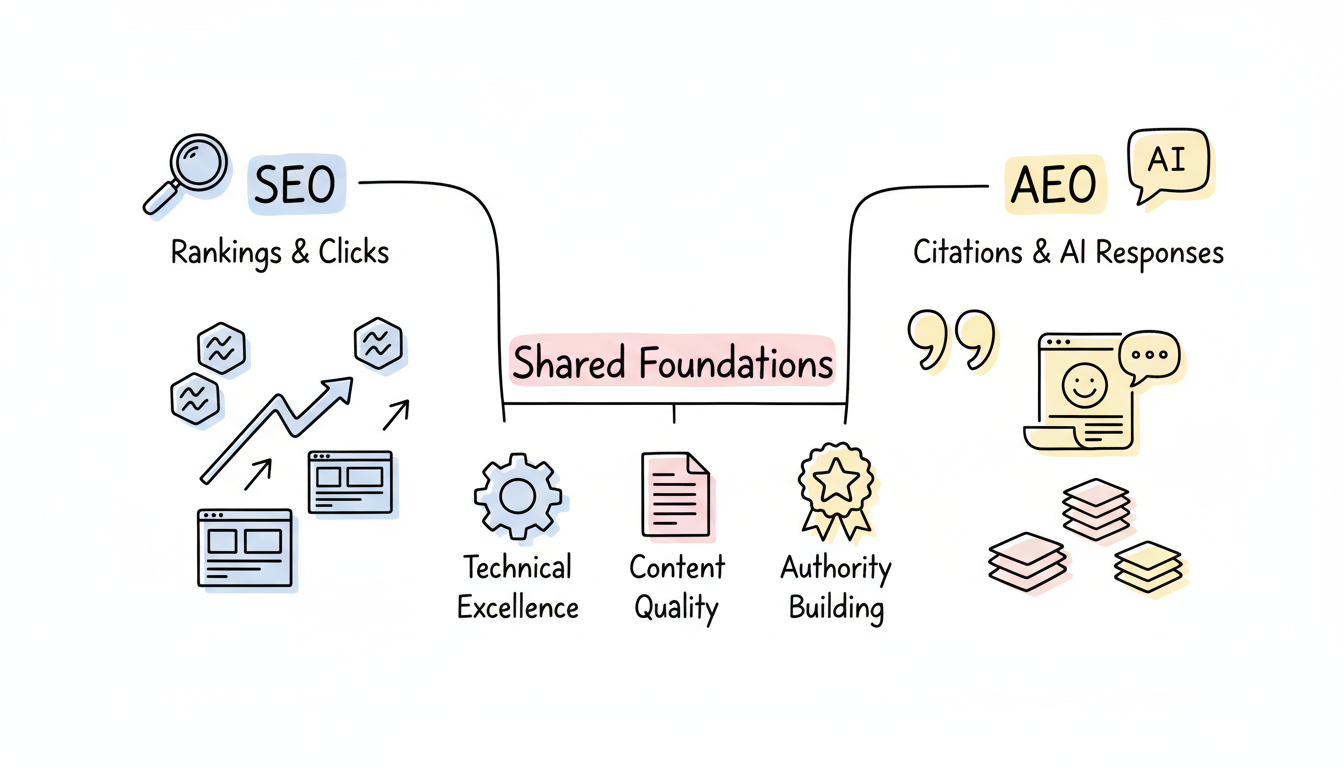
Organizations that integrate both disciplines outperform those focusing on either alone.
Content that ranks well in traditional search tends to get cited more frequently by AI systems. Research shows pages in Google's top 10 have approximately 0.65 correlation with LLM mentions, and 76% of AI Overview citations pull from top-ranking positions.
This means strong SEO creates authority signals that AEO leverages. Without good rankings, AI systems have less evidence your content is trustworthy.
Technical SEO fundamentals—crawlability, site architecture, structured data—benefit both traditional rankings and AI visibility. Clean, well-organized sites are easier for both search crawlers and AI systems to understand and cite.
Investing in technical excellence pays dividends across both channels simultaneously.
Users move between traditional search and AI assistants throughout their research journeys. Some prefer clicking through results to read full articles. Others want direct answers from ChatGPT or Perplexity.
Optimizing for both ensures visibility regardless of how users prefer to find information. Organizations can implement generative engine optimization strategies to capture users across all discovery channels.
AI referral traffic currently represents approximately 1% of total web visits, growing roughly 1% month-over-month. Organizations optimizing only for traditional search miss this expanding channel entirely.
AEO cannot succeed without the authority signals SEO builds. AI systems evaluate trustworthiness based partly on traditional ranking performance. Attempting AEO without solid SEO foundations produces inconsistent results.
Effective integration builds on existing SEO work while adding AEO-specific enhancements.
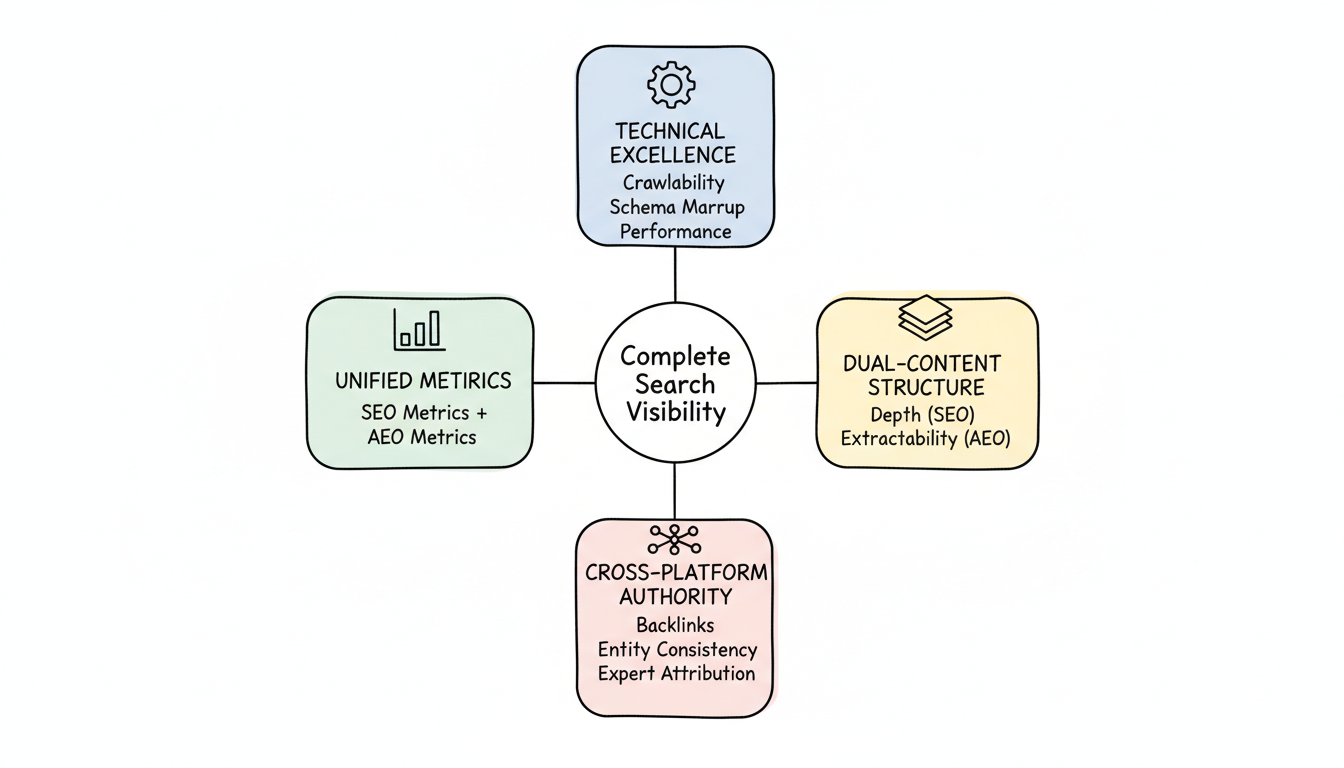
Technical SEO provides the foundation for both disciplines:
Technical work completed once supports both channels. Proper implementation requires schema markup alignment with visible content to ensure AI systems extract accurate information.
Create content that satisfies both SEO depth requirements and AEO extractability:
Comprehensive coverage for SEO: Address topics thoroughly with the depth that earns rankings and demonstrates expertise.
Extractable answers for AEO: Structure content so key statements stand alone when quoted. Lead sections with direct answers before elaboration.
Question-format headers: Match how users phrase queries in both traditional search and AI conversations.
FAQ sections: Provide concise answers that perform well for both featured snippets and AI citations.
Authority signals benefit both SEO and AEO:
Comprehensive measurement requires tracking traditional and AI metrics together:
SEO metrics: Rankings, organic traffic, click-through rates, conversions from search.
AEO metrics: Featured snippet appearances, AI referral traffic, citation frequency across AI platforms, accuracy of brand mentions.
Build dashboards showing both metric types for complete visibility understanding. Organizations can begin tracking AI Overview performance to measure their AEO effectiveness alongside traditional SEO results.
If you already have solid SEO foundations, add AEO enhancements:
Build both disciplines together from the start:
SEO and AEO address different but complementary aspects of digital visibility. Integrating both delivers better results than focusing on either alone.
The relationship: Strong SEO creates authority signals that support AEO success. Technical foundations serve both channels. Content can be structured for dual performance.
The practical approach: Maintain technical excellence, structure content for both depth and extractability, build cross-platform authority, and measure both metric types.
The 2026 reality: Users move between traditional search and AI assistants. Organizations visible in both channels reach audiences wherever they look for information.
Neither should be prioritized at the complete expense of the other. SEO provides the foundation that makes AEO possible. Start with solid SEO fundamentals, then layer AEO enhancements onto high-performing content.
Yes. Content can be structured for dual performance by combining comprehensive coverage (SEO) with extractable answer formatting (AEO). The key is organizing content so it provides depth while also including clear, quotable statements AI systems can cite.
Track traditional SEO metrics (rankings, traffic, conversions) alongside AEO metrics (featured snippets, AI referral traffic, citation frequency). Build unified dashboards showing both for comprehensive visibility understanding.
Not necessarily. The disciplines share significant overlap. Teams with strong SEO capabilities can add AEO expertise through training. Some organizations keep integrated teams while adding AEO-specific monitoring tools and processes.
By submitting this form, you agree to our Privacy Policy and Terms & Conditions.