February 19, 2026


Generative AI has fundamentally altered how search engines deliver information. Instead of presenting ten blue links for users to evaluate, AI-powered search synthesizes comprehensive answers from multiple sources—often eliminating the need to click through to any website at all.
This transformation doesn't make SEO obsolete. Instead, it demands a strategic evolution. Understanding how generative AI intersects with traditional SEO reveals the pathway to visibility in 2026's search landscape.
Traditional SEO operated on a relatively simple premise: identify target keywords, optimize content around those terms, build authority through backlinks, and rank higher. Generative AI has complicated this model.
AI systems don't match keywords to pages—they understand queries contextually and synthesize responses from content that demonstrates genuine expertise. A page perfectly optimized for "best project management software" might be overlooked if an AI system determines that another source provides more comprehensive, authoritative coverage of the topic.
This shift prioritizes:
The keyword remains relevant as a signal of topical focus, but context, depth, and authority now carry greater weight in determining which sources AI systems choose to cite.
Generative AI accelerates the trend toward zero-click search results. When AI Overviews, ChatGPT, or Perplexity synthesize complete answers, many users never click through to source websites.
For SEO practitioners, this reality demands a mindset shift. Traffic volume may decrease even as visibility increases. A brand mentioned in AI responses reaches users who never visit the website—creating awareness without measurable clicks.
This changes how success should be measured:
Traditional SEO Metrics:
AI-Era SEO Metrics:
The users who do click through from AI-generated responses often demonstrate higher intent. They've already consumed the AI's summary and want deeper information—making them more qualified leads despite lower overall volume. Organizations optimizing for ai-search-conversion-optimization recognize these users represent higher-quality traffic worth capturing.
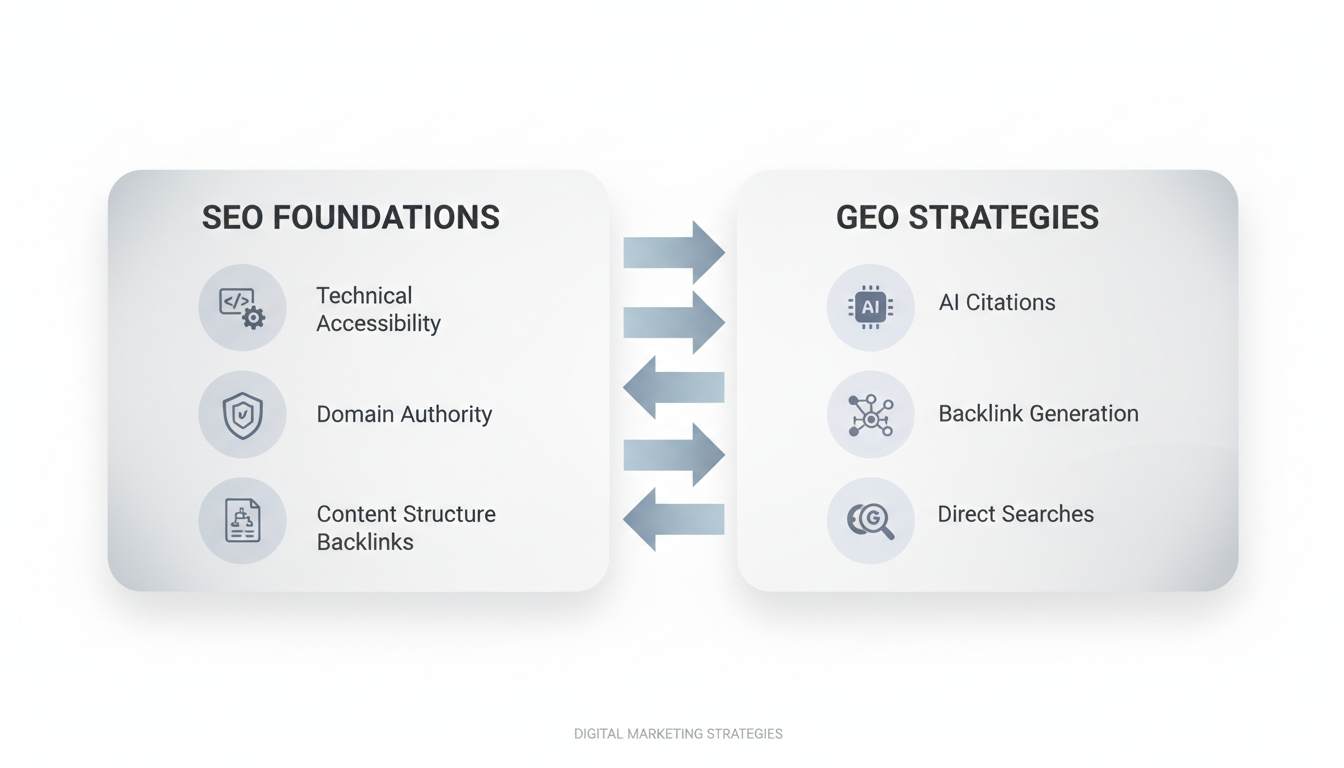
The most common mistake organizations make is treating SEO and generative engine optimization (GEO) as competing approaches. The reality is complementary: strong SEO foundations support GEO success, and GEO visibility reinforces traditional SEO signals.
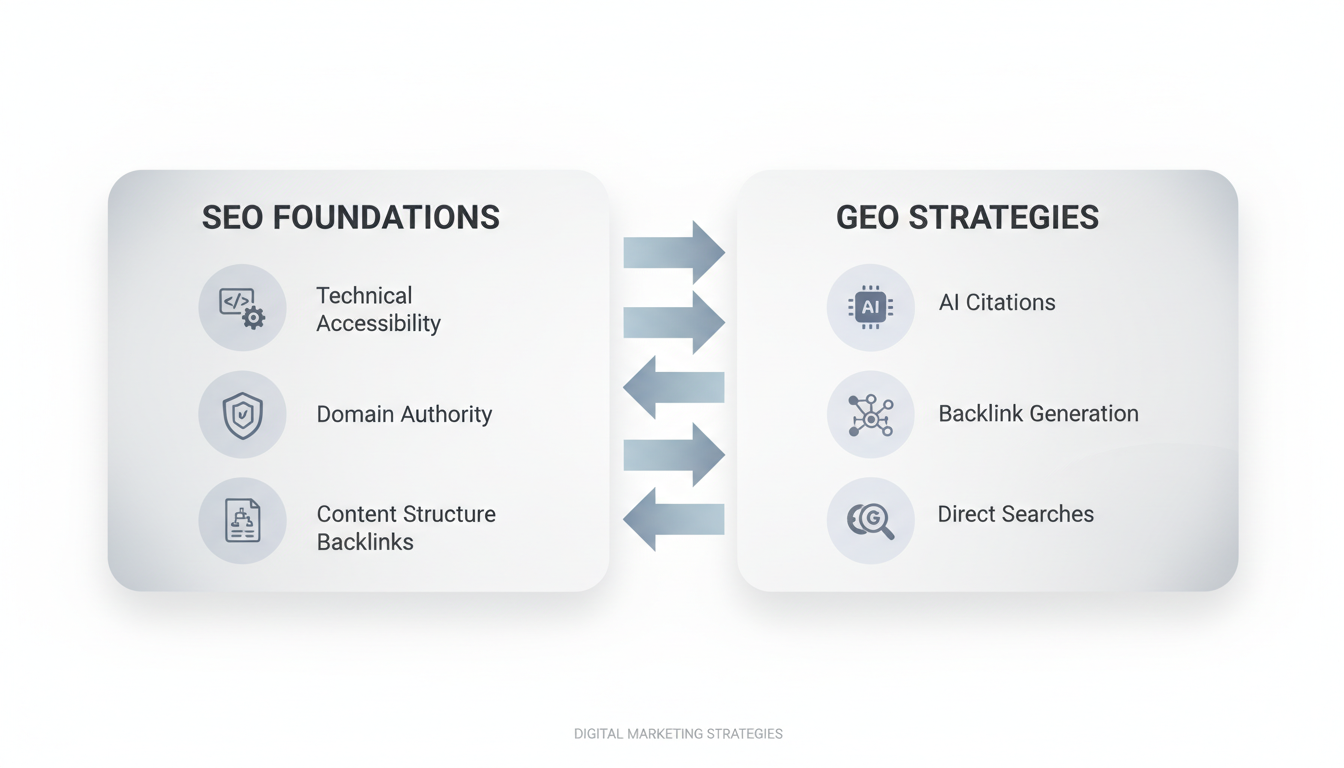
How SEO Supports GEO:
How GEO Supports SEO:
Organizations achieving maximum visibility invest in both simultaneously, recognizing that the approaches reinforce rather than replace each other. Understanding the geo-vs-aeo distinction helps practitioners develop integrated strategies.
Experience, Expertise, Authoritativeness, and Trustworthiness have always mattered for SEO. Generative AI elevates their importance dramatically.
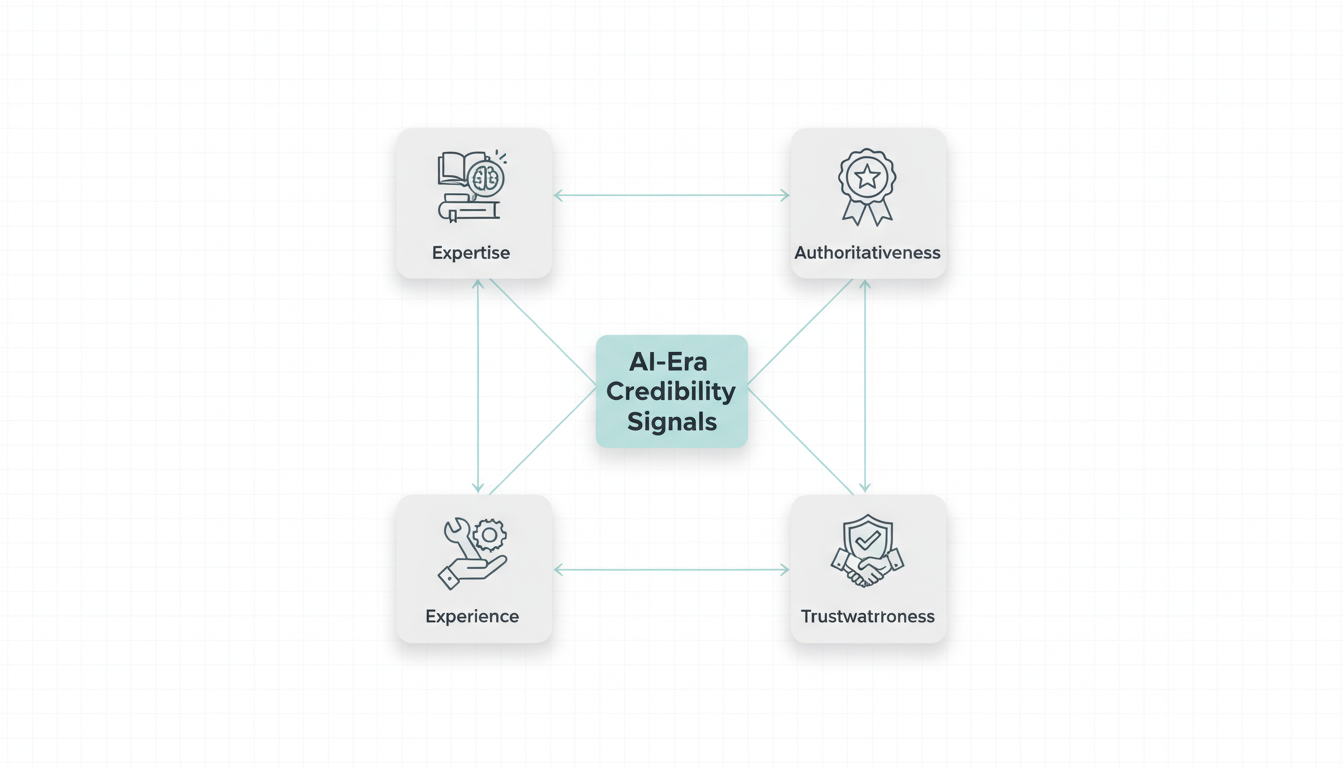
AI systems face a fundamental challenge: they can generate plausible-sounding text on virtually any topic. Distinguishing genuinely helpful content from AI-generated filler requires evaluating source credibility with greater scrutiny than traditional search algorithms applied.
Experience has become particularly valuable. Content demonstrating first-hand knowledge—specific details, personal anecdotes, original photos, practical insights only practitioners would know—signals authenticity that AI-generated content cannot replicate.
Expertise matters because AI systems synthesize information from multiple sources. When selecting which sources to cite, AI preferentially chooses content from recognized experts with demonstrated knowledge in the topic area.
Authoritativeness helps AI systems resolve conflicting information. When sources disagree, AI weights authoritative sources more heavily—making domain reputation and industry recognition crucial. Building ai-overview-authority-signals has become essential for citation-worthy content.
Trustworthiness filters unreliable sources from AI responses. Factual accuracy, transparent sourcing, and consistent reliability build the trust signals AI systems require.
Adapting content strategy for generative AI requires specific tactical changes beyond traditional SEO best practices.
AI systems extract and cite content that directly answers user questions. Structure content to provide clear, complete answers in the opening paragraphs before expanding with supporting details.
The first 40-60 words often determine whether content gets cited. Front-load value rather than building to conclusions.
AI systems can synthesize existing information from multiple sources. Content that merely restates available information adds no value for AI citation purposes.
Original research, unique perspectives, proprietary data, and novel analysis create information gain—the unique value your content provides beyond what exists elsewhere. This differentiation makes your content citation-worthy.
AI systems prefer content they can extract and present cleanly. Clear heading hierarchies, bulleted lists, numbered steps, and concise paragraphs facilitate AI comprehension and citation.
Complex, unstructured prose—even if well-written—presents extraction challenges that may cause AI systems to favor cleaner alternatives.
Generative AI relies on entity recognition to understand what content discusses. Clear identification of the people, organizations, products, and concepts your content addresses helps AI systems categorize and cite appropriately.
Consistent entity references, proper nouns, and clear topic positioning improve AI comprehension.
Technical SEO remains foundational even as content strategy evolves. Several technical factors specifically impact AI visibility:
Crawler Access: AI platforms use specific crawlers (GPTBot, Google-Extended) that can be managed through robots.txt. Blocking these crawlers prevents AI indexing regardless of content quality.
Schema Markup: Structured data helps AI systems understand content context. FAQ schema, HowTo schema, and Article schema provide explicit signals AI can leverage. Implementing aeo-schema-markup-priority strategies ensures maximum AI comprehension.
Site Speed: AI crawlers index vast amounts of content. Slow sites may receive less thorough crawling, potentially missing important content.
Mobile Optimization: AI systems evaluate user experience signals. Poor mobile experience degrades overall quality assessments.
Generative AI hasn't killed SEO—it's transformed what SEO means. The discipline has evolved from primarily technical optimization to strategic content excellence that serves both human readers and AI systems.
Success requires:
The organizations winning in 2026 recognize that SEO and generative AI optimization aren't competing strategies—they're complementary approaches to visibility in a transformed search landscape. Mastering both creates compounding advantages that neither alone can achieve.
By submitting this form, you agree to our Privacy Policy and Terms & Conditions.