
February 19, 2026


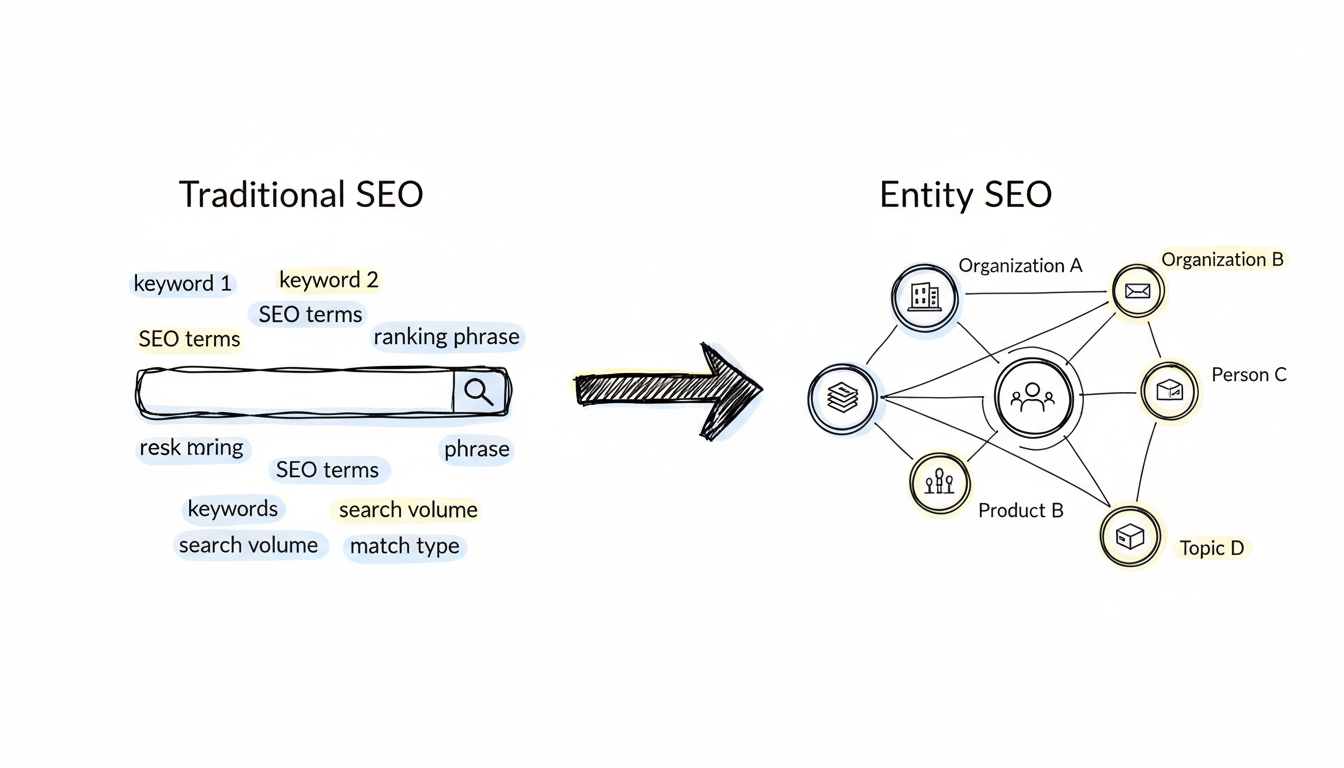
Google's Knowledge Graph contains over 500 billion facts about 5 billion entities—and it directly shapes how AI systems understand and present information. In 2026, becoming a recognized node in this vast network of connected information has become essential for AI search visibility.
This implementation roadmap provides the complete process for establishing your brand in Google's Knowledge Graph.
The Knowledge Graph isn't just a database—it's how Google understands the world. When your brand becomes a recognized entity with defined attributes and relationships, you gain advantages that traditional SEO cannot provide.
Benefit | SEO Impact |
Entity recognition | Google understands what you are, not just what you say |
Knowledge Panel | Branded search real estate and credibility signals |
Relationship mapping | Connections to related entities strengthen authority |
AI comprehension | LLMs reference Knowledge Graph entities accurately |
SERP features | Rich results, carousels, and enhanced listings |
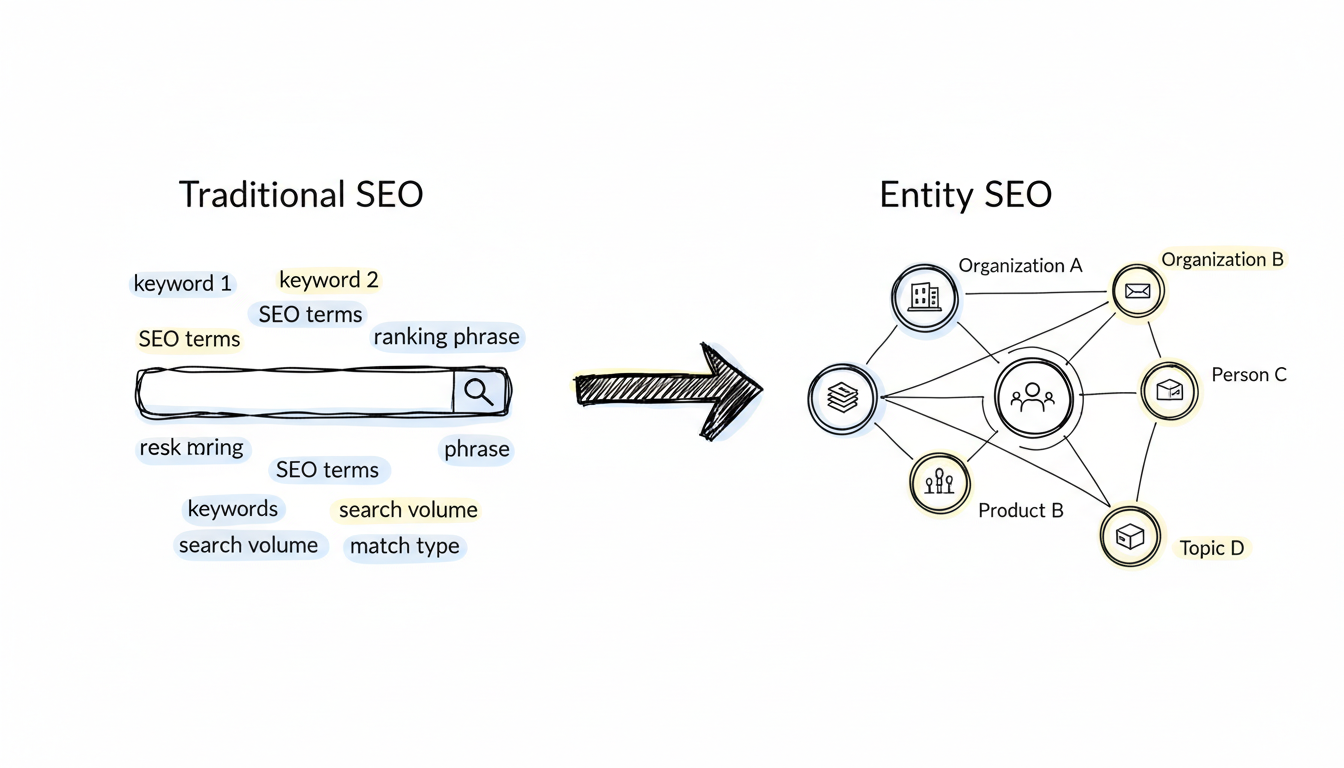
Traditional SEO asked: "What keywords do we target?"
Entity SEO asks: "What entities do we represent, and how do we prove it?"
This shift matters because AI systems reason about entities and their relationships rather than matching keyword strings. Becoming a Knowledge Graph node means Google—and every AI system using Google's data—understands your brand as a defined thing in the world. This is a foundational concept in entity optimization for AI search.
Before technical implementation, establish clear entity identity.
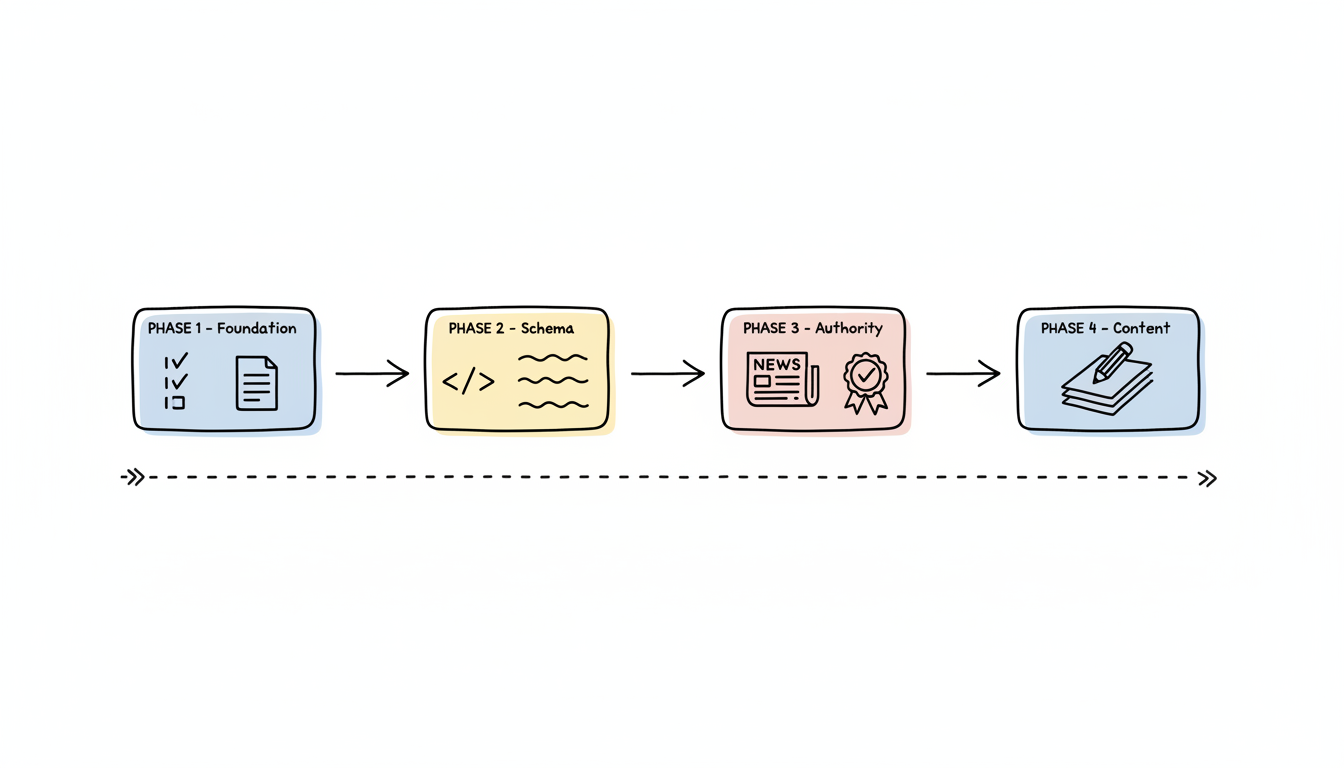
Document these core elements:
Attribute | What to Define |
Entity type | Organization, Person, Product, LocalBusiness, etc. |
Primary name | Official name with consistent spelling |
Description | Clear statement of what the entity is and does |
Identifiers | Website, social profiles, official registrations |
Relationships | Parent company, founders, key people, products |
Create or verify presence on authoritative platforms:
Priority properties:
Why these matter: Google cross-references entity information across authoritative sources. Consistent information across these properties validates entity existence and attributes.
Search your brand name and analyze:
This baseline reveals how Google currently understands your entity.
Schema markup is the technical bridge between your content and Google's Knowledge Graph. Proper schema markup alignment for AEO ensures AI systems can accurately interpret your entity data.
Organization schema (required for businesses):
{
  "@context": "https://schema.org",
  "@type": "Organization",
  "@id": "https://yoursite.com/#organization",
  "name": "Your Company Name",
  "url": "https://yoursite.com",
  "logo": "https://yoursite.com/logo.png",
  "sameAs": [
    "https://www.linkedin.com/company/yourcompany",
    "https://twitter.com/yourcompany",
    "https://www.crunchbase.com/organization/yourcompany"
  ],
  "founder": {
    "@type": "Person",
    "name": "Founder Name",
    "@id": "https://yoursite.com/#founder"
  }
}
Key implementation principles:
Principle | Implementation |
Use @id references | Create unique identifiers for entity relationships |
Include sameAs | Link to verified external properties |
Nest related entities | Connect people, products, locations |
Use specific types | DigitalMarketingAgency is better than Organization |
Page Type | Schema Required |
Homepage | Organization, WebSite |
About page | Organization, Person (for key people) |
Product pages | Product, Offer |
Blog posts | Article, Person (author) |
Contact page | Organization, ContactPoint |
Location pages | LocalBusiness, Place |
Test all schema with:
Fix errors before proceeding. Warnings are acceptable but should be addressed when possible.
Schema tells Google what you claim. Corroboration proves it's true.
Google doesn't trust self-declared information alone. The Knowledge Graph requires external validation:
Signal Type | Examples |
Third-party mentions | News articles, industry publications |
Authoritative references | Wikipedia citations, academic references |
Verified profiles | LinkedIn, Crunchbase, industry directories |
Social proof | Reviews, testimonials, case studies |
Award and recognition | Industry awards, certifications |
Earned media strategy:
Directory and profile optimization:
A Wikipedia entry provides strong Knowledge Graph signals—but must meet notability guidelines:
Notability Factor | Requirement |
Third-party coverage | Significant coverage in reliable sources |
Independent sources | Sources not affiliated with subject |
Multiple sources | Coverage from more than one source |
In-depth coverage | More than trivial mentions |
If you meet criteria, document sources carefully before creating or editing entries. If you don't, focus on building coverage that will eventually establish notability.
Content that reinforces entity relationships strengthens Knowledge Graph presence.
Create content that demonstrates expertise and entity relationships:
Content Type | Entity Benefit |
Founder/team profiles | Establishes Person entities |
Product pages | Defines Product entities |
Partnership announcements | Creates relationship connections |
Case studies | Demonstrates industry positioning |
Industry analysis | Reinforces topical authority |
Link strategically to reinforce entity relationships:
Reference and link to related entities appropriately:
Track progress with these indicators using comprehensive AEO optimization metrics:
Metric | What It Indicates |
Knowledge Panel appearance | Basic entity recognition achieved |
Knowledge Panel completeness | Attribute verification progress |
Branded search features | Entity authority signals |
Rich result eligibility | Schema implementation success |
AI citation accuracy | Knowledge Graph data quality |
Milestone | Typical Timeline |
Schema validation passing | 2-4 weeks |
Rich results appearing | 4-8 weeks |
Knowledge Panel appearance | 3-6 months |
Full Knowledge Panel details | 6-12 months |
Patience is required. Knowledge Graph inclusion reflects accumulated signals over time, not single optimizations.
Mistake | Problem | Solution |
Inconsistent naming | Confuses entity resolution | Audit all properties for exact name match |
Missing sameAs links | Weakens corroboration | Link to all verified external properties |
Orphaned entities | No relationship context | Connect all entities through schema |
Claiming without proof | Triggers trust issues | Build corroboration before claiming |
Ignoring updates | Stale information degrades trust | Review and update quarterly |
Timelines vary significantly based on existing entity signals. Businesses with established presence may see Knowledge Panels within 3-6 months. New entities with limited corroboration may take 12+ months. Consistent implementation and corroboration building accelerates the process.
Yes. Local businesses particularly benefit from Google Business Profile optimization, which provides local Knowledge Panel features. The key is establishing clear entity identity with consistent information across authoritative local directories.
Absolutely. AI systems like Google's AI Overviews, ChatGPT, and Perplexity reference Knowledge Graph data for entity understanding. Becoming a recognized entity improves accuracy of AI responses about your brand and increases citation likelihood. Understanding what is generative engine optimization (GEO) helps contextualize this benefit.
Use Google's "Claim this knowledge panel" feature for eligible entities. Once claimed, you can suggest edits to incorrect information. Google also accepts feedback through the "Suggest an edit" option visible on Knowledge Panels.
By submitting this form, you agree to our Privacy Policy and Terms & Conditions.



