February 19, 2026


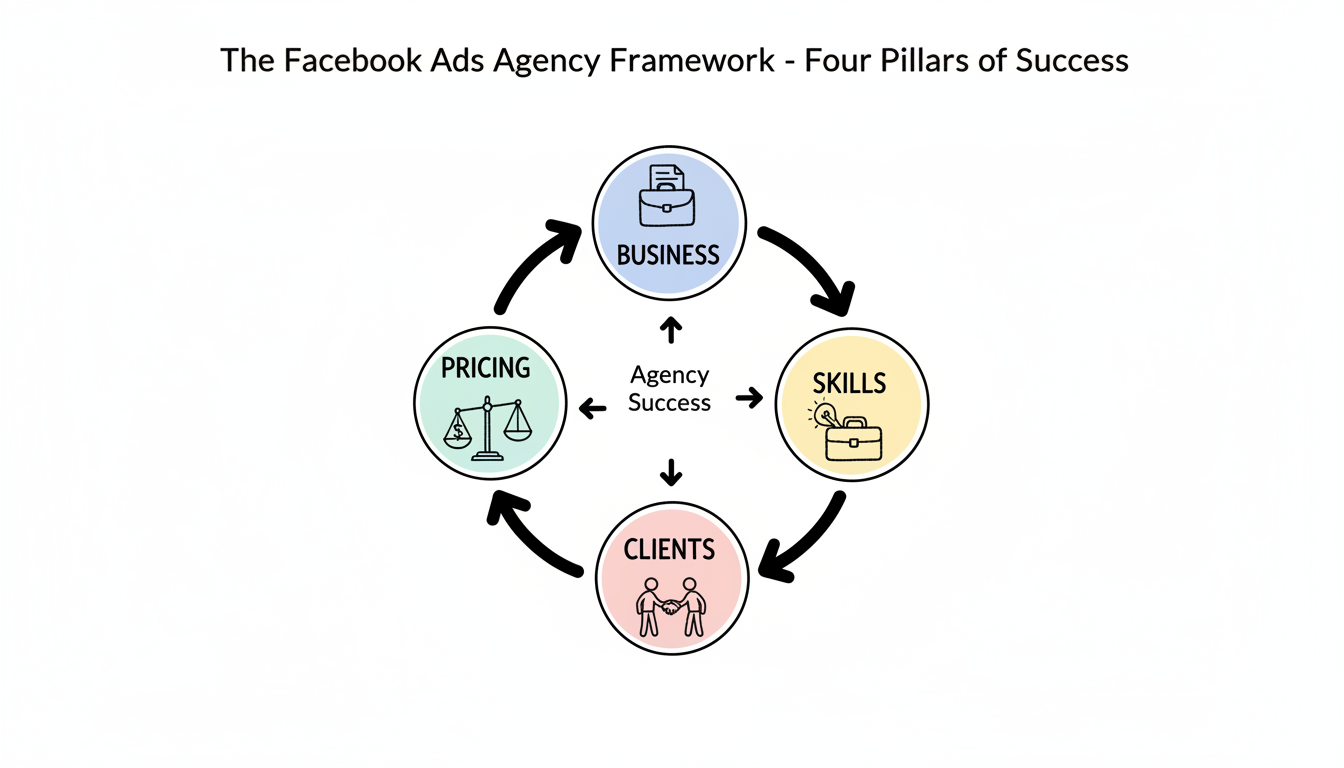
The demand for Facebook advertising expertise continues to grow as businesses recognize they need professional help to compete on Meta's platforms. Starting a Facebook ads agency can be a lucrative path—but success requires the right skills, systems, and strategy.
This guide covers everything you need to launch and grow a Meta advertising agency, from essential skills to pricing models and client acquisition.
Before signing your first client, you need the proper foundation in place.
Legal structure – Register your business (LLC is common for agencies), get an EIN, and open a business bank account. This separates personal and business finances and protects you legally.
Meta Business Manager – Set up your agency's Business Manager account. According to agency experts, "Meta Business Manager is a central hub that allows agencies to securely manage client ad accounts, pages, and team permissions without needing to be friends on Facebook or share personal login credentials."
Website and portfolio – Build a professional website that showcases your services. Even without clients yet, create case studies from your own campaigns or offer discounted work to build your portfolio.
Contracts and processes – Develop client agreements covering scope, payment terms, and termination clauses. Create standard operating procedures for onboarding, campaign management, and reporting.
Task | Why It Matters |
Business registration | Legal protection and professionalism |
Business Manager setup | Secure client account management |
Payment processing | Collect retainers and invoices |
Portfolio website | Credibility with potential clients |
Client contract template | Protect both parties |
Proposal template | Streamlined sales process |
If you're not already proficient in Meta Ads Manager, invest time in mastering the platform before taking on clients.
According to Meta advertising guides, key setup steps include: "Within Business Manager, create your Facebook Ad Account. Choose the correct time zone and currency to ensure accurate reporting. Add payment methods and set up billing preferences."
Complete Meta Blueprint certifications to validate your expertise and build credibility. Understanding how to run Facebook ads effectively is the foundation of agency success.
Running a successful Facebook ads agency requires a mix of technical, creative, and business skills.
Campaign structure – Understanding how to organize campaigns, ad sets, and ads for optimal performance and budget allocation.
Audience targeting – Proficiency with custom audiences, lookalike audiences, interest targeting, and broad targeting strategies.
Pixel and Conversions API – Ability to set up and troubleshoot tracking implementation for accurate measurement.
Optimization – Knowledge of bidding strategies, budget management, and scaling techniques.
Analytics – Reading and interpreting data to make informed optimization decisions. Being able to demonstrate value through metrics like how to calculate ROI Facebook ads is critical for client retention.
Ad copywriting – Writing headlines, body copy, and CTAs that convert.
Creative direction – Understanding what makes ads perform—even if you outsource production.
Video editing basics – At minimum, ability to resize and adapt creative for different placements.
Sales and positioning – Ability to win clients and communicate your value proposition.
Client communication – Setting expectations, delivering bad news professionally, and maintaining relationships.
Project management – Juggling multiple clients without letting anything fall through the cracks.
Financial management – Pricing profitably, managing cash flow, and tracking time.
Not everything needs to be done in-house:
Focus your learning on campaign management and client relationships—these are harder to outsource effectively.
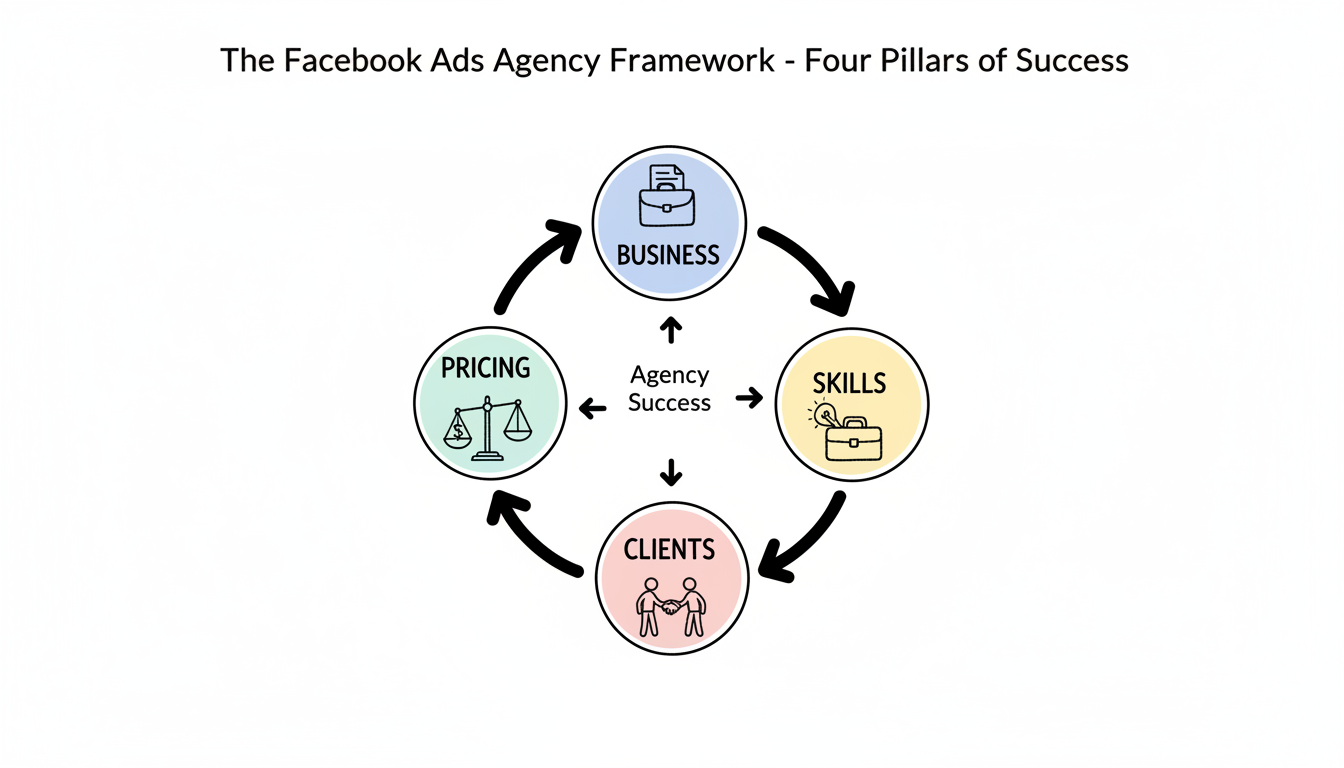
Pricing is one of the most critical decisions for a new agency. Price too low and you'll burn out; price too high without results and you'll lose clients.
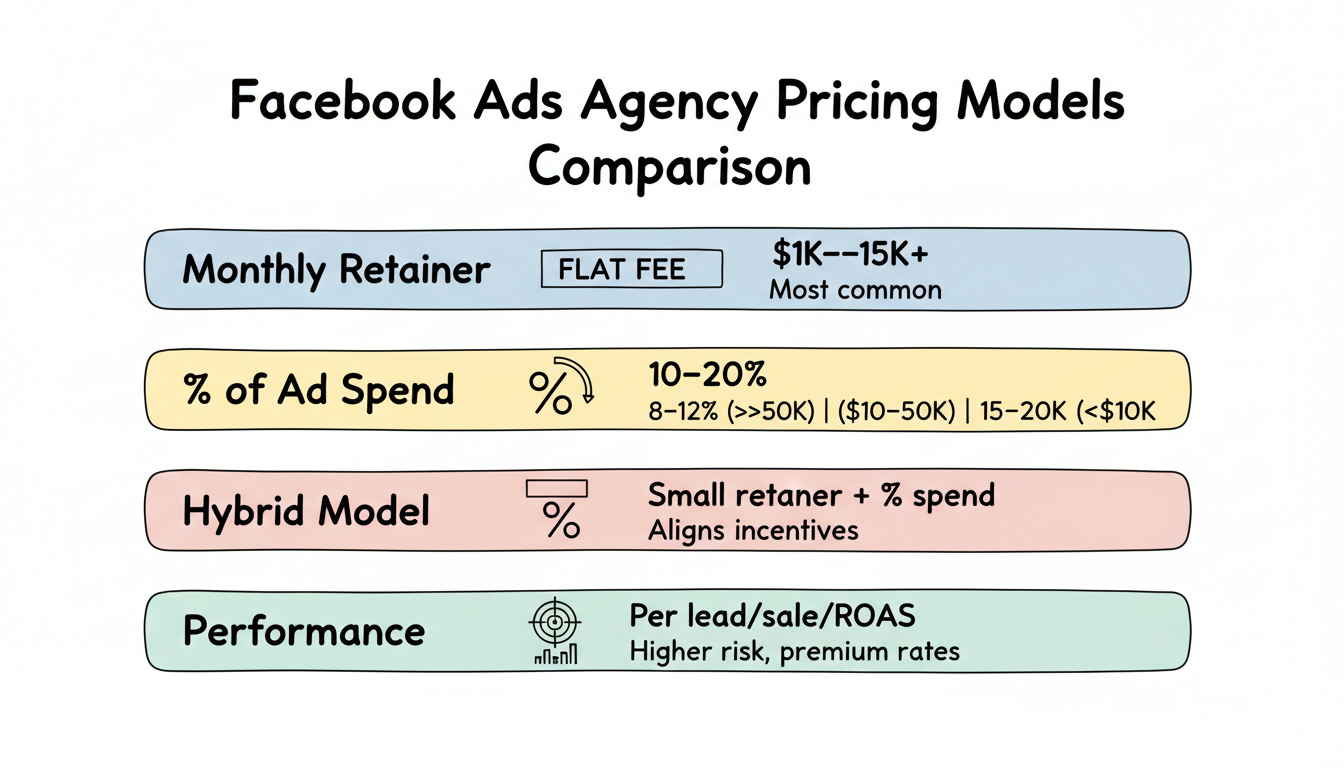
According to agency pricing research, agencies typically use these models:
Monthly retainer – A flat fee regardless of ad spend. Most common and provides predictable revenue.
Client Type | Typical Retainer Range |
Small business | $1,000 - $2,500/month |
Mid-market | $2,500 - $7,500/month |
Enterprise | $7,500 - $15,000+/month |
Percentage of ad spend – Usually 10-20% of the client's monthly ad budget.
Monthly Ad Spend | Typical Percentage |
Under $10K | 15-20% |
$10K - $50K | 12-15% |
Over $50K | 8-12% |
Hybrid model – Smaller retainer plus percentage of spend. Aligns incentives while providing base revenue.
Performance-based – Payment tied to results (leads, sales, ROAS). Higher risk but can command premium rates.
When starting out:
Define exactly what's included to avoid scope creep:
Client acquisition is the lifeblood of any agency. Here's how to build your pipeline.
Personal network – Start with people who already know and trust you. Former colleagues, friends with businesses, and extended network.
Free or discounted work – Offer to manage ads for 2-3 businesses at reduced rates in exchange for testimonials and case studies.
Local businesses – Walk into local businesses and offer your services. Restaurants, gyms, and service businesses often need help but don't know where to start.
Freelance platforms – Upwork, Fiverr, and similar platforms have clients actively searching. Competition is high but volume exists.
As you grow, invest in sustainable lead generation:
Content marketing – Blog posts, YouTube videos, and social content that demonstrate expertise. Many potential clients search for answers to questions like do Facebook ads cost money before contacting agencies.
Referrals – Ask satisfied clients for referrals. Offer referral bonuses for new business.
Paid advertising – Practice what you preach. Run Facebook ads targeting business owners in your niche.
Partnerships – Partner with complementary agencies (SEO, web design) who don't offer paid social. Many businesses work with a Facebook ads marketing agency alongside other service providers.
Speaking and networking – Present at local business events, chambers of commerce, and industry meetups.
Not every lead is a good fit. Qualify prospects to avoid problem clients:
Learn to say no to clients who will drain your time without profitable results.
The right tools make agency operations efficient and scalable.
Meta Business Manager – Core platform for managing client accounts.
Reporting tools – Google Data Studio/Looker Studio (free), AgencyAnalytics, or similar for professional reports.
Project management – Asana, Monday, or ClickUp to track tasks and deadlines.
Communication – Slack or Teams for internal communication; client portals for updates.
Time tracking – Toggl, Harvest, or similar to understand profitability by client.
Accounting – QuickBooks, FreshBooks, or similar for invoicing and financial tracking.
As you scale, consider:
According to industry analysis, "Retainer-based agencies achieve 2.3 times better retention than project-based counterparts" (18% vs 42% annual churn). Building systems for consistent delivery improves retention.
You can start with very little capital—under $1,000 for basic business registration, website, and tools. The bigger investment is time: learning the platform, building your portfolio, and acquiring clients. Most successful agency owners spent 6-12 months building expertise before going full-time.
Specialization helps with positioning and pricing. Niche agencies can charge more because they understand industry-specific challenges. Good niches include ecommerce, local services, B2B SaaS, healthcare, or real estate. That said, many successful agencies start as generalists and specialize as they identify their best-fit clients.
It depends on account complexity and service level. General guidelines: 5-10 clients for full-service management, 10-15 for media buying only, and up to 20+ with strong automation and systems. Quality suffers beyond your capacity—scale with team members or tools rather than overloading yourself.
This will happen. Be transparent, show what you've tried, and explain your plan. Most clients appreciate honesty over excuses. If results don't improve after genuine effort, offer to part ways professionally. A good offboarding is better than a resentful ongoing relationship—and protects your reputation.
By submitting this form, you agree to our Privacy Policy and Terms & Conditions.