February 19, 2026


Choosing between TikTok and YouTube for your video advertising in 2026 requires understanding the distinct strengths of each platform. Both dominate the video space but serve different purposes, audiences, and advertiser goals. This comparison breaks down everything you need to make an informed decision about where to invest your ad budget.
TikTok and YouTube represent two fundamentally different approaches to video content and advertising.
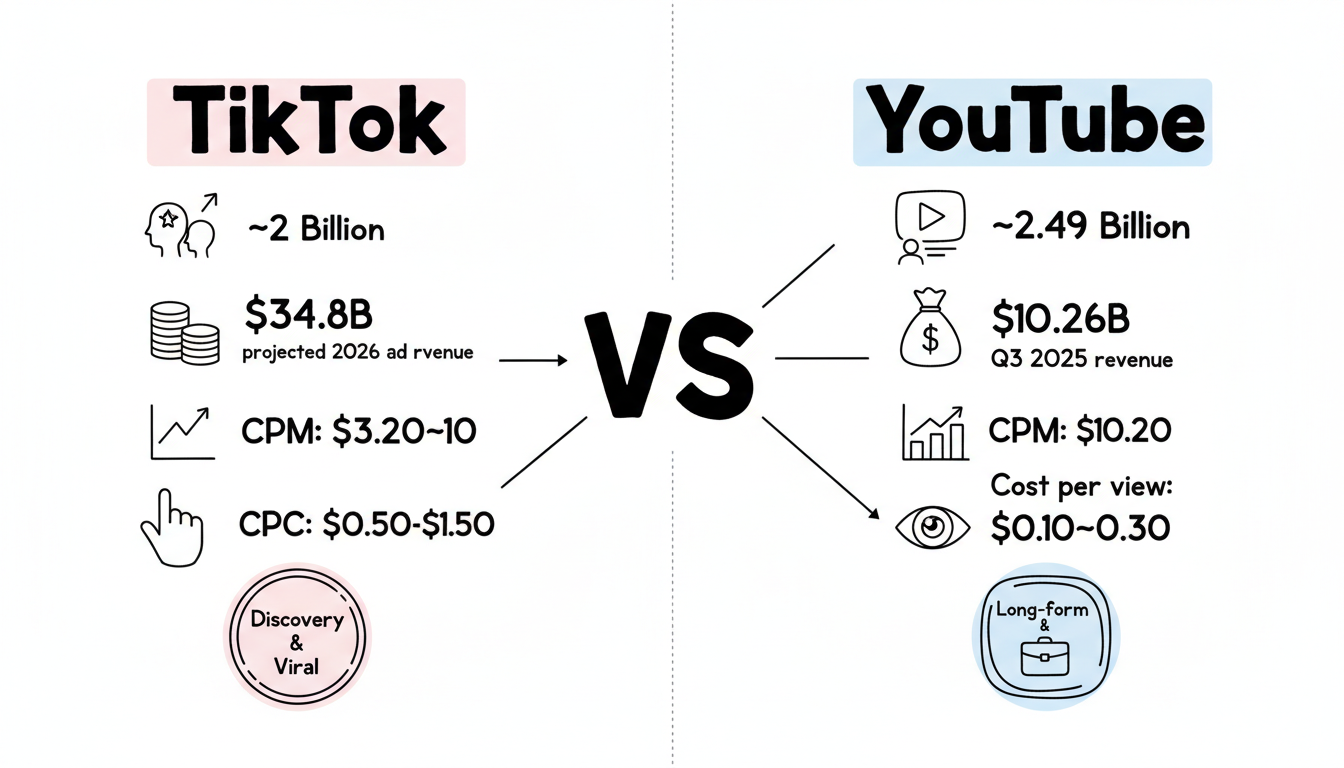
TikTok has grown to nearly 2 billion monthly active users globally, with approximately 80 million users in the United States alone. The platform's ad revenue is projected to reach $34.8 billion globally in 2026, with $17.17 billion coming from the U.S. market.
TikTok's advertising platform has matured significantly, now offering sophisticated targeting and strong performance metrics. The platform is built around algorithmic content discovery, where the "For You" page prioritizes content over creator followings. For businesses exploring the platform, a complete guide to TikTok advertising can help navigate setup and strategy.
YouTube remains the second-largest social platform with approximately 2.49 billion monthly active users. As part of Google's advertising ecosystem, YouTube offers mature ad tools and extensive reach across demographics. YouTube generated $10.26 billion in ad revenue in Q3 2025 alone, demonstrating its scale.
YouTube excels at subscription-based content consumption, with algorithmic recommendations supplementing creator followings.
Understanding who uses each platform helps you determine where your target customers spend their time.
TikTok's user base has diversified beyond its initial Gen Z stronghold:
TikTok users tend to be discovery-focused, with 56% opening the app specifically to discover something new.
YouTube attracts a broader, slightly older audience:
YouTube's audience often has higher purchase intent for considered purchases and B2B solutions.
The platforms offer distinct ad formats suited to different marketing objectives.
TikTok's ad ecosystem includes:
TikTok's content culture favors raw, authentic, trend-driven creative. The platform rewards native-looking content over polished corporate productions. Understanding TikTok ad specs and requirements ensures your creative assets meet platform standards.
YouTube offers more traditional video advertising:
YouTube's Shorts advertising platform is less developed than TikTok's, though Google continues investing in this format.
Budget considerations often drive platform selection. Here's how costs stack up in 2026.
TikTok generally offers lower entry points:
TikTok's lower CPMs make it particularly effective for top-of-funnel brand awareness campaigns.
YouTube's costs reflect its more established platform:
YouTube requires higher creative investment since longer videos need scripting, editing, and stronger storytelling.
Metric | TikTok | YouTube |
Average CPM | $3.20-$10 | $10-$20 |
Average CPC | $0.50-$1.50 | $0.10-$0.30 per view |
Minimum Budget | $500 campaign / $50 daily | Flexible |
Creative Cost | Lower (native style) | Higher (production quality) |
Both platforms deliver results, but their strengths differ.
TikTok advertising delivers impressive engagement metrics:
TikTok's short-term ROAS tends to be higher (4-12x) compared to long-term ROAS (3-5x), reflecting the platform's viral, fast-moving content nature. Ongoing optimization through TikTok A/B testing helps maintain strong performance.
YouTube excels for different objectives:
YouTube content can keep generating value long after publication, unlike TikTok's trend-driven content lifecycle.
Many successful advertisers use both platforms strategically:
For younger audiences, both TikTok and YouTube now function as search engines where users discover products and make purchase decisions.
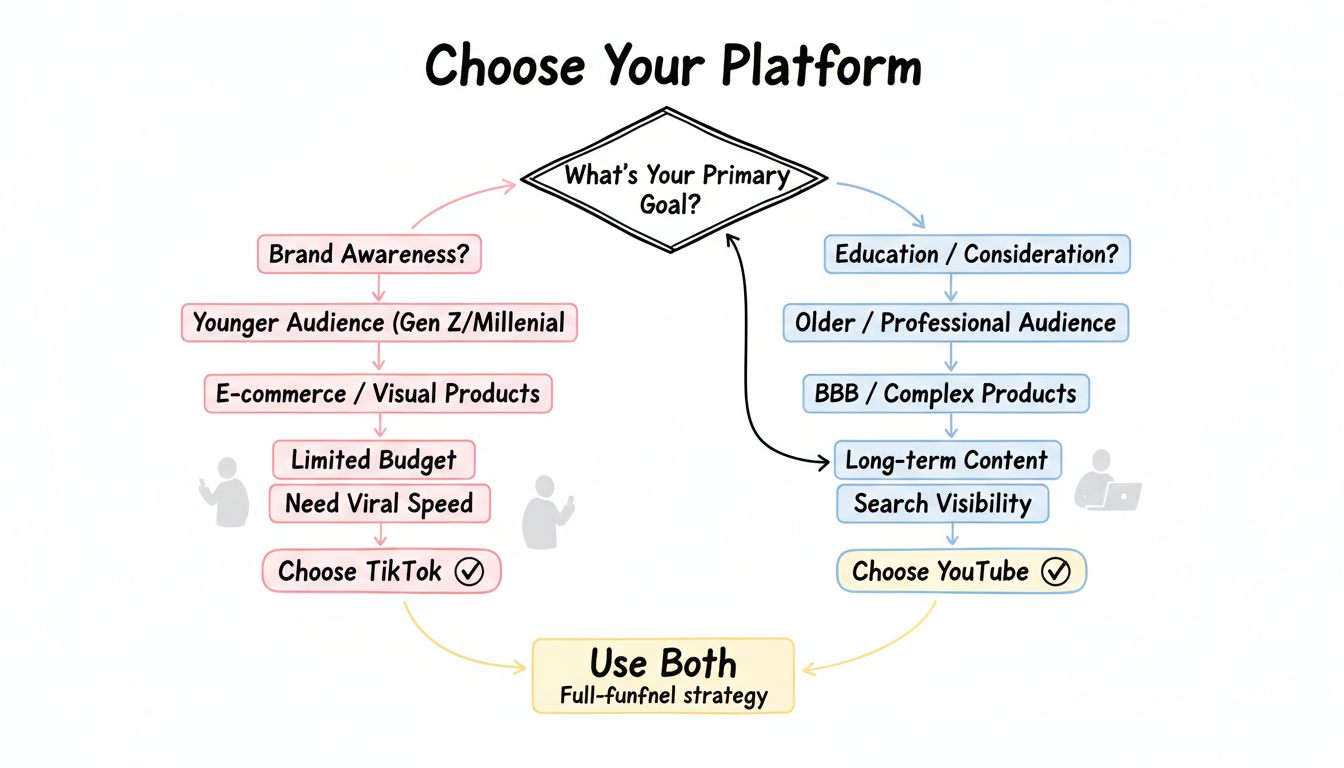
For small businesses with limited budgets, TikTok often provides better value. With CPCs starting around $0.50 and lower creative production requirements, small businesses can test and learn affordably. YouTube becomes more valuable once you have resources for higher-quality video production. Many businesses first evaluate if TikTok advertising is worth it before committing budget.
TikTok currently shows 96% higher ROAS compared to other digital channels, though results vary by industry and objective. YouTube often delivers better ROI for considered purchases, B2B, and educational content where longer engagement drives conversions.
While technically possible, it's not recommended. TikTok rewards native, authentic content that feels organic to the platform. YouTube audiences expect higher production quality and more detailed content. Adapting your creative for each platform's culture typically improves performance significantly.
By submitting this form, you agree to our Privacy Policy and Terms & Conditions.